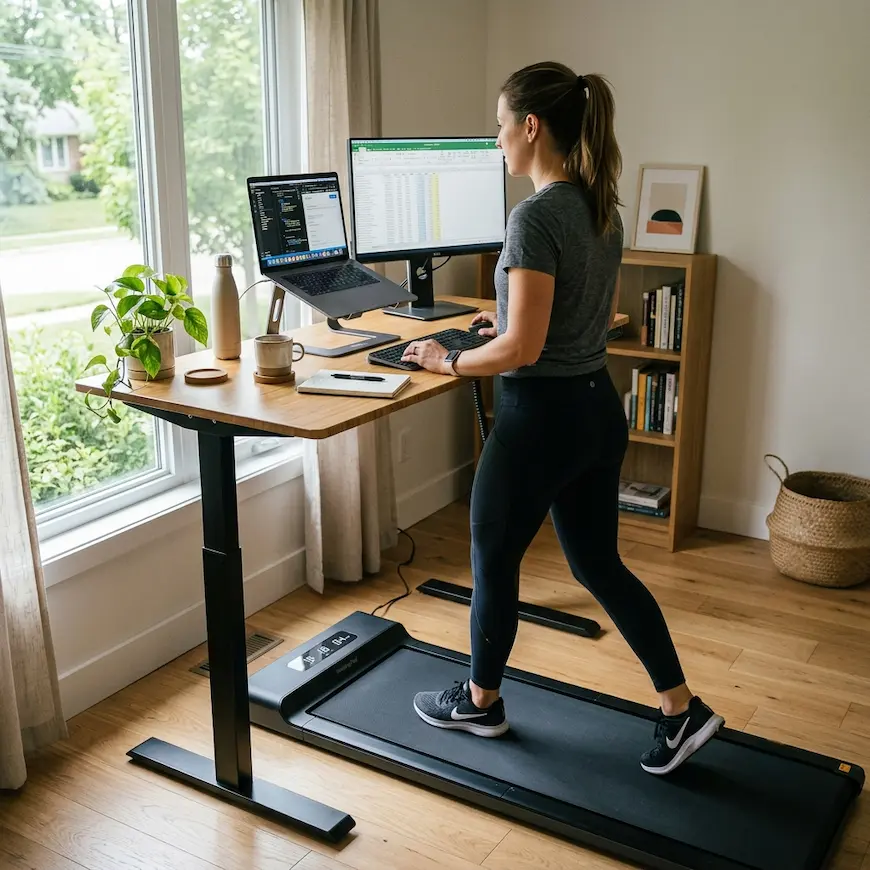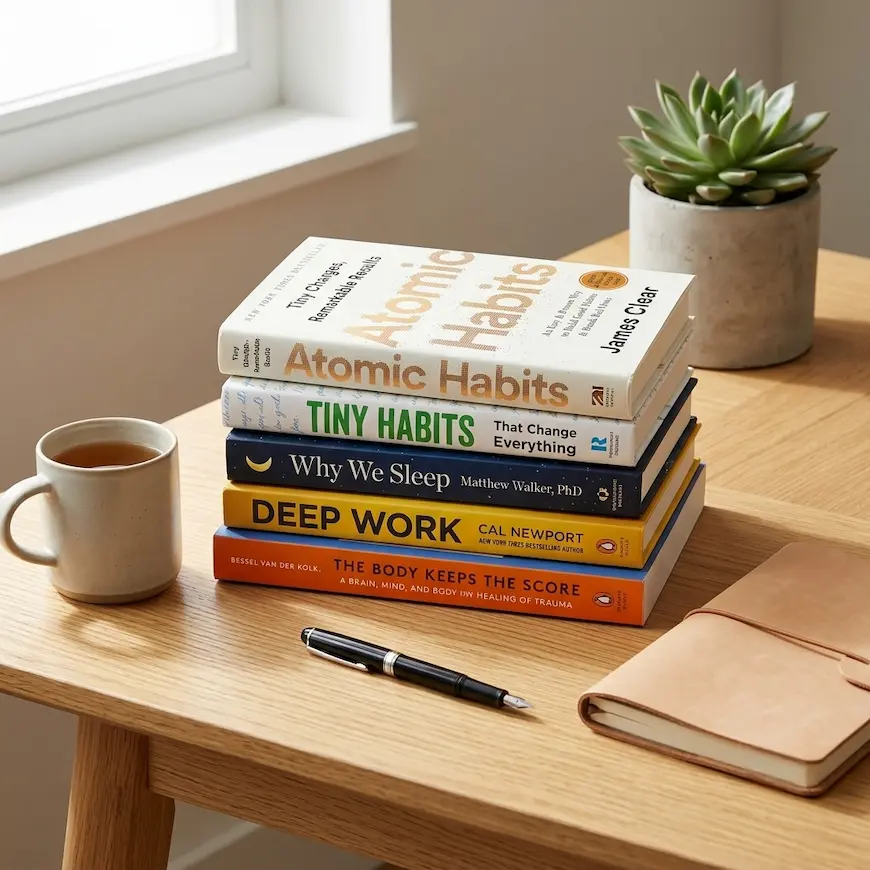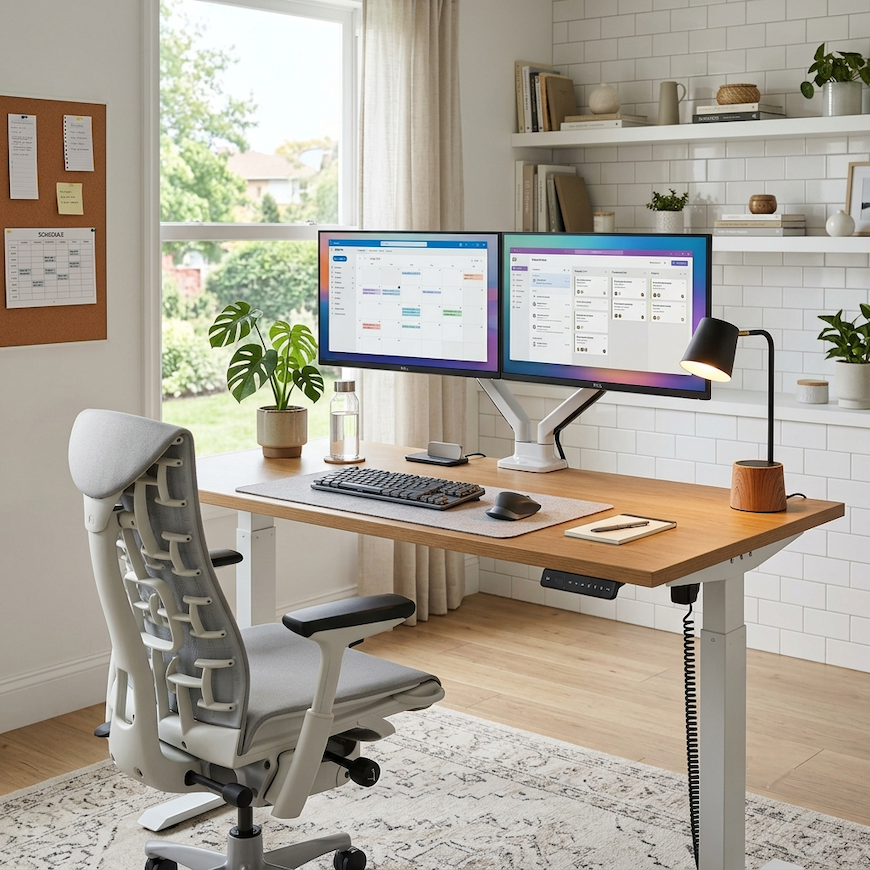
Every January, and honestly most Mondays, millions of people sit down and write out a new healthy routine. Wake up at 6am. Meditate for 20 minutes. Exercise for 45 minutes. Eat a clean breakfast. Journal. Drink 3 litres of water. Read for 30 minutes before bed.
By Wednesday, the alarm gets snoozed. By Friday, the journal is under a pile of laundry. By the following Monday, the whole thing has quietly been abandoned, and replaced with a fresh wave of guilt about not being disciplined enough.
If this sounds familiar, I want to offer you a reframe: the problem was never your discipline. The problem was the routine itself.
Most healthy routines are designed to fail. They ask too much too soon, rely on motivation that fades within days, and leave zero room for the reality of an imperfect life. The people who actually maintain a healthy routine long-term aren’t more motivated than you, they’ve just built their routines differently.
This is how to do it right.
Why Most Healthy Routines Collapse Within Two Weeks
Before getting into the method, it’s worth understanding why the typical approach fails, because if you don’t see the pattern, you’ll repeat it.
The overload problem. Most people build a healthy routine the way they’d plan a perfect life: every good habit included, nothing wasted, everything optimized. The result is a schedule that works beautifully on paper and is completely unsustainable in practice. When one piece fails, the whole structure collapses.
The motivation trap. Motivation is an emotion. It comes and goes based on sleep, stress, hormones, and what happened at work. Building a healthy routine on motivation is like building a house on sand, it works when conditions are perfect, and falls apart when they aren’t. Systems and environment outlast motivation every single time.
The copy-paste problem. Someone else’s healthy routine is optimized for someone else’s life, schedule, energy levels, and preferences. A routine borrowed from a fitness influencer who wakes up at 4:30am with no children and a personal chef will not work for a person with a 7am school run and a full-time job. This sounds obvious, but most people still try it.
No recovery plan. Even well-designed healthy routines get disrupted. Travel, illness, difficult weeks, bad nights, life intervenes. The routines that survive are the ones that have a built-in recovery plan. Most don’t.
Understanding these failure modes makes the solution much clearer.
Step 1: Start With One Anchor Habit — Not a Full Routine
The single biggest mistake people make when trying to build a healthy routine is starting with a full routine.
Don’t. Start with one habit.
Your anchor habit is the one action that, once done, makes everything else more likely to happen. For most people, this is a morning action, getting up without snoozing, drinking a glass of water, or putting on workout clothes immediately after waking. Choose the one that fits your life and commit to that single action every day for two weeks.
Why one? Because habit formation requires repetition in consistent contexts. Research by Phillippa Lally at University College London found that habits take an average of 66 days to form, not 21 days as the popular myth claims, and that complexity significantly increases the time required. One simple action becomes automatic much faster than a full healthy routine.
Get your anchor solid. Then build around it.
Related: 10 morning habits that give you the perfect anchor to build from
Step 2: Stack New Habits onto What You Already Do
Once your anchor habit feels automatic, you do it without thinking, without deciding, you’re ready to add the next piece. The method is called habit stacking, and it’s one of the most reliable approaches to building a lasting healthy routine.
Habit stacking links a new behaviour to an existing one, using this formula:
“After I [CURRENT HABIT], I will [NEW HABIT].”
For example:
– After I make my morning coffee, I will drink a glass of water first
– After I drink my water, I will step outside for 5 minutes of sunlight
– After I come back inside, I will write three things I’m grateful for
– After I journal, I will do 10 minutes of movement
Notice what’s happening: a healthy routine is being built in layers, each new habit attached to a previously automatic one. You’re not trying to remember a list of things to do, you’re creating a chain where each action triggers the next.
This is why the healthy routines that last look effortless from the outside. They weren’t built all at once. They were stacked, one habit at a time, until the sequence became the default.
Step 3: Design Your Environment Before You Rely on Willpower
Your environment is constantly shaping your behaviour, whether you’ve designed it intentionally or not. If your healthy routine requires you to make good decisions in a space that makes bad decisions easier, you’ll exhaust your willpower before 9am.
Environmental design is the process of deliberately arranging your surroundings so that your healthy routine is the path of least resistance.
Practical examples:
– Want to exercise in the morning? Put your workout clothes on the floor next to your bed the night before. The decision is already made.
– Want to drink more water? Keep a full glass on your bedside table and a large bottle visible on your kitchen counter. Out of sight is out of mind.
– Want to eat a healthier breakfast? Pre-portion overnight oats or boil eggs the evening before. Remove the cereal from the counter.
– Want to stop scrolling your phone first thing? Charge it in a different room.
None of these require willpower or motivation. They work by changing what’s easy and what’s effortful. A healthy routine designed around your environment will always outlast one that depends on daily discipline decisions.
Step 4: Make It Smaller Than You Think You Should
Here’s the counterintuitive principle behind every healthy routine that actually sticks: start so small it feels almost pointless.
BJ Fogg, a behaviour scientist at Stanford, spent years studying habit formation and found that tiny behaviours, ones that take 30 seconds to two minutes, build faster and more durably than large ones. Not because small habits produce big results on their own, but because they establish the identity and the neural pathway that bigger habits grow from.
Want to build a reading habit? Read one page. Not 30 minutes, one page. Once reading one page feels automatic, it naturally expands.
Want to exercise every morning? Do 5 minutes of movement. Not a full workout, 5 minutes. Stretching, a short walk, jumping jacks. Something that meets the bar of “I exercised today.”
The goal in the beginning isn’t performance. The goal is consistency. A healthy routine you do imperfectly every day is infinitely more valuable than a perfect healthy routine you abandon after a week.
When people tell me they can’t stick to a healthy routine, my first question is always: was it too ambitious to start? In almost every case, the answer is yes.
Step 5: Write Down When and Where — Not Just What
Most people build their healthy routine as a list of what they want to do. Research consistently shows that adding when and where to that list doubles the likelihood of follow-through.
This is called an implementation intention, a commitment of the form: “When situation X occurs, I will do behaviour Y.”
Stanford psychologist Peter Gollwitzer has published extensive research showing that implementation intentions dramatically increase goal achievement because they automate the decision-making process. Instead of deciding in the moment whether to exercise, you’ve already decided: “When I wake up on Monday, Wednesday, and Friday, I will do 20 minutes of movement in my living room before I shower.”
The when and where remove the negotiation your brain would otherwise have with itself at 6:30am when the bed is warm and the day is cold.
Apply this to every part of your healthy routine:
– “When I sit at my desk in the morning, I will write my three priorities for the day before I open email.”
– “When I finish lunch, I will take a 10-minute walk before returning to my desk.”
– “When I get into bed, I will put my phone on the charger in the hallway and read for 15 minutes.”
Specific beats vague. Every time.
Step 6: Track Your Routine Visibly
Tracking your healthy routine serves two purposes: it creates accountability to yourself, and it makes progress visible in a way that motivates continuation.
The most effective form of tracking for a healthy routine is the simplest: a paper habit tracker or a calendar on the wall where you mark off each day you completed your core habits. The visual chain of marks creates what comedian Jerry Seinfeld famously called “don’t break the chain”, a powerful motivator once the streak reaches a week or more.
A few principles for tracking that works:
Track the behaviour, not the outcome. You can’t control whether you lose weight this week, you can control whether you did your morning walk. Track the walk.
Use a recovery rule, not a perfection rule. Missing one day is a pause. Missing two days in a row is the beginning of a broken habit. Build your healthy routine around the rule: never miss twice. One bad day is a blip. Two bad days is a pattern.
Keep it simple. A tracking system that requires an app, a spreadsheet, and 15 minutes of daily admin is a system you’ll abandon. Three checkboxes on a sticky note is a system you’ll maintain.
Step 7: Do a Weekly Reset Every Sunday
The most resilient healthy routines include a regular review. Spend 10 minutes every Sunday asking yourself:
– Which habits did I complete consistently this week?
– Which ones did I skip, and why?
– Is there anything in my environment or schedule making the routine harder than it needs to be?
– What’s one thing I can adjust to make next week easier?
This isn’t self-criticism, it’s maintenance. A healthy routine is a living thing. Your life changes week to week. A routine that works perfectly in a quiet week needs adjustment for a travel week or a stressful one. The weekly reset is how you keep it relevant and realistic.
It’s also the moment to celebrate what’s working. Consistency, even imperfect consistency, deserves recognition. That positive feedback loop is what keeps a healthy routine going when novelty wears off.
What to Do When You Fall Off Your Routine
You will fall off. Travel happens. Illness happens. Hard weeks happen. The question is never whether you’ll break your healthy routine, it’s how quickly you return to it.
A few principles that help:
Lower the bar instead of abandoning the routine. If your morning healthy routine normally takes 45 minutes and you’re exhausted, do a 5-minute version. Drink water. Step outside for 2 minutes. Write one thing you’re grateful for. The habit stays alive even on its smallest setting.
Focus on identity, not outcomes. The shift that makes healthy routines truly durable is moving from “I’m trying to do healthy things” to “I’m someone who has a healthy routine.” Identity-based habits are stickier because they’re connected to who you are, not just what you want. When you miss a day, the question becomes: what would someone with a healthy routine do the next morning? They’d get back to it.
Don’t try to compensate. Missing Monday doesn’t mean doing double on Tuesday. That approach leads to soreness, fatigue, and another missed day. Just return to your normal healthy routine as if Monday didn’t happen. Clean slate.
A Simple Healthy Routine to Build From
If you’re starting from zero and want a concrete foundation, this is a healthy routine you can build from, starting with just the first two items:
Morning (15–30 minutes):
– Drink a glass of water before anything else
– Get 5 minutes of natural light outside
– Move your body for 10 minutes
– Write 3 things you’re grateful for + your 3 priorities for the day
During the day:
– Eat a protein-anchored lunch (reduces the afternoon crash)
– Take a 10-minute walk after lunch
– Drink water consistently, keep a bottle visible
Evening (20 minutes):
– Set a consistent wind-down time (same each night)
– No screens for 30 minutes before bed
– Lay out tomorrow’s workout clothes / prep anything that makes tomorrow easier
– Read for 10–15 minutes before sleep
This healthy routine isn’t impressive on paper. That’s the point. Every element is small enough to do on a bad day, and consistent enough to compound into something genuinely transformative over 60 to 90 days.
Related: Sleep habits that make your evenings work harder for your mornings
Frequently Asked Questions
What’s the best time of day to do a healthy routine?
The best time is whenever you can be most consistent. For most people, morning works best for a healthy routine because it happens before the unpredictability of the day kicks in. But a consistent evening healthy routine is infinitely better than a morning routine you can never maintain.
Should I follow someone else’s healthy routine?
Use other routines for inspiration, not prescription. Borrow the structure, anchor habit, habit stack, environment design, but fill it in with habits that fit your actual life. A healthy routine that works is one that is genuinely compatible with your schedule, energy, and preferences.
What if I have no time for a healthy routine?
Most people have more time than they think, but it's scattered, unintentional time. A healthy routine doesn't add time to your day; it shapes the time you already have. Start with 10 minutes in the morning. That's enough.
How do I stay motivated to keep my healthy routine going?
Stop relying on motivation, it's the wrong tool for this job. Design your environment, track your streak, build in a weekly reset, and connect your healthy routine to your identity. Those four things outlast motivation every time.
The Takeaway
Building a healthy routine that actually lasts isn’t about discipline, willpower, or finding the perfect morning ritual. It’s about understanding how habits actually form, and then building with that understanding instead of against it.
Start with one anchor. Stack habits slowly. Design your environment. Make it smaller than feels meaningful. Write down when and where. Track visibly. Reset weekly.
That’s it. That’s the method behind every healthy routine that sticks.
The version you have in two months, built patiently, will do more for your health and energy than any perfect routine you abandoned in week two.
All content on LifestyleMine is for informational and educational purposes only. It is not a substitute for advice from a qualified healthcare provider.*

Mimo Karam is the founder and writer at LifestyleMine. She writes about daily habits, nutrition, sleep, and emotional wellness, turning research into practical advice for people who want to live healthier without making it complicated.