Most people think sleep starts the moment their head hits the pillow. It doesn’t. Sleep starts about two hours earlier, in the small, quiet decisions you make between dinner and bed. The dim lamp instead of the overhead light. The book instead of the doomscroll. The hot shower, the cool bedroom, the steady wind-down time you keep most nights of the week.
So the difference between a broken, anxious night and a deep one is rarely the mattress or the melatonin. It’s the evening routine for better sleep you walk through to get there.
The good news: this is one of the most learnable changes you can make to your health. You don’t need expensive gadgets or a perfect bedroom. You need a sequence, a small, repeatable chain of cues that tells your body and brain it’s time to power down.
What follows is nine steps that, together, make up a workable wind-down. Take what fits, skip what doesn’t. The point isn’t perfection. It’s a routine you’ll actually do tomorrow, and the night after that.
Why an evening routine matters more than you think
Before the steps, a quick word on the biology, because once you see why your evening routine for better sleep is so powerful, the habits stop feeling optional.
Your body runs on a roughly 24-hour internal clock called the circadian rhythm. As evening approaches, that clock triggers a cascade of changes: your core body temperature begins to drop, your brain starts releasing melatonin, and your nervous system begins shifting from “alert and active” toward “rest and digest.” This isn’t a switch. It’s a slow dimmer, and it takes one to two hours to complete.
Modern life is very good at sabotaging that dimmer. Bright overhead lights at 10pm tell your brain it’s still afternoon. A late workout or a stressful email spikes the very hormones (cortisol, adrenaline) your body is trying to lower. Screens flood your eyes with the same wavelengths the sun uses. By the time you finally lie down, your biology hasn’t been preparing for sleep, it’s been fighting it.
A consistent evening routine for better sleep works by cooperating with that biology instead of overriding it. Each step you do becomes a cue, and the cues stack into a signal your body learns to trust: when these things happen, sleep is next.
The National Heart, Lung, and Blood Institute and the Sleep Foundation both list consistent pre-bed habits as one of the highest-impact, lowest-cost interventions for chronic sleep problems. They work. They just ask for a little intention.
Here’s how to build them.
Step 1: Pick a wind-down time, and treat it like a meeting
The first step in any evening routine for better sleep is choosing when it starts. Not when you want to be asleep, but when you start winding down toward sleep.
For most people, that’s about 60 to 90 minutes before lights-out. If you want to be asleep by 11pm, your routine starts at 9:30pm. That’s the moment you close the laptop, stop answering messages, and begin walking through the chain of steps below.
The reason this matters is consistency. Your circadian rhythm responds to repetition, not intention. A wind-down time that varies by two hours every night is basically no wind-down time at all, because your body never learns what’s coming. A wind-down time that holds steady, even within a 30-minute window, becomes a powerful anchor.
Treat it like a meeting. Put it in your calendar if you have to. The first habit of a working evening routine for better sleep is simply showing up at the same time, night after night.
Step 2: Dim the lights 60–90 minutes before bed
If you change only one thing about your evenings, change this: dim the lights.
Your brain measures time partly by light. Bright light in the evening, especially the cool, white light from overhead fixtures, actively suppresses melatonin, the hormone that makes you feel sleepy. A study published in PNAS by Chang and colleagues found that evening exposure to light-emitting devices delayed melatonin release, pushed back the circadian clock, and reduced next-morning alertness, even after a full night’s sleep.
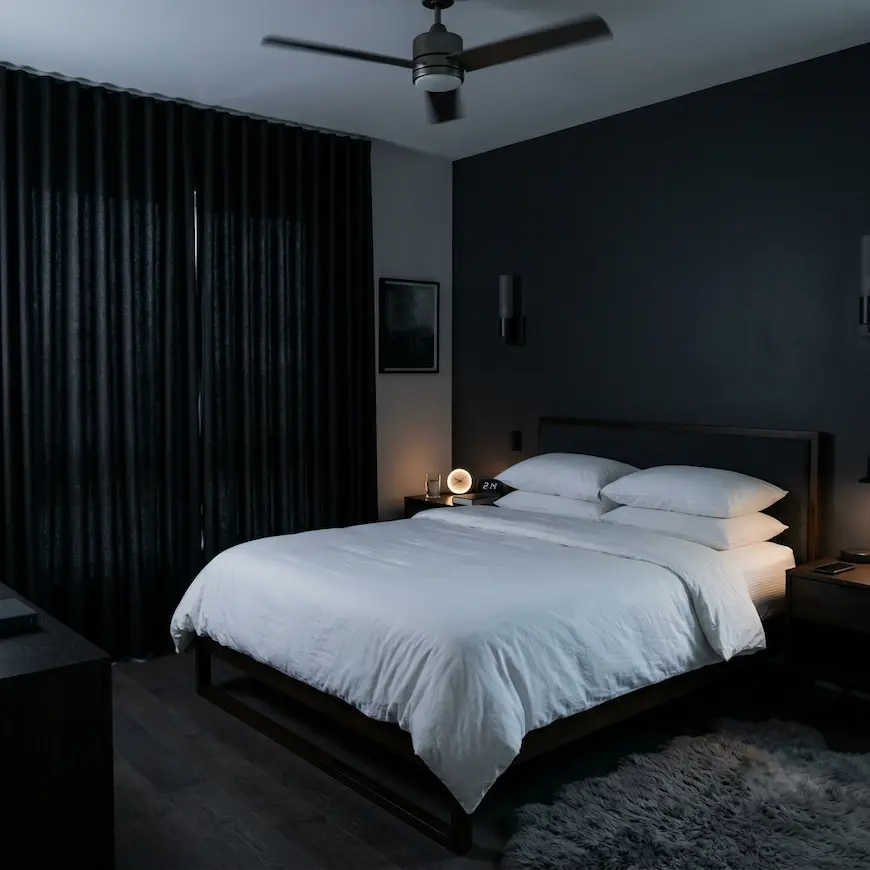
Practical version: an hour before bed, switch off overhead lights. Use warm, low lamps instead. Bedside, floor, or a single soft light in the room you’re in. Aim for “candlelit restaurant” rather than “kitchen at noon.”
If you can’t change the bulbs, you can change which lights you turn on. The cheapest sleep upgrade in your house is one warm-toned lamp you switch on at 9pm and use instead of everything else.
Step 3: Get off screens, or make them much dimmer
Screens are the obvious offender, but the truth is more nuanced than “no phones in bed.” Two things are happening when you scroll at night:
- The light is keeping you alert. Phones, tablets, and laptops emit blue-wavelength light at intensities your brain reads as daytime.
- The content is keeping you alert. Social feeds, news, and email are designed to provoke emotion and engagement. That’s the opposite of what sleep needs.
A full digital cut-off 90 minutes before bed is the gold standard, but it isn’t realistic for everyone. A workable approach is tiered:
- Best: No screens at all in the last 60 to 90 minutes.
- Good: Screens allowed, but in night mode, brightness at minimum, no work content, no doomscrolling.
- Better than nothing: Set a hard “phone goes on the charger across the room” time, with a real alarm clock so your phone isn’t your wake-up tool.
The point isn’t moral purity. It’s reducing the inputs your brain has to process in the last hour before sleep. The quieter the inputs, the smoother the transition.
Related: How to stop overthinking at night — habits that quiet a racing mind →
Step 4: Cool the bedroom down
This step surprises people because it’s so simple, but the research is unambiguous: a cool bedroom helps you fall asleep faster and stay asleep longer.
Your core body temperature naturally drops about 1 to 2°F as you transition into sleep, and a cooler environment supports that drop. The Sleep Foundation’s review of the research puts the optimal bedroom temperature for most adults between 65 and 68°F (about 18 to 20°C).
If you can’t control your thermostat, you have options. Open a window before bed. Use a fan, even on low. Switch to lighter bedding. Take a warm shower 60 to 90 minutes before bed, since your body cools dramatically afterward, mimicking the natural drop and pulling you toward sleep faster.
A bedroom that runs slightly too cold (with the right blanket) almost always sleeps better than one that runs warm. Adjust the temperature before you start winding down, so the room is ready when you are.
Step 5: Cut off caffeine, alcohol, and heavy meals
What you put into your body in the evening shapes how the night unfolds, and this is one of the most under-appreciated parts of any evening routine for better sleep.
Caffeine. Its half-life is roughly 5 to 6 hours, which means a 3pm coffee still has a quarter of its caffeine in your system at 9pm. For sensitive sleepers, that’s enough to delay sleep onset and reduce deep sleep, even if you don’t feel “wired.” A reasonable cutoff is 2pm. A strict one is noon.
Alcohol. This one fools almost everyone. Alcohol can help you fall asleep, but it fragments the second half of the night, suppresses REM sleep, and is one of the most common causes of waking up at 3am with a racing heart. If you drink, drink earlier and lighter, and pay attention to how the next morning actually feels.
Heavy meals. Eating a large meal within two hours of bed forces your digestive system to work while you’re trying to power down. Acid reflux, restless sleep, and vivid dreams often follow. If you’re hungry late, choose something small and protein-light, not a feast.
The simple rule: stop coffee mid-afternoon, finish dinner at least 2 to 3 hours before bed, and be honest about whether your evening glass of wine is helping or hurting.
Step 6: Move your body, gently
This step gets misread a lot, so let’s be precise. A vigorous workout in the last 90 minutes before bed raises your core body temperature and floods your system with adrenaline, both of which delay sleep. For most people, that’s a no.
But gentle movement in your evening routine for better sleep is the opposite. It actively helps. A short walk after dinner, five minutes of stretching, slow yoga, or just standing and rolling your shoulders shifts your nervous system from sympathetic (“fight or flight”) toward parasympathetic (“rest and digest”). It also releases muscular tension you’ve been carrying since morning without realizing it.
A simple template: 5 to 10 minutes of light stretching or slow movement after you’ve dimmed the lights, ideally with slow nasal breathing. You don’t need a routine you have to remember. Roll your neck, fold forward to touch your toes, twist gently side to side, breathe out longer than you breathe in. That’s enough.
Related: Why you’re always tired — and how your evening contributes to it →
Step 7: Empty your mind onto paper
If you’ve ever lain in bed mentally drafting tomorrow’s emails or rehearsing a conversation from three days ago, this step is the most important one in your evening routine for better sleep.
The brain doesn’t shut off easily when it’s still holding open loops. Unfinished tasks, unprocessed feelings, decisions you haven’t made. Trying to fall asleep while your mind is still running is like trying to park a car that’s still in gear.
The fix is to externalize the loops. A few minutes before bed, sit with a notebook and dump out everything that’s circling: tomorrow’s to-do list, what’s bothering you, what you didn’t finish today. You don’t need to organize or solve. You need to get it out of your head and onto the page so your brain knows it’s safe to let go.
Research backs this up. A Baylor University study by Scullin and colleagues found that people who spent five minutes writing a detailed to-do list before bed fell asleep significantly faster than those who wrote about tasks they’d already finished. The act of offloading what’s unfinished is what reduces cognitive arousal at bedtime.
This is also why journaling, brain-dumping, or even a short “tomorrow plan” works so well as a closing step in your evening routine for better sleep. It tells your mind: I’ve got this. You can rest.
Step 8: Anchor the end with the same calming cue
The last 10 to 15 minutes of your evening routine for better sleep should be the same thing, every single night. This is the closing cue. The moment your body learns to associate directly with sleep.
The specific activity matters less than its consistency and its tone. Good options:
- Reading a physical book (fiction beats non-fiction, nothing thrilling)
- A few minutes of slow nasal breathing or a guided body scan
- Listening to quiet instrumental music or a sleep podcast
- A warm, decaffeinated tea like chamomile, rooibos, or lemon balm
- Skincare in dim light, done slowly
What it should not be: anything emotionally activating, anything bright, anything that keeps your phone in your hand. The whole point is repetition. Same thing, same place, same lighting, same approximate time. Within a week or two, your nervous system starts to recognize the cue and begins down-shifting on its own.
People often underestimate how much of this is just training. You’re teaching your body that this sequence ends in rest, until eventually it starts drifting toward sleep on its own.
Related: The healthy routine framework — how to make small habits actually stick →
Step 9: Wake up at the same time, even on weekends
This last one isn’t part of the evening, but it’s the single biggest factor that decides whether your evening routine for better sleep actually works.
Your wake time is the anchor for your entire circadian rhythm. If you wake at 7am Monday through Friday and 10am on weekends, you’ve effectively flown your body to a different time zone every Saturday morning, and you’ll feel that on Sunday night when sleep won’t come.
The most reliable evening routine for better sleep in the world won’t compensate for a wake time that swings three hours week-to-week. Pick a wake time you can sustain, hold it within a 30-minute window all seven days, and your evenings will start working with you almost automatically.
You can sleep in slightly on weekends. You can’t reset your clock every weekend without paying for it.
Related: Morning habits that change how you feel — your wake time matters more than you think →
A sample evening routine (one-hour version)
If you want a concrete template, here’s a realistic one-hour version you can adapt:
- 9:30pm: Wind-down begins. Close the laptop. Turn off overhead lights. Switch on a warm lamp.
- 9:30 to 9:45pm: Light movement. Five minutes of slow stretching while breathing through your nose.
- 9:45 to 10:00pm: Brain dump. Notebook, five minutes, everything that’s looping.
- 10:00 to 10:25pm: Closing cue. Reading, slow tea, dim bathroom for skincare. Phone is across the room.
- 10:25pm: Lights out. Bedroom is cool. Same time as last night.
That’s it. No app, no supplement, no perfect bedroom. Just a quiet, repeatable sequence. Most people who keep this for two weeks notice meaningful changes in how fast they fall asleep and how rested they feel in the morning.
What to skip from mainstream sleep advice
A few things that often appear in evening routines but rarely earn their place:
- Melatonin gummies, nightly. Melatonin is a signal hormone, not a sleeping pill. Used occasionally for jet lag, fine. Taken every night at high doses, it can blunt your body’s own production.
- Long, heated meditation sessions. If meditation works for you, keep it short and low-effort. A 30-minute practice that becomes another thing you “should” do can backfire.
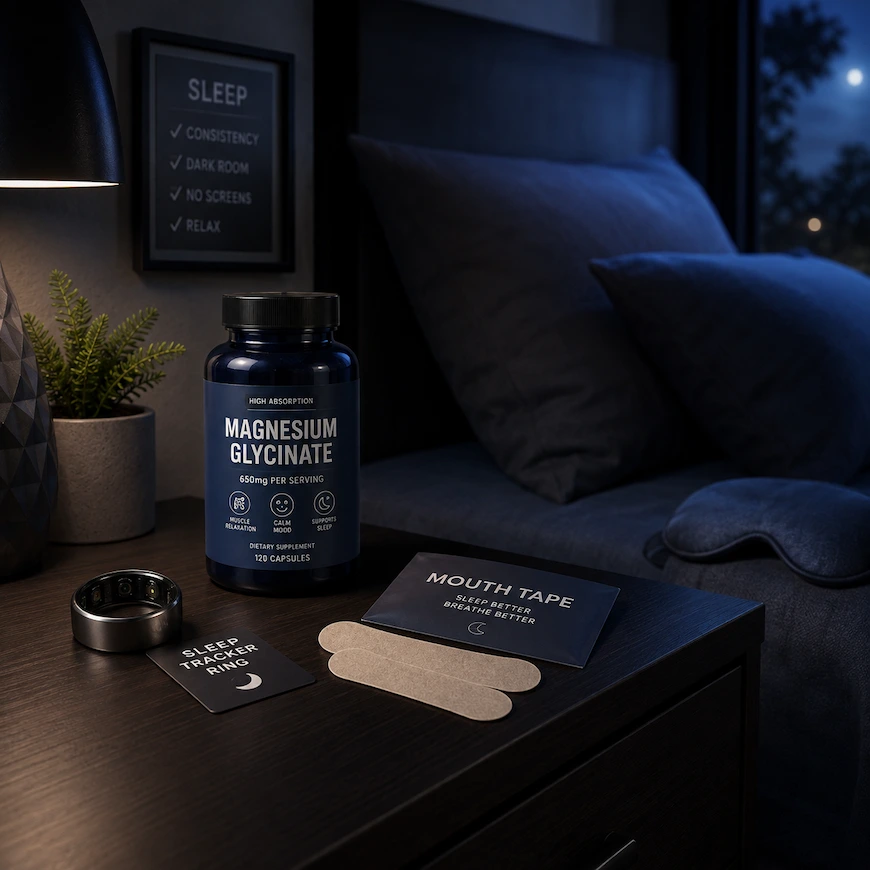
- Sleep tracker obsessions. Watching your sleep score can create anxiety about sleep, a phenomenon researchers half-jokingly call “orthosomnia.” If your tracker stresses you out, take it off.
- Massive bedtime supplement stacks. Magnesium glycinate is genuinely useful for many people, but stacking five supplements isn’t a routine, it’s a workaround for one. Build the habits first.
Related: Symptoms of magnesium deficiency — and how it affects sleep →
When an evening routine isn’t enough
Most sleep problems respond well to the evening routine for better sleep outlined above. But some don’t, and it’s worth being honest about that.
If you’ve been doing a consistent, well-built routine for 4 to 6 weeks and you’re still struggling with chronic insomnia, frequent middle-of-the-night waking, loud snoring, gasping during sleep, or unrefreshing sleep no matter how long you stay in bed, that’s a signal to talk to a doctor. Sleep apnea, restless leg syndrome, and chronic insomnia are real medical conditions, and they don’t get fixed by lifestyle alone.
LifestyleMine is a wellness platform, not a clinical resource. If sleep is significantly affecting your life, please reach out to a qualified healthcare professional.
Frequently asked questions
What’s the best time to start an evening routine?
About 60 to 90 minutes before your intended bedtime. If you want to be asleep by 11pm, your routine starts somewhere between 9:30 and 10pm. The exact time matters less than keeping it consistent.
Can I still use my phone at night?
If you can, avoid it for the last 60 minutes. If you can't, dim the brightness, use night mode, and avoid emotionally activating content (work, news, social media). The light matters, but the content matters more than most people realize.
What’s the single most important step in an evening routine for sleep?
Consistency. Same wind-down time, same wake time, same closing cue every night. A "perfect" evening routine for better sleep done randomly is far less effective than a basic one done consistently.
Should I take melatonin every night?
Generally no. Melatonin is most useful for short-term issues like jet lag or shift work. For nightly sleep, lifestyle steps (light, temperature, screens, consistency) work better and don't blunt your body's own production.
What if I work late and can’t start my routine until close to bed?
Shorten it rather than skip it. Even a 20-minute routine (dim lights, quick brain dump, cool room, slow breathing) is dramatically better than going straight from work to bed. Some evening routine for better sleep is always better than none.
The takeaway
A great evening routine for better sleep doesn’t require expensive gear, perfect willpower, or a spotless life. It requires a sequence: same wind-down time, same cues, same closing anchor. That’s basically it.
Pick a wind-down time. Dim the lights. Get off screens. Cool the bedroom. Stop caffeine early. Move gently. Empty your mind onto paper. End the night the same way every night. Wake up at the same time tomorrow.
You won’t do all nine perfectly tomorrow, and you don’t need to. Pick the two or three that felt most relevant (probably the wind-down time, the lights, and the brain dump) and start there. The rest will layer in over the next month.
What’s strange about a good evening routine for better sleep is that nothing seems to be happening for the first couple of weeks, and then one Tuesday morning you wake up before your alarm and realize you feel like yourself again. That’s what it’s for.
All content on LifestyleMine is for informational and educational purposes only. It is not a substitute for advice from a qualified healthcare professional.

Mimo Karam is the founder and writer at LifestyleMine. She writes about daily habits, nutrition, sleep, and emotional wellness, turning research into practical advice for people who want to live healthier without making it complicated.