For decades, we’ve looked at schizophrenia as a condition locked solely within the brain. But what if the secret to managing its most challenging symptoms, like brain fog, social withdrawal, and cognitive “glitches”, actually starts in your gut?
In 2026, the medical world is buzzing with a new term: Psychobiotics. Recent breakthroughs have revealed a profound “Gut-Brain Axis” connection, suggesting that the billions of bacteria living in your digestive tract might hold the remote control to your mental clarity. This isn’t just about digestion; it’s about neurobiology.
In this guide, we’re diving into the latest science on how fermented foods like kefir, kimchi, and sauerkraut are becoming the newest allies in functional psychiatry.

What are Psychobiotics? The 2026 Breakthrough
“Psychobiotics” are specific strains of live bacteria (probiotics) that, when ingested in adequate amounts, produce a health benefit in patients suffering from psychiatric illness. Unlike general probiotics that focus on bloating or regularity, psychobiotics are specifically studied for their ability to influence brain chemistry.
According to a 2025 meta-analysis published in ScienceDirect, adjuvant probiotic treatment, using beneficial bacteria alongside traditional antipsychotic medication, showed a statistically significant reduction in the “negative symptoms” of schizophrenia. These are the symptoms that medication often struggles to touch: lack of motivation (avolition), emotional flatness (blunted affect), and social isolation.
For the millions living with schizophrenia, this represents a major shift. Whether someone is navigating the different types of schizophrenia or dealing with the specific challenges of paranoid schizophrenia, we are moving away from simply “managing receptors” to “nourishing entire ecosystems.”

How Your Gut “Talks” to Your Brain: The Science of the Axis
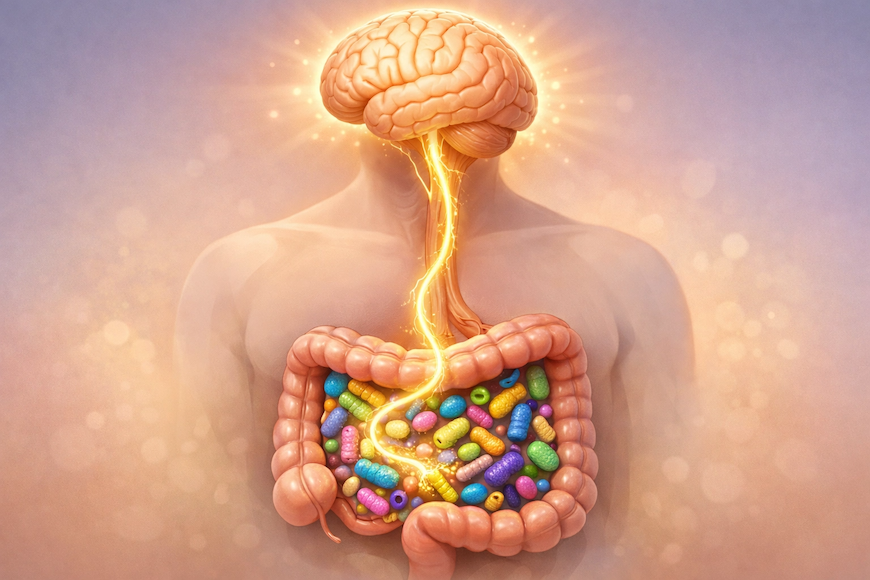
It sounds like science fiction, but your gut and brain are in a constant 24/7 group chat. This bidirectional communication is known as the Gut-Brain Axis. They communicate through three primary channels:
- The Vagus Nerve: The Neural Superhighway
The Vagus nerve is the longest nerve of the autonomic nervous system, connecting the brain stem directly to the digestive tract. Think of it as a fiber-optic cable. Research has shown that gut bacteria can send signals directly to the brain via this nerve, influencing mood, stress response, and even cognitive function.
- The Chemical Factory: Neurotransmitter Production
Did you know your gut bacteria produce about 95% of your body’s serotonin? While this serotonin doesn’t cross the blood-brain barrier directly, its precursors and the signaling it triggers in the gut have a massive impact on the brain. Furthermore, specific gut microbes produce GABA (the brain’s primary “calm down” chemical) and Dopamine, both of which are central to schizophrenia pathology.
- The Immune Shield: Controlling Inflammation
Schizophrenia is increasingly linked to “low-grade systemic inflammation.” When the gut lining becomes compromised, a condition often called “leaky gut”, inflammatory markers and toxins can leak into the bloodstream and eventually cross the blood-brain barrier. Fermented foods help seal this lining, preventing “brain fire” (neuroinflammation).
The 2026 Insight: A study published in Neuron (March 2026) identified a novel biomarker in the gut microbiome that can predict the severity of cognitive symptoms in schizophrenia patients with 89% accuracy.

Top 5 Fermented Foods for Mental Clarity
If you’re looking to support your gut-brain axis, not all fermented foods are created equal. Many store-bought versions are pasteurized, which kills the beneficial bacteria. Focus on these “Psychobiotic Powerhouses” found in the refrigerated section:
| Food | Key Strains | Why It Works for Schizophrenia |
| Kefir | Lactobacillus kefiri, S. turicensis | Contains up to 61 different strains. It’s a “broad-spectrum” probiotic that supports overall neuro-resilience. |
| Kimchi | Lactobacillus plantarum | Rich in strains that have been shown to regulate GABA levels, helping with anxiety and sensory overload. |
| Sauerkraut | L. brevis, L. sakei | High in organic acids that support the intestinal lining and reduce systemic inflammation. |
| Miso | Aspergillus oryzae | A fermented soy product that provides essential enzymes for nutrient absorption, crucial for brain health. |
| Tempeh | Rhizopus oligosporus | Acts as both a prebiotic (food for bacteria) and a probiotic, providing sustained support for the gut microbiome. |
Practical Guide: How to Incorporate Psychobiotics Safely
If you or a loved one are living with schizophrenia, jumping into a high-fermented diet too quickly can cause digestive upset. Here is a 3-step plan to do it right:
Step 1: Start Small
Begin with just one tablespoon of sauerkraut or 1/4 cup of kefir per day. Your gut microbiome is an ecosystem; you want to introduce new “residents” slowly to avoid bloating or gas.
Step 2: Focus on “Live” and “Raw”
Always check the label. If a product is “shelf-stable” (not refrigerated), it has likely been heat-treated, meaning the psychobiotics are dead. Look for the words “Live Active Cultures” or “Raw.”
Step 3: Pair with Prebiotics
Probiotics (the bacteria) need Prebiotics (fiber) to survive. Pair your fermented foods with:
- Garlic and Onions: Natural fuel for good bacteria.
- Bananas: Especially slightly green ones, which are high in resistant starch.
- Oats: A great base for a “psychobiotic bowl” topped with kefir.
The Future of Schizophrenia Care: A Holistic View
While traditional psychiatry focuses heavily on dopamine receptors, Functional Psychiatry looks at the whole person. We are entering an era where a psychiatrist might prescribe a specific probiotic strain alongside a traditional antipsychotic.
The goal isn’t just the absence of hallucinations; it’s the presence of vitality. By switching to a diet rich in fermented “live” foods, you are essentially “crowding out” the harmful microbes that fuel inflammation and cognitive decline.
Final Thoughts: A Complementary Approach
It is vital to remember that fermented foods are not a replacement for prescribed medication or therapy. Schizophrenia is a complex condition that requires professional medical oversight.
However, the science of 2026 is clear: The gut is the second brain. By nourishing your second brain, you give your first brain the best possible chance to heal, focus, and thrive.
Ready to start? Pick up a bottle of raw kefir this week and see if you notice a difference in your morning focus. Your brain and your gut will thank you.