✦
THE LIFESTYLEMINE NEWSLETTER
Simple wellness tips, healthy recipes, and
everyday inspiration delivered to your inbox.
Your Email Address
This is the part most articles about vegetarian diet benefits skip.
Cutting meat out of your diet isn’t a passive act. You don’t just take something away. You have to replace what meat was doing for your body, which is why understanding what your body actually needs from food matters before you redesign your entire diet. There are three nutrients where the replacement plan takes real attention.
Vitamin B12
This is the only one I’d call non-negotiable.
There’s no plant food on earth that reliably provides active vitamin B12. Tempeh, nori, and nutritional yeast get listed as sources, but the B12 analogues in those foods aren’t bioavailable the same way. For practical purposes, if you eat no animal products, you aren’t getting B12 from food. The NIH’s clinical fact sheet lays out the dosing detail if you want it NIH Office of Dietary Supplements, Vitamin B12.
The catch is that the body stores B12 in the liver, and those stores can last three to five years. You won’t feel the deficiency coming. By the time symptoms show up, including fatigue, numbness in the hands and feet, brain fog, and mood changes, the deficiency has often been building for years. Severe, prolonged B12 deficiency causes irreversible neurological damage.
Vegetarians who eat dairy and eggs get some B12 from those foods. Vegans need to supplement. The standard recommendation for adults who eat no animal products is 1,000 mcg of cyanocobalamin two to three times a week. B12 and iron top the list of best supplements for energy for plant-based eaters, and there’s a reason for that.
I take it on Monday, Wednesday, and Friday. Not optional.
Iron
One of the most talked-about vegetarian diet benefits is that plant-based diets tend to be lower in total iron load, which lowers iron overload risk. But the flip side is absorption.
Meat contains heme iron, absorbed at a rate of 15 to 35%. Plants contain non-heme iron, absorbed at 2 to 20% depending on the meal. This doesn’t mean vegetarians are all iron deficient. It means iron intake has to be intentional. Iron deficiency is one of the most common reasons people feel always tired on a plant-based diet without knowing why.
The practical fix is simple. Vitamin C, taken with an iron-containing meal, converts non-heme iron from its ferric (Fe3+) to its ferrous (Fe2+) form, which absorbs far more efficiently. A glass of orange juice with a lentil dish. Tomatoes in a bean stew. That single habit can more than double your non-heme iron absorption.
One more thing worth knowing: tea, coffee, and calcium-rich foods eaten within an hour of an iron-rich meal can cut absorption by up to 50%. Timing matters.
Omega-3 Fatty Acids
Plants give you ALA, a short-chain omega-3 found in flaxseeds, chia seeds, and walnuts. The body converts ALA into the long-chain forms EPA and DHA, which are the ones that actually act on inflammation, brain health, and cardiovascular tissue.
The conversion rate is the problem. The body turns roughly 5 to 10% of ALA into EPA, and less than 4% into DHA. Fatty fish supply EPA and DHA directly, no conversion needed. Take fish out of the diet and that conversion bottleneck becomes a real factor.
Vegetarians and vegans who want to hold their EPA and DHA levels need to either eat fatty fish (which settles the question for vegetarians), take algae-based omega-3 supplements (algae is where the fish get theirs in the first place), or accept that their long-chain omega-3 status will likely sit lower than an omnivore’s. Knowing about these gaps is part of understanding the vegetarian diet benefits fully, not just the headline version.
People searching for vegetarian diet benefits usually find the same three claims: better heart health, lower cancer risk, lower diabetes risk. All three hold up. Here’s where the numbers come from.
Heart disease: The EPIC-Oxford study above is the largest. The Adventist Health Study, which tracked more than 96,000 Seventh-day Adventists in North America, found vegetarians had markedly lower rates of cardiovascular mortality than non-vegetarians. Adventists as a group don’t smoke or drink, which strips out major confounders and makes the dietary signal cleaner.
Cancer: The Adventist Health Study 2 found vegetarians had a 7.6% lower overall cancer incidence than non-vegetarians. For colorectal cancer specifically, vegetarians showed a 22% lower incidence in the same cohort. The proposed mechanism involves less exposure to heme iron, nitrosamines from processed meat, and insulin-like growth factor-1 (IGF-1), which tends to run lower on plant-based diets.
Type 2 diabetes: A 2009 study in Diabetes Care (Tonstad et al., Adventist Health Study) found vegetarians had a 23.6% lower prevalence of type 2 diabetes than non-vegetarians. The protective effect held even after adjusting for BMI, which means the diet itself, not just the lower body weight typical of vegetarians, was doing some of the work.
Body weight: In the Adventist Health Study 2, mean BMI was 23.6 for vegans, 25.7 for vegetarians, 26.3 for semi-vegetarians, and 28.8 for non-vegetarians. The gradient is consistent and matches what other large cohorts have found.
These are population-level associations, not randomized controlled trials, so causation can’t be pinned down perfectly. But the consistency across multiple large studies is hard to wave away. The vegetarian diet benefits for metabolic health look real, not just correlation.
I made it in the first three weeks.
I stopped eating meat and started eating more pasta, more cheese, more bread, more crackers. Technically vegetarian. In practice not much better than before, and in some ways worse, because my protein intake dropped hard.
This is what researchers call the pseudo-vegetarian problem. The health data on vegetarian diet benefits came from people who replaced meat with legumes, whole grains, vegetables, nuts, and seeds. Not people who replaced it with cheese pizza and packaged snacks.
If you go vegetarian and don’t deliberately build your meals around plant protein, a few things happen. Protein intake drops, which reduces satiety and ramps up cravings. Fiber intake can drop too, if you’re filling the gap with refined carbs instead of legumes. And the metabolic benefits that show up in the research just won’t materialize.
The protein question gets tangled up in the combining myth. For decades people believed plant proteins had to be combined at every meal to get a complete amino acid profile. The American Dietetic Association formally cleared this up in 1994: it isn’t necessary. The body pools amino acids across the day. You don’t need rice and beans in the same sitting. You need enough protein across the day, from varied sources.
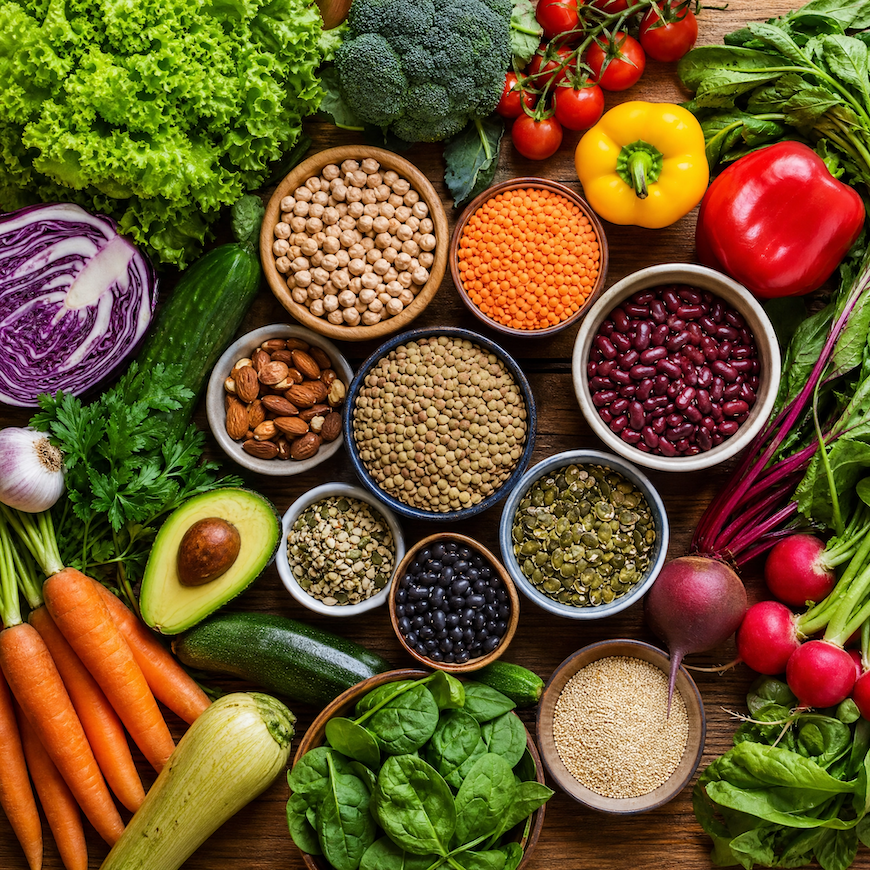
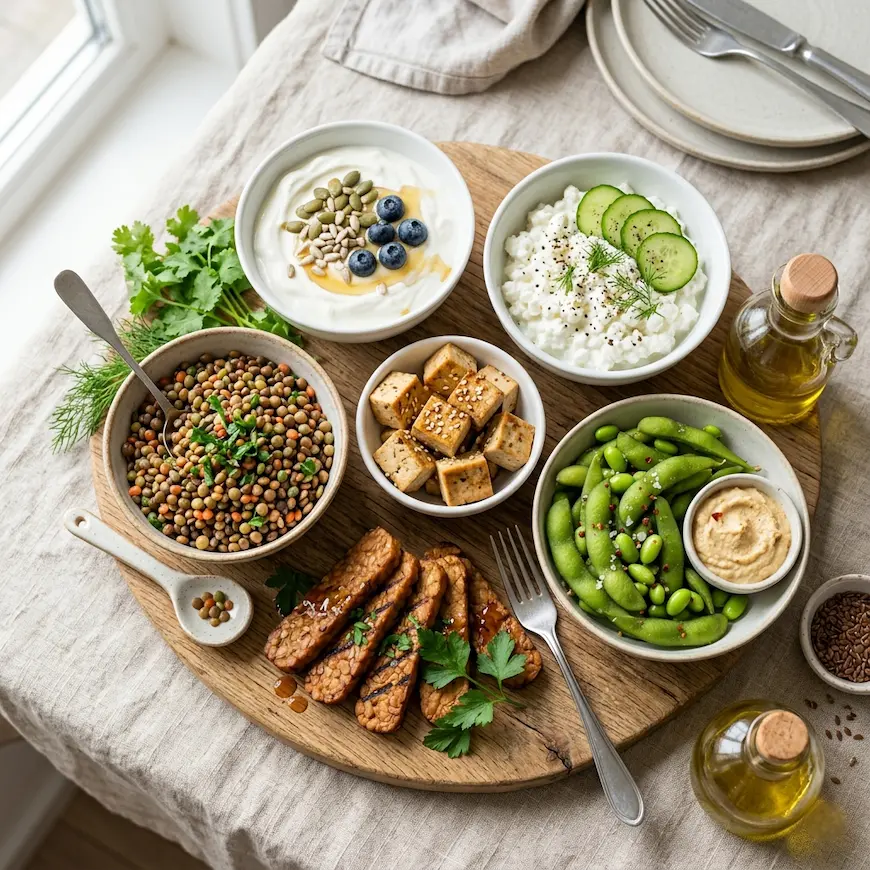
What you do need: lentils (26g protein per cooked cup), black beans (15g), chickpeas (15g), tofu (20g per cup), edamame (17g), quinoa (8g). These are the foods that make the vegetarian diet benefits real. Without them, you’re just eating fewer calories and calling it a diet. Legumes are also a good source of magnesium, so if you’re not sure where you stand, it’s worth reading up on the most common signs of magnesium deficiency .
One of the more interesting vegetarian diet benefits works without you ever noticing it.
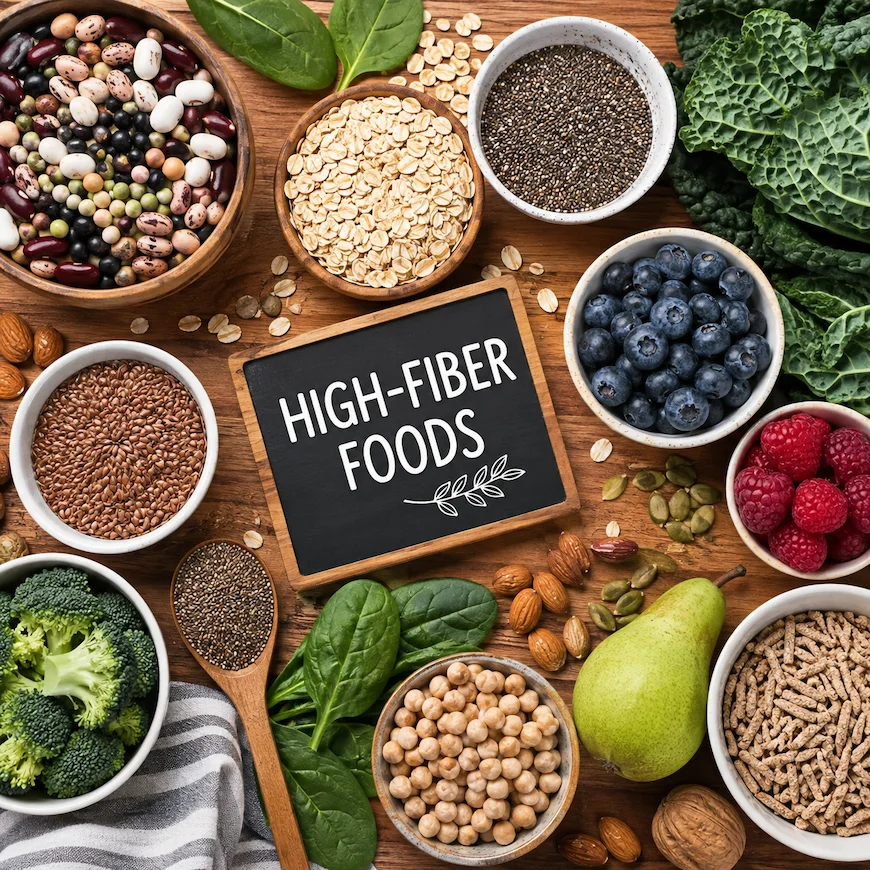
A plant-rich diet, especially one high in fiber from legumes, vegetables, and whole grains, shifts the makeup of the gut microbiome. It tends to grow populations of butyrate-producing bacteria like Faecalibacterium prausnitzii and Roseburia intestinalis.
Butyrate is a short-chain fatty acid that colonocytes, the cells lining the colon, use as their main fuel. It also signals to immune cells in the intestinal wall, dialing down inflammatory cytokine production and strengthening the epithelial barrier. A stronger barrier means less bacterial endotoxin crossing into circulation, which keeps baseline systemic inflammation lower. Plant-heavy diets are also among the best sources of anti-inflammatory foods available.
The average American eats about 14 to 15 grams of fiber a day. Recommended intake is 25 grams for women and 38 grams for men. Well-built vegetarian diets usually land at 35 to 45 grams a day. That difference shows up as measurable change in gut bacterial diversity within eight weeks of switching, according to multiple microbiome studies.
This is one of the vegetarian diet benefits with the fastest onset. The microbiome responds to dietary fiber within days, not months.
The terms get used interchangeably online, but they’re different diets with different nutritional profiles.
Vegetarians avoid meat, poultry, and seafood. They still eat dairy and eggs. So they get B12 from eggs and dairy, they avoid heme iron while keeping non-heme iron, and they get some omega-3 from eggs (especially omega-3 enriched eggs).
Vegans avoid all animal products, including dairy, eggs, and honey. Every nutritional gap in this article is bigger for vegans. The vegetarian diet benefits data applies to both groups, but vegan diets need more deliberate supplement planning to avoid deficiencies.
Lacto-ovo vegetarians, who eat dairy and eggs but no meat, sit in the middle, where most nutritional needs can be met from food with less supplementation. This is the easiest version to sustain without sliding into a deficiency.
If you’re switching from an omnivore diet, starting as a lacto-ovo vegetarian and learning the nutrition landscape before moving to vegan is a reasonable way in.
At 90 days, beyond the cholesterol, a few other things were different.
Digestion was faster and more regular. I went from bloating after almost every dinner to almost never. I think that was mostly the fiber. Gut transit time shortens a lot when fiber goes up.
Sleep was better. I have no mechanistic explanation for that, and I’m not going to invent one. Maybe lower heme iron, maybe the carbohydrate timing from legume-heavy dinners, maybe something else entirely. But it was consistent enough that I noticed.
Skin inflammation around my jawline, a low-grade issue for years, eased noticeably by week seven. Again, I can’t prove cause. The drop in saturated fat and the jump in antioxidants from vegetables are plausible contributors.
Energy in the first three weeks was rough. That’s normal. The gut microbiome is restructuring, which brings temporary bloating and unpredictable digestion. Iron absorption can dip if you don’t plan meals. And if you’re not eating enough protein, you’ll feel it in your muscles and your focus. Push through week three and the picture changes.
The vegetarian diet benefits are real. But you get them by doing the diet properly, not by removing meat and hoping for the best.
The best-documented one is lower LDL cholesterol, driven by less saturated fat and the removal of heme iron from the diet. The EPIC-Oxford study found a 32% lower rate of ischemic heart disease in vegetarians. The effect is consistent across multiple large cohort studies in different countries and populations.
Cholesterol can shift within four to six weeks of cutting saturated fat. Gut microbiome changes start within days of more fiber. Blood pressure improvements tend to land around the six to eight week mark. B12 depletion, if it's happening, won't produce symptoms for years because of those liver stores. Most people notice subjective energy and digestion changes within two to four weeks.
Yes, but it takes intention. Plant proteins are complete and sufficient when eaten in enough variety and quantity. Lentils, chickpeas, black beans, tofu, tempeh, edamame, and quinoa are all high-protein staples. The Academy of Nutrition and Dietetics states that well-planned vegetarian diets are nutritionally adequate for all stages of life, including pregnancy and athletic performance Academy of Nutrition and Dietetics position paper, Journal of the Academy of Nutrition and Dietetics , 2016.
The research doesn't clearly crown one. Both produce similar cardiovascular and metabolic benefits next to omnivore diets. Vegans tend to have slightly lower BMI and possibly lower cancer incidence, but vegans also have higher rates of B12 deficiency and omega-3 insufficiency when they don't supplement. A well-planned vegan diet and a well-planned vegetarian diet are both healthier than the average omnivore diet in the literature.
B12 deficiency is the most serious, particularly for vegans. Iron deficiency anemia is common among vegetarians and vegans who don't watch their non-heme iron sources and vitamin C pairing. Omega-3 insufficiency (specifically EPA and DHA) is another common gap. Zinc absorption also runs lower on plant-heavy diets, because phytates in whole grains and legumes bind zinc and cut absorption by up to 45%. Soaking and sprouting legumes brings the phytate content down a lot.
Reducing meat, even without cutting it entirely, produces measurable improvements in cardiovascular markers, gut health, and inflammation. This is sometimes called a "flexitarian" approach. The largest effects show up in fully vegetarian populations, but partial reductions still produce real results. Cutting red and processed meat first tends to give the biggest early improvement.
The information in this article is for educational purposes only and does not constitute medical advice. If you have existing health conditions, particularly anemia, digestive disorders, or cardiovascular disease, consult a registered dietitian or your physician before making significant dietary changes.
Mimo Karam is the founder and writer at LifestyleMine. She writes about daily habits, nutrition, sleep, and emotional wellness, turning research into practical advice for people who want to live healthier without making it complicated.