What Are the Best Anti-Inflammatory Foods?
Quick Answer: The most evidence-supported anti-inflammatory foods are: extra virgin olive oil (oleocanthal — ibuprofen-like COX inhibition), fatty fish (EPA/DHA — resolvin and protectin precursors), blueberries and tart cherries (anthocyanins — NF-κB inhibition), leafy greens (vitamin K, quercetin), turmeric with black pepper (curcumin + piperine for bioavailability), and walnuts (ALA omega-3 + polyphenols). The single most evidence-supported dietary pattern for reducing systemic inflammation is the Mediterranean diet, the 2013 PREDIMED trial (7,447 participants, 5-year follow-up) found a 30% reduction in major cardiovascular events vs low-fat diet.
Inflammation isn’t inherently bad. Acute inflammation, the redness, swelling, and heat after an injury or infection, is the immune system doing exactly what it should. The problem is chronic low-grade inflammation: a persistent, sub-clinical immune activation that runs for years, damaging blood vessel walls, promoting insulin resistance, accelerating neurodegeneration, and feeding cardiovascular disease, type 2 diabetes, cancer, and autoimmune conditions.
Diet is one of the most powerful levers on chronic inflammation, and it works in both directions (Minihane et al. 2015). What you eat directly shapes the production of pro- and anti-inflammatory signaling molecules (prostaglandins, leukotrienes, resolvins, cytokines), the makeup of the gut microbiome that sets your systemic immune tone, and oxidative stress across the body.
This guide covers the 12 anti-inflammatory foods with the strongest clinical evidence, the anti-inflammatory foods and the dietary pattern with the best trial data behind them, the pro-inflammatory foods worth cutting back, the supplements worth considering, and a practical daily meal framework.
The omega-6/omega-3 ratio: the mechanism behind chronic inflammation
Quick Answer. The omega-6/omega-3 ratio is the thread that ties the rest of this together. The Western diet provides 15 to 20 times more omega-6 than omega-3. Both compete for the same COX and LOX enzymes: omega-6 produces pro-inflammatory eicosanoids, while omega-3 produces anti-inflammatory resolvins and protectins. Every pattern of anti-inflammatory foods that lowers chronic inflammation (Mediterranean, traditional Okinawan, hunter-gatherer) ends up with a far lower omega-6/omega-3 ratio than the modern Western diet. Fixing that ratio, then building meals around anti-inflammatory foods, is the foundational move.
How the ratio got so far off: The flood of refined vegetable oils into the 20th-century food supply, soybean oil (now the most consumed fat in the US), corn oil, sunflower oil, and canola, sharply raised dietary linoleic acid (omega-6). Those oils are in nearly every processed food, fast-food item, and restaurant meal. Over the same period, omega-3 rich foods like fatty fish, grass-fed meat, and pasture-raised eggs fell relative to grain-fed alternatives. Together the two trends pushed the dietary ratio from about 4:1 to 15-20:1 across a century.
Correcting the ratio with anti-inflammatory foods:
- Reduce, to make room for anti-inflammatory foods: vegetable oils high in omega-6 (soybean, corn, sunflower, or generic “vegetable” oil); ultra-processed foods, which nearly all use high omega-6 oils; and excess conventional grain-fed meat
- Increase, leaning on anti-inflammatory foods: fatty fish 2 to 3 times a week (salmon, sardines, mackerel); extra virgin olive oil as your main cooking fat; walnuts; flaxseed; and pasture-raised eggs
The Mediterranean diet: the most evidence-supported anti-inflammatory pattern
Quick Answer. The most rigorously tested pattern of anti-inflammatory foods is the Mediterranean diet. The PREDIMED trial (Estruch et al. 2013, New England Journal of Medicine; corrected and republished in 2018) randomized 7,447 high-cardiovascular-risk participants to a Mediterranean diet plus extra virgin olive oil, a Mediterranean diet plus nuts, or a low-fat diet. It was stopped early for benefit, with the Mediterranean groups showing about a 30% relative reduction in major cardiovascular events. Secondary analyses found meaningful drops in CRP, IL-6, and other inflammatory markers in the Mediterranean groups versus control.
A note on that trial: the original 2013 paper was retracted in 2018 after randomization irregularities surfaced, then republished with reanalyzed data. The corrected version still found a significant cardiovascular benefit, and it remains one piece of a large body of evidence supporting these anti-inflammatory foods.
Mediterranean diet core principles:
| Component | Frequency | Anti-inflammatory mechanism |
|---|---|---|
| Extra virgin olive oil | Primary fat; 4+ tbsp/day | Oleocanthal (COX inhibition); oleic acid (reduces TLR4 activation) |
| Fatty fish | 2–3x/week | EPA/DHA (resolvin and protectin synthesis; anti-inflammatory LOX products) |
| Vegetables | ≥3 servings/day | Polyphenols, carotenoids, vitamin K; NF-κB and NLRP3 inhibition |
| Legumes | ≥3x/week | Fiber (fermentation produces short-chain fatty acids that suppress inflammatory cytokines) |
| Nuts (walnuts, almonds) | 1 oz/day | ALA omega-3, polyphenols, magnesium |
| Whole grains | Primary carbohydrate | Fiber; low glycemic, which reduces insulin-mediated IL-6 |
| Moderate wine | Optional (1 glass with meals) | Resveratrol (NF-κB inhibition at low doses); any alcohol excess reverses the benefit |
| Red meat | Limit to 1–2x/month | Less heme iron, nitrates, and AGEs |
This pattern of anti-inflammatory foods goes straight at the omega-6/omega-3 ratio: EVOO replaces vegetable oils, fatty fish replaces processed meat, and vegetables and legumes feed a microbiome that makes butyrate.
12 anti-inflammatory foods, ranked by evidence
Quick Answer. The 12 best anti-inflammatory foods below are ranked by the depth of human clinical evidence, not by wellness reputation. Blueberries, extra virgin olive oil, fatty fish, and leafy greens have the most robust RCT and epidemiological support. Tart cherries, turmeric (with piperine), and fermented foods have strong mechanistic plus human-trial evidence. Seaweed, black garlic, and a few others rest mostly on in vitro or animal data, and they’re labeled that way.
Tier 1 anti-inflammatory foods: strongest human clinical evidence
1. Extra virgin olive oil Extra virgin olive oil is the most evidence-backed of all anti-inflammatory foods. Oleocanthal, which is present only in high-quality EVOO and not in refined olive oil, is a natural COX-1 and COX-2 inhibitor that works much like ibuprofen. At about 50 ml a day (roughly 3.5 tbsp), the oleocanthal dose approximates a low-dose ibuprofen effect. EVOO’s oleic acid also reduces TLR4 activation, the receptor that kicks off the inflammatory cascade in response to bacterial lipopolysaccharides. PREDIMED used EVOO as its main intervention arm. Make it your primary cooking fat and use it in place of butter for sautéing. It anchors any list of anti-inflammatory foods.
2. Fatty fish (salmon, sardines, mackerel, herring) The EPA and DHA in fatty fish are the precursors to resolvins and protectins, lipid mediators that actively resolve inflammation rather than just suppressing it (Calder 2017, Biochem Soc Trans). Sardines in particular are one of the cheapest and most nutrient-dense sources: high in EPA/DHA, vitamin D, calcium from the edible bones, and B12. Our guide to stopping meat eating covers the DHA/EPA replacement strategy for anyone cutting out fish. Aim for 2 to 3 servings of these anti-inflammatory foods a week; canned sardines and mackerel hit the same EPA/DHA at a fraction of the price of fresh fish.
3. Blueberries and mixed berries Berries have the highest anthocyanin content of any common food. Anthocyanins directly inhibit NF-κB, the master switch for inflammatory gene expression, and activate Nrf2, the master switch for antioxidant enzymes. A 2010 double-blind RCT found daily blueberries significantly lowered CRP and IL-6 in obese adults. Frozen berries keep the same anthocyanin content as fresh and cost much less, which makes them budget anti-inflammatory foods. Wild blueberries, the smaller, more purple kind, carry about twice the anthocyanins of cultivated ones. Berries are among the best-studied anti-inflammatory foods.
4. Leafy greens (spinach, kale, Swiss chard, arugula) The vitamin K1 in leafy greens directly inhibits NF-κB signaling. Quercetin, especially high in kale, blocks histamine release and the LOX and COX pathways. Lutein and zeaxanthin in dark greens cut inflammatory oxidative stress in the retina, brain, and cardiovascular system. There’s also a nutrient angle: the folate, magnesium, and potassium in greens address deficiencies that independently raise inflammatory tone, since low magnesium elevates CRP. Greens are nutrient-dense anti-inflammatory foods on every count.
5. Walnuts The only nut with meaningful ALA omega-3 (2.5 g per ounce). Walnuts also carry ellagitannins, which gut bacteria convert to urolithins, potent anti-inflammatory metabolites, plus polyphenols and magnesium. Several RCTs show that 1 to 1.5 oz of walnuts a day lowers CRP, IL-6, and oxidized LDL. The 2018 WAHA trial (708 older adults, 2-year follow-up) found walnut supplementation significantly reduced IL-6 and other inflammatory markers versus a control diet. Walnuts rank high among nut-based anti-inflammatory foods.
6. Tart cherries Tart cherries (the Montmorency variety) have the highest anthocyanin concentration of any fruit. Multiple RCTs in athletes show clear reductions in post-exercise muscle pain and CRP. A 2012 trial found tart cherry juice lowered uric acid, the inflammatory trigger in gout, with effectiveness comparable to low-dose allopurinol in some patients. An 8 oz glass of tart cherry juice before bed doubles as a sleep aid, since tart cherries are one of the few food sources of melatonin. Concentrated tart cherry capsules give the same effect, one of the few anti-inflammatory foods that doubles as a sleep aid, without the sugar load of commercial juice. Among fruit, they’re standout anti-inflammatory foods.
Tier 2 anti-inflammatory foods: strong evidence (mechanistic plus human trials)
7. Turmeric root (with black pepper) Curcumin inhibits NF-κB, COX-2, and 5-LOX at once, a broader reach than most food-derived compounds. The catch is absorption: curcumin from food or plain supplements absorbs at under 1% without piperine (black pepper extract). Add black pepper to any turmeric preparation, since 20 mg of piperine raises curcumin absorption by around 2,000%. Our comprehensive guide to turmeric and ginger covers the bioavailability science, clinical dosing, and which supplement forms are worth buying over plain turmeric powder. By mechanism, turmeric is one of the most potent anti-inflammatory foods.
8. Fermented foods (yogurt, kefir, kimchi, sauerkraut, tempeh) A 2021 Stanford randomized trial (Sonnenburg et al.) found that a high-fermented-food diet significantly increased microbiome diversity and lowered 19 inflammatory proteins, including IL-17A, a cytokine tied to autoimmune conditions. A high-fiber diet group in the same trial didn’t show the effect, which suggests fermented foods do something beyond fiber alone. The mechanism: they shift the gut toward short-chain-fatty-acid-producing bacteria, reduce LPS translocation across the gut barrier, and supply bacterial metabolites that directly dampen inflammatory signaling. Fermented anti-inflammatory foods work largely through the microbiome.
9. Green tea EGCG (epigallocatechin gallate) is the most studied polyphenol in green tea. It inhibits NF-κB, lowers TNF-α, and activates autophagy, the cellular cleanup that clears damaged, inflammatory debris. A 2017 meta-analysis of 9 RCTs found green tea significantly reduced CRP and IL-6. The L-theanine in green tea also lowers cortisol, which matters because chronically high cortisol promotes systemic inflammation. Two to four cups of steeped green tea a day reaches meaningful EGCG levels, and matcha (ground whole leaf) delivers 3 to 10 times the EGCG of steeped tea. As beverages go, green tea is among the top anti-inflammatory foods.
10. Ginger Gingerols and shogaols, the active compounds in fresh and dried ginger, inhibit both the COX and LOX pathways, the same dual target some pharmaceutical anti-inflammatories aim at. That LOX inhibition produces arachidonic-acid-pathway effects most dietary compounds don’t reach. Several RCTs show ginger lowers CRP and post-exercise muscle soreness, putting it among the better-studied anti-inflammatory foods. Paired with turmeric (covered in our turmeric and ginger guide), the two give complementary COX, LOX, and NF-κB inhibition. Ginger and turmeric are complementary anti-inflammatory foods.
11. Dark chocolate (70%+ cacao) The flavanols in cacao, especially epicatechin, inhibit NF-κB and raise nitric oxide availability, which reduces vascular inflammation and improves endothelial function. A 2017 Frontiers in Nutrition meta-analysis found dark chocolate significantly reduced CRP and improved flow-mediated dilation. The cutoff matters: 70%+ cacao ensures meaningful flavanol content, while milk chocolate (whose dairy binds polyphenols and cuts absorption) and lower-cacao chocolate don’t deliver the same effect. The evidence-supported portion is 1 to 1.5 oz of 70 to 85% dark chocolate a day. At that cacao level, it’s one of the rare dessert-like anti-inflammatory foods.
12. Beets (betalains) Betanin, the red pigment, and other betalains in beets inhibit COX-2 and suppress NF-κB. Beet nitrates convert to nitric oxide, improving vascular endothelial function and lowering CRP. A 2014 RCT found beet juice concentrate significantly reduced IL-6 and TNF-α in older adults over 6 weeks. Betalain content is highest in raw beets and drops moderately with roasting. Cold-pressed beet juice concentrate holds onto a high betalain content if it’s made without high heat. Beets are underrated anti-inflammatory foods.
Pro-inflammatory foods to reduce: the other half of the equation
Quick Answer. Eating anti-inflammatory foods is as much about what you cut as what you add. The three most pro-inflammatory components: refined vegetable oils high in omega-6 (soybean, corn, sunflower, the main driver of the omega-6/omega-3 imbalance); ultra-processed foods (refined carbs, additives, and omega-6 oils together activate TLR4 and the NLRP3 inflammasome); and added sugar and high-fructose corn syrup (which raise IL-6, CRP, uric acid, and advanced glycation end products). Cutting those three does more than piling anti-inflammatory foods on top of an otherwise pro-inflammatory diet ever will.
| Pro-inflammatory food | Primary mechanism | What to replace it with |
|---|---|---|
| Refined vegetable oils (soybean, corn, sunflower) | Extreme omega-6 excess feeding arachidonic acid and eicosanoids | Extra virgin olive oil, avocado oil, small amounts of butter |
| Ultra-processed foods | TLR4 activation; gut dysbiosis; AGEs; trans fat remnants | Whole foods, home-cooked |
| Added sugar / HFCS | IL-6 elevation; AGEs; uric acid; insulin resistance driving adipose IL-6 | Whole fruit; small amounts of honey or maple syrup |
| Processed red meat (hot dogs, deli meat, sausage) | Nitrates, heme iron, high saturated fat, AGEs | Unprocessed lean meat; fatty fish; legumes |
| Refined grains (white bread, white rice, pastries) | High glycemic, spiking insulin and adipose TNF-α | Whole grains; legumes; root vegetables |
| Alcohol (heavy use) | Direct gut barrier damage; LPS translocation; liver inflammation | Moderate at most; polyphenol sources like pomegranate juice |
Anti-inflammatory foods for arthritis: the evidence specific to joint pain
Quick Answer. For arthritis, the best evidence among anti-inflammatory foods sits with omega-3 fatty acids (multiple RA trials show fewer tender and swollen joints and lower NSAID use); the Mediterranean diet (significant drops in RA disease-activity scores); curcumin (comparable to NSAIDs for OA pain in several trials); and tart cherry (uric acid reduction for gout). For OA specifically, losing weight through better diet reduces joint load, since each pound lost takes about four pounds off the knee across a step.
Rheumatoid arthritis (RA): A 2019 systematic review of dietary interventions in RA found the strongest evidence for the Mediterranean diet (lower DAS-28 disease-activity scores), omega-3 fatty acids (less joint tenderness and swelling, lower NSAID requirements, reduced IL-1β and TNF-α), and cutting processed and refined foods (lower CRP). These anti-inflammatory foods work alongside DMARD therapy rather than replacing it, but they consistently improve outcomes on top of medical treatment. Our osteoarthritis guide covers where OA and RA dietary advice overlap.
Osteoarthritis (OA): Curcumin with piperine at 500 to 1,500 mg a day matches 1,200 mg of ibuprofen for pain reduction in multiple RCTs, which makes it the most evidence-supported of the anti-inflammatory foods and supplements for OA pain, with far fewer GI side effects. OA is driven more by mechanical wear than systemic inflammation, but systemic cytokines (IL-1β, TNF-α, and IL-6 from adipose tissue) amplify the pain and speed cartilage breakdown. Lowering that inflammatory burden through anti-inflammatory foods reduces the amplification.
Gout: Gout is an inflammatory arthritis triggered by uric acid crystal deposition. Tart cherry lowers serum urate in multiple trials. Alcohol, especially beer and spirits, sharply raises uric acid, so cutting it is one of the highest-impact dietary moves for gout. Organ meats, anchovies, herring, mussels, and high-fructose corn syrup are the highest-purine foods and the most direct flare triggers. Eating for gout means avoiding those high-purine foods specifically, alongside the broader set of anti-inflammatory foods.
Anti-inflammatory supplements: what has evidence beyond food
Quick Answer. The highest-evidence anti-inflammatory supplements are curcumin with piperine (NF-κB, COX-2, and LOX inhibition; OA pain RCTs); omega-3 fish oil EPA/DHA (resolvin and protectin synthesis; RA and cardiovascular trials); magnesium glycinate (a cofactor for 300+ enzymatic reactions, and deficiency directly raises CRP); and vitamin D (immunomodulatory, with deficiency linked to higher inflammatory markers and autoimmune risk). These four have the most consistent human-trial evidence for lowering inflammatory markers. Our full supplement guide covers forms, doses, and drug interactions for each.
Curcumin + BioPerine: 500 to 1,500 mg curcuminoids plus 5 to 20 mg piperine daily. Look for Meriva, Longvida, or “curcumin with BioPerine” on the label, since plain curcumin without a bioavailability enhancer absorbs at under 1%. It interacts with blood thinners, so check with your physician if you’re on anticoagulants.
Omega-3 fish oil: 2 to 4 g EPA+DHA daily for an anti-inflammatory effect, above cardiovascular maintenance doses. The triglyceride form (as found in fish) absorbs better than the ethyl ester form. Krill oil supplies EPA/DHA in phospholipid form with a little astaxanthin. High-dose fish oil can mildly increase bleeding time, which matters with anticoagulants.
Magnesium glycinate: 200 to 400 mg elemental magnesium at night. Magnesium deficiency raises CRP on its own. The glycinate form is better for absorption and tolerance than oxide.
Vitamin D3: 1,000 to 4,000 IU daily, dosed to your serum 25-OH-D level, with a target of 40 to 60 ng/mL. Pair it with K2 (MK-7) to steer calcium into bone. Deficiency is extremely common and strongly tracks with higher inflammatory markers, autoimmune disease risk, and cardiovascular events.
Anti-inflammatory meal plan: what a full day looks like
Quick Answer. A good plan built on anti-inflammatory foods doesn’t need exotic ingredients or pricey supplements. The Mediterranean pattern captures most of the benefit through anti-inflammatory foods like olive oil, fatty fish, legumes, vegetables, and whole grains. The daily target: 3 to 5 servings of vegetables, 1 to 2 servings of berries or fruit, a serving of fatty fish or legumes as the main protein, 3 to 4 tablespoons of EVOO, an ounce of walnuts or almonds, and whole grains as the carbohydrate base.
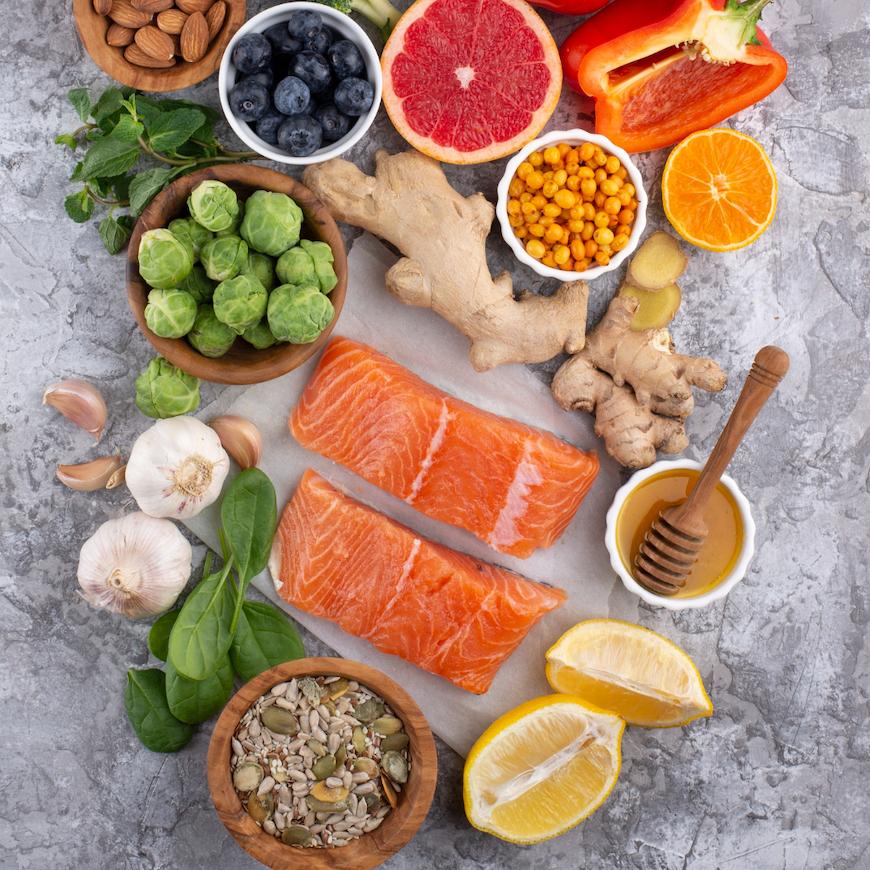
A sample day of anti-inflammatory foods:Breakfast:
- Overnight oats with frozen wild blueberries, 1 oz walnuts, 1 tsp cinnamon, and a drizzle of honey
- Green tea or matcha (1 to 2 cups)
- Optional: 1 tbsp ground flaxseed stirred in
Lunch:
- Large salad: arugula, spinach, purple cabbage, beets (roasted or grated), cherry tomatoes, and 1/4 avocado
- Dressing: 2 tbsp extra virgin olive oil, lemon juice, garlic, turmeric, and black pepper
- 1 can sardines in olive oil, drained and added to the salad, or 1 cup tempeh
Dinner:
- Baked salmon with roasted garlic and fresh ginger
- Steamed broccoli with an EVOO drizzle and lemon
- Farro or quinoa (or roasted sweet potato instead)
- 1 to 2 squares of 85% dark chocolate after dinner
Snacks:
- Tart cherry juice (4 oz concentrate in water) mid-afternoon
- A small bowl of mixed berries with 1 to 2 tbsp kefir
- 1 oz mixed nuts (walnuts, almonds, Brazil nuts)
What this day of anti-inflammatory foods delivers:
- Omega-3/omega-6 ratio: much improved over a standard Western diet
- Oleocanthal: about 50 ml EVOO across cooking and dressing
- Anthocyanins: blueberries, purple cabbage, and tart cherry
- EPA/DHA: salmon (2 to 3 g combined) plus sardines
- Curcumin: turmeric in the dressing, with black pepper, which is non-negotiable
- Fiber: 35 to 40 g, which feeds a butyrate-producing microbiome
- Polyphenols: green tea, dark chocolate, walnuts, and olive oil
Frequently Askd Questions: anti-inflammatory foods
Is dairy pro-inflammatory or anti-inflammatory?
It depends on the type, and the evidence is mixed. Fermented dairy like yogurt and kefir consistently tracks with lower inflammatory markers, likely from the probiotic and bioactive peptide content. Full-fat dairy looks neutral or slightly anti-inflammatory in several large studies, against the saturated fat hypothesis. Ultra-processed dairy like processed cheese and ice cream tracks with higher inflammatory markers. For most people: yogurt and kefir act as anti-inflammatory foods, moderate full-fat dairy is neutral, and highly processed dairy is worth limiting.
Does intermittent fasting reduce inflammation?
Yes, through a few mechanisms: cutting calories reduces the adipose tissue that pumps out inflammatory cytokines, fasting activates autophagy that clears pro-inflammatory damaged proteins, and fasting-induced ketosis has direct anti-inflammatory effects via the NLRP3 inflammasome. A 2019 study found Ramadan fasting significantly lowered IL-6 and CRP in healthy adults. The benefits add to anti-inflammatory foods rather than replacing them.
Can an anti-inflammatory diet help with skin conditions?
Yes. Acne, eczema, and psoriasis all have inflammatory components that respond to anti-inflammatory foods. For acne, high-glycemic foods worsen insulin-driven sebum and androgen activity, dairy (especially low-fat) may worsen it via IGF-1, and omega-3 plus low-glycemic eating consistently improves acne in RCTs. For psoriasis and eczema, omega-3 fatty acids, the Mediterranean diet, and cutting processed foods all show benefit in trials. These are adjuncts to dermatological treatment, not replacements.
What is the fastest way to reduce inflammation?
In the short term (24 to 72 hours): omega-3 supplementation (2 to 4 g EPA/DHA lowers inflammatory markers within days), cutting ultra-processed foods and alcohol (gut barrier inflammation starts resolving within 24 hours of removing the main triggers), adding a high-dose curcumin-with-BioPerine supplement, and eating more fatty fish. For sustained reduction, consistent adherence to a Mediterranean pattern over 4 to 12 weeks is the highest-evidence strategy. Nothing beats consistent anti-inflammatory foods as a long-term approach. Consistency over many months, not any single meal, is what truly moves inflammatory markers.
Should I take anti-inflammatory supplements or just eat the foods?
Food first is almost always the right call, since whole anti-inflammatory foods supply thousands of synergistic phytochemicals that isolated supplements can't replicate. Among anti-inflammatory foods, extra virgin olive oil gives you oleocanthal, oleic acid, and polyphenols in a matrix that amplifies their combined effect. That said, a few nutrients are hard to get from anti-inflammatory foods alone: omega-3 at therapeutic doses (2 to 4 g EPA/DHA) means eating fatty fish daily, curcumin at anti-inflammatory doses needs supplementation with piperine, and adequate vitamin D is nearly impossible through diet in northern latitudes. Those four (omega-3, curcumin plus piperine, magnesium, and vitamin D) are the supplements that complement a diet of anti-inflammatory foods most meaningfully.
This article is for informational purposes only. Anti-inflammatory foods are reasonable lifestyle support for general wellness but do not replace medical treatment for diagnosed inflammatory conditions (rheumatoid arthritis, Crohn’s disease, cardiovascular disease, cancer). Curcumin and fish oil can interact with blood-thinning medications, so consult your physician before supplementing if you take anticoagulants. If you have kidney disease, discuss dietary changes with a nephrologist before making significant alterations.

Mimo Karam is the founder and writer at LifestyleMine. She writes about daily habits, nutrition, sleep, and emotional wellness, turning research into practical advice for people who want to live healthier without making it complicated.