✦
THE LIFESTYLEMINE NEWSLETTER
Simple wellness tips, healthy recipes, and
everyday inspiration delivered to your inbox.
Your Email Address
Curcumin, the polyphenol behind turmeric’s yellow color, works through several anti-inflammatory mechanisms at once:
NF-κB inhibition: NF-κB is the master switch that turns on genes for pro-inflammatory cytokines (IL-1β, IL-6, TNF-α). Curcumin blocks its activation. Some DMARDs used in rheumatoid arthritis hit the same pathway, though curcumin does it far more weakly.
COX-2 suppression: COX-2 produces prostaglandins that drive pain and inflammation. Ibuprofen and naproxen block COX-2 directly. Curcumin instead suppresses COX-2 expression at the transcriptional level, which reaches the same endpoint by a different route.
Antioxidant activity: Curcumin neutralizes reactive oxygen species directly and also raises the body’s own antioxidant enzymes (SOD, catalase, GSH-Px). Working on both fronts, scavenging and enzyme induction, gives it broader reach than most dietary antioxidants.
Clinical evidence for osteoarthritis: A 2014 RCT by Panahi and colleagues compared 1,500mg/day curcumin against 1,200mg/day ibuprofen in 40 knee OA patients. Pain relief was about equal at four weeks, and the curcumin group had far fewer GI side effects. A 2019 meta-analysis of eight trials backed this up, finding meaningful pain and function gains. That’s why curcumin leads our osteoarthritis pain relief article as the best-evidenced natural option for joint pain.
Cognitive and brain effects: Curcumin crosses the blood-brain barrier, and in animal studies it raises BDNF (brain-derived neurotrophic factor), a protein that neurons need to grow and survive. The human evidence is early but encouraging. Small trials show better attention and working memory in healthy adults. Curcumin’s anti-inflammatory action in the brain may matter for the neuroinflammation theory of Alzheimer’s, though no human trial has shown it prevents or treats the disease. Taken together, these are the clearest ways turmeric and ginger benefit the body at a cellular level.
The bioavailability problem: why most people get nothing from turmeric
Quick Answer: Plain curcumin absorbs at under 1%, so nearly all of it passes straight through the gut. Piperine, the active compound in black pepper, raised curcumin bioavailability by up to 2,000% in the landmark Shoba 1998 study . Eating it with fat helps too. Without one of these tricks, a 500mg curcumin capsule may deliver under 5mg to your bloodstream, which is essentially nothing.
This is the single most important practical fact about taking turmeric for inflammation, and almost nobody emphasizes it enough.In that study, subjects took either 2g curcumin alone or 2g curcumin with 20mg piperine. Serum curcumin ran 20 times higher in the piperine group, a 2,000% jump in bioavailability from 20mg of something that costs almost nothing. Piperine works by blocking intestinal glucuronidation, the process that deactivates curcumin in the gut wall, and by slowing transit so curcumin has more time to cross into the blood.
Strategy
Absorption increase
Practical application
Piperine (BioPerine)
~2,000%
5–20mg with each dose; buy curcumin with BioPerine
Phospholipid complex (Meriva)
~29x over standard curcumin
Meriva-branded products
Lipid-based delivery (fat)
~7–8x
Take with olive oil, nut butter, or avocado
Nanoparticle formulations
Variable (high)
Longvida-branded products
Micronized + cyclodextrin
Variable
Cavacurmin-branded products
Bottom line for choosing a supplement: The label “curcumin 500mg” tells you nothing on its own. Look for “curcumin with BioPerine,” “Meriva phytosome,” “Longvida optimized curcumin,” or “95% curcuminoids plus piperine.” Plain turmeric root powder in a daily shot delivers very little curcumin to your bloodstream. It still does some good locally in the gut lining, but without an absorption enhancer the systemic effect is negligible. Get this part right, and the ways turmeric and ginger benefit you stop being theoretical.
Quick Answer: Ginger’s strongest evidence is for nausea, in three settings: pregnancy, chemotherapy, and post-surgery. 6-gingerol, the main active compound in fresh ginger, and 6-shogaol, which forms when ginger is dried or heated, both block 5-HT3 and NK1 receptors, the same targets some prescription antiemetics hit. Ginger also has solid anti-inflammatory, blood sugar, and digestive effects backed by RCTs.
Nausea: This is ginger’s strongest suit. A 2016 systematic review by Lete and Allué in Integrative Medicine Insights pulled together 12 trials and found ginger effective for nausea in pregnancy, during chemotherapy, and after surgery. The evidence-based dose is 250mg of powdered ginger four times a day, 1g total. It works by blocking the serotonin 5-HT3 receptors in the gut wall that set off the nausea reflex, the same receptor ondansetron (Zofran) targets. Ginger’s effect is weaker than the drug but genuinely useful at the right dose, with no meaningful side effects.
Digestive motility: Ginger speeds up gastric emptying, the handoff of food from the stomach to the small intestine. That’s why it helps with bloating and that heavy, sluggish feeling after a meal. A 2011 RCT found 1.2g of ginger moved food out of the stomach faster than placebo. It does the opposite of what Ozempic does, since GLP-1 drugs slow gastric emptying, so ginger can offset some of that slowdown. This is one of the faster ways turmeric and ginger benefit everyday digestion.
Blood sugar: Several RCTs have looked at ginger and blood glucose. A 2015 meta-analysis by Khandouzi and colleagues found that 2g/day of ginger lowered fasting glucose by roughly 12 mg/dL and HbA1c by 0.67% in people with type 2 diabetes. The mechanism runs through GLUT4 and insulin sensitization via AMPK. It won’t manage diabetes on its own, but it’s a worthwhile addition to a diet. It’s a small but real way turmeric and ginger benefit metabolic health.
Anti-inflammatory: Gingerols block both COX and LOX pathways, including 5-lipoxygenase, so they hit two inflammatory cascades where aspirin and ibuprofen only touch COX. A 2001 trial by Altman and Marcussen found ginger extract beat placebo for knee OA pain, though the effect was smaller than in curcumin studies. The two pair well in an anti-inflammatory eating approach , another way turmeric and ginger benefit people managing joint inflammation.
Gingerol vs shogaol: Fresh ginger is highest in 6-gingerol. Drying or heating it converts gingerol to shogaol, which is about 10 times more potent by weight but acts somewhat differently. So dried ginger powder in a shot or capsule gives you a different compound than fresh ginger. Both are useful, just not interchangeable. Either form still lets turmeric and ginger benefit you, through slightly different compounds.
Quick Answer: Curcumin’s anti-inflammatory evidence is strongest for osteoarthritis (several positive RCTs), inflammatory bowel disease (positive trials for ulcerative colitis maintenance), and metabolic syndrome (lower CRP, less LDL oxidation). Rheumatoid arthritis evidence looks promising but rests on smaller trials. For “general inflammation” with no specific diagnosis, the picture is fuzzier, though biomarker reductions show up across multiple studies.
Osteoarthritis: The strongest evidence, across multiple RCTs. It’s the area where turmeric and ginger benefit joint pain most reliably. See the section above and the fuller breakdown in our guide to relieving osteoarthritis pain .
Inflammatory bowel disease: Several trials have tested curcumin as maintenance therapy for quiescent ulcerative colitis. A 2006 RCT found that 2g/day of curcumin alongside standard therapy (sulfasalazine or mesalamine) cut relapse rates compared with placebo plus standard therapy at six months. It’s an add-on to standard care, not a replacement for it.
Metabolic syndrome: Trials in people with metabolic syndrome show curcumin lowering CRP, LDL oxidation, and blood glucose. A 2019 meta-analysis by Tabrizi and colleagues found a significant drop in CRP across 15 trials, another setting where turmeric and ginger benefit people at cardiometabolic risk. That’s relevant for anyone working through a weight management plan, like the one in our weight loss guide .
Cardiovascular: In some trials curcumin improves endothelial function (measured by flow-mediated dilation) about as much as aerobic exercise does. It seems to work by calming vascular inflammation and freeing up more nitric oxide. The evidence is moderate, and more consistent in people with metabolic syndrome than in healthy ones. Even here, the ways turmeric and ginger benefit the heart look promising rather than proven.
Quick Answer: The turmeric supplement market is huge and uneven. Four things to check: a bioavailability-enhanced form (BioPerine, Meriva, or Longvida rather than plain curcumin); curcuminoid content given as a percentage (look for 95%); third-party testing (USP, NSF, or ConsumerLab); and a real dose (500–1,500mg curcuminoids a day for a therapeutic effect). Skip plain “turmeric root powder” capsules with no bioavailability data, because they deliver almost no curcumin to your bloodstream.
This category is worth slowing down on, because product quality varies more here than in almost any other supplement aisle. Buy well and you get the turmeric and ginger benefit the research describes; buy badly and you get colored starch.What to look for:
Form: Labels like “curcumin phytosome (Meriva),” “Longvida optimized curcumin,” or “curcumin C3 complex with BioPerine” point to enhanced formulations.Curcuminoid percentage: “95% curcuminoids” means 95% of the extract is active compounds (curcumin, demethoxycurcumin, bisdemethoxycurcumin).BioPerine amount: 5–20mg per dose is the effective range.Dose: 500–1,000mg curcuminoids for general anti-inflammatory use, 1,500mg to match clinical arthritis trials.Third-party certification: USP Verified, NSF Certified for Sport, or ConsumerLab approval means the label is accurate.
What to avoid:
“Turmeric 500mg” with no curcuminoid percentage. It may be mostly starch.
Products with no piperine or other absorption help. You’re wasting your money.
Very cheap products, like $8 for 180 capsules. Good curcumin and proper testing cost money, so the bargain bottles are almost never well formulated.
“Proprietary blend” labels that hide how much of each ingredient you’re getting.
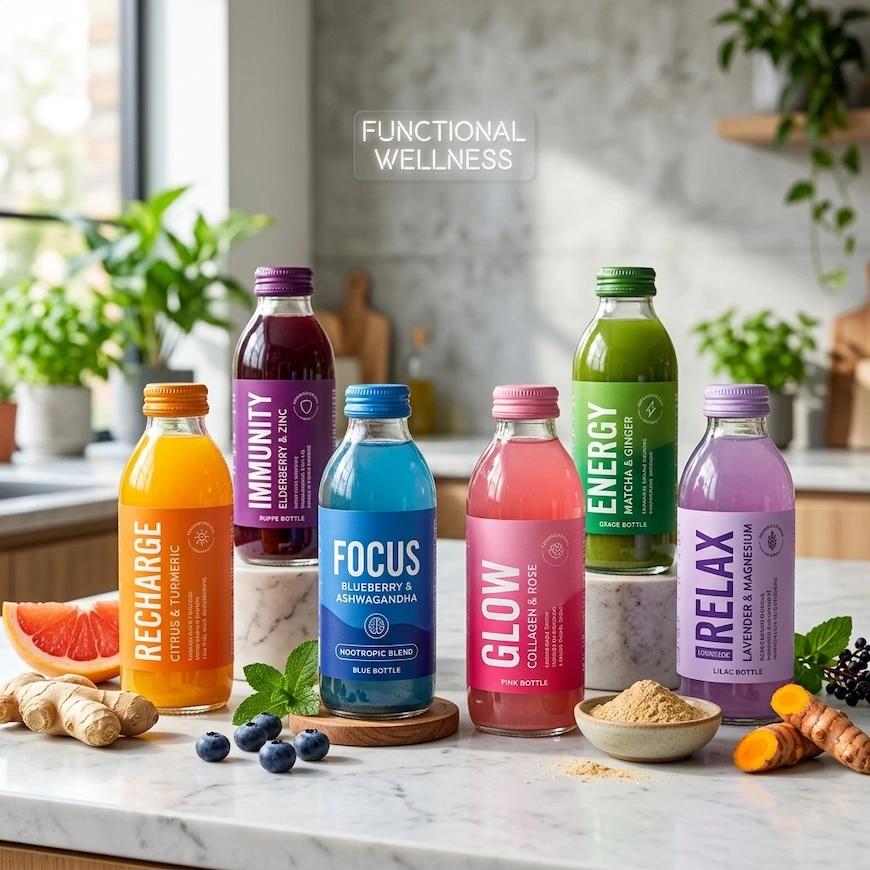
Liquid shots vs supplements: Bottled turmeric ginger shots (Rebbl, Suja, Pressed Juicery) use fresh-pressed root, usually 1–2 tsp of turmeric per shot, so you get real curcumin plus the other co-factors in the whole root, but no piperine. They beat most other drinks on the shelf, yet they still deliver less curcumin to your blood than a well-built supplement with BioPerine. The recipe below fixes that by always adding black pepper. Either way, the turmeric and ginger benefit you get comes down to absorption.
Quick Answer: The trick to a turmeric ginger shot that does something is pairing it with both black pepper (piperine, for curcumin absorption) and a little fat (olive or coconut oil, since curcumin is fat-soluble). Those two additions turn a pleasant wellness drink into one your body can actually absorb.
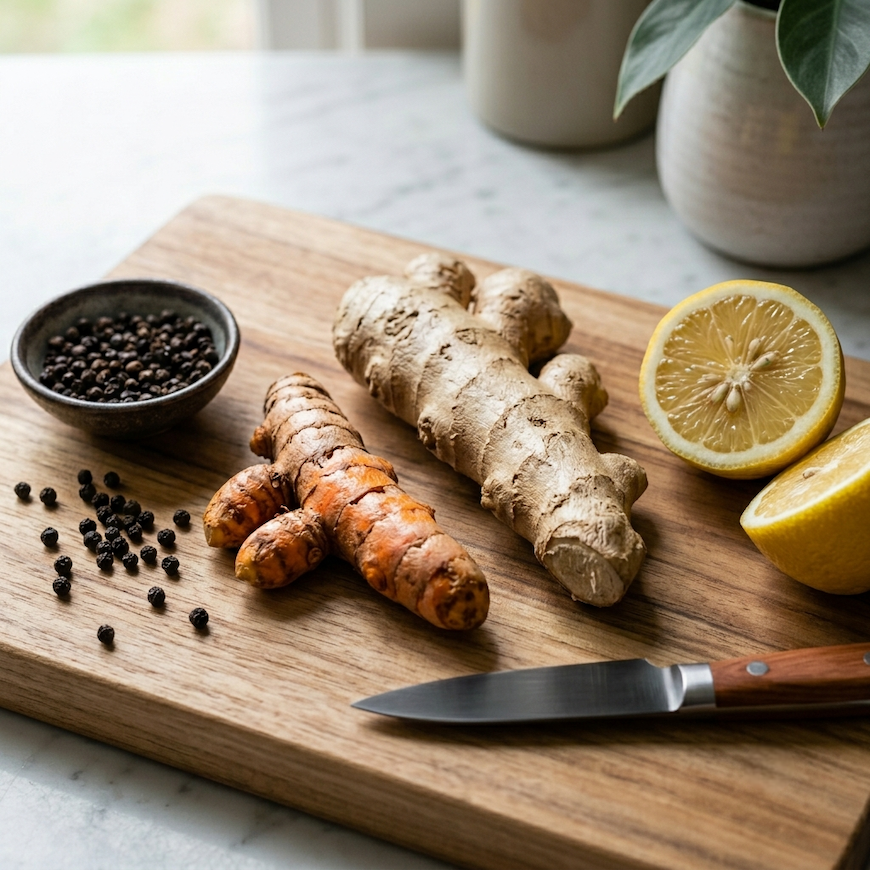
1-inch fresh turmeric root (or 1 tsp turmeric powder with 95% curcuminoids)
1-inch fresh ginger root (or ½ tsp dried ginger powder)
Juice of ½ lemon
¼ tsp black pepper (non-negotiable for curcumin absorption)
½ tsp cold-pressed extra virgin olive oil or coconut oil (fat solubilizes curcumin)
¼ cup cold water or cold-pressed apple juice
1 tsp raw honey (optional, adds antibacterial properties and palatability)
Pinch of cayenne (optional, adds heat and stimulates circulation)
Peel the turmeric and ginger. Juice both through a cold-press juicer, or blend with the water and strain through a fine mesh strainer.
Combine the strained juice with the lemon juice, olive oil, black pepper, and honey in a small jar.
Shake hard for 30 seconds so the oil and water emulsify, or add a tiny pinch of lecithin to help them blend.
Drink it right away. The oil separates if it sits.
Best time to take: First thing in the morning, or with a meal that has some fat in it. The lemon adds vitamin C, which helps. Ginger on an empty stomach is fine for most people, but if you have GERD it can sting a little, so take it with a small meal instead.
Storage: Fresh shots fade fast, so make them daily or keep at most a one-day batch. Curcumin is light-sensitive, so use a dark jar. Done daily, this is the easiest way to let turmeric and ginger benefit you without much thought.
Quick Answer: At food doses, turmeric and ginger are safe for most adults. At supplement doses (curcumin 500–1,500mg/day), watch three things: a blood-thinning interaction with anticoagulants, extra bile and gallbladder stimulation at high doses, and reduced iron absorption. Ginger affects the same clotting pathways. Both are considered safe in pregnancy at food amounts, but medicinal doses in pregnancy need a doctor’s sign-off.
Blood thinning: Both curcumin and ginger reduce platelet aggregation. At food doses that doesn’t matter much. At supplement doses, in someone already taking warfarin, aspirin, clopidogrel, or another anticoagulant, the effects stack and can raise bleeding risk. If you’re on a blood thinner, talk to your prescribing doctor before starting curcumin, since your INR monitoring may need adjusting.
Gallstones: Curcumin triggers bile secretion and gallbladder contraction. That’s helpful for preventing bile stasis, which can lead to stones, but it’s a problem if you already have gallstones and get biliary colic. If your gallstones are symptomatic, check with a gastroenterologist before taking high-dose curcumin. Our gallstones guide goes through the bile mechanisms in detail.
Iron absorption: Turmeric can bind iron and cut non-heme iron absorption when you take it with iron-rich meals. If you have iron-deficiency anemia or borderline iron stores, take turmeric supplements at a different time from those meals or your iron pills.
Other drug interactions: Curcumin may inhibit cytochrome P450 enzymes (CYP3A4, CYP1A2) that break down many medications, which can shift their blood levels. If you take several prescriptions, run high-dose curcumin past a pharmacist first. Cleared by your doctor, turmeric and ginger benefit most people safely.
Together, on both practical and biological grounds. Both block NF-κB and COX, so you get a combined anti-inflammatory effect through slightly different routes, and ginger's 5-LOX inhibition covers a pathway curcumin barely touches. Putting them in one shot, smoothie, or capsule also makes the daily habit easier to keep. Human evidence for the combination specifically is thin, but there's no reason to separate them and good reason to pair them. This is the simplest way most people let turmeric and ginger benefit their routine without overthinking it.
In most osteoarthritis and inflammation RCTs, curcumin produces clear changes at four to eight weeks of consistent use. A 2019 meta-analysis found significant OA pain improvement at both the four- and eight-week marks. Ginger acts faster on gastric motility, often within days. For markers like CRP, studies show measurable drops at four to eight weeks. Within the therapeutic range, consistency beats dose, so plan on at least 6–8 weeks of daily 500–1,000mg curcuminoids with piperine before you judge it. Stick with it, and turmeric and ginger benefit inflammation on a timescale of weeks, not days.
At very high doses, above about 8,000mg of curcuminoids a day, GI side effects climb. The no-observed-adverse-effect level in human trials sits around 8g/day. Standard doses of 500–1,500mg/day are well under any toxicity threshold and have held up as safe in trials lasting up to three months. At normal doses the real concerns are drug interactions and the specific conditions above (blood thinners, gallstones, iron), not toxicity itself.
Only indirectly. Its anti-inflammatory and insulin-sensitizing effects may support metabolic health, and since visceral fat pumps out inflammatory cytokines, lowering inflammation can improve insulin sensitivity. One meta-analysis linked curcumin to modest drops in BMI and waist circumference in adults with overweight or obesity. That's metabolic support, not fat-burning. Turmeric isn't a weight-loss supplement in any direct sense.
Golden milk (a turmeric latte made with milk and spices) usually has 1–2 tsp of turmeric per serving. With black pepper and warm milk providing the fat, a cup can deliver 200–400mg of curcuminoids with decent absorption. That's at the low end of therapeutic doses, but taken daily it offers real anti-inflammatory support. The ¼ tsp of black pepper isn't optional if you actually want the curcumin to reach your bloodstream. Even so, turmeric and ginger benefit you most when the cup is a daily habit.
Yes. Long-term daily use at food doses and standard supplement doses is generally considered safe, assuming your doctor knows about any medications. Animal studies show no toxicity from chronic curcumin at human-equivalent doses. The supplements section of our healthy aging guide covers turmeric and curcumin as a long-term companion to an anti-inflammatory diet, one more setting where turmeric and ginger benefit you over the years.
This article is for informational purposes only. Turmeric and ginger supplements can interact with blood-thinning medications, affect iron absorption, and stimulate bile production. Consult your healthcare provider before starting supplemental doses if you take prescription medications, have gallstones, are pregnant, or have a diagnosed medical condition. Do not use supplemental turmeric or ginger as a replacement for prescribed medications without physician guidance.
Mimo Karam is the founder and writer at LifestyleMine. She writes about daily habits, nutrition, sleep, and emotional wellness, turning research into practical advice for people who want to live healthier without making it complicated.