✦
THE LIFESTYLEMINE NEWSLETTER
Simple wellness tips, healthy recipes, and
everyday inspiration delivered to your inbox.
Your Email Address
Quick Answer: Alcohol makes you fall asleep faster but disrupts the second half of the night. It suppresses REM sleep and tends to wake you in the early hours as your body clears the alcohol. By week two without drinking, most people get deeper sleep, more vivid dreams, and wake up genuinely rested rather than just not tired.
This was the change I noticed first, and it was dramatic.
I had always fallen asleep fast after wine in the evening. What I did not know was that the quick sleep onset was masking a real disruption in the back half of the night. Research from the National Institute on Alcohol Abuse and Alcoholism’s journal describes the pattern: alcohol shortens the time it takes to fall asleep, then suppresses REM and fragments sleep later in the night as blood alcohol drops (Roehrs & Roth, 2001 ).
The practical version of that finding: I was waking at 3 to 4am most nights and blaming stress, anxiety, or just being a light sleeper. Within five days of stopping, I stopped waking at 3am. I assumed it was coincidence. By day twelve I knew it wasn’t.
By the end of week two my sleep had changed in ways I could feel. Dreams got more vivid, which points to more REM. I woke up at my alarm instead of an hour before it. Feeling rested in the morning, not just not-exhausted, was something I had not had regularly in years and had stopped noticing I was missing.
If you wake regularly between 2 and 4am, alcohol is one of the first things worth removing as a sober curious test. The sleep link is one of the best-documented and least-discussed effects of regular drinking.
If you want to build the rest of a sleep-supportive setup alongside cutting alcohol, the sleep temperature guide covers getting your bedroom and sleep conditions right.
Quick Answer: Alcohol is a diuretic that pulls hydration out of the skin, and regular drinking is linked to more facial flushing, redness, and visible vessels. Within 2 to 3 weeks of stopping, many people notice less puffiness, especially around the eyes, a more even tone, and less redness. The changes are real but subtle. They show up in photos more than in the mirror.
I noticed my skin before anything else, because I had been looking at it every morning for 30 years.
The first obvious change was puffiness. By the end of week one my face looked less swollen in the morning. The area under my eyes, which had been puffy no matter how much I slept, settled down noticeably. Alcohol is a vasodilator that widens blood vessels and a diuretic that dehydrates you, and both feed the puffy, slightly inflamed look that regular drinkers often blame on poor sleep.
The dermatology research backs this up. In a cohort study of nearly 83,000 women, higher alcohol intake was linked to a higher risk of developing rosacea, the chronic facial redness and flushing condition, with white wine and liquor showing the strongest association (Li et al., 2017 ). Alcohol drives vasodilation and inflammatory activity that turns up in the skin as redness and sensitivity.
By week three my skin tone was more even. The baseline redness across my cheeks and nose, which I had assumed was just my complexion, faded. I changed nothing else. Same cleanser, same moisturizer, same routine.
The sober curious skin changes are real, but they are not the dramatic before-and-after some social posts promise. What you get is a quieter version of the inflammation that was always there. Enough to feel like a genuine improvement, not enough to look like a different person.
It built on the skin cycling routine I already had going. Both work at the level of the skin barrier, and the combination did more than either one alone.
Quick Answer: The first week without alcohol often feels flat, not energized, as your brain adjusts to losing a depressant it leaned on for evening wind-down. By week two, most people notice sharper morning thinking. By week three, steady afternoon energy without the 3pm crash is common. Week four brings a baseline that sits noticeably higher than what used to feel normal.
I’ll give you the week-by-week version, because the usual sober curious account online, which jumps straight to “I felt amazing immediately,” isn’t accurate.
Week one. Flat. I did not feel worse, but I did not feel better. My evenings felt restless and unfinished, like I kept waiting for something that never arrived. Mornings were marginally cleaner but not dramatically different. I wondered whether any of this was worth it.
Week two. Things started to turn. I woke up without the 20-minute fog that had opened every morning for as long as I could remember. My first hour of work got sharper. I made fewer small mistakes. I did not feel like I needed a second coffee to start.
Week three. The afternoon. This was the big one. I had had a reliable 2:30pm crash for years and had blamed it on circadian rhythm, lunch, screens, and everything except the wine from the night before. By week three the crash was gone. Not smaller. Gone. I was working at 3:30pm with the same clarity I had at 10am.
Week four. I stopped noticing the absence of alcohol and started noticing the presence of energy I had not had in years. Not euphoric. Steady. The flat baseline of my daily energy had simply risen.
Alcohol is a central nervous system depressant, and its effect on energy is not limited to the hours right after you drink. Metabolizing it, the disrupted sleep, and the inflammatory response all carry into the next day in a way that feels like just being a tired adult. Removing it shows you what your real energy level is, which for a lot of people is higher than they thought.
To support those energy changes, the mood-boosting foods that help neurotransmitter balance are a natural next step after cutting back on alcohol.
Quick Answer: The social side is the hardest part, and almost every article on this understates it. Most adult social occasions are built around alcohol, and showing up without it makes you slightly invisible in ways you won’t fully get until you live them. The discomfort passes, but it takes preparation.
Nobody warns you about the social friction until you are in it.
The first dinner party during my sober curious month was fine, then a bit uncomfortable, then clarifying. Fine because I had a sparkling water with lime and no one noticed for the first hour. Uncomfortable because when the wine was poured and I declined, someone asked why, and suddenly I was accounting for a personal experiment in front of people I barely knew. Clarifying because I saw, right then, how much social cohesion at adult gatherings runs on everyone doing the same ritual at the same pace.
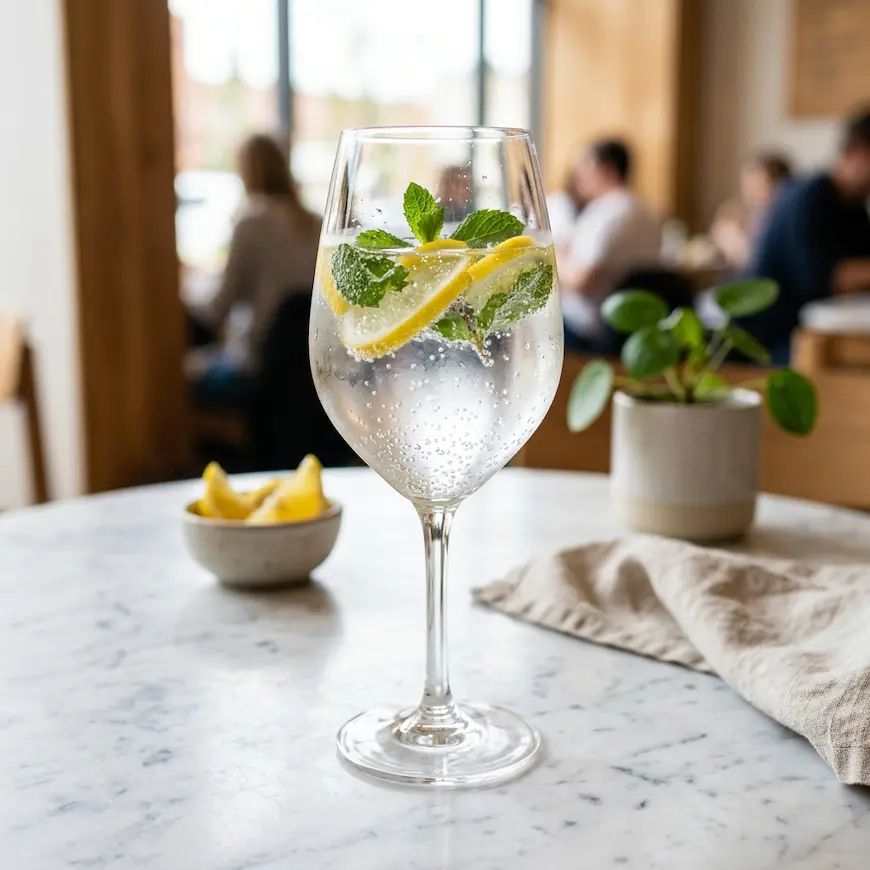
Going sober curious in social settings takes three things: a drink in your hand (sparkling water, a non-alcoholic option, anything), a simple answer to “why aren’t you drinking” (“I’m taking a break this month,” said without apology), and the honest understanding that most of the discomfort is yours, not theirs.
What I did not expect was how much I noticed other people’s drinking once I wasn’t part of it. Not in a judgmental way. But I clocked the timing of when people reached for a glass, what they were saying when they did, how conversations changed after the second round. I noticed it about my own past self too, which was uncomfortable and useful.
The sober curious approach that actually works: hold a non-alcoholic drink that looks like a drink, commit to your answer, and show up curious enough about the people around you that the missing alcohol doesn’t leave a gap.
Quick Answer: The non-alcoholic drink category has gotten genuinely good in the last three years. Non-alcoholic spirits like Seedlip, alcohol-free wine from brands like Leitz and Thomson & Scott, and botanical drinks from Curious Elixirs are now worth drinking because you enjoy them, not just because you’re avoiding alcohol. Sparkling water with lime works too, though it is not the same experience.
I’ll be honest: most non-alcoholic wine is not very good. The reds in particular taste thin and faintly medicinal once you’ve spent any time with the real thing. Some whites and sparkling options are much better.
What actually works:
Seedlip Garden 108 non-alcoholic spirit ([AMAZON AFFILIATE LINK]): a botanical blend meant to be mixed like gin. With tonic and a slice of cucumber, it is genuinely enjoyable in a way that has nothing to do with pretending it’s alcohol. The flavor is complex enough to hold your interest.
Curious Elixirs No. 1 non-alcoholic cocktail ([AMAZON AFFILIATE LINK]): pre-made, complex, with adaptogens like ashwagandha and reishi. Pricey, but a real ritual drink, especially in the evening when the wine-o’clock pull is strongest.
Liquid Death sparkling water variety pack ([AMAZON AFFILIATE LINK]): for the occasions where you just need something casual in your hand. From across a room, the can reads like a beer.
“This Naked Mind” by Annie Grace ([AMAZON AFFILIATE LINK]): the book I read during my 30 days that reframed how I understood alcohol’s psychological pull and why it lingers even in people who don’t enjoy how it makes them feel the next day.
What I kept using after my sober curious month: Seedlip in the evenings when I want the ritual of a proper drink, and sparkling water at social occasions when I don’t want to drink but also don’t want to make it a topic.
Quick Answer: After my sober curious 30 days I had lost 3.5 lbs with no change to diet or exercise, my resting heart rate dropped 4 beats per minute, my Oura sleep score rose by about 12 points on average, and the afternoon energy crash I had normalized for years was gone by week three.
The things I actually measured:
Weight. Down 3.5 lbs over 30 days with no other dietary changes. Alcohol carries 7 calories per gram, more than protein or carbohydrates. Three glasses of wine a night runs roughly 360 to 400 calories. Cutting that over 30 days works out to about 3 lbs on paper, which matched what I saw.
Resting heart rate. Down from 68 to 64 bpm by day 28. Alcohol raises resting heart rate for hours after you drink as the body processes it, and this is one of the changes that shows up reliably on an Oura Ring or similar tracker. It reversed almost completely within two weeks.
Sleep quality. My Oura sleep score averaged 71 before the sober curious experiment and 83 across the final two weeks. The biggest gains were in deep sleep and total sleep time.
Mood. Harder to quantify, and the most meaningful. A low-grade anxiety I had pinned on work and life in general eased noticeably in weeks three and four. The National Institute on Alcohol Abuse and Alcoholism notes that alcohol disrupts the brain’s GABA and glutamate systems, and that regular drinking can raise baseline anxiety even in people who drink to manage it (NIAAA, “Alcohol’s Effects on the Brain,” niaaa.nih.gov). For a lot of moderate drinkers, removing alcohol lowers anxiety, which is counterintuitive if you’ve been using it to feel calmer.
Quick Answer: The most important discovery of my sober curious 30 days was not physical. It was seeing the specific emotional jobs alcohol had been doing in my day, the quiet engine of the sober curious experiment: the transition from work to rest, the social lubricant for awkward moments, the reward at the end of a hard day. Once those patterns were visible, I could choose more deliberately.
I did not go into the sober curious experiment expecting a psychological revelation. I expected better sleep numbers and maybe clearer skin.
What I got was a kind of visibility I did not know I was missing. Alcohol had been filling roles I was completely unaware of. The shift from end-of-workday to start-of-evening was one. Without the wine, that handoff felt unfinished for weeks. I had to build other ways to close the day: a walk, a change of clothes, some small ritual that marked the end of one mode and the start of another. An evening routine without alcohol meant actually building a routine instead of defaulting to one that came in a bottle.
The social piece was different. I learned that I reached for alcohol specifically when I felt socially uncertain, as a way to manage the awkwardness of new people and unfamiliar rooms. Taking it away did not make those situations harder in the end. It made me learn to be in them differently.
What I kept after my sober curious 30 days: I now drink occasionally and on purpose, which is a real shift from drinking automatically and out of habit. The difference feels large.
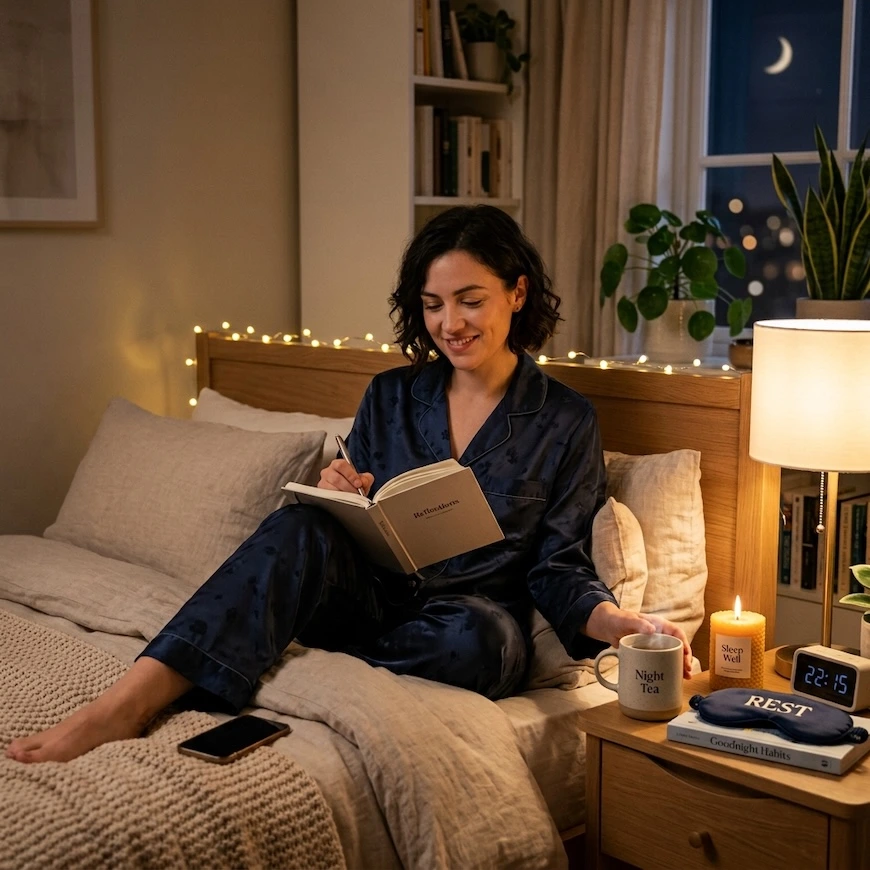
Building the rest of a sober curious life includes creating evening rituals that replace the transition alcohol used to handle. The digital detox guide covers the screen-time side of the evening, and the night routine guide covers the physical wind-down.
Read also: Alcohol Rehab: What Treatment Actually Involves
Quick Answer: I did not stay completely alcohol-free after the sober curious 30 days, but I stopped drinking automatically. The distinction matters. I now choose to drink on specific occasions, consciously, without habit running the decision in the background. The physical changes, better sleep, lower anxiety, clearer skin, steadier afternoon energy, were big enough that I protect them differently than I did before.
What this sober curious life looks like a few months on, for me.
I drink maybe once or twice a month now, down from almost daily. I did not decide that consciously on day 31. It happened because the experiment made the costs of drinking visible in a way they hadn’t been, and those costs were higher than I’d realized.
What I kept:
The Seedlip and Curious Elixirs in the evenings as intentional ritual drinks that don’t wreck my sleep
The morning clarity and the absence of the hangover fog, even from “just a couple glasses”
The active decision about whether I actually want a drink, instead of reaching for one on autopilot
What changed:
I can use other transition rituals to move from work to rest, rather than leaning on alcohol to do it neurologically
I can decline social drinking gracefully without it becoming an event
I understand what “tired” actually feels like, versus “slightly disrupted by alcohol”
This sober curious experiment is not for everyone. If you drink rarely, or you don’t notice alcohol affecting your sleep, energy, or mood in measurable ways, the change may not be worth the social friction. But if you wake at 3am, feel unrested most mornings, lean on caffeine through the afternoon, or sense that your evenings need chemical management to feel good, thirty days of being sober curious is a low-cost test with a high information yield.
To build the rest of a routine that supports steady energy and mood alongside less alcohol, the anti-inflammatory foods guide covers the dietary side of lowering systemic inflammation.
Thirty days is long enough to see meaningful changes in sleep, skin, morning energy, and mood stability. It is not long enough to reverse long-term skin damage or shift liver health much for heavy drinkers, but for moderate social drinkers it produces clear, measurable differences in the areas most people care about. It also gives you enough data to make better ongoing decisions about alcohol.
The most effective move is a non-alcoholic drink that looks like a drink and needs no explanation. Sparkling water with lime in a wine glass, a Seedlip and tonic, or a non-alcoholic can all work socially. Something in your hand removes the visual cue that invites questions. When someone asks directly, "I'm taking a break this month" is a complete, comfortable answer that rarely draws follow-up.
Yes. This is explicitly not about permanent abstinence. Most people who do a sober curious experiment go back to drinking, but they do it differently: more intentionally, less automatically, with a clearer sense of how alcohol affects their own body. Some choose to keep reducing or cut it out based on what they notice. The experiment is about information, not identity.
Most moderate drinkers see a drop of 2 to 5 lbs over 30 days when they stop without replacing the alcohol calories with other food or drink. It comes from removing alcohol calories (7 per gram, higher than carbs or protein), less inflammation, better sleep helping metabolic regulation, and often better food choices without the late-evening appetite shifts alcohol causes.
For many moderate to regular drinkers, yes, even though it seems backwards, since plenty of people drink to feel less anxious. Alcohol disrupts the GABA and glutamate systems that regulate calm and alertness, and regular use can leave the nervous system in a state of low-grade activation that feels like background anxiety. Removing it often lowers that baseline within 2 to 4 weeks, even in people who started out using alcohol to manage anxiety.
"This Naked Mind" by Annie Grace is the most accessible entry point. It reframes the psychology of alcohol without leaning on willpower or shame, and it makes the habit patterns behind drinking visible without asking you to identify as having a problem. "Sober Curious" by Ruby Warrington coined the term and covers the social and identity sides of choosing a different relationship with alcohol. Both are worth reading before or during a sober curious experiment.
Mimo Karam is the founder and writer at LifestyleMine. She writes about daily habits, nutrition, sleep, and emotional wellness, turning research into practical advice for people who want to live healthier without making it complicated.