✦
THE LIFESTYLEMINE NEWSLETTER
Simple wellness tips, healthy recipes, and
everyday inspiration delivered to your inbox.
Your Email Address
Before any food, drink a full glass of water.
This sounds too simple to matter, but research from Harvard’s Nutrition Source on hydration and a study by Ganio and colleagues in the Journal of Nutrition found that even mild dehydration, losing just 1–2% of body water, noticeably impairs mood, concentration, and energy. Many of the symptoms people read as exhaustion are actually mild dehydration.
When you’re tired, you almost certainly haven’t drunk enough water. You’ve drunk coffee. You’ve drunk tea. Both are mild diuretics. Neither replaces what you’ve lost overnight.
The first answer to what to eat when exhausted is often not a food at all, it’s a glass of water, before you do anything else. Add a pinch of salt and a squeeze of lemon if you’re truly depleted, especially after a poor night’s sleep or a workout. The minerals help your cells absorb what you’re drinking.
Then eat.
If there’s one food I reach for on bad-energy mornings, it’s oats. Consistent, cheap, and genuinely hard to mess up, they’re the most dependable answer to what to eat when exhausted.
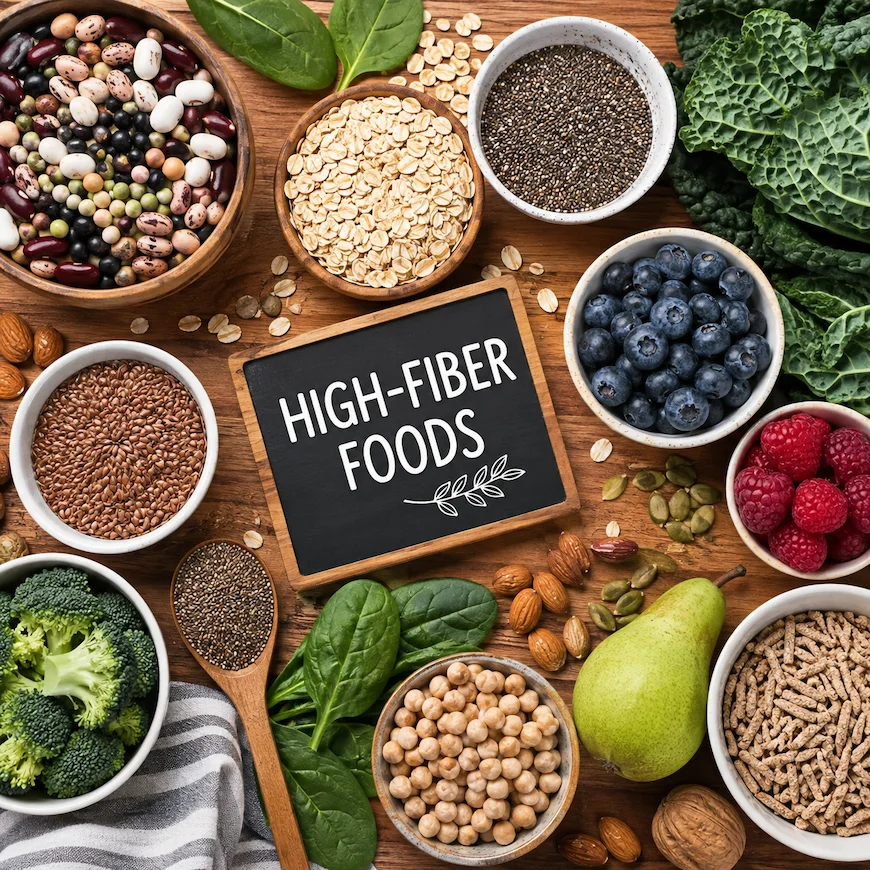
Oats are slow carbs, they release glucose gradually over 2–3 hours instead of all at once. No spike, no crash, steady fuel from breakfast through mid-morning. They also contain B vitamins (specifically B1 and B5), small amounts of iron, and beta-glucan fiber that stabilizes blood sugar even further.
The cheap version: rolled oats, hot water, a pinch of salt. The slightly upgraded version: oats cooked in milk, topped with banana, almond butter, and a sprinkle of cinnamon. Either takes 5 minutes.
If you can’t face cooking, overnight oats work just as well, and you can make three days’ worth on a good day, ready for the bad ones.
Related: The complete list of foods that give you all-day energy without caffeine →
Eggs are the unsung hero of any what-to-eat-when-exhausted list. They’re cheap, they’re fast, and they hit four exhaustion-relevant nutrients at once.
Each egg delivers around 6 grams of high-quality protein (for sustained energy and blood sugar stabilization), choline (which the brain uses for clear thinking), B12 (critical for energy production), and vitamin D (which most people are low in, especially in winter).
The simplest version: two eggs scrambled in olive oil, with a slice of whole-grain toast. Three minutes. You’ll feel the difference within an hour.
On exhausted days, eggs do something carbs alone can’t, they keep you full and stable for 3–4 hours instead of 60–90 minutes. More than almost anything else on this list, that’s what turns a hard day around.
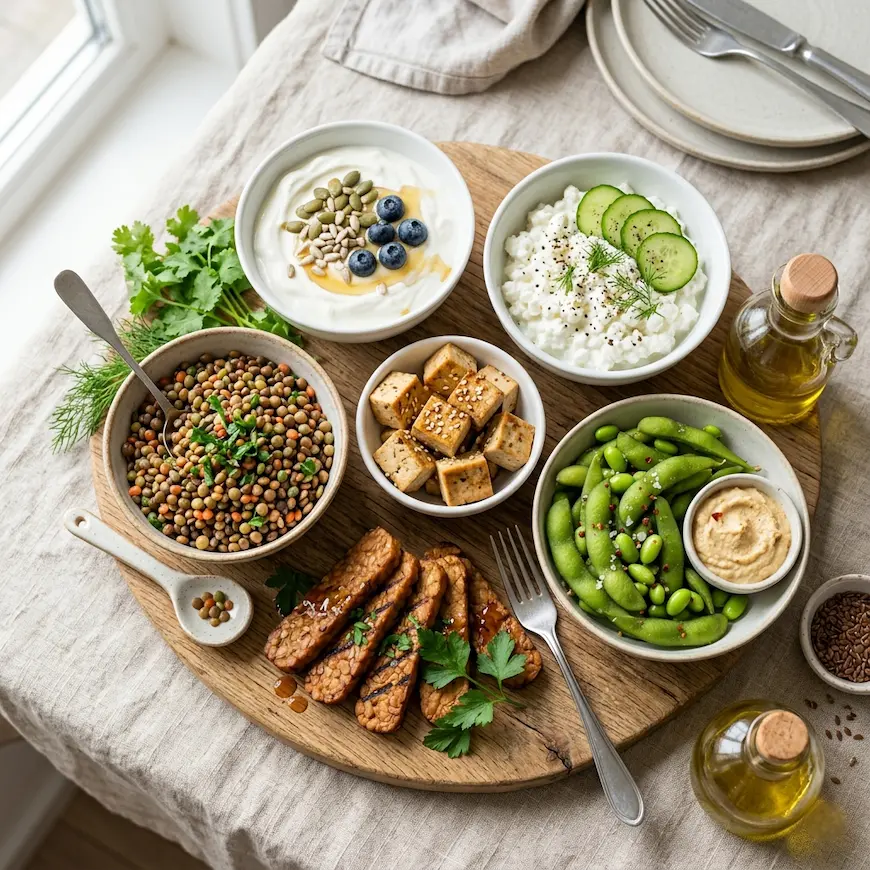
If you’ve been chronically tired for weeks, your iron may be low. This is one of the most overlooked causes of persistent exhaustion, particularly in women under 50 and anyone eating mostly plants.
According to the NIH Office of Dietary Supplements , iron deficiency is the most common nutrient deficiency in the world, and one of its first symptoms is fatigue that doesn’t improve with rest.
Strong iron sources to know:
Animal-based (best absorbed): Lean red meat, chicken thighs, sardines, oysters, liverPlant-based (pair with vitamin C to absorb better): Lentils, spinach, tofu, pumpkin seeds, beansThe combo: Iron-rich plant food plus something with vitamin C (lemon, peppers, strawberries, kiwi) in the same meal triples absorption
A practical example for an exhausted dinner: lentils cooked with chopped tomato and a squeeze of lemon. You’re getting iron, vitamin C, slow carbs, and protein in one bowl that takes 20 minutes.
If you’ve been tired for more than 4–6 weeks, get your ferritin tested. Knowing what to eat when exhausted doesn’t help if your tank is structurally low.
When you’re exhausted and need something now , a banana beats every snack bar on the shelf.
A medium banana gives you about 25 grams of natural carbohydrate (energy your brain can use immediately), 400+ mg of potassium (which most people don’t get enough of, and which directly affects how tired your muscles feel), and a small dose of B6 (involved in serotonin and energy metabolism).
Bananas digest fast, that’s a feature, not a bug, when you’re crashing and need fuel in the next 20 minutes. Pair one with a tablespoon of almond butter or a small handful of nuts and the carb release slows down enough to last you through a meeting or a walk.
When the question is what to eat when exhausted at 3pm and you can’t face making anything, this is it.
Spinach, kale, Swiss chard, and arugula pack more nutrients per minute of effort than almost anything else. On exhausted days, they’re the shortcut.
A single cup of cooked spinach delivers iron, magnesium, folate, vitamin K, and vitamin C. Folate matters more than most people realize, the NIH links low folate directly to fatigue, brain fog, and low mood.
You don’t have to make a salad. The lazy version: wilt two big handfuls of baby spinach into your eggs while they scramble. It disappears into the eggs and you’ve added iron, folate, and magnesium to a 3-minute meal without really trying.
This is the practical side of knowing what to eat when exhausted, the food has to be easy enough to actually make on the days you have nothing left.
Related: Symptoms of magnesium deficiency — and how it affects energy →
Inflammation and exhaustion are more connected than most people realize. When your body is dealing with low-grade inflammation, from poor sleep, stress, or a few days of bad eating, your energy drops even when nothing is technically wrong.
Fatty fish like salmon, sardines, and mackerel are loaded with omega-3 fatty acids, which lower inflammation. They also deliver high-quality protein, B12, and vitamin D, three nutrients that support energy production at the cellular level.
Salmon takes 8 minutes in a pan. Sardines come in a can, cost less than $3, and need no cooking at all. On the hardest days, a tin of sardines on toast with lemon and black pepper is one of the smartest 2-minute meals you can make.
Eat fish 2–3 times a week and you’re addressing one of the quieter drivers of chronic exhaustion, the kind most people never think to connect to their diet.
Magnesium is involved in over 300 processes in the body, including how your cells produce energy. When it’s low, fatigue follows. And according to the NIH Office of Dietary Supplements on magnesium , a significant portion of adults don’t hit the recommended daily intake.
Three foods worth keeping around:
Almonds: a small handful gives you about 80 mg of magnesium, plus protein and healthy fatPumpkin seeds: among the most magnesium-dense foods around, plus zinc and ironDark chocolate (70%+): yes, really. One square delivers magnesium, antioxidants, and a genuine mood lift
Put almonds in your bag, pumpkin seeds in your oatmeal or salads, dark chocolate on your shelf for rough afternoons. None of these feel like “fatigue food,” which is part of why they’re easy to actually eat.
This is one of the most underrated answers to what to eat when exhausted, you don’t have to overhaul anything, you just keep these around.
If breakfast feels impossible and you only have 60 seconds, Greek yogurt is your answer.
A small container delivers 15–20 grams of protein (more than two eggs), live probiotic cultures that support gut health and, increasingly, mood and energy, plus calcium and B12. Top it with a tablespoon of nut butter, a handful of berries, and a sprinkle of pumpkin seeds and you’ve got a 90-second meal covering protein, slow carbs, healthy fat, magnesium, and antioxidants.
Keep plain Greek yogurt in the fridge at all times. On exhausted mornings, you don’t have to think, you just assemble.
Knowing what to eat when exhausted is half the equation. The other half is knowing what reliably makes it worse.
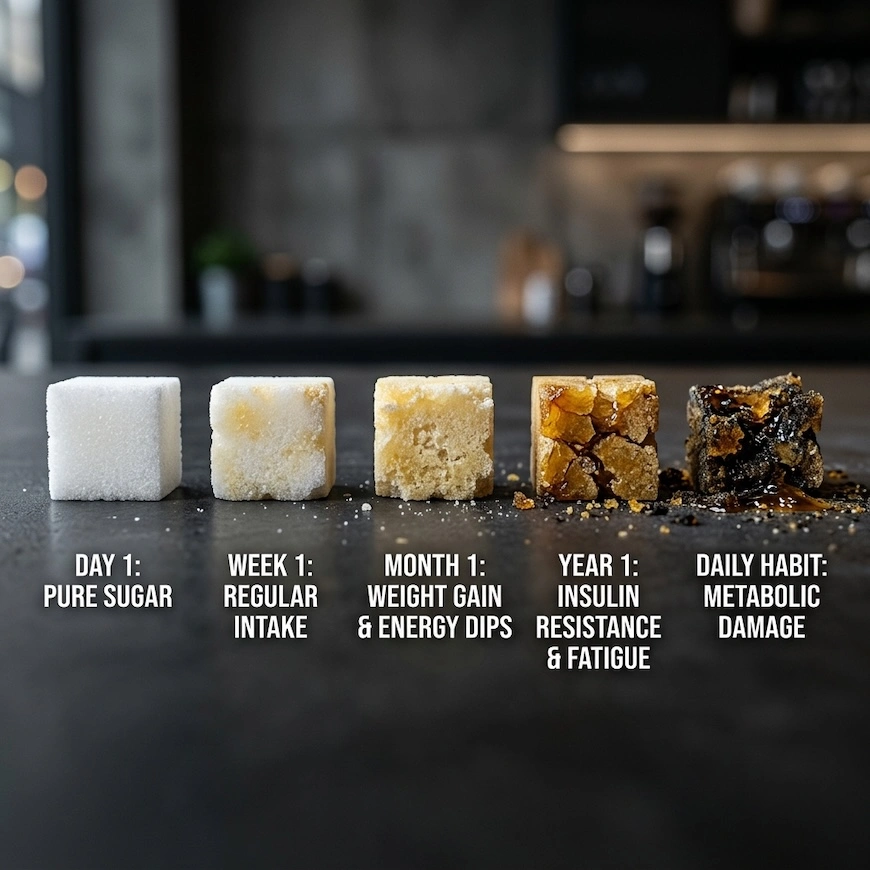
Refined sugar and pastries. A muffin or a sweet coffee feels like fuel for 30 minutes, then drops your blood sugar lower than it started. By 11am you’re more tired than you were at 9.
Alcohol. Even one drink fragments sleep, disrupts REM, and leaves you depleted the next morning. If you’re already exhausted, an evening drink will guarantee another rough day. Save it for nights you’re actually well-rested.
Heavy, fried food. Greasy meals slow digestion and redirect blood to your gut for 2–3 hours, leaving you sluggish and foggy. Save heavy meals for high-energy days.
Too much caffeine, too late. Coffee isn’t the problem. A third cup at 3pm is, it masks fatigue without fixing it, then disrupts that night’s sleep and deepens the cycle. Cap caffeine at 2pm on tired days.
“Energy drinks.” Sugar plus caffeine plus a B vitamin dump. Spike, crash, spike. They make exhaustion worse over the course of a day.
The rule: when you’re depleted, eat foods that build and avoid foods that borrow.
If you only remember three meals from this article, make it these. Each takes under 15 minutes, uses ingredients you can keep on hand, and combines the right macros to genuinely rebuild your reserves.
½ cup oats cooked in milk (or water plus a splash of milk)
1 sliced banana
1 tablespoon almond butter
1 tablespoon pumpkin seeds
A glass of water with a pinch of salt and lemon on the side
Hits: Slow carbs, protein, magnesium, potassium, B vitamins, hydration.
2 eggs scrambled in olive oil with a handful of spinach
1 slice whole-grain toast
½ avocado with lemon, salt, and chili flakes
A handful of berries
Hits: Protein, choline, B12, iron, folate, healthy fats, vitamin C.
1 cup cooked lentils (canned is fine), warmed with a chopped tomato, garlic, and olive oil
A handful of spinach wilted in
A squeeze of lemon and a sprinkle of feta
1 square of 70% dark chocolate after
Hits: Iron, vitamin C (for absorption), protein, magnesium, slow carbs, mood-supportive fats.
Make these three meals on three consecutive low-energy days and you’ll feel different by day four. This is why knowing what to eat when exhausted compounds, it’s not one good meal, it’s what happens when you stop making it worse.
Related: Build a healthy routine that makes these meals automatic →
Diet matters, but it’s not the only piece. If you’ve been exhausted for more than 4–6 weeks despite eating well, sleeping reasonably, and managing your stress, food isn’t the issue.
Persistent fatigue can have medical causes that no amount of oats and salmon will touch: thyroid dysfunction, iron-deficiency anemia, sleep apnea, B12 or vitamin D deficiency, chronic infections, hormonal shifts. None of those get diagnosed in a wellness article. They get diagnosed by a blood test and a conversation with a doctor.
LifestyleMine is a wellness platform, not a medical resource. If exhaustion has lasted more than a few weeks, please reach out to a qualified healthcare professional. The food helps. It isn’t always enough.
Related: Why you’re always tired — 7 lifestyle causes and what to do →
There isn't one — it depends on the moment. For a meal: eggs with greens on whole-grain toast. For a fast snack: a banana with almond butter. For overnight recovery: oats with nuts and berries. Every answer to what to eat when exhausted follows the same principle: combine slow carbs, protein, and a nutrient-dense plant food.
A breakfast with slow carbs and protein. Oatmeal with nut butter, eggs on whole-grain toast, or Greek yogurt with berries and seeds all work. Pure carbs alone — toast, cereal, pastry — crash you by 10am without exception.
Refined sugar with no protein or fat: pastries, sweet coffee drinks, fruit juice, candy. They spike blood sugar fast and crash it harder, leaving you more depleted than before you ate.
Yes, in moderation, and not on an empty stomach. One or two cups before noon is fine for most people. The mistake is using coffee instead of food — coffee borrows energy, food creates it.
You'll notice a meal-by-meal difference fairly quickly. The bigger reset — your nutrient stores actually rebuilding — takes 2–4 weeks of consistent eating. Knowing what to eat when exhausted becomes most useful when it's a default pattern, not a one-off fix.
Stock your kitchen for exactly that scenario. Greek yogurt, canned sardines, pre-washed greens, canned lentils, oats, frozen berries, bananas, and pumpkin seeds let you build any of the three templates above in under 10 minutes with no real cooking.
The takeaway
When you’re exhausted, your body needs something specific: stable blood sugar, key nutrients, real protein, and water. Caffeine, sugar, and “energy” snacks borrow from tomorrow to get you through the next 30 minutes. Real food does the opposite.
Knowing what to eat when exhausted isn’t about a perfect diet. It’s about a small set of reliable choices, oats, eggs, greens, fish, lentils, bananas, nuts, yogurt, dark chocolate, that you can rotate through on the hardest days. Each one addresses a real mechanism behind why you feel depleted, and together they rebuild what an exhausted body is actually missing.
Pick the two foods that stood out. Buy them this week. Keep them within reach on Monday morning. The next time you crash, you won’t be at the mercy of whatever’s easiest, you’ll already know what to reach for.
Not a meal plan. Just a small kitchen of foods that do the work.
All content on LifestyleMine is for informational and educational purposes only. It is not a substitute for advice from a qualified healthcare professional.
Mimo Karam is the founder and writer at LifestyleMine. She writes about daily habits, nutrition, sleep, and emotional wellness, turning research into practical advice for people who want to live healthier without making it complicated.