✦
THE LIFESTYLEMINE NEWSLETTER
Simple wellness tips, healthy recipes, and
everyday inspiration delivered to your inbox.
Your Email Address
The math:
1 lb of fat ≈ 3,500 calories stored
500 cal/day deficit × 7 days = 3,500 cal/week, or about 1 lb/week in theory
750 cal/day deficit, about 1.5 lbs/week in theory
1,000 cal/day deficit, about 2 lbs/week in theory (the upper limit for most people, and it risks muscle loss and metabolic adaptation)
The caveat most weight loss articles skip: research by Kevin Hall and colleagues (2011, Lancet ) showed that the 3,500-calorie rule overstates real fat loss, because metabolic rate adapts downward during sustained restriction. The body isn’t a simple calculator. It cuts energy expenditure by 10 to 15% as body weight falls and hormones shift. That isn’t failure, it’s biology. Around week 8 to 10 of a deficit, recalculate your TDEE at your new body weight and, if you need to, widen the deficit slightly.
How to find your TDEE: use a TDEE calculator based on your age, sex, height, current weight, and activity level. Subtract 500 to 750 calories from that number. That’s your daily target for 1 to 1.5 lbs/week of loss, and the engine behind how to lose weight in 3 months.
Tracking: the app that changed things for me was MyFitnessPal, not for perfection but for pattern recognition. My “harmless” 3 PM office donut was 350 calories. The spoonfuls I took while cooking dinner added 200 more. Two weeks of honest tracking showed I was eating 600 to 800 more calories a day than I thought, and the scale math made sense.
Quick Answer: Eating 1.6 to 2.2g of protein per kg of body weight during a calorie deficit is the most evidence-backed way to hold onto lean muscle while you lose fat. Protein also has the highest satiety per calorie of any macronutrient and a thermic effect of 20 to 30%, so you burn roughly a quarter of protein calories just digesting them. Most people eating in a deficit are badly undereating protein.
When I tracked my food that first week, I had 6g of protein at breakfast (oatmeal and fruit), 8g at lunch (a salad with almost no protein), and I was ravenous by 10 AM and 3 PM daily. The hunger wasn’t weakness, it was a predictable response to too little protein. The satiety and thermic effects behind that are well documented Westerterp-Plantenga 2008 : higher protein intake raises diet-induced thermogenesis and fullness, which is exactly what you want when you’re cutting calories.For most adults:
Minimum for muscle preservation in a deficit: 1.2g/kg body weightOptimal range: 1.6 to 2.2g/kg (backed by multiple systematic reviews)Practical target for a 165-lb / 75 kg person: 120 to 165g protein/day
This is why high-protein snacks become a real tool for how to lose weight in 3 months, not just a preference. Keeping Greek yogurt, cottage cheese, eggs, and canned tuna on hand killed most of my afternoon emotional snacking, since protein suppresses ghrelin (the hunger hormone) better than carbs or fat. See our high protein snacks guide for protein-per-calorie breakdowns and the leucine science behind satiety.
Protein powder: not a magic supplement, just a convenient delivery method. I mixed a scoop of vanilla Orgain protein into my morning smoothie (frozen banana, spinach, cinnamon, where the cinnamon hides the green) and it took my breakfast from 6g to 25g of protein without adding much in calories. That single change ended the 10 AM crash almost immediately.
Quick Answer: No single named diet wins in head-to-head long-term trials once calorie intake is matched. The Mediterranean diet has the strongest evidence for long-term cardiovascular and metabolic health alongside weight loss. Low-carb and keto speed up early weight loss (mostly water from glycogen depletion) but produce similar fat loss to low-fat diets at 12 months. The best diet is the one that keeps you in a modest calorie deficit for 90+ days without misery.
The DIETFITS trial (Gardner et al., 2018, JAMA) compared healthy low-fat against healthy low-carb diets in 609 adults over 12 months and found no significant difference in weight loss between the groups. The 2020 PREDIMED-Plus trial found that a calorie-restricted Mediterranean diet produced meaningful, sustained weight loss in adults at cardiovascular risk. The takeaway isn’t that diets don’t matter, it’s that sticking to a quality whole-food diet matters far more than the macronutrient ratio.
What the best weight loss diet actually looks like:
Component
Recommendation
Why
Protein
1.6 to 2.2g/kg/day
Preserves muscle, highest satiety
Vegetables
5 to 7 cups/day
Volume eating: low calories, high fiber, fills the plate
Fiber
25 to 35g/day
Slows digestion, feeds the gut microbiome, cuts hunger
Refined carbs
Minimize
Fast-absorbing, low satiety, easy to overeat
Saturated fat
Moderate
Calorie-dense, watch portions
Ultra-processed food
Minimize
High palatability drives overconsumption
The pattern I found sustainable: eat protein and vegetables first at every meal, then fill the rest of your calories with whole grains, fruit, and healthy fats. That builds in volume eating, so you’re full before you can overeat the calorie-dense stuff.Pair this with anti-inflammatory foods . Research increasingly shows that chronic low-grade inflammation impairs leptin signaling and insulin sensitivity, both of which make weight loss harder. An anti-inflammatory pattern (omega-3s, vegetables, berries, olive oil, dark chocolate) helps on that front alongside calorie management, which is the dietary half of how to lose weight in 3 months.
Quick Answer: Intermittent fasting (IF) works for weight loss mainly by cutting total calorie intake, not through any unique metabolic effect of the fasting window. 16:8 produces no more fat loss than unrestricted eating when calories are matched (JAMA Internal Medicine, 2020). Where IF helps: it’s a behavioral structure that ends evening snacking for many people, which naturally lowers intake. Use it if it suits your life; don’t expect metabolic magic.
I tried intermittent fasting twice; both times I made up the calories in the eating window. It’s a well-documented pattern: time-restricted eaters often eat more during their feeding window, partly offsetting the meals they skipped.IF’s genuine benefits for some people:
Removes the highest-calorie eating window (late-night snacking) for night owls
Cuts decision fatigue around breakfast for people who aren’t hungry in the morning
Simplifies meal planning (two meals instead of three means less kitchen time and fewer impulse-eating chances)
Some evidence for better insulin sensitivity independent of weight loss (relevant for metabolic syndrome)
A practical 16:8 setup if you try it:
Eating window: noon to 8 PM (the most flexible for social meals)
Break the fast with a high-protein meal, not carbs that spike and crash
First hunger pang during the fast: drink 500 mL of water before deciding whether you’re actually hungry
If you train in the morning, have a protein shake beforehand and push the eating window to 9 or 10 AM
The honest version: when it comes to how to lose weight in 3 months, IF is a tool, not a method. If not eating until noon is genuinely sustainable for you, use it. If it makes you miserable and you compensate at dinner, it isn’t worth the discipline cost.
Quick Answer: Resistance training 3 days a week plus daily low-intensity movement (walking) beats cardio-only approaches for body composition during weight loss. Cardio burns calories during the session; muscle built through resistance training raises resting metabolic rate permanently, since each kg of added muscle burns about 13 extra calories a day at rest. The combination of both works best.
My biggest mistake across years of failed attempts was avoiding weights because I thought I’d “bulk up.” Wrong, and the science is unambiguous. A 2012 Pennington Biomedical Research Center study found that resistance training produced far better body composition (fat loss plus muscle retention) than cardio-only at similar calorie burns.
What I actually did (low-equipment, home-based):
Resistance training: 3x a week, 25 to 30 minutes, dumbbells and bodyweight only (squats, lunges, push-ups, Romanian deadlifts, bent-over rows)
Walking: 7,000 to 10,000 steps daily, which was the real calorie burner over 90 days, not the gym sessions
HIIT: once a week at most, effective but high injury risk and recovery cost for beginners
The step-count insight: a Fitbit tracking 7,000 to 10,000 steps a day accounts for 300 to 500 extra calories burned beyond a sedentary baseline. Over 90 days, that’s 27,000 to 45,000 extra calories, or 8 to 13 lbs of theoretical fat loss from walking alone. This is why building daily walking into your routine before you worry about gym programming is the highest-return move when you’re figuring out how to lose weight in 3 months.
Sleep and exercise interact: the sleep hygiene habits section of this site covers the mechanism in depth. Poor sleep (under 7 hours) raises ghrelin by 15 to 25%, drops leptin by similar amounts, and drives 25 to 45% higher cravings for high-calorie food the next day. You can’t out-train or out-diet chronic sleep deprivation.
Quick Answer: The supplement market here is enormous and the evidence is often overstated. Honest breakdown: caffeine and green tea extract have real but modest effects; protein powder is the most practical support tool; most popular fat burners (raspberry ketones, garcinia cambogia) have no clinically meaningful human evidence. Supplements add maybe 10 to 15% on top of diet and exercise, they aren’t a foundation.
Tier 1, real but modest effect: Caffeine. Raises metabolic rate by 3 to 5% and increases fat oxidation during exercise. One of the few weight loss compounds with consistent human evidence. The effect is strongest in non-habitual users and fades with tolerance. Practical dose: 100 to 200mg pre-workout (1 to 2 cups of coffee). Use it strategically, not constantly.
Green tea extract (EGCG). A 2011 meta-analysis (Hursel et al., Obes Rev ) found that catechin and caffeine together raise 24-hour energy expenditure and fat oxidation; an earlier 2009 analysis put the added weight loss at roughly 1.3 kg over 12 weeks versus placebo. Real but modest. Mechanism: EGCG inhibits catechol-O-methyltransferase (COMT), which prolongs norepinephrine’s effect on fat cells. Practical dose: 300 to 500mg EGCG daily with caffeine. The supplements for healthy aging guide covers EGCG’s broader antioxidant profile.
Tier 2, useful support tools: Protein powder (whey, casein, plant-based). Not a fat burner. It’s a tool to hit protein targets when whole foods are inconvenient, and it supports muscle preservation during a deficit, which protects metabolic rate. I used Orgain vanilla, mixed into coffee for a satisfying “latte” that held me for 4 hours.
Psyllium husk / glucomannan. Soluble fiber that expands in the stomach and increases fullness. One RCT (Walsh 1984, updated in later trials) found glucomannan produced about 5.5 lbs of additional weight loss over 8 weeks versus placebo at 3g/day. Psyllium works similarly. Both are cheap, safe, and work by cutting calorie intake through fullness, not by manipulating metabolism.
Magnesium glycinate. Not a fat burner. It matters because poor sleep raises hunger hormones, and magnesium glycinate improves sleep quality (covered in our deep sleep habits guide ). It plugged a gap in my diet and improved my sleep, and better sleep cut my next-day cravings for high-carb food.
Tier 3, no meaningful human evidence:
Raspberry ketones: no human RCT evidence for weight loss. Animal studies used doses 100-fold higher than supplement labels.Garcinia cambogia (HCA): multiple reviews found no clinically significant effect versus placebo in humans.CLA (conjugated linoleic acid): modest effects in animals, inconsistent and very small effects in humans.Most “thermogenic” blends: proprietary mixes where the individual ingredients are underdosed and the combinations untested.
The supplements that actually mattered for me: protein powder (muscle), psyllium husk (appetite), magnesium glycinate (sleep), and a good omega-3 (inflammation). No magic pills. Anyone who tells you a supplement alone is how to lose weight in 3 months is selling something.
Quick Answer: Weeks 1 to 3: mostly water and glycogen (2 to 5 lbs fast), with genuine fat loss beginning. Weeks 4 to 8: steady 1 to 1.5 lbs/week of fat loss, and the first metabolic adaptation may show up. Weeks 9 to 13: plateau risk is highest, so recalculate TDEE and consider a one-week diet break at maintenance calories to restore leptin before the final push.
Weeks
What’s happening
Expected loss
What to focus on
1 to 2
Glycogen and water depletion, habit formation
3 to 6 lbs
Tracking accuracy, protein target
3 to 6
Genuine fat loss begins
1 to 1.5 lbs/week
Consistency, sleep, resistance training
7 to 10
Metabolic adaptation possible, plateau risk
0.5 to 1 lb/week
Recalculate TDEE, tighten tracking
11 to 13
Final push, maintenance transition
1 to 1.5 lbs/week
Diet break if needed, habit solidification
Total 12 to 20 lbs
The plateau fix: in week 6 I hit a wall, and the scale didn’t move for 10 days. My instinct was to eat less. The right answer was to recalculate TDEE at my new, lower body weight, take a 5-day refeed at maintenance calories (which temporarily restores leptin), then go back to the deficit. The scale dropped 1.8 lbs the week after the refeed. This is documented in metabolic research; it feels counterintuitive, but it’s a key part of how to lose weight in 3 months without stalling.
Non-scale wins matter: walked up stairs without wheezing (week 5), zipped the goal jeans (week 9), slept through the night for the first time in two years (week 7, once the sleep routine was in place). These predict long-term success better than what the scale says on a Tuesday morning.
Quick Answer: The only interventions with meaningful clinical evidence for raising resting metabolic rate are resistance training (building muscle), adequate protein (20 to 30% TEF versus 3 to 5% for fat), and avoiding the severe restriction that triggers metabolic adaptation. “Metabolism booster” supplements produce 3 to 7% increases at best. Cold exposure activates brown fat, but the per-session calorie effect is small (20 to 50 extra calories).
The metabolism-booster category is heavily marketed and badly overstated. Your resting metabolic rate is set mostly by lean muscle mass, age, and genetics. The levers you can actually pull:
1. Resistance training. Each kilogram of muscle burns about 13 calories a day at rest. Adding 3 to 4 kg of muscle (doable in 6 to 12 months for beginners) adds 40 to 50 calories a day to resting metabolism. Not dramatic, but permanent, compounding, and bundled with other health benefits.
2. Protein intake. The thermic effect of food means you burn 20 to 30% of protein calories during digestion. A diet with 150g of protein a day burns 120 to 180 more calories in digestion than the same calories from fat.
3. Non-exercise activity thermogenesis (NEAT). Fidgeting, walking, standing: together these can account for 200 to 600 calories a day of difference between people. The 10,000-step goal is really a NEAT target, and it’s one of the highest-leverage behavioral changes for total daily energy expenditure.
4. Sleep. Sleeping under 6 hours a night is linked to a 5 to 10% drop in resting energy expenditure the next day, on top of the ghrelin and leptin disruption. Sleep is metabolic medicine, not optional, and it’s the most underrated piece of how to lose weight in 3 months.
Yes. 20 lbs in 13 weeks means averaging 1.54 lbs/week, which works out to roughly a 770 calorie/day deficit. That's achievable but toward the upper end of sustainable. It's more likely for people with higher starting weights (where TDEE is higher), people pairing diet with real exercise, and people starting from scratch with a lot of easy improvement available from food quality alone. The first 1 to 2 weeks show faster losses (3 to 5 lbs of water weight), which makes the early math look easier. Sustainable targets: 12 to 16 lbs for most people, 16 to 22 for those with significant starting weight and high consistency. Either way, that's a realistic answer to how to lose weight in 3 months.
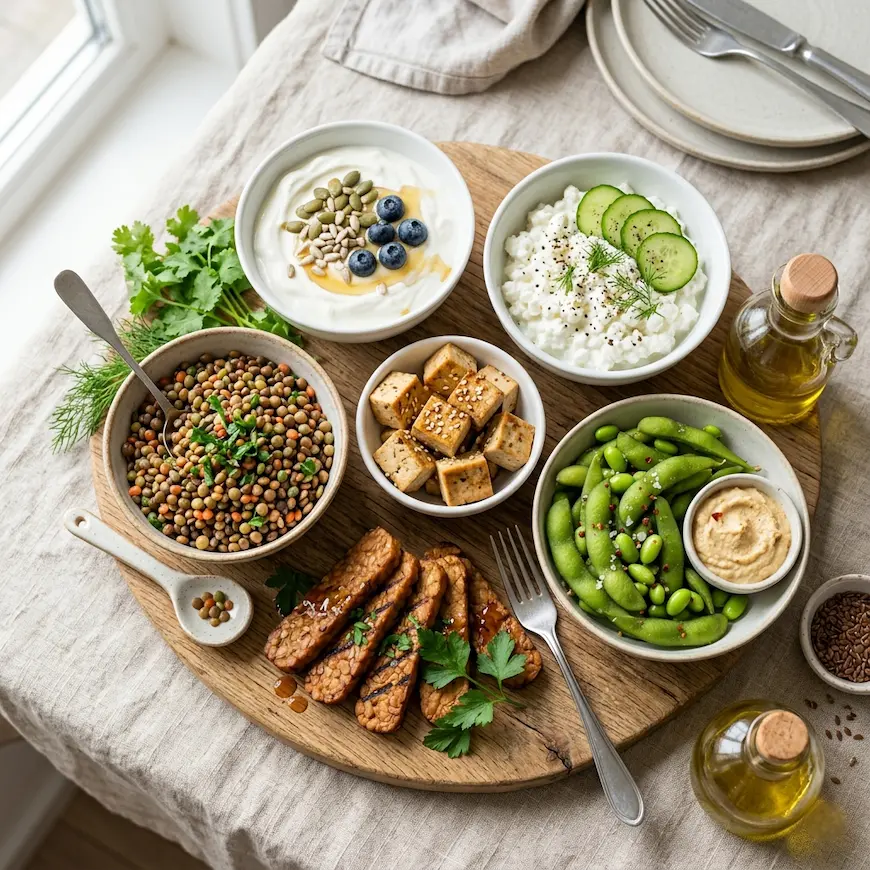
Volume eating is the answer: foods with low calorie density but high volume and fiber. Vegetables (20 to 50 cal/cup), broth-based soups, lean protein, berries, and high-fiber whole grains create physical fullness at a low calorie cost. The combination of protein (appetite-hormone control), fiber (gastric volume and slow digestion), and water-rich foods (volume) makes a 1,600 to 1,800 cal/day intake feel far more satisfying than 2,000 calories of processed food. Greek yogurt, cottage cheese, eggs, canned tuna, edamame, and leafy vegetables are the building blocks.
Water isn't a fat burner, but it's a meaningful weight management tool. A 2016 review found that drinking 500 mL of water 30 minutes before meals cut meal calorie intake by about 13%. Cold water briefly raises metabolism by 10 to 30% for 30 to 90 minutes (the body warming it to temperature), a very small effect. More practically: dehydration often reads as hunger. My afternoon "slump" turned out to be dehydration almost every time, and a glass of water before the vending machine probably cut 150 calories a day.
Regain is the central challenge in weight management: roughly 80% of people who lose weight regain at least some of it within 5 years. The drivers are metabolic (lower TDEE at a reduced weight) and behavioral (sliding back into old habits). The most evidence-backed maintenance approaches: weigh yourself weekly (not daily, too variable) and respond to upward trends before they accumulate, keep up resistance training to preserve muscle and metabolic rate, keep protein high, and treat maintenance as active work rather than a passive default. The skills that take the weight off are the same ones that keep it off.
Yes. Diet creates the calorie deficit; exercise amplifies it and improves body composition, but it isn't required for weight loss. A 750 cal/day diet deficit alone produces 1 to 1.5 lbs/week. The catch with diet-only approaches: you lose a mix of fat and muscle, which cuts metabolic rate more sharply and makes maintenance harder. Exercise, especially resistance training, preserves lean mass during the deficit, gives a better body composition at the same scale weight, and brings metabolic and mental health benefits on its own. Diet is the engine; exercise is the upgrade.
Underestimating calorie intake. Study after study shows people underestimate what they eat by 20 to 50%. A handful of nuts here and there, the spoonfuls while cooking, the sauces and dressings, the drinks: none of it feels like eating, but it adds up to hundreds of extra calories. Two weeks of honest food logging reveals the gap every time. The second biggest mistake is excessive restriction that can't last. A 1,200-calorie diet that breaks after 3 weeks produces worse long-term outcomes than an 1,800-calorie diet you keep for 6 months.
This article is for informational purposes only. Weight loss affects individual health in ways that depend on starting health status, medications, and medical history. Rapid weight loss (more than 1.5 kg/week), unexplained unintentional weight loss, or weight loss accompanied by fatigue, hair loss, or other symptoms should be evaluated by a healthcare provider. Very low calorie diets (under 800 cal/day) require medical supervision. Always consult a healthcare professional before starting a significant dietary change, particularly if you have diabetes, cardiovascular disease, kidney disease, or take medications that interact with dietary changes.
Mimo Karam is the founder and writer at LifestyleMine. She writes about daily habits, nutrition, sleep, and emotional wellness, turning research into practical advice for people who want to live healthier without making it complicated.