What Makes a Chocolate Chip Cookie Healthy Without Ruining the Taste?
Quick Answer: A healthy chocolate chip cookie swaps refined flour for almond or oat flour (more fiber, protein, healthy fat), reduces sugar by 30–50% and shifts to lower-glycemic sweeteners, uses quality dark chocolate (70%+ cacao for flavanol content), and keeps fat sources like nut butters or coconut oil instead of eliminating fat entirely. The result: fewer blood sugar spikes, more nutrients, and cookies that taste better than the “diet” label implies.
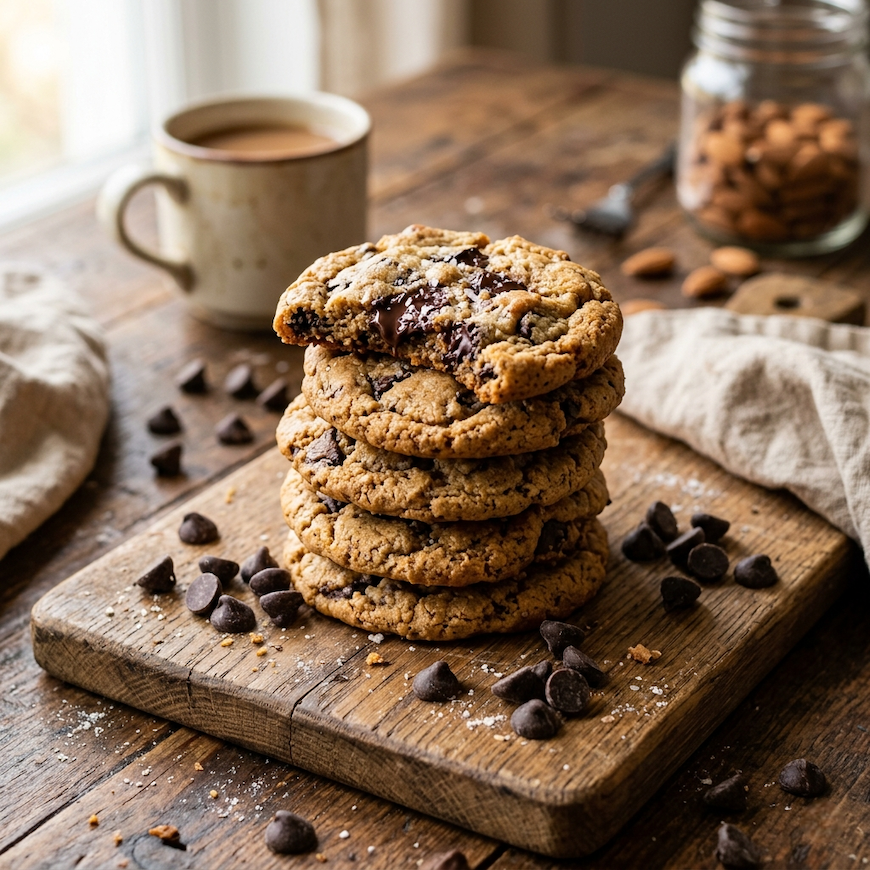
I spent years treating “healthy cookies” as an oxymoron, eating a dry, sad protein cookie bar and calling it dessert. Then I started testing recipes built on almond flour, good dark chocolate, and real sweeteners, and the results came out better than what I was making with all-purpose flour and a bag of white sugar. Good healthy chocolate chip cookies, it turns out, come down to technique.The reason most healthy chocolate chip cookies fail isn’t the ingredients, it’s that they’re engineered to look healthy on paper without being tested as food.
A cookie made with almond flour and maple syrup only tastes like cardboard when the ratios are off or the baker doesn’t get how differently almond flour behaves from wheat.This guide covers the ingredient science, a master healthy chocolate chip cookies recipe with tested macros, and four variations (keto, vegan, high-protein, oat flour), plus the common mistakes that turn promising recipes into baking disasters.
The science behind healthy cookie ingredients
Quick Answer: Each ingredient swap in healthy chocolate chip cookies does a job. Almond flour adds protein and fat in place of empty starch, dark chocolate at 70%+ adds flavanols (plant compounds with cardiovascular evidence), and quality fats from nut butters or coconut oil add satiety without the trans-fat risk of partially hydrogenated shortening. Knowing what each change does helps you troubleshoot texture problems.
Flour: structure and nutritionFlour gives cookies two things: gluten (protein networks that build structure) and starch (which gelatinizes and creates chew). Remove wheat flour and you remove gluten, so cookies spread differently, hold together differently, and need different binders.
- All-purpose flour: 3g protein, 0.3g fiber, 95 calories per ¼ cup. Basically starch and gluten with little nutrition.
- Almond flour: 6g protein, 3g fiber, 4g fat, 160 calories per ¼ cup. More calorie-dense but far more nutritious. That fat content is what makes almond flour cookies naturally soft and tender without butter.
- Oat flour: 4g protein, 2g fiber, 100 calories per ¼ cup. The best texture-to-GI tradeoff for anyone who wants a more traditional cookie structure.
Almond flour’s nutrient density fits into the broader health benefits of nut consumption (Ros 2010), which links nuts to better cholesterol and cardiovascular markers thanks to their unsaturated fats, fiber, and plant sterols.
Chocolate: quality matters biochemicallyDark chocolate at 70%+ cacao contains flavanols, a class of polyphenols concentrated in cacao. A 2011 meta-analysis in the BMJ (Buitrago-Lopez et al.) reviewing seven prospective studies found chocolate consumption associated with a 37% lower risk of cardiovascular disease and a 29% lower risk of stroke. The mechanism runs through flavanol-driven improvements in endothelial function and lower blood pressure.The cutoff matters.
Milk chocolate at 30 to 40% cacao has most of its flavanols processed out. At 70%+, a 1-oz serving delivers 400 to 600mg of cocoa flavanols, and at 85%+ you’re closer to 700 to 800mg. This is the scientific basis for recommending dark chocolate specifically in anti-inflammatory eating approaches, and why the chocolate chip you choose in healthy chocolate chip cookies actually matters.
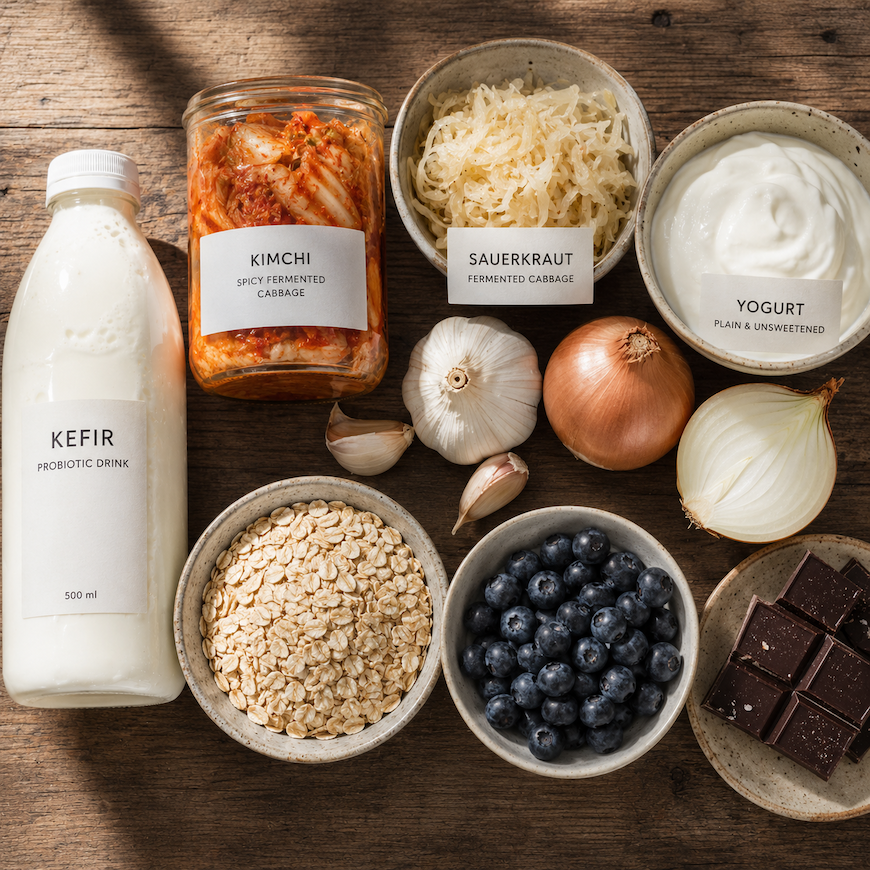
Dark chocolate is also a decent source of magnesium, which is one reason a square in the evening sits comfortably alongside good healthy deep sleep habits.
Sweeteners: a glycemic index reality checkCoconut sugar is often sold as having a “much lower glycemic index” than regular sugar. The actual data Atkinson et al. 2008 international GI tables: coconut sugar GI is about 54, white sugar about 65. That’s a real difference but not a dramatic one, and both still raise blood glucose. Coconut sugar’s real edge is subtler: it carries trace minerals (iron, zinc, calcium) and a little inulin that white sugar lacks, and its richer flavor means you tend to use slightly less.Maple syrup (GI ~54) and honey (GI ~58) sit close to coconut sugar.
The meaningful GI drop comes from sugar alcohols: erythritol (GI 0), allulose (GI 0 to 1), and monk fruit extract (GI 0). Those are the genuine low-glycemic options, which matter for anyone managing blood sugar or eating low-carb.Mashed ripe banana (GI ~51, fructose-dominant) can replace up to half the added sugar in many recipes while adding potassium and fiber, which ties into the wider nutrition covered in our banana guide.
Almond flour chocolate chip cookies: master recipe
Quick Answer: This master recipe for healthy chocolate chip cookies makes 18 cookies at about 105 calories each, with 2.5g protein and 8g fat. It uses almond flour (the protein and healthy-fat base), maple syrup (flavor and moisture), coconut oil (a neutral fat), and 70%+ dark chocolate chips. As written, it’s naturally gluten-free, grain-free, and dairy-free.
Why this recipe works: almond flour’s own fat means it needs less added fat than wheat-flour recipes. The egg binds the dough (there’s no gluten to do it). Baking soda gives lift. And because the fat content is high, these cookies don’t need to set fully in the oven, they firm up as they cool. That’s the core trick behind tender healthy chocolate chip cookies.
Ingredients (yields ~18 cookies)
Dry:
- 1½ cups (168g) blanched almond flour, not almond meal (finer grind means better texture)
- ½ tsp baking soda
- ¼ tsp fine sea salt
- ¼ tsp cinnamon (optional)
Wet:
- 3 tbsp coconut oil, melted and cooled slightly
- 3 tbsp pure maple syrup (or honey)
- 1 large egg, room temperature
- 1½ tsp pure vanilla extract
Mix-in:
- ½ cup (85g) dark chocolate chips, 70%+ cacao
Instructions
- Preheat the oven to 175°C (350°F). Line a baking sheet with parchment paper.
- Whisk the dry ingredients: combine almond flour, baking soda, salt, and cinnamon in a medium bowl.
- Mix the wet ingredients: in a separate bowl, whisk the melted coconut oil, maple syrup, egg, and vanilla until fully combined.
- Combine: pour wet into dry and stir until a soft, slightly sticky dough forms. Don’t overmix.
- Fold in the chocolate chips. Hold back a few to press onto the tops after shaping.
- Chill the dough for 15 minutes in the refrigerator. This keeps them from spreading too much, so don’t skip it.
- Scoop and shape: use a tablespoon or small cookie scoop to portion the dough. Roll into a ball and flatten slightly, since almond flour cookies don’t spread much on their own.
- Bake 10 to 12 minutes until the edges are just golden. The centers will look underdone and will firm up a lot as they cool.
- Cool on the pan for 10 minutes before transferring. Moving them too early causes crumbling.
Estimated nutrition per cookie (of 18)
| Nutrient | Per cookie |
|---|---|
| Calories | ~105 kcal |
| Protein | 2.5g |
| Total fat | 8g |
| Saturated fat | 3g |
| Carbohydrates | 7g |
| Fiber | 1.2g |
| Net carbs | ~5.8g |
| Sugars | 5g |
Estimates calculated from USDA FoodData Central values. They vary by brand and chocolate chip type.
Storage: room temperature in an airtight container for up to 5 days, or the freezer for up to 3 months (freeze the baked cookies on a sheet pan first, then bag them). You can also freeze the dough balls raw and bake straight from frozen, adding 2 to 3 minutes.
4 recipe variations
Quick Answer: The master recipe adapts cleanly into four versions of healthy chocolate chip cookies: keto (swap maple syrup for erythritol plus 1 extra tbsp almond milk), vegan (replace the egg with a flax egg), high-protein (swap ¼ cup almond flour for vanilla whey), and oat flour (use 1¼ cups oat flour for a chewier, more traditional texture).
Keto chocolate chip cookies
For lower-carb healthy chocolate chip cookies, replace the maple syrup with ¼ cup granulated erythritol or allulose plus 1 extra tablespoon unsweetened almond milk (to make up the moisture lost from removing the liquid sweetener). Use Lily’s dark chocolate chips or ChocZero chips in place of standard dark chocolate chips.
Net carbs per cookie: ~2 to 3g (vs 5.8g in the master recipe).A note on sugar alcohols: erythritol and allulose are generally well tolerated, but larger amounts of erythritol upset some stomachs. Allulose has fewer GI side effects and is the better choice for sensitive ones.Allergens: tree nuts (almonds). Dairy-free if you use dairy-free chocolate chips.
Vegan chocolate chip cookies
Replace the egg with 1 flax egg: 1 tablespoon ground flaxseed plus 3 tablespoons water, rested 5 minutes until gel-like. Make sure the chocolate chips are dairy-free (most dark 70%+ chips are, but check for milk powder). The result is a slightly denser, chewier bite.Alternative egg swap: 3 tablespoons aquafaba (the liquid from canned chickpeas) gives a lighter, slightly crispier edge.Allergens: tree nuts (almonds).
High protein chocolate chip cookies
For higher-protein healthy chocolate chip cookies, replace ¼ cup of the almond flour with ¼ cup vanilla whey protein powder (or unflavored if you prefer). Add 2 extra tablespoons of almond milk to the wet ingredients to offset the drying effect of the protein powder.
Protein per cookie: ~4.5g (vs 2.5g in the master recipe).Best protein powders for baking: whey concentrate (not isolate, which dries out more), casein (chewier), and pea protein (slightly earthy but neutral). Avoid collagen peptides on their own, since they don’t give the baking structure other proteins do.Pair these with the protein science in our high protein snacks guide if you’re eating them as a post-workout snack alongside other protein. Protein needs climb with age, so for older bakers these higher-protein cookies fit neatly into the wider approach in our supplements for healthy aging guide.Allergens: tree nuts (almonds), dairy (whey).
Oat flour chocolate chip cookies
For chewier healthy chocolate chip cookies, replace the almond flour with 1¼ cups certified gluten-free oat flour. Cut the coconut oil slightly to 2 tablespoons (oat flour holds moisture differently). Add 1 tablespoon almond milk if the dough feels stiff.
Result: a chewier, more traditional texture, closer to a classic chocolate chip cookie than the almond flour version. Higher in carbohydrates (about 14g per cookie) but lower in fat and calories.Allergens: gluten (if the oat flour isn’t certified gluten-free), plus possible cross-contamination.
Flour alternatives compared: full nutrition table
Quick Answer: Per ¼ cup, almond flour leads on protein (6g) and healthy fat, oat flour leads on chewy texture and lower calorie density, coconut flour is the lowest-carb option but needs a dedicated recipe, and whole wheat flour is the closest structural match to all-purpose with meaningfully more fiber.
| Flour (¼ cup) | Calories | Protein | Fiber | Carbs | Fat | Best for |
|---|---|---|---|---|---|---|
| All-purpose (white) | 114 | 3g | 0.3g | 24g | 0.3g | Traditional texture, no nutritional advantage |
| Almond flour | 160 | 6g | 3g | 6g | 14g | Soft/chewy, grain-free, high protein |
| Oat flour | 100 | 4g | 2g | 19g | 2g | Traditional chew, lower fat |
| Whole wheat flour | 113 | 4g | 3g | 22g | 0.5g | Closest to white flour, more fiber |
| Coconut flour | 120 | 4g | 10g | 18g | 4g | Very low carb, absorbs 3x more liquid |
| Chickpea flour | 110 | 6g | 5g | 18g | 2g | High protein and fiber, earthy flavor |
Coconut flour needs a dedicated recipe. Substituting 1:1 gives a dry, crumbly result, so use recipes written specifically for it.
Best store-bought healthy chocolate chip cookies
Quick Answer: When baking isn’t an option, the best commercial healthy chocolate chip cookies share a few traits: an almond or oat flour base, minimal added sugar or sugar-alcohol sweetening, 70%+ dark chocolate chips, no partially hydrogenated oils, and a short ingredient list. Three brands consistently fit.
Best packaged options:
HighKey Mini Chocolate Chip Cookies. Almond flour base, monk fruit sweetened, 1g net carb per serving, 7g fat, 1g protein. The best keto-friendly packaged choice among healthy chocolate chip cookies, with a crunchy mini-bite texture. Available on Amazon in resealable bags.
Simple Mills Almond Flour Cookies. Almond flour plus coconut sugar, non-GMO, 7g sugar per serving (lower than conventional), organic dark chocolate chips, short ingredient list. Better for general healthy eating than for strict low-carb.
Partake Foods Crunchy Cookies. Oat flour base, free from all top 9 allergens (dairy, egg, wheat, tree nuts, soy, peanuts, fish, shellfish, sesame). 10g added sugar per serving, 3g protein. The best option for allergy-restricted households.
Lenny & Larry’s Complete Cookie. High protein (16g per cookie) on a plant-based protein base. One full cookie is 430 calories, so it’s more meal replacement than snack. Best for post-workout when you need a lot of protein in one hit.
Common baking mistakes that ruin healthy cookies
Quick Answer: The usual failure modes when baking healthy chocolate chip cookies: skipping the dough chill (they spread flat), pulling them from the oven too early and then moving them while soft (crumbling), over-measuring almond flour by scooping instead of spooning (dense, dry cookies), and using a cold egg with melted coconut oil (the oil re-solidifies into lumps). All preventable with technique.
Mistake 1: skipping the 15-minute chill. Almond flour has no gluten network and a lot of fat, so unchilled dough spreads aggressively in the oven. Fifteen minutes in the fridge solidifies the coconut oil and firms the fat matrix, giving the cookies shape before the heat sets them.
Mistake 2: under- or over-baking. Almond flour cookies look underdone when they’re actually done. The edges should be just golden and the center should still look slightly soft. They firm up a lot as they cool, so if they’re firm in the oven, they’ll be rock-hard once cooled.
Mistake 3: measuring almond flour by scooping. Scooping compresses the flour, and you can end up with 20 to 30% more than the recipe calls for, which makes cookies dense and dry. Spoon almond flour into the cup and level it off.
Mistake 4: cold egg plus melted coconut oil. Coconut oil re-solidifies when it hits cold ingredients. Use a room-temperature egg, or let the melted oil cool for 5 minutes before mixing, or you’ll get white lumps through the dough.
Mistake 5: expecting wheat-flour texture. Almond flour cookies have a softer, more tender crumb and never get the chew of a wheat-flour cookie. The texture of almond flour healthy chocolate chip cookies is genuinely good, just different. If you want something closer to a classic cookie, start with the oat flour variation instead.
Frequently Asked Questions
Is coconut sugar really healthier than white sugar?
Marginally, with caveats. Coconut sugar's GI is about 54 versus white sugar's 65, a real but modest difference. It carries trace minerals (potassium, zinc, calcium) and a little inulin fiber that white sugar doesn't. But it has the same calories (16 per teaspoon), the same total carbohydrate, and the same effect on teeth. It will not prevent blood sugar spikes the way it's marketed. Honest framing: coconut sugar is a slightly better choice with a few trace nutrients and a richer flavor that nudges you to use a bit less, but it's not blood-sugar-neutral.
How do I make cookies with less sugar without losing sweetness?
When you're baking healthy chocolate chip cookies, three things work: increase the vanilla extract (vanilla amplifies perceived sweetness with no added sugar); add a pinch of cinnamon (it activates sweet taste receptors and cuts how much sweetener you need); and use 85%+ dark chocolate chips (their bitterness creates contrast that makes the dough taste sweeter by comparison). Together, these usually cut sweetener 25 to 30% with no noticeable drop in sweetness. Mashed ripe banana is another strong option: one medium ripe banana adds sweetness roughly equal to 3 to 4 tablespoons of sugar in perception.
Can I freeze healthy chocolate chip cookie dough?
Yes, and it's one of the best batch strategies for healthy chocolate chip cookies. Scoop the dough into balls, set them on a parchment-lined sheet pan, and freeze until solid (1 to 2 hours). Move the frozen balls to a freezer bag, where they last 3 months. Bake from frozen at the same temperature, adding 2 to 3 minutes. You can also freeze fully baked cookies and thaw at room temperature for 20 to 30 minutes or microwave 15 to 20 seconds. Freezing dough with raw egg is safe as long as the cookies are fully baked before eating.
Are oat flour chocolate chip cookies actually gluten-free?
Only if you use certified gluten-free oat flour. Oats are naturally gluten-free but are almost always cross-contaminated with wheat during growing, harvest, or processing unless certified. Brands like Bob's Red Mill Gluten-Free Oat Flour and Anthony's Organic Oat Flour carry certified GF labels. If you're baking for someone with celiac disease or serious gluten sensitivity, certification matters, and standard oat flour from a bulk bin is not safe.
Nutrition estimates here are calculated from USDA FoodData Central data and are approximations. Actual values vary by brand, exact measurement, and preparation method. These recipes are intended for general healthy eating and are not medical dietary prescriptions.

Mimo Karam is the founder and writer at LifestyleMine. She writes about daily habits, nutrition, sleep, and emotional wellness, turning research into practical advice for people who want to live healthier without making it complicated.