What Are Gallstones and When Do They Become an Emergency?
Quick Answer: Gallstones are hardened deposits of bile components, 80% cholesterol-based, that form in the gallbladder. About 80% cause no symptoms and need no treatment. Symptomatic gallstones produce biliary colic: severe upper-right abdominal pain lasting 15 minutes to 6 hours after fatty meals. When pain persists beyond 6 hours with fever, that signals acute cholecystitis, a medical emergency requiring hospital evaluation, not home management.
Gallstones are one of those conditions most people don’t think about until they’re doubled over after a rich dinner. I’ve read through the case literature on gallstones symptoms, and what strikes me most is how often the diagnosis comes late, partly because 80% of gallstones never cause symptoms, and partly because the gallstones symptoms that do appear get brushed off as “stomach pain” or “heartburn” until they’ve turned into something more serious.
The gallstones symptoms that matter most aren’t the obvious ones. What matters is telling the difference between a routine biliary colic episode and the start of acute cholecystitis, acute cholangitis, or gallstone pancreatitis. Those three complications are medical emergencies. This article covers gallstones causes, the full spectrum of gallstones symptoms, every gallstone treatment option, the recovery timeline, and a practical prevention diet, including a correction of the popular ACV “gallstone flush” claim that has no clinical support.
What are gallstones? Types, prevalence, and how they form
Quick Answer: Gallstones affect 10 to 15% of adults in the US and Europe. The gallbladder stores bile between meals. When bile becomes supersaturated with cholesterol or bilirubin, crystals form and grow into stones over months to years. Cholesterol stones (80%) are yellowish-green and form when cholesterol supersaturation outstrips bile’s ability to keep it dissolved. Pigment stones (20%) are smaller, darker, and form from excess bilirubin.
The gallbladder is a small pear-shaped organ tucked under the liver. Its job is to concentrate and store bile, the digestive fluid the liver makes to emulsify dietary fat. Between meals, the gallbladder concentrates bile by up to 10-fold. When you eat, the hormone cholecystokinin (CCK) triggers the gallbladder to contract, pushing bile through the cystic duct into the common bile duct and then into the small intestine to meet the incoming food.
Gallstones form when this system goes wrong in one of three ways:
- Too much cholesterol in bile (supersaturation), the main driver of cholesterol stones
- Too much bilirubin in bile, seen in conditions that break down red blood cells quickly (sickle cell disease, hemolytic anemia, cirrhosis)
- Poor gallbladder emptying, where bile stagnates, concentrates further, and gives crystals a place to form
Once a crystal forms, it can stay microscopic (biliary sludge) or grow over months to years into stones anywhere from sand-grain to golf-ball size. Most stones stay in the gallbladder. The trouble starts when one migrates into the cystic duct or common bile duct.
Prevalence data from the large Rome Group study Shaffer 2006 put gallstones in roughly 10 to 15% of adults in Western populations, with most never causing symptoms. Of the stones that do become symptomatic, about 1 to 2% per year lead to serious complications.
Gallstones causes and risk factors: the 5 Fs
Quick Answer: The classic mnemonic for gallstone risk is the “5 Fs”: Female, Forty, Fat, Fertile, Fair (Northern European ancestry). Estrogen raises biliary cholesterol secretion, obesity increases cholesterol supersaturation, and rapid weight loss dumps cholesterol into bile faster than it can be cleared. Diabetes, Crohn’s disease (which impairs bile acid reabsorption), and prolonged fasting add to the risk.
Understanding what causes gallstones isn’t just academic, because many of the risk factors can be changed. Portincasa and colleagues (2006), in a Lancet review of cholesterol gallstone disease, laid out how cholesterol supersaturation, crystal nucleation, and sluggish gallbladder motility combine to form stones.
The hormonal factor (Female and Fertile): women are twice as likely as men to develop gallstones before menopause. Estrogen raises hepatic cholesterol secretion and slows the gallbladder, both stone-promoting effects. Risk goes up during pregnancy (bile turns significantly more lithogenic), with oral contraceptives, and with postmenopausal hormone therapy. That hormonal mechanism is why the female-to-male gap narrows after menopause.
Obesity and weight dynamics (Fat): obesity on its own raises biliary cholesterol secretion. The paradox is that rapid weight loss raises gallstone risk too. Aggressive caloric restriction (below 800 cal/day) makes the liver mobilize and secrete cholesterol from fat stores faster than bile can keep it dissolved. Very-low-calorie diets and bariatric surgery patients have markedly higher gallstone rates in the months after rapid weight loss. Gradual loss (0.5 to 1kg per week) keeps that risk down. Ursodeoxycholic acid (UDCA, Rx) is sometimes given preventively to bariatric patients for this reason.
Dietary factors:
- Stone-promoting: high saturated fat, high refined carbohydrate, low fiber, rapid weight cycling
- Stone-protective: unsaturated fats (which stimulate healthy gallbladder emptying via CCK), dietary fiber (which lowers biliary cholesterol), and moderate coffee (2 to 3 cups/day is tied to 20 to 30% lower gallstone risk across several cohort studies)
Other risk factors:
- Crohn’s disease affecting the terminal ileum, which impairs bile acid reabsorption and lowers bile’s capacity to keep cholesterol dissolved
- Type 2 diabetes, linked to impaired gallbladder motility
- Prolonged fasting or total parenteral nutrition, where the gallbladder doesn’t empty and bile stagnates
- Medications: fibrates, octreotide, and ceftriaxone (an antibiotic that can precipitate as a calcium salt in bile)
Gallstones symptoms and gallbladder attack symptoms
Quick Answer: Most gallstones (80%) cause no symptoms. When gallstones symptoms do appear, the usual one is biliary colic: severe right-upper-quadrant pain that radiates to the right shoulder, lasts 15 minutes to 6 hours, and is set off by fatty meals. Once these gallstones symptoms run past 6 hours with fever and tenderness, the picture shifts to acute cholecystitis, a more serious problem that needs urgent hospital evaluation. Catching these gallstones symptoms early is what prevents that progression.
When gallstones symptoms appear, they fall into a few recognizable patterns, and the most common is biliary colic.
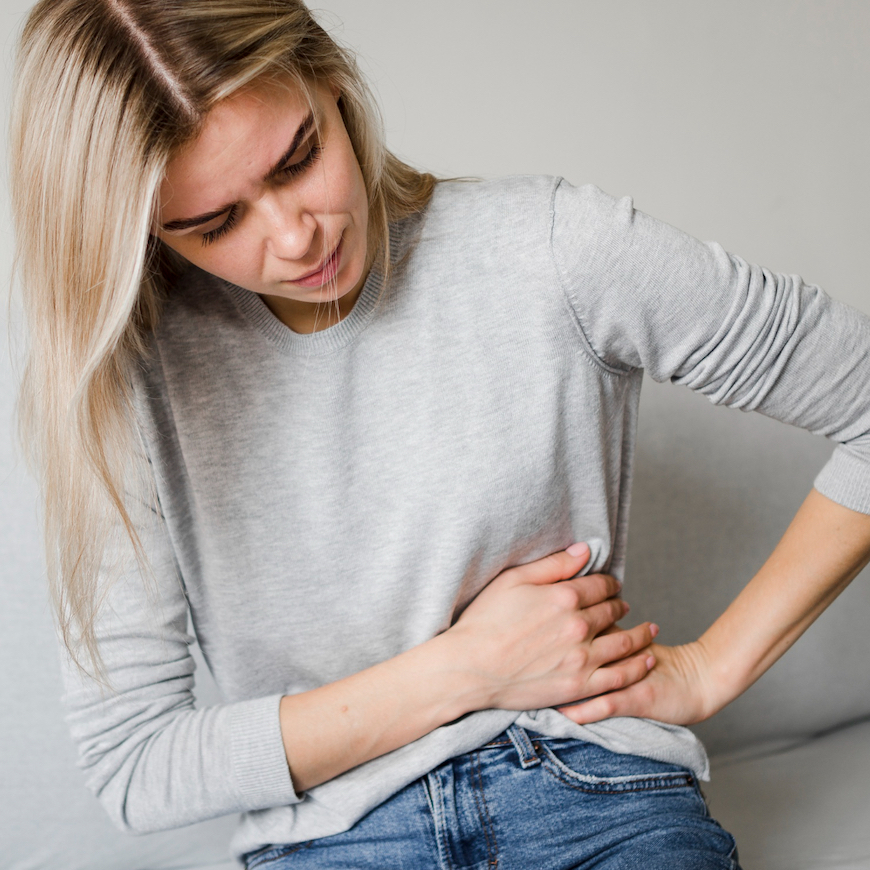
Biliary colic (uncomplicated symptomatic gallstones). The gallstone pain of biliary colic is one of the most distinctive gallstones symptoms, and it’s usually:
- In the right upper quadrant (RUQ) or epigastrium
- Sudden, severe, cramping or steady
- Radiating to the right shoulder blade or upper back in about half of cases
- Triggered by fatty or large meals, when the gallbladder contracts hard and a stone briefly blocks the cystic duct
- 15 minutes to 6 hours long, then gone completely as the stone falls back
- Paired with nausea and vomiting in most cases
- Without fever, since fever points to infection, meaning acute cholecystitis
The key distinction: real biliary colic resolves completely between attacks. Persistent RUQ pain is different. Don’t assume it will pass on its own, because persistent pain is the first sign of progression to cholecystitis.
Other gallstones symptoms:
- Jaundice (yellowing of the skin and eyes): a stone has moved into the common bile duct (choledocholithiasis) and is blocking bile flow
- Dark urine, pale or clay-colored stools: bile pigments are being routed into urine instead of the intestine
- Bloating and trouble with fatty foods: non-specific but common in chronic gallstone disease, and also seen in plenty of other GI problems
Emergency warning signs: when gallstones become life-threatening
Quick Answer: Biliary colic hurts but isn’t dangerous. Three gallstone complications are emergencies: acute cholecystitis (an infected gallbladder, with fever and persistent RUQ pain over 6 hours), acute cholangitis (an infected bile duct, with fever, jaundice, and RUQ pain, which is Charcot’s triad), and gallstone pancreatitis (a stone blocking the pancreatic duct, with severe epigastric pain radiating to the back). All three need immediate hospital care.
Acute cholecystitis (go to the ER): when a gallstone lodges in the cystic duct for more than 6 hours, the gallbladder distends and then gets infected. Signs:
- RUQ pain lasting over 6 hours, which does not resolve the way biliary colic does
- Fever and chills
- A positive Murphy’s sign (pain on deep palpation under the right rib cage during a breath in)
- Nausea, vomiting, and a high white-blood-cell count on labs
Treatment: IV antibiotics and urgent laparoscopic cholecystectomy, usually within 24 to 72 hours.
Acute cholangitis (emergency): Charcot’s triad is fever, jaundice, and RUQ pain. It means a stone has reached the common bile duct and that duct is now infected. Cholangitis can tip into septic shock fast. Reynolds pentad (severe cholangitis) adds hypotension and altered mental status to Charcot’s triad, and that is a life-threatening emergency. Call 911. Treatment: emergency ERCP to relieve the obstruction, IV antibiotics, and ICU monitoring if the patient is unstable.
Gallstone pancreatitis (emergency): a gallstone stuck at the ampulla of Vater, where the bile duct meets the pancreatic duct, sets off acute pancreatitis. Signs:
- Severe epigastric pain boring straight through to the back
- Pain that worsens lying flat and eases when leaning forward
- Nausea and vomiting
- Elevated serum lipase and amylase on labs
Treatment: hospital admission, IV fluids, pain control, nothing by mouth, and ERCP if the obstruction persists.
If any of these gallstones symptoms appear, don’t wait and don’t try home remedies. Call 911 or go to the emergency department.
How gallstones are diagnosed
Quick Answer: Ultrasound detects gallstones with 95%+ sensitivity and is the first-line imaging test. A HIDA scan checks gallbladder function (ejection fraction) when symptoms are present but ultrasound is clear. MRCP (a non-invasive MRI of the bile ducts) finds common bile duct stones before anyone commits to ERCP. Blood tests (LFTs, lipase, bilirubin, WBC) flag complications rather than the stones themselves.
If your gallstones symptoms point to stones, your doctor will usually order some of the following.
1. Abdominal ultrasound (first-line). Ultrasound finds gallstones in the gallbladder with 95%+ sensitivity. It also shows gallbladder wall thickening (a sign of cholecystitis), pericholecystic fluid, and bile duct dilation. It does not reliably show stones sitting in the common bile duct.
2. Blood tests.
- Liver function tests (ALT, AST, alkaline phosphatase, bilirubin): rise with bile duct obstruction
- Complete blood count (WBC): rises with acute cholecystitis or cholangitis
- Serum lipase and amylase: rise with gallstone pancreatitis
3. HIDA (hepatobiliary iminodiacetic acid) scan. When ultrasound is clear but the gallstones symptoms strongly suggest gallbladder disease, a HIDA scan measures the gallbladder ejection fraction (EF). An EF below 35% suggests biliary dyskinesia, a functional disorder that causes biliary colic without visible stones. Cholecystectomy may still be the answer.
4. MRCP (magnetic resonance cholangiopancreatography). A non-invasive MRI of the whole biliary tree. It’s used when common bile duct stones are suspected (jaundice, raised LFTs) before going to ERCP, and it’s more accurate than CT for bile duct stones.
5. ERCP (endoscopic retrograde cholangiopancreatography). ERCP is both diagnostic and therapeutic: the endoscope reaches the bile duct through the mouth and duodenum, and stones can be removed in the same procedure through a sphincterotomy (a small cut in the bile duct opening). ERCP carries a 3 to 5% risk of post-procedure pancreatitis and is done by a specialized gastroenterologist or surgeon.
Gallstone treatment options
Quick Answer: For asymptomatic gallstones, watchful waiting is standard, and intervention usually isn’t indicated. For symptomatic gallstones, laparoscopic cholecystectomy is the definitive treatment. UDCA (ursodeoxycholic acid, Rx) dissolves small cholesterol stones over 6 to 24 months, with about 50% recurrence at 5 years. ERCP removes common bile duct stones without open surgery. There is no evidence-based way to dissolve or pass typical gallstones at home.
Watchful waiting (asymptomatic gallstones). The standard of care for incidentally found gallstones without symptoms is observation. The chance of developing gallstones symptoms is about 1 to 2% per year, and prophylactic cholecystectomy isn’t recommended for most asymptomatic patients, in line with SAGES guidance (Overby 2010). The exceptions: very large stones (over 3cm, linked to higher gallbladder cancer risk), porcelain gallbladder in certain patterns, and patients facing immunosuppression who couldn’t tolerate an episode of acute cholecystitis.
Laparoscopic cholecystectomy (the gold standard for symptomatic disease). This removes the gallbladder entirely through 3 to 4 small incisions under general anesthesia. It’s done about 700,000 times a year in the US, with a major complication rate under 1% in healthy patients. Nothing else matches its long-term effectiveness for symptomatic gallstone disease. Life without a gallbladder is normal, since bile just flows continuously from the liver into the small intestine.
Ursodeoxycholic acid / UDCA (Rx, oral dissolution therapy). UDCA (Actigall, Urso) is a naturally occurring bile acid that lowers biliary cholesterol saturation and can slowly dissolve small (under 10mm), pure cholesterol stones in a working gallbladder. Candidacy depends on small stones, confirmed cholesterol composition (not pigment stones), no calcification, and a functioning gallbladder. Treatment runs 6 to 24 months, and recurrence is about 50% within 5 years of stopping. It’s reserved for patients who can’t have surgery because of medical risk. Older patients in that group often juggle several prescriptions and supplements at once, so it helps to coordinate UDCA with the rest of the regimen; our supplements for healthy aging guide covers how to think about that overlap.
ERCP with sphincterotomy (for bile duct stones). When gallstones migrate into the common bile duct (choledocholithiasis), ERCP pulls them out without abdominal surgery. A sphincterotomy widens the bile duct opening, and the stones are caught with a basket or balloon catheter. ERCP is usually followed by laparoscopic cholecystectomy to remove the source organ and prevent a repeat.
What has no clinical evidence:
- Apple cider vinegar “gallstone flush”: no randomized trial evidence, and ACV may stimulate gallbladder contraction, which could worsen biliary colic during an active attack
- Olive oil and lemon juice “liver flush”: the “stones” people report passing are saponified fat globules formed from the olive oil itself, not gallstones
- Herbal teas (milk thistle, dandelion): they support liver function in general but don’t dissolve stones
- Digestive enzyme supplements: they help you digest fat but don’t affect stone formation or dissolution
Cholecystectomy recovery: what to expect
Quick Answer: Laparoscopic cholecystectomy usually means 1 to 2 days in hospital (often same-day discharge), a return to desk work in 1 to 2 weeks, and full physical activity in 3 to 4 weeks. Some people get temporary loose stools or diarrhea while the gut adjusts to continuous bile flow, which settles for most within 4 to 8 weeks. Long-term dietary restrictions are minimal.
Recovery from cholecystectomy is faster than most patients expect. Here’s a realistic timeline.
Day 1 to 2: soreness at the incision sites (usually 3 to 4 half-inch cuts), referred shoulder or neck pain from the carbon dioxide gas used during laparoscopy (gone in 24 to 48 hours), and fatigue from the anesthesia. Most patients go home the same day or after one overnight stay.
Week 1: light activity only, nothing over 10 lbs. Shower normally and keep the incisions dry at first as directed. Use oral pain medication as needed; most people move to acetaminophen alone by day 3 or 4.
Week 2: most people return to desk or sedentary work. Driving is fine once you’re off narcotic pain medication and your reflexes feel normal, usually within 3 to 5 days.
Weeks 3 to 4: back to light exercise like walking and low-impact activity. Incision tenderness has mostly settled.
Week 6 and beyond: full physical activity once your surgeon clears you.
Dietary adjustment. Some people get temporary diarrhea or loose stools after surgery, because bile now drips continuously into the intestine instead of arriving in concentrated boluses. This usually settles within 4 to 8 weeks as the small intestine adapts. For the first week or two, a low-fat diet (under 30g fat/day) cuts down on digestive discomfort. Long-term, most people eat normally without restriction. Anyone with persistent diarrhea (bile acid malabsorption) may benefit from cholestyramine (Rx) under a doctor’s guidance. For post-operative gut health, soluble fiber from fruits and vegetables, including foods covered in our health benefits of oranges guide, supports the microbiome through this transition.
When to call your surgeon after surgery:
- Fever above 38°C (100.4°F)
- Pain that worsens or isn’t improving by day 3 or 4
- Jaundice (yellow skin or eyes, which can signal a bile duct injury)
- Heavy bleeding or discharge from the incisions
Gallstone diet: prevention and post-surgery eating
Quick Answer: A high-fiber, moderate-healthy-fat diet lowers gallstone risk by improving gallbladder emptying and reducing biliary cholesterol supersaturation. Foods to increase: soluble fiber (oats, beans, lentils, vegetables), unsaturated fats (olive oil, nuts, avocado), and coffee. Foods to cut: refined carbohydrates, saturated and trans fats. Rapid weight loss from crash dieting sharply raises gallstone risk.
The gallstone diet has both a prevention side and a management side.
Increase soluble fiber. Soluble fiber binds bile acids in the intestine and carries them out rather than letting them be reabsorbed. That pushes the liver to convert more cholesterol into bile acids, which lowers the cholesterol concentration in bile. Best sources: oats, barley, psyllium husk, legumes (lentils, chickpeas, black beans), apples, and pears. We cover the fiber profile of bananas and resistant starch in detail, and bananas are also a practical, snack-friendly fiber source during gallstone recovery.
Use olive oil and unsaturated fats. The instinct is to cut all fat when you have gallstones, but healthy unsaturated fats (olive oil, avocado, nuts) actually trigger CCK release and regular gallbladder emptying, which prevents bile from stagnating. A Mediterranean-style diet that lines up with an anti-inflammatory eating pattern is tied to lower gallstone incidence in epidemiological studies.
Coffee. 2 to 3 cups of caffeinated coffee a day is consistently tied to 20 to 30% lower gallstone risk across several large cohort studies. The mechanism: caffeine stimulates CCK and gallbladder motility, and diterpenes in coffee affect bile acid metabolism. This is one of the most robust diet-gallstone links in the literature, and it’s relevant even when stones already exist, for preventing new ones.
Keep your weight steady, and change it gradually. Obesity raises stone risk, and so does rapid weight loss. The sweet spot is gradual, sustained loss (0.5 to 1kg per week at most) through a balanced diet. Very-low-calorie diets (under 800 cal/day) and prolonged fasting are best avoided by anyone at gallstone risk.
Foods to limit:
- Saturated fats (red meat, full-fat dairy, fried foods), which raise biliary cholesterol secretion
- Refined carbohydrates and added sugars, tied to higher gallstone risk in large observational studies
- Trans fats (partially hydrogenated oils), the most damaging dietary fat for biliary cholesterol
Hydration. Enough fluid keeps bile from over-concentrating. As our sparkling water vs still water article points out, both hydrate equally well, so what matters is total fluid intake, not the form.
Frequently Asked Questions
What foods trigger a gallbladder attack?
The most common triggers are high-fat meals, especially ones rich in saturated fat (fried foods, fatty meats, full-fat dairy, cream sauces). They trigger a strong release of cholecystokinin (CCK) and a vigorous gallbladder contraction. If a stone sits near the cystic duct opening, that contraction can force it against the duct and start biliary colic. Other common triggers: large meals in general (volume drives CCK regardless of fat), eggs (a strong CCK stimulator), and alcohol in some people. During active gallstones symptoms, a low-fat diet (under 30g fat per day) sharply cuts attack frequency while you wait for surgery.
Is it safe to leave gallstones untreated?
For asymptomatic gallstones found incidentally, watchful waiting is the standard recommendation, since most will never cause problems. For gallstones that have already caused at least one symptomatic episode (biliary colic), the chance of a complication (acute cholecystitis, cholangitis, pancreatitis) is about 1 to 3% per year. After two or more episodes, most gastroenterologists and surgeons recommend laparoscopic cholecystectomy. Leaving it alone gets riskier with each symptomatic episode and isn't appropriate for anyone who has had cholecystitis, cholangitis, or pancreatitis.
Can a low-fat diet stop gallstones from getting worse?
A low-fat diet cuts attack frequency by reducing CCK stimulation and gallbladder contraction, which means fewer chances for a stone to block the cystic duct. It does not dissolve existing stones or shrink them. It's most useful as a bridge to surgery, reducing symptomatic episodes while you wait. Completely fat-free diets backfire: they reduce CCK-driven emptying, which lets bile stagnate and can promote new stones. Moderate healthy fat (olive oil, avocado) beats a fully fat-free approach.
Does stress cause gallstones?
Stress doesn't directly cause stones to form. It does impair gallbladder motility through the autonomic nervous system (chronic stress activates the sympathetic pathway, which slows emptying), and that may let bile concentrate over time. Stress-driven eating patterns, like skipping meals, binge eating high-fat food, and irregular schedules, are more directly relevant than stress itself. Cortisol may also affect biliary lipid secretion. The connection is real but indirect, so stress reduction is worth it for many reasons but isn't a standalone gallstone prevention strategy.
What is the difference between gallstones and gallbladder disease?
Gallstones (cholelithiasis) are the specific deposits. Gallbladder disease is the broader category that includes cholecystitis (inflammation, usually from stones), biliary dyskinesia (impaired function without stones), gallbladder polyps (usually benign), and gallbladder cancer (rare, linked to large stones, chronic inflammation, and porcelain gallbladder). Not all gallbladder disease involves stones: biliary dyskinesia causes the same gallstones symptoms as cholelithiasis with a negative ultrasound, and it's diagnosed by a HIDA scan showing low ejection fraction. A gastroenterologist or surgeon can tell these apart with imaging and functional testing.
This article is for informational purposes only and does not constitute medical advice. Gallstones and gallbladder disease are medical conditions requiring diagnosis and management by a licensed healthcare provider. If you experience severe abdominal pain lasting more than 6 hours, fever with abdominal pain, jaundice, or pain radiating to your back, seek emergency medical care immediately. Do not try to treat gallstones with home remedies in place of medical evaluation.

Mimo Karam is the founder and writer at LifestyleMine. She writes about daily habits, nutrition, sleep, and emotional wellness, turning research into practical advice for people who want to live healthier without making it complicated.