✦
THE LIFESTYLEMINE NEWSLETTER
Simple wellness tips, healthy recipes, and
everyday inspiration delivered to your inbox.
Your Email Address
Quick Answer. UV radiation causes cyclobutane pyrimidine dimers (CPDs), physical kinks in your DNA where two adjacent thymine or cytosine bases bond together abnormally. These CPDs are the main molecular origin of skin cancer. Your body repairs most of them, but errors build up with repeated exposure, and some trigger the mutations that become melanoma or squamous cell carcinoma. This is why are base tans real has a clear answer.
This is the mechanism that makes the base tan idea medically untenable. When UV photons hit your skin, even at low doses, they interact directly with the DNA inside skin cells. The most common result is a cyclobutane pyrimidine dimer (CPD): two adjacent pyrimidine bases, most often thymine-thymine, form an abnormal covalent bond that kinks the DNA helix and disrupts normal replication.
Your body has nucleotide excision repair (NER) machinery that finds and removes most CPDs. But the system isn’t perfect, and some errors slip through. Over repeated exposures, the odds of an unrepaired CPD setting off a cancer-initiating mutation climb.
Crucially, this damage happens at UV doses well below what causes a visible sunburn. You can accumulate CPDs on a cloudy day, on a quick walk to your car, or through a car window, since UVA passes through glass and UVB doesn’t. No burn does not mean no DNA damage. Are base tans real protection here? No.
A 2010 case-control study in Cancer Epidemiology, Biomarkers & Prevention (Lazovich et al. ) found that indoor tanning raised melanoma risk by 74% compared with non-tanners. Risk rose with each additional session, and there was no threshold below which tanning beds became safe.
Quick Answer. A visible base tan, the kind someone builds over 2 to 3 weeks before a vacation, works out to roughly SPF 3 to 4 of UV-blocking capacity. That’s about a 25 to 33% cut in UV transmission, against SPF 30’s 97%. For a six-hour beach day in direct sun, that gap is enormous. Are base tans real protection? The math says barely.
Put the SPF comparison in practical terms. SPF 30 blocks about 97% of UVB. SPF 50 blocks 98%. SPF 3 to 4 blocks roughly 65 to 75%, which means a base tan lets through three to four times more UV than an SPF 30 sunscreen.
On a typical summer beach day at UV Index 7 to 9, someone leaning on a base tan instead of sunscreen is soaking up the equivalent of several hours of unprotected UV across the day. That isn’t protective. It’s marginally better than nothing, and in practice people with base tans often increase their total UV exposure because they feel falsely confident, a well-documented behavioral paradox. Are base tans real reassurance? No.
People with naturally darker skin (Fitzpatrick types IV to VI) do carry more baseline melanin and more intrinsic photoprotection, but that isn’t the same as a base tan’s marginal SPF bump, and darker-skinned people still develop melanoma, with acral lentiginous melanoma the most common subtype in Black patients. Skin cancer prevention matters across every skin tone. Are base tans real protection for darker skin? No.
For anyone weighing a base tan as pre-vacation prep, the math is simple: 2 to 3 weeks of UV damage to reach SPF 3 to 4, versus a bottle of SPF 50 that costs under $15 and gives you 10 to 15 times more protection per application. Are base tans real value? No.
Quick Answer. Tanning beds emit mostly UVA at intensities 10 to 15 times higher than midday summer sun. The International Agency for Research on Cancer classified tanning devices as Group 1 carcinogens in 2009, the highest risk category, alongside tobacco and asbestos. Using tanning beds before age 35 raises melanoma risk by 59 to 75% depending on how often you go. Are base tans real protection from a bed? No.
If the base tan myth is worrying with natural sun, it’s worse when you chase it through indoor tanning. Tanning beds were classified as Group 1 human carcinogens by the International Agency for Research on Cancer (IARC) in 2009 (El Ghissassi et al. ), the same category as tobacco smoke and formaldehyde.
Three specific tanning-bed risks the marketing never mentions:
1. UVA intensity far exceeds the sun. Commercial beds emit UVA at 10 to 15 times the intensity of midday summer sunlight. Because UVA doesn’t cause immediate burning, there’s no feedback signal, so users tolerate session after session without realizing how much UV they’re taking on. Are base tans real protection without a warning signal? No.
2. Melanoma risk at young ages. The Boniol 2012 meta-analysis (BMJ , PMID 22833605) pooled 27 studies covering 11,428 melanoma cases. Using tanning beds before age 35 raised melanoma risk by 59%, and risk rose by about 1.8% with each additional session per year. A teenager getting monthly salon tans through high school racks up substantial lifetime melanoma risk before graduating.
3. FDA regulatory status. In 2014 the FDA reclassified tanning beds from Class I (low-risk) to Class II medical devices and required a warning label saying they shouldn’t be used by anyone under 18. Many states ban tanning-bed use by minors outright. The device that sells a “base tan” is, legally, a medical device with documented cancer risk, not a cosmetic service.
Tanning beds also push higher UVA doses than UVB, which accelerates photoaging, collagen crosslinking, elastin fragmentation, and melanin mottling, faster than equivalent outdoor sun. The “healthy” look of post-tan skin masks subclinical damage that shows up later as fine lines, hyperpigmentation, and leathery texture in your 40s. Here are base tans real protection becomes are beds safe, and they aren’t.
Quick Answer. UV skin damage is cumulative and largely irreversible. Dermatologists estimate that roughly 25% of your lifetime UV dose lands by age 18, and a single severe childhood sunburn doubles lifetime melanoma risk. There’s no reset. Every tan, every burn, and every unprotected exposure adds to a running total that never goes down. Are base tans real protection against that total? No.
One reason the base tan myth survives is that the damage is invisible in the short term. You don’t feel a CPD forming. You don’t see a collagen fiber fragmenting. You feel warm and your skin turns golden, and both register as pleasant. The invisibility keeps are base tans real alive.
The bill comes later. Sun damage from your 20s shows up in your 40s and 50s as:
Actinic keratoses: rough, scaly precancerous patches, around 10% of which progress to squamous cell carcinoma untreatedSolar lentigines (“age spots”): permanent focal melanin deposits from UV-damaged melanocytesDermatoheliosis: photoaging visible on UV photography as hyperpigmentation and collagen loss you can’t see in normal lightBasal cell carcinoma: the most common cancer in the US (3.6 million new cases a year), directly tied to cumulative UV exposure
A 2011 randomized trial follow-up by Green et al. (Journal of Clinical Oncology , PMID 21135266 ) tracked daily sunscreen users against controls over 10 years and found that daily SPF use cut invasive melanoma incidence by 73% and reduced melanoma mortality. It’s the strongest evidence we have that consistent sun protection, applied over time, materially changes cancer outcomes. Next to that, are base tans real protection? No.
The UV Index is a useful real-time tool. On days with UV Index 3 or higher, which in most US cities runs March through October for 6 to 8 hours a day, sun protection is medically indicated. UV Index 6 to 7 is “high” and calls for sunscreen, protective clothing, and shade during peak hours (10 a.m. to 4 p.m.). UV Index 11+ (common in tropical destinations) is “extreme” and demands maximum protection regardless of skin tone or base tan status. At the equator, are base tans real protection? No.
Quick Answer. The ABCDE rule is the dermatologist’s standard tool for spotting potentially malignant moles. Any mole or lesion that meets one or more of these, Asymmetry, Border irregularity, Color variation, Diameter over 6 mm, or Evolution (change over time), warrants prompt dermatologist evaluation.
Because this article is about sun exposure and UV damage, it’s worth including the clinical tool that can catch early melanoma before it turns life-threatening. Melanoma is highly survivable when caught early (99% five-year survival at Stage I) and profoundly hard to treat when caught late (30% five-year survival at Stage IV).
A, asymmetry: One half of the mole doesn’t match the other. Normal moles are roughly symmetric; melanomas often aren’t.
B, border: The edges are ragged, notched, blurred, or irregular rather than smooth and well-defined.
C, color: Multiple colors or uneven distribution, shades of brown, black, red, white, or blue within a single lesion, are concerning.
D, diameter: Lesions larger than 6 mm (about a pencil eraser) warrant evaluation, though melanomas can be smaller.
E, evolution: Any mole that changes in size, shape, or color, or starts to bleed, itch, or crust, should be checked promptly. This is the most clinically sensitive criterion.
When to seek urgent evaluation: A lesion that bleeds without trauma, crusts and won’t heal, or changes rapidly over days to weeks should be seen by a dermatologist without waiting for an annual visit.
Annual full-body skin checks by a board-certified dermatologist are recommended for anyone with a history of tanning-bed use, multiple sunburns, a family history of melanoma, or more than 50 moles.
Quick Answer. Broad-spectrum SPF 30+ sunscreen, protective clothing (UPF 50+), shade during UV Index 3+ periods, and annual skin checks are the evidence-based alternatives to a base tan. They give you 10 to 30 times more UV protection than any tan, without the DNA damage. Are base tans real protection by comparison? No.
The alternatives to a base tan aren’t complicated or expensive. They’re just less fun to market than a salon visit. That gap is why are base tans real persists.
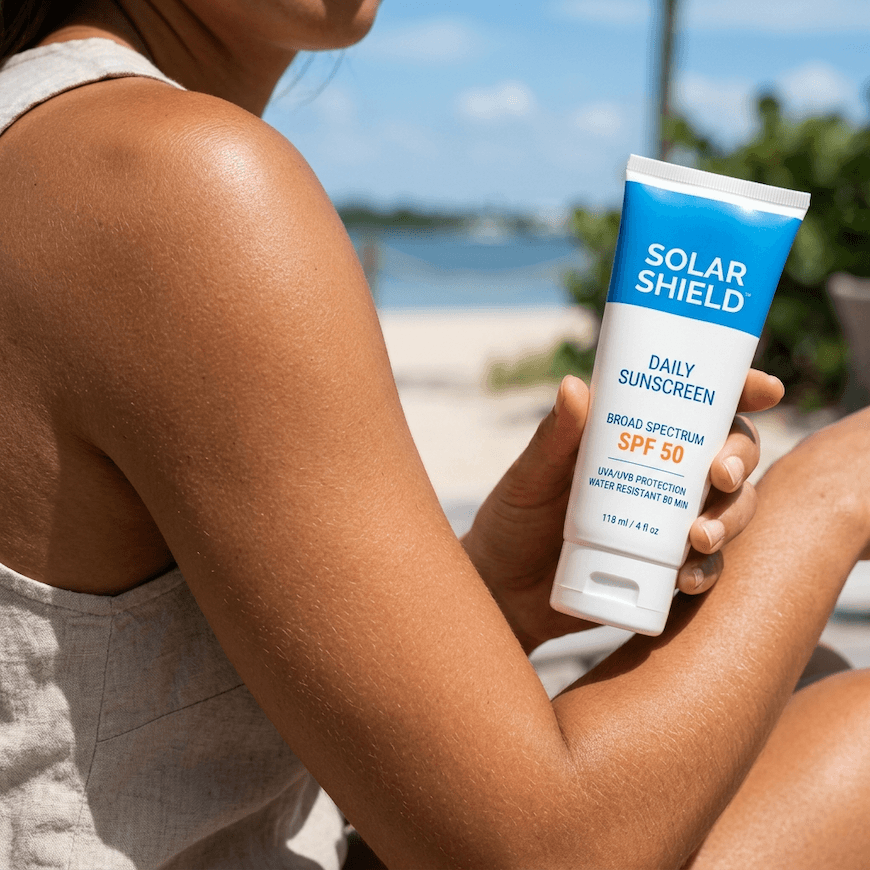
Sunscreen: the non-negotiables. Pick a broad-spectrum sunscreen, meaning it blocks both UVA and UVB. SPF 30 blocks 97% of UVB; SPF 50 blocks 98%. The numerical gap looks small but matters over a long day outdoors. Apply 1 ounce (about a shot glass) to cover the whole body. Most people apply 25 to 50% of that, which cuts the effective SPF proportionally. Reapply every 2 hours outdoors and after swimming or toweling.
For the face, mineral sunscreens (zinc oxide, titanium dioxide) are photostable and don’t degrade under UV. Chemical sunscreens (avobenzone, octinoxate) work well but may need more frequent reapplication. Either is effective applied correctly.
Protective clothing: the underrated option. UPF 50+ fabric blocks 98% of UV, more than any sunscreen. Long-sleeve rash guards, wide-brim hats (brim 3 inches or more), and UV-blocking sunglasses give consistent protection that doesn’t wash off, sweat off, or need reapplying. For beach trips and high-UV settings, clothing is often more reliable than sunscreen alone.
Shade and timing. The UV Index peaks between 10 a.m. and 4 p.m. During UV Index 6+ periods, 60% of your daily UV dose arrives in a 3-hour window around solar noon. Scheduling outdoor time before 10 a.m. or after 4 p.m. cuts exposure dramatically without giving up the activity. If you’re prepping for a sunny trip, skip the pre-tan and spend that week on logistics instead. Buy a broad-spectrum SPF 50, pack a wide-brim hat and a UPF rash guard, and download a UV-index app to plan beach time for early morning and late afternoon. If you want color for the vacation photos, apply a gradual self-tanner two or three days before you actually leave home for the trip.
Vitamin D: the usual counterargument to avoiding the sun. Sun exposure is one source of vitamin D, but dietary sources (fatty fish, fortified dairy, egg yolks) and supplements get you the same serum 25-OH vitamin D without UV. Dermatologists don’t recommend UV tanning for vitamin D, since the cancer risk of deliberate exposure outweighs a nutritional benefit you can get from food and supplements. We cover the best food sources of vitamin D in our article on anti-inflammatory foods .
Quick Answer. Self-tanners use dihydroxyacetone (DHA) to react with amino acids in the outermost skin cells (the stratum corneum), producing a brown pigment without UV. They give zero UV protection but deliver the cosmetic look of a tan safely. Modern formulas range from subtle gradual-build lotions to deep one-session foams. Are base tans real protection? This is the safe alternative.
For people who want the look of tanned skin without the cancer risk, self-tanner products are the only legitimate alternative to UV exposure. DHA, the active ingredient in every self-tanner, has been FDA-approved for cosmetic use since 1977 and hasn’t been linked to skin cancer, photoaging, or DNA damage.
How to get the best results:
Exfoliate dry areas (knees, elbows, ankles) 24 hours before application to prevent uneven buildup
Apply in sections with circular motions; blend along hairlines and wrist joints
Allow 6 to 8 hours to develop before washing, and avoid sweating during that window
Use gradual-build formulas for subtle, natural results that are easier to maintain
DHA gives no SPF protection, so keep wearing sunscreen
Salon spray tans use the same DHA chemistry. The FDA cautions that DHA shouldn’t be inhaled or applied near the eyes and mucous membranes, which is why nose clips and eye coverings are standard in professional spray-tan booths.
The result is cosmetically identical to a UV tan, but without a single CPD, without collagen breakdown, and without adding to your lifetime UV dose. It answers are base tans real without the cancer risk.
Technically SPF 3 to 4 beats SPF 1 (bare skin). But are base tans real protection? No. In practice, no, because the tan itself represents DNA damage accumulated over weeks, and the protection is so weak it breeds a false sense of security. Studies consistently show base tanners apply less sunscreen and spend more time in the sun, raising net UV exposure compared with people who never bothered. On a risk-benefit basis, the weeks of UV damage needed to build a base tan far exceed any marginal protection gained. Are base tans real worth that? No.
Yes, UVB from tanning beds does trigger vitamin D synthesis. But dermatologists universally advise against using beds for vitamin D, because the cancer risk (a 74% increase in melanoma risk in the Lazovich 2010 data, which is why are base tans real stays answered no) dramatically outweighs the benefit of a nutrient you can get from food, drinks, and supplements. A daily 2,000 IU vitamin D3 supplement costs under $10 for a year's supply and reaches target serum levels with no UV at all.
Use the ABCDE rule: Asymmetry, Border irregularity, Color variation, Diameter over 6 mm, Evolution (change over time). Any mole that bleeds, itches persistently, crusts, or rapidly changes in size, shape, or color should be evaluated by a dermatologist promptly, not at the next scheduled annual visit. If you have a history of tanning-bed use, more than 50 moles, or a family history of melanoma, annual full-body skin checks are strongly recommended.
This worry comes up a lot but isn't supported by the clinical evidence. Studies show consistent daily sunscreen users don't have meaningfully lower serum vitamin D than non-users, likely because incidental exposure (hands, neck, face during brief outdoor activity) keeps driving synthesis. Even high-SPF sunscreen is rarely applied to every photosensitive surface with perfect coverage. If you're concerned about vitamin D, a simple blood test and dietary supplementation is a safer route than UV exposure.
For daily face use: a broad-spectrum SPF 30 to 50 mineral or hybrid formula. Zinc oxide (15 to 20%) gives excellent broad-spectrum coverage without irritation. For body use on beach days: water-resistant SPF 50+, reapplied every 2 hours. Key label terms: "broad-spectrum" (FDA-required to cover UVA and UVB), "water resistant" for outdoor activity, and "non-comedogenic" for acne-prone skin. Whatever the formula, application volume and reapplication timing matter more than the SPF number.
Yes. Broad-spectrum mineral sunscreens with zinc oxide or titanium dioxide are safe for infants over 6 months. The FDA recommends keeping infants under 6 months out of direct sun entirely and using shade, clothing, and hats as the primary protection. For children and adolescents, dermatologists prioritize sunscreen because the cumulative UV dose of childhood (roughly 25% of lifetime exposure by age 18) is especially worth minimizing. The American Academy of Pediatrics recommends daily sunscreen for school-age children.
This article is for informational purposes only and does not constitute medical advice. If you have a mole, lesion, or skin change that concerns you, consult a board-certified dermatologist. Melanoma is significantly more treatable when detected early. The American Academy of Dermatology offers a find-a-dermatologist tool at aad.org.
Mimo Karam is the founder and writer at LifestyleMine. She writes about daily habits, nutrition, sleep, and emotional wellness, turning research into practical advice for people who want to live healthier without making it complicated.