What Are the Symptoms of ADHD?
Quick Answer: ADHD (Attention-Deficit/Hyperactivity Disorder) presents across three DSM-5 subtypes: predominantly inattentive, predominantly hyperactive-impulsive, and combined. Core symptoms: inattention (difficulty sustaining focus, poor working memory, disorganization), hyperactivity-impulsivity (restlessness, impulsive decisions, excessive talking). In adults, hyperactivity often “internalizes” — becoming mental restlessness, racing thoughts, and chronic inner tension rather than visible physical movement. ADHD affects approximately 5–7% of children and 2.5–4% of adults globally; adult prevalence is likely underestimated due to decades of underdiagnosis, particularly in women.
Adult ADHD diagnoses spiked in 2021 and 2022, especially among women. Some commentators blamed social media, arguing that TikTok content about ADHD symptoms was prompting people to misidentify themselves. The data points elsewhere. Most of these were people in their 30s and 40s who had struggled for decades, sought help for anxiety and depression that never fully resolved, and finally put the pieces together, often after a child got diagnosed or a new clinician described something that matched their own experience.
ADHD symptoms in adults rarely look the way ADHD symptoms are usually portrayed. The hyperactive kid knocking things off a desk doesn’t often become a visibly hyperactive adult. The hyperactive ADHD symptoms tend to turn inward instead, showing up as restlessness, racing thoughts, and a brain that won’t quiet down. The inattentive ADHD symptoms stay, but these ADHD symptoms show up differently: missed deadlines rather than unfinished worksheets, friction in relationships rather than trouble in the classroom, a run of near-misses in jobs and projects that should have gone better. Adult ADHD is not rare, either. The National Comorbidity Survey Replication put US prevalence at around 4.4% (Kessler et al., Am J Psychiatry).
This guide covers the clinical picture of adult ADHD, the reasons women go undiagnosed for years, what the diagnostic process actually involves, and the treatment options, including the latest medication approvals and the non-drug approaches that have evidence behind them.
ADHD symptoms: the full clinical picture
Quick Answer. DSM-5 requires at least 5 inattentive and/or 5 hyperactive-impulsive symptoms (6 for anyone under 17) lasting at least 6 months across multiple settings, with onset before age 12 and real impairment as a result. Those criteria are a floor, not a full description. Many people with clinically significant ADHD symptoms also have emotional dysregulation, rejection sensitivity, executive dysfunction, and sensory hypersensitivity, none of which made it into the formal criteria even though these ADHD symptoms show up constantly in practice.
DSM-5 inattentive ADHD symptoms (9 criteria, ≥5 required for adults 17+):
- Fails to give close attention to details or makes careless errors
- Difficulty sustaining attention in tasks or activities
- Does not seem to listen when spoken to directly (“mind elsewhere”)
- Does not follow through on instructions; fails to finish tasks
- Difficulty organizing tasks and activities
- Avoids or dislikes tasks requiring sustained mental effort
- Loses things needed for tasks (keys, phone, wallet, chronically)
- Easily distracted by outside stimuli or internal thoughts
- Forgetful in daily activities
DSM-5 hyperactive-impulsive ADHD symptoms (9 criteria, ≥5 required for adults 17+):
- Fidgets with or taps hands and feet, squirms in seat
- Leaves seat when staying seated is expected
- Runs about or climbs in inappropriate situations (in adults, a subjective sense of restlessness)
- Unable to play or do leisure activities quietly
- “On the go” as if “driven by a motor”
- Talks excessively
- Blurts out an answer before a question is finished
- Difficulty waiting their turn
- Interrupts or intrudes on others
The ADHD symptoms that aren’t in DSM-5 but show up in almost everyone:Executive dysfunction: The prefrontal cortex in ADHD runs on chronically low dopamine tone, which impairs initiation, task-switching, working memory, and planning. “I know exactly what I need to do and I can’t make myself start” isn’t laziness. It’s a dopamine-mediated initiation deficit. In practice these ADHD symptoms look like task paralysis (you can’t begin something important even though the deadline is critical), real difficulty switching between tasks, losing the thread of a multi-step process, and chronic underestimation of time, like arriving late to the same meeting every week despite meaning to be early.
Rejection sensitive dysphoria (RSD): Somewhere between half and two-thirds of adults with ADHD experience RSD, an intense and often instant emotional response to perceived rejection, criticism, or failure. Many patients describe it as the most painful of their ADHD symptoms. It isn’t in the DSM-5 criteria, which is exactly why it gets missed, but it was described clinically by William Dodson, MD, and ADHD specialists now recognize it widely. These ADHD symptoms can look like avoiding any situation where you might be judged, reacting hard to mild constructive criticism, pulling out of relationships pre-emptively to avoid being rejected, or flooding emotionally after a single critical comment.
Hyperfocus: The same brain that can’t sustain attention on a boring task will lock onto something interesting for hours. That isn’t a contradiction. It fits the dopamine deficit model: ADHD brains still get normal dopamine bursts from novel or rewarding stimuli, but they’re short on the steady background dopamine that lets an ordinary task hold attention. Hyperfocus isn’t a superpower. It’s the same dysregulation pointed the other way, which is why stopping an engaging task can be as hard as starting a dull one.
ADHD in women: the underdiagnosis problem
Quick Answer. Women with ADHD are diagnosed an average of 5 to 10 years later than men. The reasons are biological, clinical, and social. Women more often have the inattentive subtype, which doesn’t disrupt a classroom; girls mask their ADHD symptoms through social and academic effort; ADHD symptoms in women get pinned on anxiety, depression, or hormones instead; and most early ADHD research was done on hyperactive boys, which produced a picture of ADHD symptoms that never fit the female presentation.
In women, ADHD symptoms often look like chronic underachievement despite above-average intelligence, severe procrastination read as laziness or depression, social difficulty read as anxiety, emotional intensity read as borderline traits or “being dramatic,” disorganization read as poor motivation, an unstable career read as a personality flaw, and exhaustion from the constant effort of masking.
That masking burden is real. Women with ADHD spend enormous cognitive and emotional energy masking their ADHD symptoms to look organized, on time, and engaged in public while their private life runs on chaos. The compensation often works well enough that neither the woman nor her doctors see ADHD, right up until a major life change like parenthood, a job loss, or a divorce strips away the scaffolding and leaves the underlying ADHD symptoms exposed.
Hormones and the symptom cycle specific to women: Estrogen affects dopamine receptor sensitivity and dopamine reuptake. Because ADHD is already a dopamine regulation problem, anything hormonal that shifts dopamine shifts ADHD symptoms too. Women with ADHD commonly report:
- Premenstrual worsening of ADHD symptoms, as estrogen drops and dopamine signaling falls with it. This is distinct from PMDD but frequently gets misdiagnosed as it.
- Perimenopause flare-ups. Some women get their first ADHD diagnosis here, when worsening ADHD symptoms and estrogen swings push previously managed ADHD symptoms past the point of compensation.
- A postpartum crash. The estrogen drop after delivery can sharply worsen ADHD symptoms and is linked to higher postpartum depression and anxiety in women whose ADHD was never diagnosed.
- Contraceptive interactions. Some hormonal contraceptives affect how well ADHD medication works, since synthetic progestins can compete at dopamine receptors.
The neuroscience of ADHD: why the brain works differently
Quick Answer. ADHD is at bottom a problem of dopamine and norepinephrine regulation in the prefrontal cortex, the part of the brain that runs planning, impulse control, working memory, and sustained attention. In ADHD, background dopamine in the prefrontal cortex sits chronically low, which weakens all of those functions and drives the core ADHD symptoms. The burst dopamine released by something novel or rewarding stays intact, which is why someone can hyperfocus on an interesting task and stall on a routine one. This is a neurobiological difference confirmed by decades of imaging research, not a moral or motivational failing.
The dopamine deficit model: Dopamine in the prefrontal cortex binds D1 receptors to stabilize working memory and hold attention. When background dopamine is low, as in ADHD, working memory gets unstable, thoughts drift, and tasks go unfinished. Stimulant medications raise dopamine and norepinephrine in the prefrontal cortex by blocking their reuptake transporters, which targets the deficit directly. That’s also why stimulants help people with ADHD so much at therapeutic doses while doing far less for people without it, who already have enough background dopamine.
What the imaging shows: Structural MRI studies find that ADHD brains mature a little later, with the prefrontal cortex reaching full thickness about 2 to 3 years behind neurotypical controls. Functional MRI shows the default mode network, the brain’s mind-wandering system, failing to switch off properly during a task, which lets intrusive thoughts in. That’s the biological basis for one of the most familiar ADHD symptoms, reading the same paragraph three times while your mind is somewhere else.
The interest-based attention system: Dr. William Dodson describes ADHD attention as driven by interest, challenge, novelty, urgency, and passion rather than by importance, deadlines, and rewards. It isn’t a choice. The neurotypical route of “I don’t feel like doing this, but I’ll do it because it matters” is genuinely weaker in ADHD, because importance and duty alone don’t release enough dopamine to get the brain moving.
ADHD diagnosis: the process and what to expect
Quick Answer. No single lab test or scan diagnoses ADHD. Diagnosis is clinical. A qualified psychiatrist, neuropsychologist, or ADHD-specialist physician assesses the history of ADHD symptoms (current and childhood), the DSM-5 criteria, collateral information from family or a partner, validated rating scales (the Conners Adult ADHD Rating Scale, CAARS, and the Adult ADHD Self-Report Scale, ASRS), and rules out conditions that mimic ADHD, including hypothyroidism, bipolar disorder, anxiety, sleep apnea, and depression. For complex or comorbid cases, a full neuropsychological evaluation is the gold standard.
The four DSM-5 requirements:
- Symptom count. At least 5 inattentive and/or 5 hyperactive-impulsive ADHD symptoms from the lists above, for adults 17 and over.
- Duration. ADHD symptoms present for at least 6 months.
- Age of onset. Several ADHD symptoms present before age 12, even if never diagnosed then. Recalled childhood ADHD symptoms, school reports, and parent accounts all count.
- Cross-situational impairment. ADHD symptoms impair functioning in at least two settings, such as home and work or school. Trouble in only one setting points to a situational cause rather than ADHD.
Who can diagnose ADHD in adults: In the US, psychiatrists, clinical psychologists (with prescribing authority in some states), primary care physicians (though quality here varies a lot), and neuropsychologists, who handle comprehensive testing for complex cases. Psychiatric nurse practitioners can diagnose and prescribe in most states too.
The ASRS screening scale: The WHO Adult ADHD Self-Report Scale (ASRS v1.1) is a validated 18-item questionnaire used as a first-pass screen. It’s all over the internet, but it isn’t a diagnostic tool. A positive screen means you should get evaluated, not that you can diagnose yourself. Part A, the first 6 items, has the strongest predictive value, and a score of 4 or more there points to likely ADHD and warrants a professional assessment.
Online ADHD tests, and what they can’t do: Plenty of online ADHD tools exist. The validated ones (ASRS, the online Conners CAARS) flag likely ADHD that’s worth evaluating. None of them can diagnose it. Diagnosis needs a clinical interview, collateral history, differential diagnosis, and professional judgment. Telehealth has widened access considerably, and a legitimate service runs a detailed clinical interview rather than just scoring a questionnaire. Cost and access vary widely too, since insurance coverage for evaluations and stimulant prescriptions differs by region and by clinician, and waitlists for specialist assessment can stretch for months.
ADHD medication: the full guide to stimulants and non-stimulants
Quick Answer. Stimulants are the first-line ADHD medication and have the strongest evidence base, with a 70 to 80% response rate in adults. There are two classes: amphetamines (Adderall, Vyvanse) and methylphenidate (Ritalin, Concerta). Non-stimulants (atomoxetine/Strattera, viloxazine/Qelbree, guanfacine/Intuniv) are second-line, used when someone can’t tolerate stimulants, has significant anxiety or a tic disorder, or has substance use concerns. Every ADHD medication needs a prescription and ongoing monitoring. The counter-intuitive part: treating ADHD symptoms with stimulants lowers long-term substance use risk rather than raising it.
Stimulant options:
| Medication | Class | Duration | Key notes |
|---|---|---|---|
| Lisdexamfetamine (Vyvanse) | Amphetamine prodrug | 10–14 hrs | Smoothest profile; lower abuse potential (needs GI conversion); often preferred for adults |
| Mixed amphetamine salts XR (Adderall XR) | Amphetamine | 8–10 hrs | Widely used; generic available |
| Mixed amphetamine salts IR (Adderall) | Amphetamine | 4–6 hrs | Shorter acting; useful for flexibility |
| Methylphenidate ER (Concerta) | Methylphenidate | 10–12 hrs | Different mechanism (reuptake inhibitor vs amphetamine’s release plus reuptake) |
| Methylphenidate IR (Ritalin) | Methylphenidate | 3–5 hrs | The original stimulant; shorter duration |
| Dexmethylphenidate XR (Focalin XR) | d-MPH | 8–10 hrs | Active enantiomer of methylphenidate |
Non-stimulant options:
- Atomoxetine (Strattera): A selective norepinephrine reuptake inhibitor, FDA-approved for adult ADHD. It takes 4 to 8 weeks to reach full effect, unlike stimulants, which work immediately. It’s useful when anxiety is prominent or stimulants are off the table, and it helps the inattentive ADHD symptoms meaningfully even though it doesn’t act on dopamine directly.
- Viloxazine (Qelbree): Approved in 2021, an SNRI first cleared for children 6 to 17 and now used off-label in adults. It’s an alternative to atomoxetine with a different tolerability profile.
- Guanfacine (Intuniv) and clonidine (Kapvay): Alpha-2 adrenergic agonists that mainly address hyperactivity, impulsivity, and emotional dysregulation. They work well as an add-on to stimulants for residual ADHD symptoms, need gradual titration, and can’t be stopped abruptly.
Stimulants and addiction, the finding that surprises people: A major 2012 study (Lichtenstein et al., N Engl J Med), built from a Swedish population registry of 25,656 ADHD patients, found that patients had a significantly lower criminality rate while on ADHD medication than during their own unmedicated periods, a 32% drop in men. The broader research is consistent: treating ADHD reduces long-term adverse outcomes rather than driving them. The mechanism is straightforward. Untreated ADHD pushes people toward self-medication with alcohol, stimulants, and other substances, and treating it lowers that drive.
Cardiac screening before stimulants: Before starting a stimulant, a basic cardiovascular check is standard: blood pressure, heart rate, any personal history of structural heart disease or arrhythmia, and any family history of sudden cardiac death or structural heart disease. Stimulants are generally safe in people without cardiac pathology, but they’re relatively contraindicated in structural heart defects, significant hypertension, and a history of symptomatic arrhythmia.
ADHD treatment beyond medication
Quick Answer. The most effective ADHD treatment pairs medication with behavioral strategies. Medication addresses the neurobiology of ADHD symptoms; behavioral work builds skills and systems that keep working in the evenings and on weekends when medication coverage thins out. The components with evidence behind them are ADHD-adapted CBT, ADHD coaching, structured environmental design, aerobic exercise, and better sleep. Exercise deserves special mention: in multiple randomized trials, 30 minutes of moderate aerobic exercise eases ADHD symptoms to a clinically meaningful degree.
CBT for ADHD: Standard CBT doesn’t fully address ADHD-specific problems. A specialized protocol focuses on task initiation and procrastination, organizational systems that scaffold a weak working memory, cognitive work on the shame and self-blame that pile up after years of underperformance, emotional regulation for RSD and low frustration tolerance, and time management. Several evidence-based manuals exist specifically for adult ADHD, including Safren’s CBT for Adult ADHD and Solanto’s metacognitive therapy.
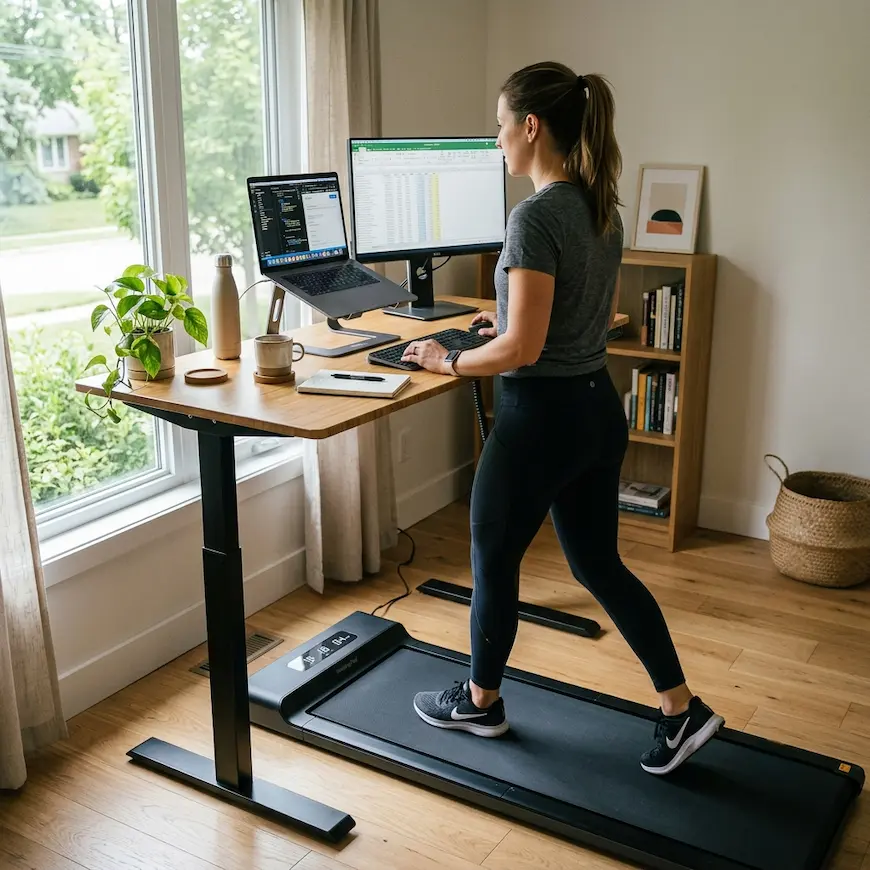
Exercise, the closest thing to a free dose: Exercise is one of the best-supported non-medication interventions for ADHD. A single 20 to 30 minute aerobic session acutely raises dopamine and norepinephrine in the prefrontal cortex, the same neurotransmitters stimulants target. Trials in both children and adults show better attention, working memory, and impulse control, with ADHD symptoms easing for several hours afterward. It won’t replace medication for moderate-to-severe ADHD symptoms, but as an add-on it extends and deepens medication effects and covers the days you’re off it. The sleep benefit matters too, because ADHD and sleep loss feed each other, and exercise improves both through overlapping mechanisms covered in our sleep deprivation guide.
ADHD coaching: Coaching supplies external structure, accountability, and practical strategy from someone who understands ADHD specifically. It’s distinct from therapy, since it focuses on day-to-day function rather than emotional processing or diagnosis. It works especially well for adults whose ADHD symptoms are stable on medication but who still struggle with career functioning, organization, and long-term goals. The ICF (International Coaching Federation) and the ADHD Coaches Organization (ACO) both list certified coaches.
Environmental design: ADHD symptoms ease in a structured, low-distraction environment with external deadlines and accountability. Practical moves: time-block your calendar and treat every commitment as a meeting with a location and a time; use body doubling, where working alongside another person (even over video) switches on performance; put visible clocks everywhere, since time blindness needs constant external cues; cut friction for important tasks, so keys live in the same bowl every time instead of on a random surface; and line up accountability partners for anything high-stakes.
Nutrition and ADHD: High-protein, low-sugar meals smooth out the blood glucose swings that worsen ADHD symptoms. Protein also supplies tyrosine and phenylalanine, the amino acid precursors to dopamine. Several small trials show a protein breakfast improves morning ADHD symptoms in children and adults alike, and a high-carb, no-protein breakfast reliably makes late-morning ADHD symptoms worse. Omega-3 supplementation has modest evidence: a 2012 meta-analysis found a small but real effect on inattention and hyperactivity. Our supplements for healthy aging guide covers the omega-3 forms and doses that absorb best.
ADHD and sleep: About 75% of ADHD patients have sleep problems, most often delayed sleep phase, where you can’t fall asleep before midnight no matter when you go to bed. That’s not just bad sleep hygiene. It’s a circadian issue tied to the dopamine and melatonin relationship in ADHD. Untreated sleep loss makes ADHD symptoms worse, so ADHD wrecks sleep and bad sleep worsens ADHD in a loop. Low-dose melatonin (0.5 to 1 mg at the target bedtime) is the best-supported fix for ADHD-related delayed sleep, gentler than prescription sleep medications. Our sleep deprivation guide walks through this melatonin dosing alongside the full sleep protocol.
ADHD comorbidities: what tends to come with it
Quick Answer. ADHD rarely travels alone. The common companions: anxiety disorders (about 50% of adults with ADHD), depression (30%), learning disabilities (dyslexia in roughly 25%), oppositional defiant disorder in children, substance use disorders (much higher in untreated ADHD), autism spectrum disorder (30 to 50% of autistic people also meet ADHD criteria), and sleep disorders. These overlaps aren’t coincidental; they often share genetic and neurobiological roots with ADHD. Treating ADHD symptoms frequently improves comorbid anxiety and depression, while leaving them untreated keeps the comorbidities going.
ADHD and anxiety, the most common pairing: Roughly half of adults with ADHD also meet criteria for an anxiety disorder, which makes telling the ADHD symptoms apart messy. Anxiety can impair concentration and create restlessness that mimics ADHD symptoms, and ADHD symptoms generate real anxiety through chronic underperformance, missed commitments, and social slip-ups. Telling primary anxiety apart from ADHD-generated secondary anxiety matters for treatment: treat the ADHD and the secondary anxiety sometimes lifts on its own, but treat only the anxiety and you’ve left the original generator in place.
ADHD and misophonia: ADHD and misophonia co-occur well above chance, sharing sensory hypersensitivity and emotional reactivity, and both involve the anterior insular cortex and autonomic dysregulation. Our misophonia guide goes into this overlap, including why treating the underlying ADHD symptoms eases misophonia for some patients.
ADHD and substance use, the treatment paradox: People with ADHD self-medicate with caffeine (often in very large amounts, sometimes the first visible clue), nicotine, alcohol, and stimulant drugs at far higher rates than the general population. The reason is direct: stimulants briefly normalize prefrontal dopamine and give real, if uncontrolled, relief. The Lichtenstein registry study showing lower adverse outcomes on prescribed medication is the clinical case for treating ADHD symptoms rather than withholding stimulants out of misplaced addiction fears.
Frequently Asked Questions
What does an ADHD assessment involve?
A thorough adult assessment usually runs a structured clinical interview covering current ADHD symptoms and childhood history (1 to 2 hours), validated self-report questionnaires (ASRS, CAARS), collateral history from a parent, partner, or close family member, a look at any school records or prior assessments, comorbidity screening (anxiety, depression, bipolar disorder, learning disabilities, sleep disorders), and a medical history review to rule out thyroid problems, anemia, and sleep apnea. A full neuropsychological evaluation adds 4 to 8 hours of cognitive testing (working memory, processing speed, executive function, IQ). It gives the most objective picture but costs more and isn't always necessary for straightforward cases.
Is ADHD overdiagnosed?
The data doesn't back the overdiagnosis story. The World Federation of ADHD's 2021 international consensus statement (Faraone et al., Neurosci Biobehav Rev), the most comprehensive ADHD evidence review published and the work of 80 international scientists, concludes that ADHD is more likely underdiagnosed worldwide than overdiagnosed, particularly in women, non-white populations, and low-income countries. Rising diagnostic rates over the decades reflect better recognition of a long-overlooked population, not diagnostic inflation.
Does ADHD get better with age?
Partly, for some people. Hyperactive ADHD symptoms often ease in adulthood as they turn inward. Inattentive ADHD symptoms and executive function deficits usually persist, though adults build compensating strategies that offset these ADHD symptoms somewhat. The underlying neurology, prefrontal dopamine dysregulation and the cortical maturation pattern, is lifelong even when symptoms are well managed. Many adults find things get worse during high-demand stretches, like parenting young children, a career step up, or relationship conflict, when their compensating capacity runs out.
Can ADHD be treated with diet alone?
Diet can support management but isn't enough on its own for moderate-to-severe ADHD. The dietary moves with the best evidence: a high-protein breakfast to keep dopamine precursors available, avoiding blood glucose crashes through low-glycemic eating, cutting artificial food dyes (especially Red 40, where there's small but consistent evidence of worsened ADHD symptoms, mainly in children), and omega-3 supplementation (modest evidence). The high-protein, low-sugar approach lines up with the protein-focused foods in our high-protein snacks guide.
What is the difference between ADHD and autism?
ADHD and autism spectrum disorder overlap a lot. Around 30 to 50% of autistic people also meet ADHD criteria, and ADHD rates run high in the first-degree relatives of autistic people. Both involve executive dysfunction, sensory sensitivities, and social difficulty. The main differences: ADHD attention is variable and can hyperfocus on interests, while autistic special interests are more consistent; ADHD social difficulty comes mostly from impulsivity and inattention, like missing cues or interrupting, while autistic social difficulty involves a different processing of social rules and reciprocity; and autistic sensory profiles tend to be more consistent across texture, sound, and light. Plenty of people have both (AuDHD), and telling the ADHD symptoms apart from autistic traits matters because the treatment approaches differ.
This article is for informational purposes only and does not constitute medical advice or diagnosis. ADHD diagnosis requires clinical evaluation by a qualified mental health or medical professional. Stimulant medications are controlled substances that require physician prescription and monitoring. Do not self-prescribe or self-discontinue ADHD medications.

Mimo Karam is the founder and writer at LifestyleMine. She writes about daily habits, nutrition, sleep, and emotional wellness, turning research into practical advice for people who want to live healthier without making it complicated.