✦
THE LIFESTYLEMINE NEWSLETTER
Simple wellness tips, healthy recipes, and
everyday inspiration delivered to your inbox.
Your Email Address
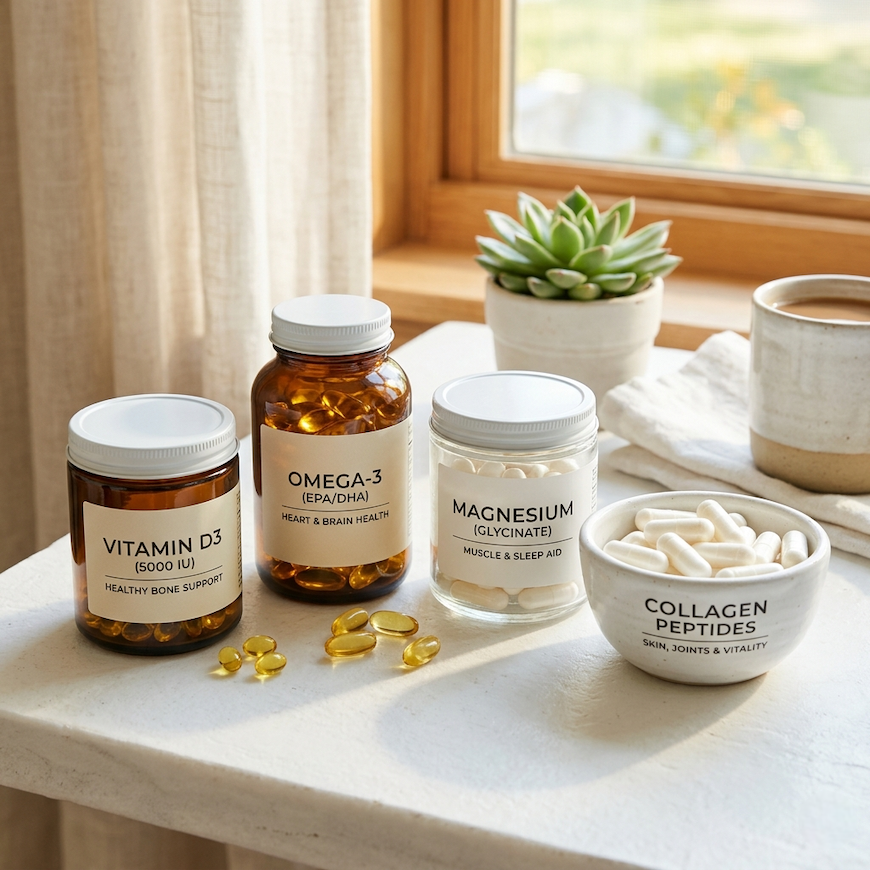
Quick Answer: EPA (eicosapentaenoic acid) and DHA (docosahexaenoic acid) are the two biologically active omega-3 fatty acids, and they rank among the best-supported supplements for healthy aging. ALA from plant sources (flaxseed, walnuts, chia) converts to EPA at about 5 to 8% and to DHA at less than 1%, which makes fish-derived or algae-derived EPA/DHA the only reliable sources for most people. Evidence: cardiovascular protection (GISSI trial), cognitive aging (DHA accumulates in brain gray matter), and lower systemic inflammation (EPA suppresses prostaglandin E2 synthesis). Target: 1 to 2g combined EPA+DHA daily.
Evidence tier: Strong (multiple large RCTs)
Omega-3 fatty acids touch three of aging’s biggest concerns: cardiovascular disease, cognitive decline, and chronic inflammation. The mechanism for each is distinct, and that breadth is why omega-3 anchors most lists of supplements for healthy aging.
For heart health: EPA competitively inhibits arachidonic acid metabolism, reducing pro-inflammatory prostaglandins and thromboxane A2 (a platelet aggregation promoter). DHA incorporates into cardiac cell membrane phospholipids, improving membrane fluidity and ion channel function. The GISSI-Prevenzione trial (N=11,324 post-MI patients) showed a 20% reduction in all-cause mortality and a 45% reduction in sudden cardiac death in the omega-3 group vs placebo over 3.5 years.
For cognitive aging: DHA is the most abundant fatty acid in brain gray matter, particularly in synapse-rich regions. Aging comes with declining DHA in the prefrontal cortex and hippocampus. Epidemiological data consistently links higher DHA intake to lower Alzheimer’s risk, though supplementation trials in established dementia show less benefit than dietary prevention studies. It works better before significant neurodegeneration than after.
For inflammation: EPA directly reduces circulating IL-6, TNF-alpha, and CRP, the inflammatory markers most tied to accelerated biological aging and age-related disease risk. The anti-inflammatory foods article covers the dietary pattern that EPA/DHA supplementation extends: the Mediterranean pattern provides 1 to 2g EPA/DHA daily from fish, which is the target.
Form note: Fish oil, krill oil, and algae oil all provide EPA/DHA. Algae oil is the original source (fish concentrate omega-3 from eating algae) and suits vegans, though it tends to have lower EPA relative to DHA. Krill oil contains phospholipid-bound EPA/DHA (possibly better bioavailability) plus astaxanthin. Look for triglyceride form over ethyl ester for fish oil, since it absorbs about 70% better. Take with food containing fat.
Quick Answer: Vitamin D3 alone is the most widely supplemented nutrient among aging adults, but the K2-MK7 pairing makes it work correctly. Vitamin D3 increases calcium absorption from the gut. Vitamin K2 (specifically the MK-7 form) activates osteocalcin and matrix Gla protein, the proteins that direct calcium into bones and keep it out of arterial walls. Without K2, the extra calcium absorption from D3 can contribute to arterial calcification. The D3 plus K2 combination is one of the most practical supplements for healthy aging: more calcium absorbed and directed to the right place.
Evidence tier: Strong for vitamin D deficiency correction; moderate for K2 vascular outcomes
41.6% of US adults are vitamin D deficient (serum 25-OHD < 20 ng/mL), rising to over 60% in adults over 65 who avoid sun exposure, the primary synthesis pathway. After age 70, skin synthesis efficiency drops by about 75% compared to young adults, even with equivalent sun exposure.
The 2019 VITAL trial in the New England Journal of Medicine (Manson et al., N=25,871, 5.3 years) found that vitamin D3 supplementation (2,000 IU/day) reduced cancer mortality by 25% in participants who developed cancer during the trial, and reduced cancer incidence by 12% overall. Cardiovascular event reduction was not significant overall but was significant in participants who had not been taking fish oil separately. It’s one of the largest vitamin D trials completed.
Bone health is the traditional vitamin D rationale: D3 plus calcium reduce fracture risk in adults over 65 by about 12 to 15% in meta-analyses. K2 is increasingly recognized as the missing piece. The Rotterdam Study (N=4,807) found MK-7 (menaquinone-7) intake significantly associated with reduced aortic calcification and lower cardiovascular mortality, independent of vitamin D status.
Practical notes:
D3 (cholecalciferol) raises serum 25-OHD more effectively than D2 (ergocalciferol)
K2-MK7 has a longer half-life than MK-4, so once-daily dosing works
Both are fat-soluble, so take with a meal containing fat
Target serum 25-OHD: 40 to 60 ng/mL; test before and after supplementing to confirm you’re getting there
The signs of magnesium deficiency article is relevant here: magnesium is required to convert vitamin D3 into its active form (1,25-dihydroxyvitamin D). People who are magnesium-deficient don’t respond normally to vitamin D, which partly explains why some people “take vitamin D but don’t improve.”
Quick Answer: Magnesium is a cofactor in over 300 enzymatic reactions, including ATP production, DNA repair, protein synthesis, and muscle and nerve function, which puts it among the most overlooked supplements for healthy aging. 48% of Americans consume below the estimated average requirement, and aging reduces both dietary intake and intestinal absorption. The form matters enormously: magnesium oxide (most common, cheapest) is about 4% absorbed. Magnesium glycinate has the highest bioavailability with the lowest GI side effects and crosses the blood-brain barrier to support sleep, lower anxiety, and cognitive function.
Evidence tier: Strong for deficiency correction; moderate for specific outcomes
Magnesium deficiency in aging adults produces a cluster of symptoms often blamed on aging itself rather than on a correctable nutritional gap: sleep fragmentation, muscle cramps and weakness, elevated blood pressure, heightened anxiety and irritability, constipation, and fatigue. This overlap is why magnesium deficiency often goes undiagnosed. Magnesium rarely gets headline billing among supplements for healthy aging, but the deficiency math is hard to argue with. Serum magnesium is a poor marker of total body magnesium status (only 1% of magnesium is extracellular), and deficiency can be severe without serum levels flagging low.
Age-specific mechanisms:
Aging reduces intestinal magnesium absorption by up to 30% compared to young adults
Kidney magnesium reabsorption efficiency decreases with age
Proton pump inhibitors (PPIs) and diuretics, commonly used by older adults, markedly reduce magnesium levels
High-calcium intake (without enough magnesium) worsens the ratio, since calcium and magnesium compete for the same intestinal transporters
For sleep: Magnesium glycinate works well here because glycine itself promotes sleep (an inhibitory neurotransmitter that reduces core body temperature and deepens slow-wave sleep), and magnesium activates GABA-A receptors, the same class targeted by benzodiazepine sleep medications, through a different mechanism. The sleep article covers magnesium glycinate at 200 to 400mg as Method 11, with the supporting Abbasi 2012 RCT.
For blood pressure and cardiovascular aging: Magnesium is essential for endothelial nitric oxide synthesis, the mechanism by which arteries relax and dilate. Low magnesium is consistently associated with higher systolic and diastolic blood pressure and higher atrial fibrillation risk in large cohort studies.
Form guide: Glycinate = highest bioavailability, best tolerated, preferred for sleep and anxiety. Malate = good absorption, preferred for energy and muscle function. Citrate = moderate absorption, useful for constipation (mild osmotic effect). Threonate = crosses the blood-brain barrier most efficiently, preferred for cognitive support. Oxide = avoid for supplementation; extremely low absorption.
Quick Answer: NAD+ (nicotinamide adenine dinucleotide) is a coenzyme required for mitochondrial energy production, DNA damage repair (via PARP enzymes), and sirtuin activation, the “longevity genes” studied by David Sinclair’s lab at Harvard. NAD+ levels decline about 50% from age 20 to 50. NMN (nicotinamide mononucleotide) and NR (nicotinamide riboside) are oral precursors that raise intracellular NAD+. A 2021 Science paper by Yoshino et al. found NMN supplementation improved muscle insulin sensitivity in postmenopausal women with prediabetes, the first rigorous human RCT among these supplements for healthy aging.
Evidence tier: Promising early human data, not yet validated at the scale of vitamin D or omega-3
NAD+ precursors are the most-hyped of the newer supplements for healthy aging, and the human data is finally catching up. The NAD+ story starts with the biology of cellular aging. As NAD+ levels fall with age, three aging-relevant processes slow down:
Mitochondrial biogenesis: NAD+ is the electron acceptor in the mitochondrial electron transport chain. Lower NAD+ means less efficient ATP production, a contributor to the fatigue, reduced exercise capacity, and metabolic slowdown of aging.DNA repair: PARP-1 and PARP-2 (poly(ADP-ribose) polymerases) use NAD+ as a substrate to detect and repair DNA strand breaks. With less NAD+, accumulated DNA damage goes unrepaired, a hallmark of cellular aging.Sirtuin activation: Sirtuins (SIRT1-7) are NAD+-dependent deacetylases that regulate gene expression, inflammation, metabolism, and stress resistance. Low NAD+ impairs sirtuin activity across these pathways.
NMN vs NR: Both raise intracellular NAD+, but through slightly different pathways. NMN is one step closer to NAD+ in the biosynthesis chain and requires transport into cells via the Slc12a8 transporter (confirmed in mice, recently confirmed in human gut). NR requires conversion to NMN before entering cells. In direct comparison studies, NMN tends to raise blood NAD+ more than NR at equivalent doses, though individual responses vary a lot. Both are well-tolerated in human safety studies up to 1 to 2 years.
The 2021 Science study (Yoshino M et al., N=25, 10 weeks at 250mg NMN/day) showed a significant improvement in muscle insulin sensitivity and in gene expression for NAD+ biosynthesis and signaling compared to placebo, clinically meaningful outcomes in a metabolically compromised population.
Resveratrol context: Resveratrol activates SIRT1 (a NAD+-dependent sirtuin) and became famous through Sinclair’s research and early PREDIMED data. High-dose resveratrol trials in humans have produced inconsistent results, and some evidence suggests high doses may antagonize certain exercise adaptations. The mechanism is compelling; the supplementation evidence is weaker than NMN/NR right now.
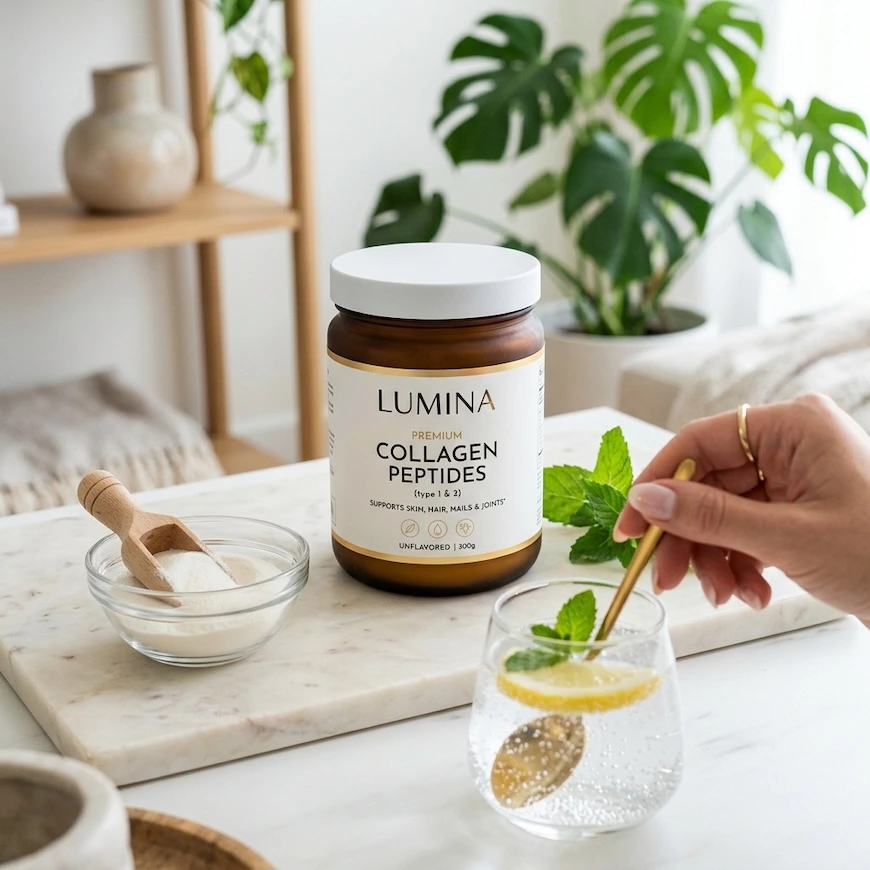
Quick Answer: Collagen benefits are type-dependent, which trips up a lot of people shopping for supplements for healthy aging. For skin: hydrolyzed collagen peptides (type I and III, typically 2.5 to 10g/day) have 5 randomized controlled trials showing improvement in skin elasticity, hydration, and wrinkle depth, the strongest evidence base in the cosmetic supplement category. For joints: type II undenatured collagen (UC-II, 40mg/day) has distinct evidence, working through oral immune tolerance at the joint rather than through structural substrate. Taking the wrong type gives you the wrong benefits.
Evidence tier: Moderate (good RCT data for skin; emerging for joints)
Natural collagen production peaks in the mid-20s and declines about 1% per year after that. By age 50, most people have lost 30 to 35% of baseline collagen density in skin and connective tissue. The three main types relevant to supplements:
Type I: Skin, tendons, bone matrix, cornea. Most abundant in the body and in most collagen supplementsType II: Cartilage. The primary structural protein in joint cartilage; the target for joint-specific formulasType III: Skin and blood vessel walls. Often co-supplemented with type I
For skin aging: The 2014 Proksch et al. RCT (N=69, 8 weeks) found a significant improvement in skin elasticity with 2.5g hydrolyzed collagen peptides vs placebo. Larger trials since then confirm it: hydrolyzed collagen is absorbed as di- and tripeptides that act as signaling molecules, stimulating fibroblast activity and boosting the body’s own collagen synthesis, not just structural building blocks.
Key point: for skin benefits, collagen peptides need to be hydrolyzed (broken into small peptides). Intact collagen protein is not absorbed as collagen. Vitamin C is a required cofactor for collagen cross-linking, so taking collagen without enough vitamin C limits the benefit. Even so, collagen is one of the few cosmetic supplements for healthy aging with real RCT support.
For joint health: UC-II (undenatured type II collagen, 40mg) works through a different mechanism: oral immune tolerance. Small amounts of native (undenatured) type II collagen taken orally trigger Tregs (regulatory T cells) in gut-associated lymphoid tissue to suppress the autoimmune attack on joint cartilage seen in inflammatory arthritis. That’s why the dose is 40mg, much lower than skin collagen doses, and why “hydrolyzed collagen for joints” misses the mechanism. The protein calculator article covers collagen’s amino acid profile: high glycine and hydroxyproline, low leucine, not a muscle-building protein.
Quick Answer: Vitamin B12 deficiency affects an estimated 10 to 30% of adults over 65, not primarily from dietary insufficiency but from declining intrinsic factor production. Intrinsic factor is secreted by gastric parietal cells and is required for B12 absorption in the terminal ileum. Parietal cell function declines with age-related gastric atrophy and is further impaired by PPIs and metformin. Methylcobalamin (the active, methylated form) is better retained than cyanocobalamin and doesn’t require hepatic conversion, which makes it the preferred form among B-vitamin supplements for healthy aging.
Evidence tier: Strong for deficiency correction; moderate for cognitive outcomes
Vitamin B12’s role in aging goes beyond anemia prevention, though megaloblastic anemia is the classic presentation of severe deficiency. The more relevant aging concern is the homocysteine-brain relationship. Elevated homocysteine (caused by B12 deficiency, since B12 is required for the methionine cycle) is directly associated with accelerated brain atrophy and cognitive decline in older adults.
The Oxford OPTIMA trial (Smith et al., N=168, 2 years) found that B-vitamin supplementation (B12 + B6 + folate) in participants with mild cognitive impairment and elevated homocysteine reduced the rate of brain atrophy by 53% versus placebo on MRI, one of the most striking supplement-cognitive findings in the literature.
The absorption mechanism for 50+ adults: Dietary B12 is bound to protein in food. Gastric acid and pepsin first free it from protein. Then intrinsic factor (IF) binds it and carries it to the terminal ileum for absorption. Gastric acid decline (atrophic gastritis, PPI use, H. pylori infection, all more common with age) impairs both the protein-release step and parietal cell IF production. The result: B12 in food becomes progressively less absorbable.
Crystalline B12 in supplements (not protein-bound) skips the first step, since it needs no gastric acid or pepsin for release. That’s why supplemental B12 stays effective even when food-source B12 absorption has declined. High-dose sublingual methylcobalamin further bypasses the IF requirement via buccal absorption.
Metformin note: Metformin (Rx), used for type 2 diabetes and increasingly studied for longevity, reduces B12 absorption by competing for intestinal calcium-dependent binding. People taking metformin long-term should monitor B12 levels annually.
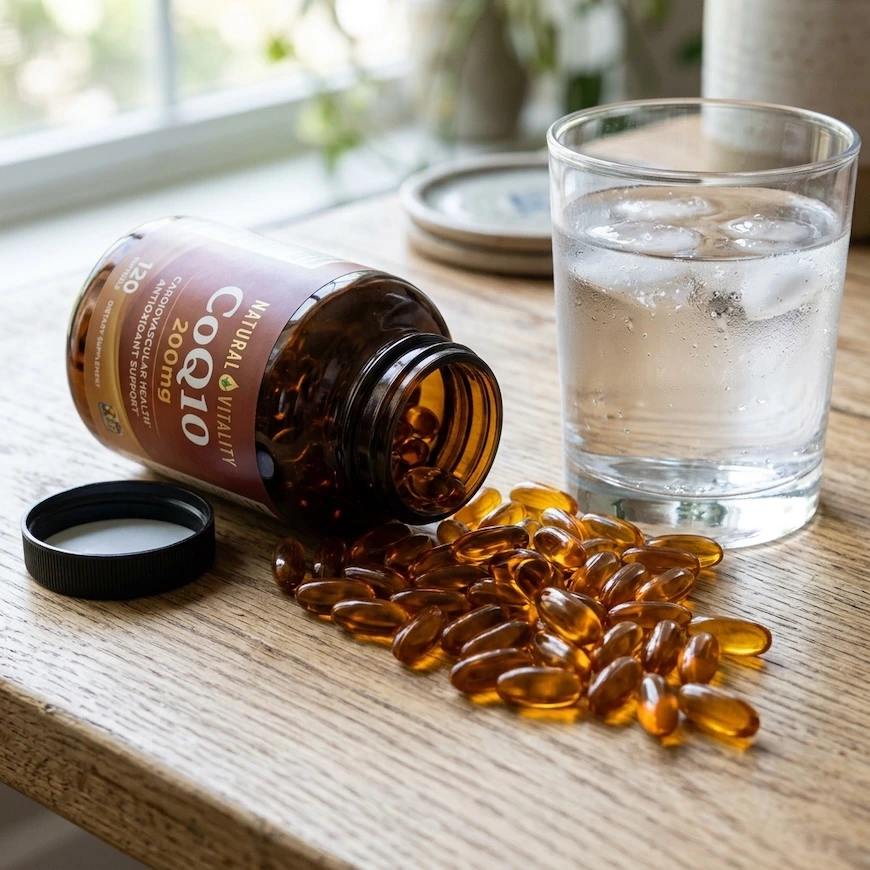
Quick Answer: CoQ10 benefits are most pronounced in two specific groups: adults over 50 (endogenous CoQ10 synthesis declines with age and is lowest in the tissues with the highest energy demand, such as heart, kidney, and liver) and people taking statin medications (Rx), which block the mevalonate pathway used for both cholesterol and CoQ10 synthesis, reducing CoQ10 levels by up to 40%. For over-40 adults, ubiquinol (the reduced, active form) is one of the better-absorbed supplements for healthy aging compared to ubiquinone.
Evidence tier: Moderate for statin-related symptoms; emerging for aging biomarkers
CoQ10 (ubiquinone) is a fat-soluble compound in the mitochondrial inner membrane that carries electrons between complexes I/II and complex III of the electron transport chain. Without enough CoQ10, mitochondrial ATP production becomes inefficient, producing the muscle fatigue, weakness, and reduced exercise tolerance that overlap with statin side effects.
The statin connection: Statins (Rx), rosuvastatin, atorvastatin, simvastatin, and lovastatin, inhibit HMG-CoA reductase, the rate-limiting enzyme in the mevalonate pathway. This pathway produces cholesterol, but mevalonate is also the precursor for ubiquinone (CoQ10). Statin use reduces plasma CoQ10 by 30 to 50%. The clinical relevance is debated, since large trials haven’t confirmed that CoQ10 reliably prevents statin-associated muscle symptoms (SAMS) in all patients. Some individuals with statin myopathy do improve with CoQ10. Discuss it with your physician before changing a statin regimen.
Ubiquinone vs ubiquinol: Ubiquinone (oxidized form) has to be reduced to ubiquinol before use in the electron transport chain. The body handles this efficiently in younger adults. After 40, and particularly after 50, the conversion becomes less efficient, making ubiquinol (the pre-reduced form) the better choice for bioavailability. Ubiquinol also absorbs better: about 3-fold higher plasma levels than equivalent ubiquinone doses in older adults.
Typical supplemental doses: 100 to 300mg ubiquinol daily. Fat-soluble, so take with a meal containing fat. For statin users specifically, CoQ10 is among the more defensible supplements for healthy aging. Results on energy and exercise tolerance usually take 6 to 8 weeks of consistent use.
No. Start by addressing documented deficiencies before exploring advanced compounds. Priority order, based on deficiency prevalence and evidence: (1) Vitamin D3 + K2 if you're not getting sun regularly, (2) Omega-3 EPA/DHA if you eat fatty fish less than twice a week, (3) Magnesium glycinate if you have sleep issues, muscle cramps, or are over 50, (4) B12 (methylcobalamin) if you're over 60 or taking metformin or PPIs. After these foundations, NAD+ precursors and CoQ10 are the evidence-backed next tier for going further. Get blood work first, and don't supplement blindly.
No, and this matters. Fat-soluble vitamins (A, D, E, K) accumulate in the body and can reach toxic levels with excess supplementation. High-dose vitamin D (above 4,000 IU/day without physician guidance) can cause hypercalcemia. High-dose calcium (above 1,000mg in post-menopausal women not balanced with K2) may raise arterial calcification risk. Iron should never be taken unless deficiency is documented, since excess iron is pro-oxidant. The principle behind sensible supplements for healthy aging: correct a deficiency, don't chase "more is better."
Fat-soluble ones (D3+K2, omega-3, CoQ10, resveratrol): with the largest meal of the day containing fat. Magnesium glycinate: 1 hour before bed for sleep support. B12: morning, since it can be mildly energizing and may interfere with sleep if taken late. NMN/NR: morning with breakfast, since NAD+ precursors may have mild stimulant effects. Iron (if prescribed Rx): on an empty stomach with vitamin C for absorption, and not within 2 hours of calcium or antacids.
Yes. Vitamin B12 is found almost exclusively in animal products, so deficiency is universal in long-term vegans who don't supplement. EPA/DHA from algae oil is the plant-based source (same molecule as fish oil, just bypassing the fish). Vitamin D3 from lichen is the vegan form; D2 is vegan but less effective at raising serum levels. Calcium from fortified plant milks or supplements (citrate form) matters if dairy is excluded. Creatine (found mainly in meat and fish) is much lower in plant-based eaters, relevant for muscle preservation after 50. Iron and zinc bioavailability from plants is lower thanks to phytate inhibition; absorption improves if you soak legumes and eat iron-rich plants with vitamin C.
The tests most relevant to supplement decisions: 25-OHD (vitamin D status, the only way to know if you need to supplement and at what dose), serum B12 (though serum B12 doesn't fully capture functional deficiency; methylmalonic acid and homocysteine are more sensitive), magnesium (serum is a poor marker of tissue magnesium; RBC magnesium is more accurate if available), omega-3 index (% EPA+DHA in red blood cell membranes, target above 8% for cardiovascular and cognitive protection), and a CBC (to catch iron deficiency anemia before supplementing iron). A basic metabolic panel and lipid panel give context for CoQ10 and statin considerations. Testing first keeps your supplements for healthy aging targeted rather than guesswork.
Yes, and this is the most important check before adding any supplement over 50. Omega-3 above 3g/day has mild blood-thinning effects, relevant for people on warfarin (Rx) or other anticoagulants. St. John's Wort (sometimes used for mood) is a CYP3A4 inducer that lowers levels of statins, anticoagulants, immunosuppressants, and many other drugs. Magnesium can reduce absorption of some antibiotics (quinolones, tetracyclines), so take them 2 hours apart. High-dose vitamin E (above 400 IU) potentiates anticoagulants. Always disclose every supplement to your prescribing physician.
This article provides general nutritional information about supplements relevant to healthy aging. It is not a substitute for personalized medical advice. Before starting any new supplement protocol, consult a physician or registered dietitian, particularly if you are over 60, take prescription medications, or have liver, kidney, or cardiovascular conditions. Supplement doses and needs vary significantly by individual health status, existing blood levels, diet, and medical history. No supplement cures or prevents any specific disease.
Mimo Karam is the founder and writer at LifestyleMine. She writes about daily habits, nutrition, sleep, and emotional wellness, turning research into practical advice for people who want to live healthier without making it complicated.