What Is the Most Effective Treatment for Osteoarthritis Pain?
Quick Answer: Exercise and weight loss are the highest-evidence interventions for osteoarthritis pain relief, a 2015 Cochrane review found exercise reduces knee OA pain with effect sizes comparable to NSAIDs. For every pound of weight lost, knee joint loading during walking decreases by approximately 4 pounds. Medical options range from topical diclofenac (low systemic risk, strong evidence) to corticosteroid injections (effective short-term, potentially harmful long-term) to joint replacement for severe disease.
Osteoarthritis gets described as “wear and tear arthritis” in almost every article written about it. The phrase isn’t wrong, but it leaves people with the impression that the damage is inevitable and passive, and that the only sensible response is to wait until things get bad enough for surgery. The research says otherwise.
Osteoarthritis pain relief is possible at every stage of the disease, and the things that work best are rarely the most expensive or invasive. A 2015 Cochrane review of 54 randomized trials found that exercise reduces knee OA pain about as well as NSAIDs do. A 1999 study in Arthritis & Rheumatism (Messier et al.) found that for every pound of body weight lost, knee joint loading during walking dropped by roughly 4 pounds. This evidence is two decades old. Even so, the average newly diagnosed patient still reaches for ibuprofen long before anyone offers them physical therapy.
This article covers the full osteoarthritis treatment spectrum, from the lifestyle changes with the strongest evidence to the procedures with the most genuinely uncertain risk-benefit math, including where the conventional advice on glucosamine and corticosteroid injections falls short. Done right, osteoarthritis pain relief is a layered plan, not a single pill.
About 32.5 million American adults have OA. Knee OA is the most common form, affecting 10% of men and 13% of women over age 60, and it is the leading cause of disability in adults in the United States, which is exactly why getting osteoarthritis pain relief right matters at this scale.
What osteoarthritis actually is, and why that changes the treatment
Quick Answer: Osteoarthritis is not simply cartilage “wearing out.” It is a failure of the whole joint as an organ, involving cartilage breakdown, changes in the bone underneath, low-grade inflammation in the joint lining, and ligament laxity. That inflammatory component is the reason anti-inflammatory strategies (exercise, weight loss, omega-3s, NSAIDs) matter for osteoarthritis pain relief, even though OA is not an inflammatory arthritis like rheumatoid disease.
The “wear and tear” framing suggests passive damage from use, like tire tread wearing thin. Osteoarthritis disrupts the entire joint:
- Articular cartilage: Cartilage cells (chondrocytes) shift from building tissue to breaking it down, degrading the matrix faster than it gets repaired. Cartilage has no blood supply of its own, so it depends on joint fluid being squeezed in and out during movement for its nutrients. That is one reason inactivity speeds up the breakdown.
- Subchondral bone: As cartilage thins, the bone underneath takes more stress and remodels, forming bone spurs (osteophytes) and hardened areas that change how the joint moves.
- Synovial membrane: In most OA patients the joint lining shows low-grade inflammation, with raised cytokines like IL-1β and TNF-α. This is why anti-inflammatory approaches help.
- Periarticular muscles: Weak muscles around an OA joint let it load harder and absorb less shock. In knee OA, quadriceps weakness is both a result of the disease and a cause of further damage, and breaking that cycle is central to osteoarthritis pain relief.
The main risk factors for OA are age (the strongest predictor), obesity (the most modifiable, and the highest-impact thing most patients can change), prior joint injury such as ACL tears or fractures, being female (especially after menopause), and repetitive loading at work. The modifiable ones are where osteoarthritis pain relief gets most of its leverage.
Weight management: the biggest modifiable factor
Quick Answer: Excess body weight is the most important modifiable risk factor for knee and hip OA. Every 1 kg (2.2 lb) lost takes roughly 4 kg of force off each knee per step. Lose 10 lb and you remove about 40 lb of knee loading per step, multiplied across thousands of steps a day. For most overweight patients, this is where osteoarthritis pain relief actually starts.
Osteoarthritis pain relief for knee OA in overweight patients begins with weight management, not because it’s easy, but because no drug or injection produces a comparable long-term structural benefit.
The knee takes 3 to 6 times body weight during normal walking. Lose 10 lb and you cut knee force by 40 to 60 lb per step. The Framingham OA study found that each unit drop in BMI (about 5 to 7 lb for the average adult) cut the risk of developing knee OA by half in women. In people who already have OA, the ADAPT trial (Messier et al., 2004) found that diet-induced weight loss combined with exercise beat either approach alone for pain and function.
Even modest weight loss counts toward osteoarthritis pain relief. You don’t need to hit an “ideal” BMI. A 5 to 10% reduction in body weight produces measurable improvements in knee pain, function, and quality of life.
The practical route: low-impact activity like swimming or cycling is kind to the joint and burns calories while delivering the exercise benefit at the same time. On the food side, an eating pattern that lowers systemic inflammation, such as a Mediterranean diet built around anti-inflammatory foods with fewer refined carbs, works on both the weight and the inflammation behind OA, the two levers behind durable osteoarthritis pain relief. Citrus is worth a mention here too: the vitamin C and bioflavonoids in oranges support collagen synthesis, which cartilage depends on.
Exercise: the most underused treatment that actually works
Quick Answer: Exercise is first-line treatment for osteoarthritis in every major guideline (OARSI, ACR, EULAR), and for pain reduction its effect size is comparable to NSAIDs. The Cochrane review (Fransen 2015, 54 RCTs) found meaningful improvements in pain and function. Quadriceps strengthening and low-impact aerobic exercise have the strongest evidence for osteoarthritis pain relief.
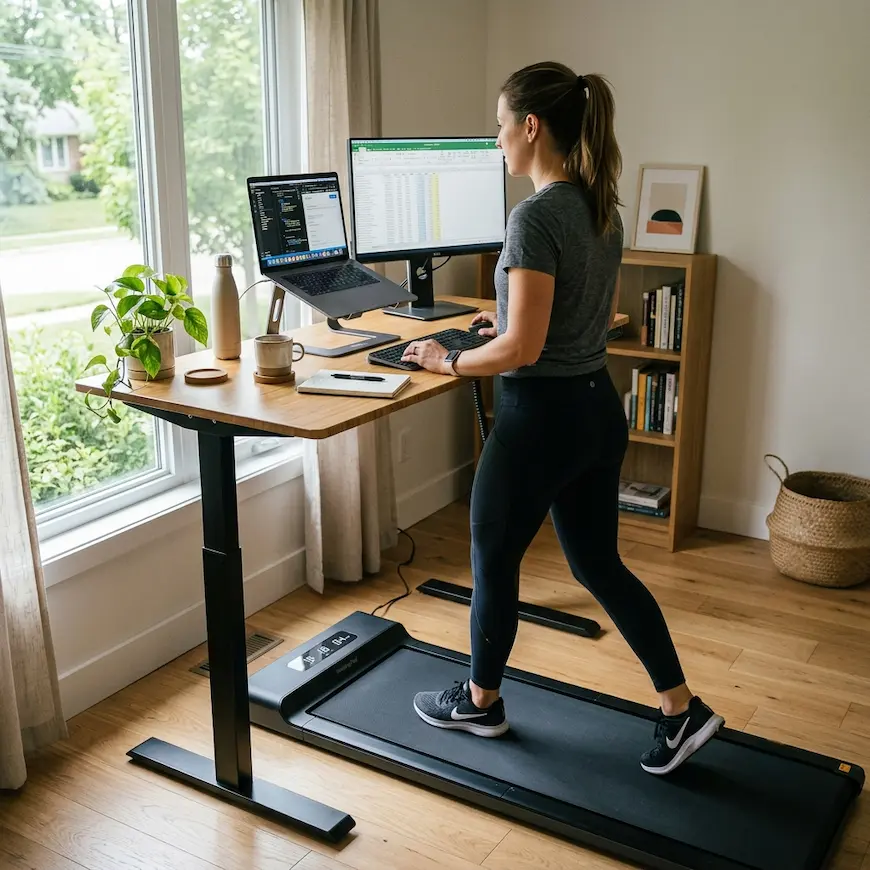
Exercise is the most powerful non-drug route to osteoarthritis pain relief available, and the one most often skipped. The hesitation makes sense. It feels wrong to move a painful, damaged joint. But the evidence is strong, and the OARSI guidelines put it first for a reason.
Why it works mechanically:
- Cartilage gets its nutrients from joint fluid being compressed and released during movement, since it has no blood supply of its own.
- Stronger muscles around the joint absorb force and take load off the joint surface.
- Better joint position sense (proprioception) cuts down on the abnormal loading patterns that grind a joint.
- Joint fluid spreads and moves better with regular activity.
Here is how the main exercise types stack up on evidence:
| Type | Evidence | Pain benefit | Function benefit |
|---|---|---|---|
| Quadriceps strengthening | High (Cochrane 2015) | Significant | Significant |
| Low-impact aerobic (swimming, cycling) | High | Significant | Significant |
| Tai chi | High (Wang 2009 meta-analysis) | Moderate | Significant |
| Water-based exercise (hydrotherapy) | High | Significant | Significant |
| Yoga | Moderate | Moderate | Moderate |
| High-impact running, jumping | Low for OA joints, limit it |
Quadriceps work for knee OA: the quads are the knee’s main shock absorbers, and when they’re weak the cartilage takes more load. Targeted strengthening (straight leg raises, seated leg extensions with light resistance, step-ups) produces measurable osteoarthritis pain relief and improves walking speed in older adults. Start with 2 to 3 sessions a week, 20 to 30 minutes each. Mild soreness afterward is normal. Sharp joint pain or swelling that lasts more than 2 hours means the intensity was too high. Working with a physical therapist for the first 4 to 6 weeks helps you get the form and loading right.
A physical therapist can also spot muscle imbalances, teach joint protection, do hands-on treatment, and match a program to your specific damage pattern. ACR and OARSI guidelines both recommend physical therapy for knee and hip OA as part of first-line osteoarthritis pain relief.
OTC pain relief: what works and what the evidence shows
Quick Answer: Topical diclofenac (Voltaren 1% gel, OTC) has the best safety profile for most people. It reaches the joint at therapeutic levels with very little getting into the bloodstream. Oral NSAIDs (ibuprofen, naproxen) work but carry GI and cardiovascular risk. Acetaminophen is widely used but the evidence for it in OA is surprisingly weak. Opioids are not appropriate for OA. For day-to-day osteoarthritis pain relief, topical diclofenac is the place most people should start.
Topical diclofenac (Voltaren Arthritis Pain 1% gel). Diclofenac is an NSAID. Rubbed into the skin over a joint, it builds up in the joint tissue at levels high enough to block COX-2, the inflammatory enzyme, while keeping blood levels 94 to 99% lower than an equivalent oral dose. You get most of the anti-inflammatory benefit with almost none of the GI or cardiovascular risk of oral NSAIDs. The OARSI 2019 and ACR 2019 guidelines both strongly recommend topical NSAIDs for hand and knee OA, and specifically prefer them over oral NSAIDs for adults over 75. Apply to the joint four times a day. Best results for osteoarthritis pain relief come at 4 to 6 weeks of steady use.
Oral NSAIDs (ibuprofen, naproxen). Effective for OA pain and inflammation, but worth managing carefully:
- GI risk: regular use is linked to ulcers and GI bleeding. Take with food, and consider adding a proton pump inhibitor (omeprazole, Rx) if you use them often. Anyone with a history of ulcers should use topical diclofenac or acetaminophen instead.
- Cardiovascular risk: all oral NSAIDs raise cardiovascular risk slightly with regular use. Naproxen has the best cardiovascular profile of the common OTC options.
- Kidney risk: NSAIDs reduce kidney prostaglandins and can impair function, which matters most in older adults, diabetics, or anyone with reduced kidney function.
Use the lowest dose that works, for the shortest time that works.
Acetaminophen (Tylenol). The ACR 2019 guidelines downgraded acetaminophen from a strong to a conditional recommendation after a 2016 Cochrane review found it gives only minimal pain relief in hip and knee OA at standard doses. It still has a place in osteoarthritis pain relief for people who can’t take NSAIDs. Cap the dose at 3,000 mg/day in adults over 65 (not the often-quoted 4,000 mg) because of cumulative liver risk, and avoid it with alcohol.
Best supplements for osteoarthritis, by evidence tier
Quick Answer: Curcumin has the strongest emerging evidence, with several RCTs showing it eases pain about as well as low-dose NSAIDs. Glucosamine and chondroitin showed no overall benefit in the large GAIT trial, though the moderate-to-severe subgroup did respond. Undenatured type II collagen (UC-II, 40 mg/day) beat glucosamine plus chondroitin in one head-to-head trial. Omega-3s lower systemic inflammation and are very safe. Supplements are an adjunct to osteoarthritis pain relief, not a replacement for the basics.
The supplement market aimed at osteoarthritis pain relief is huge, and the evidence behind individual products varies a lot.
Tier 1, strongest support.
Curcumin (turmeric extract, 95% curcuminoids). Several RCTs have compared curcumin to NSAIDs for OA pain, and a number found similar pain reduction. A 2014 RCT by Panahi et al. found 1,500 mg/day of curcumin worked about as well as 1,200 mg of ibuprofen for knee OA, with fewer GI side effects, which makes it appealing for long-term osteoarthritis pain relief. A 2019 systematic review supported the anti-inflammatory mechanism, which hits the same NF-κB and COX-2 pathways NSAIDs target. Plain curcumin is poorly absorbed, so look for enhanced-bioavailability formulations (piperine, phytosome, or lipid-based delivery). Typical evidence-based dose: 500 to 1,000 mg curcuminoids daily.
Tier 2, mixed, set realistic expectations.
Glucosamine and chondroitin for arthritis. The GAIT trial (Clegg et al., 2006, NEJM), the largest RCT of these two (1,583 patients, 6 months), found that the combination gave no significant benefit over placebo overall. The subgroup with moderate-to-severe pain did show a significant benefit (p=0.002), while the mild-pain subgroup showed none. These supplements are safe and low-risk, so if you have moderate-to-severe knee OA pain and want another angle on osteoarthritis pain relief, a 3-month trial is reasonable. Standard dose: glucosamine sulfate 1,500 mg/day plus chondroitin sulfate 1,200 mg/day.
Undenatured type II collagen (UC-II, 40 mg/day). A 2009 RCT by Crowley et al. compared UC-II 40 mg to glucosamine 1,500 mg plus chondroitin 1,200 mg in 52 OA patients. UC-II came out ahead on all three primary outcomes (pain, stiffness, function) at 180 days. It works through oral tolerization, presenting native collagen to gut immune tissue to calm the immune response against joint collagen. Note that 40 mg of undenatured UC-II is the evidence-based dose. Hydrolyzed collagen at much larger doses (10 to 20 g/day) works by a different mechanism and has separate evidence aimed at skin, not joints.
Tier 3, supportive, indirect evidence.
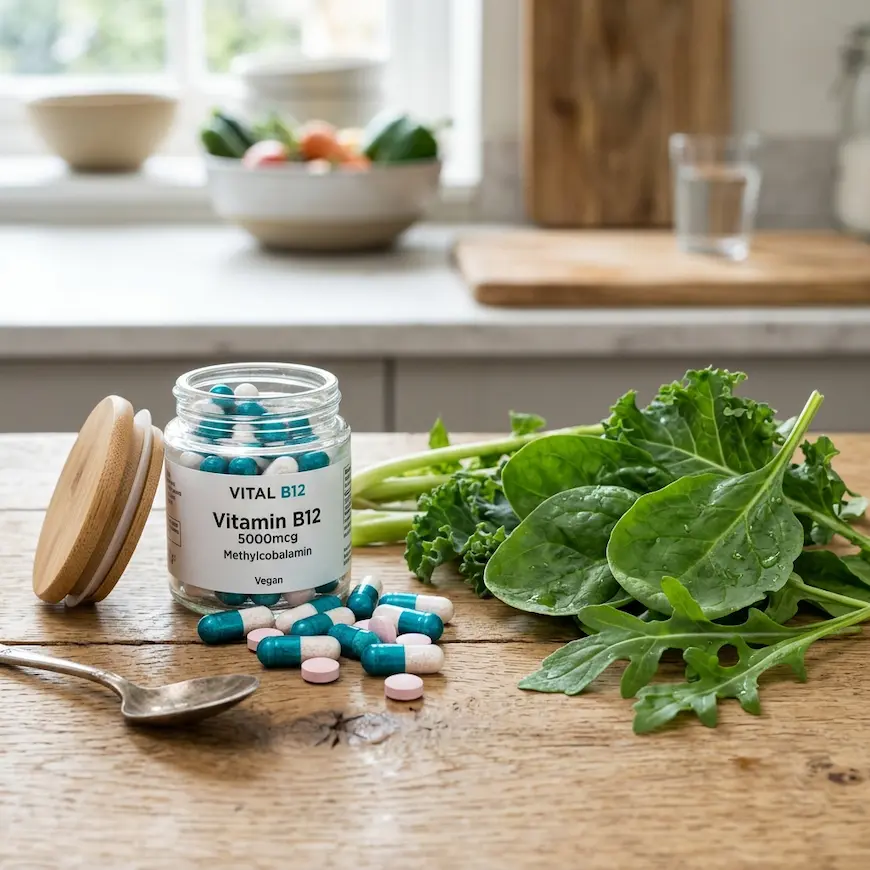
Omega-3 fatty acids (EPA+DHA). Omega-3s lower the inflammatory cytokines (IL-1β, TNF-α) that drive OA joint-lining inflammation. Several observational studies link higher intake with lower OA risk and slower progression. The OA-specific RCT data are thinner, but the mechanism, the cardiovascular upside, and the safety profile make 1,000 to 2,000 mg of EPA+DHA daily a reasonable adjunct. Choose molecularly distilled fish oil from a reputable brand to limit heavy-metal contamination. Omega-3s also show up on most lists of supplements for healthy aging, alongside things like CoQ10, so for older adults managing several issues at once they can do double duty.
Boswellia serrata (Indian frankincense, AKBA extract). Boswellia blocks 5-lipoxygenase (5-LOX), an inflammatory enzyme that NSAIDs and corticosteroids don’t touch. Several RCTs show real osteoarthritis pain relief in knee OA within 4 to 8 weeks, and a 2014 meta-analysis backed it up. Dose: 100 to 400 mg of standardized AKBA extract daily.
Heat, cold, and assistive devices
Quick Answer: Heat is best for stiffness, muscle tension, and warming up before exercise. Cold is best for acute flares, post-exercise swelling, and sharp pain. They target different mechanisms, so alternating them by symptom type works well. Knee braces, orthotic insoles, and canes all reduce joint loading and have evidence for osteoarthritis pain relief.
Heat. Moist heat penetrates better than dry heat. Use it for morning stiffness, before exercise to loosen tissue, and for muscle spasm. For stiffness-driven osteoarthritis pain relief, a heating pad on medium for 15 to 20 minutes is about right. Don’t put heat on a joint that’s acutely swollen, red, or warm, because that makes inflammation worse.
Cold. Ice packs or cold gel wraps for 15 to 20 minutes reduce acute swelling through vasoconstriction, slow pain-signal conduction, and lower the metabolic demand of inflamed tissue. Use it after exercise if a joint is sore and swollen, and during flares. Never put ice straight on skin, and skip it on joints affected by Raynaud’s or poor circulation.
Contrast therapy: 3 minutes of heat, then 1 minute of cold, repeated 3 to 5 times, ending on cold, helps manage post-exercise swelling while keeping tissue loose. If you find this useful, the same hot-and-cold logic shows up in the wider research on the health benefits of cold versus hot showers.
Devices and orthotics:
- Knee offloading brace: for medial-compartment knee OA (the most common kind), a valgus offloading brace shifts load to the healthier outer compartment. Studies show 10 to 50% pain reduction with a proper fit.
- Insoles: laterally wedged insoles reduce medial knee loading. The evidence is moderate, and most of the benefit is in people with specific alignment patterns. A podiatrist can tell you if they fit your case.
- Cane: hold it in the hand opposite the painful knee, and you cut knee loading by 20 to 30%. Right knee affected, cane in the left hand. It’s mechanically correct, badly underused, and one of the cheapest sources of osteoarthritis pain relief there is.
- Knee pillow: a pillow between the knees when you side-sleep cuts rotational forces on the hip and knee overnight, which helps with hip OA and bilateral knee OA.
Medical interventions: injections, PRP, and surgery
Quick Answer: Corticosteroid injections give good short-term relief (4 to 12 weeks), but a 2017 JAMA trial found repeated injections every 12 weeks sped up cartilage loss over 2 years. Hyaluronic acid injections show modest evidence. PRP is promising but the evidence is inconsistent. Joint replacement is highly effective for end-stage OA, with 90 to 95% satisfaction. These are tools for when conservative osteoarthritis pain relief isn’t enough, not first moves.
Corticosteroid injections (Rx, physician-administered). Intra-articular corticosteroids (triamcinolone, methylprednisolone) make sense for acute flares that haven’t responded to oral or topical drugs, situations that need fast relief for a specific event, and patients who can’t take oral NSAIDs. The catch: the McAlindon 2017 JAMA RCT (140 knee OA patients, 2 years) found that patients getting triamcinolone every 12 weeks lost significantly more cartilage volume than placebo patients (-0.21 mm vs -0.10 mm), with no difference in pain at 2 years. Most rheumatologists now treat them as short-term osteoarthritis pain relief, cap them at 3 to 4 per year in one joint, and avoid them in patients with significant cartilage loss.
Hyaluronic acid injections (viscosupplementation) (Rx, physician-administered). These (Synvisc, Euflexxa, Hyalgan) aim to restore the joint fluid’s cushioning properties. A 2019 Cochrane review found statistically significant but small improvements in pain and function, small enough that it’s fair to ask whether the benefit beats the placebo response. OARSI 2019 gives them a conditional recommendation (uncertain benefit), and ACR 2019 recommends against them for hip OA but conditionally for knee OA. They’re not first-line, but they’re an alternative to repeated steroid injections for people who need injection-based osteoarthritis pain relief.
Platelet-rich plasma (PRP) (Rx, physician-administered). PRP concentrates platelets from your own blood and injects them into the joint, where the growth factors are meant to nudge cartilage repair. Several small-to-mid-sized RCTs show benefit over hyaluronic acid and placebo, but results swing depending on how the PRP is prepared. OARSI 2019 calls it “uncertain,” with too little consistent evidence for a clear call. It’s usually not covered by insurance and runs $500 to $2,000 per injection. It may be worth raising with a sports medicine physician if you’ve failed conservative treatment but aren’t ready for surgery.
Joint replacement. Total knee or hip replacement is for end-stage OA, where cartilage is severely damaged (bone-on-bone on imaging), pain and loss of function are hurting quality of life, and conservative treatment has been applied consistently for 6+ months without enough relief. Total knee replacement has a 90 to 95% satisfaction rate, gives major osteoarthritis pain relief in the right candidates, and modern implants last 15 to 20+ years. Partial (unicompartmental) knee replacement is an option for single-compartment disease, with faster recovery. The decision needs a detailed talk with an orthopedic surgeon and should weigh your age, activity goals, bone quality, and fitness for surgery.
Pain, mood, and the part most articles skip
Quick Answer: Pain catastrophizing, the habit of ruminating on pain, feeling helpless, and magnifying its threat, is one of the strongest predictors of OA pain severity, more predictive than imaging in some studies. CBT for chronic pain and mindfulness-based stress reduction both have strong evidence for osteoarthritis pain relief, independent of any change in the joint itself.
Chronic OA pain isn’t a pure mechanical signal. The brain processes pain through pathways shaped by mood, sleep, anxiety, and past pain. Two people with identical knee X-rays can report very different pain, and the gap is often explained by psychological factors, especially catastrophizing, which is why osteoarthritis pain relief has a psychological dimension most articles skip.
CBT for chronic pain goes after catastrophizing thoughts (“this will never improve,” “I can’t do anything because of my knee”) and swaps in workable coping strategies. Multiple RCTs show CBT lowers OA pain intensity, catastrophizing, and disability even when the joint itself doesn’t change. OARSI 2019 lists psychological interventions as a conditional recommendation.
Mindfulness-based stress reduction (MBSR) dials down the distress side of pain rather than the raw sensation. A 2010 RCT found MBSR significantly cut catastrophizing and psychological distress in OA patients compared to controls.
Sleep and pain feed each other: pain wrecks sleep, and short sleep lowers your pain threshold. Working on your habits for a deep and restful sleep directly reduces how severe OA pain feels, not just quality of life.
Social support matters too. Isolation tracks with worse pain in chronic conditions, and OA support groups (the Arthritis Foundation runs in-person and online ones) offer peer education and coping strategies with measurable osteoarthritis pain relief.
Frequently Asked Questions
Is swimming good for osteoarthritis?
It's one of the best options. Buoyancy cuts your effective body weight by about 90% when you're fully immersed, taking the compressive load off the joint while still working the heart and the muscles. A 2007 Cochrane review found aquatic exercise reduces OA pain and improves function. Warm-water exercise in a heated pool (33 to 35°C) adds heat relaxation for stiff joints. If pool access is limited, water aerobics or aqua-cycling get you similar benefits.
Can diet affect osteoarthritis pain?
Yes, through inflammation and weight. The Mediterranean pattern (lots of olive oil, fish, vegetables, legumes, and nuts, with fewer refined carbs and processed foods) is linked to lower inflammatory markers and reduced OA risk in observational studies. Losing weight through diet directly reduces joint loading (about 4 lb less force per step for every 1 lb lost). Specific foods with anti-inflammatory evidence: fatty fish (omega-3s), turmeric, ginger, and tart cherry juice. No food reverses the structural damage, but anti-inflammatory eating clearly eases symptoms.
What’s the difference between osteoarthritis and rheumatoid arthritis?
Osteoarthritis is a degenerative joint problem, with cartilage breakdown, bone changes, and low-grade local inflammation driven mainly by mechanical loading, aging, and weight. Rheumatoid arthritis is an autoimmune disease in which the immune system attacks the lining of many joints at once, causing systemic inflammation, joint erosion, and effects beyond the joints (fatigue, fever, anemia). RA usually hits joints symmetrically, causes long morning stiffness (over an hour), shows positive blood markers (RF, anti-CCP), and needs DMARDs (Rx). OA is asymmetric, brings shorter stiffness (under 30 minutes), and is seronegative. If you're unsure which you have, see a rheumatologist.
Are there warning signs with osteoarthritis that need urgent care?
Yes. OA itself isn't an emergency, but some symptoms in an affected joint need urgent evaluation: sudden severe swelling with warmth, redness, and fever, which could be a joint infection (septic arthritis); sudden severe swelling with extreme pain over hours, which could be gout or pseudogout; a joint that locks (won't fully straighten or bend) and stays locked, which can mean a loose body or torn meniscus; and new numbness, weakness, or bladder changes with spinal OA. These warrant same-day care, not home management.
How long do osteoarthritis treatments take to work?
It depends on the treatment. Topical diclofenac gel: improvement within 2 to 4 weeks of regular use. Oral NSAIDs: 24 to 72 hours for acute pain. Corticosteroid injections: 24 to 48 hours, lasting up to 12 weeks. Exercise therapy: meaningful pain reduction after 4 to 8 weeks of consistent training. Weight loss: benefits build over months. Curcumin and glucosamine/chondroitin usually need 6 to 12 weeks before you notice anything. Because exercise and supplements work gradually, a lot of people quit before they reach the timeframe where the evidence says they'd help.
This article is for general information and isn’t a substitute for medical advice. Talk to your doctor before starting a supplement, medication, or exercise program, especially if you have other health conditions.

Mimo Karam is the founder and writer at LifestyleMine. She writes about daily habits, nutrition, sleep, and emotional wellness, turning research into practical advice for people who want to live healthier without making it complicated.