What Are the Real Health Benefits of Eating Bananas?
Quick Answer: One medium banana (118g) delivers 422mg potassium, 10.3mg vitamin C, 0.4mg vitamin B6 (24% DV), and 3g fiber including resistant starch and pectin. [kw]Banana benefits[kw] span blood pressure regulation, gut microbiome support, workout fuel, and mood via the tryptophan-serotonin pathway. Ripe and unripe bananas have meaningfully different glycemic indexes (30-42 vs 51-62) — which matters if blood sugar management is a goal.
I ate a banana with almond butter every morning for about four months while tracking my energy levels between meals. What I noticed was that days I skipped breakfast entirely were uniformly worse for mid-morning focus. But the banana-plus-protein combination specifically kept me stable through to noon without the dip I’d get from toast or cereal alone. The fiber combination, resistant starch plus pectin, is the reason, and the science behind it is more interesting than I expected.
Banana benefits are real and specific, but the banana benefits you actually get depend on which banana you eat (ripe vs green matters), when you eat it, and what you pair it with. Here’s the breakdown.
Banana nutrition profile: what’s in one medium banana
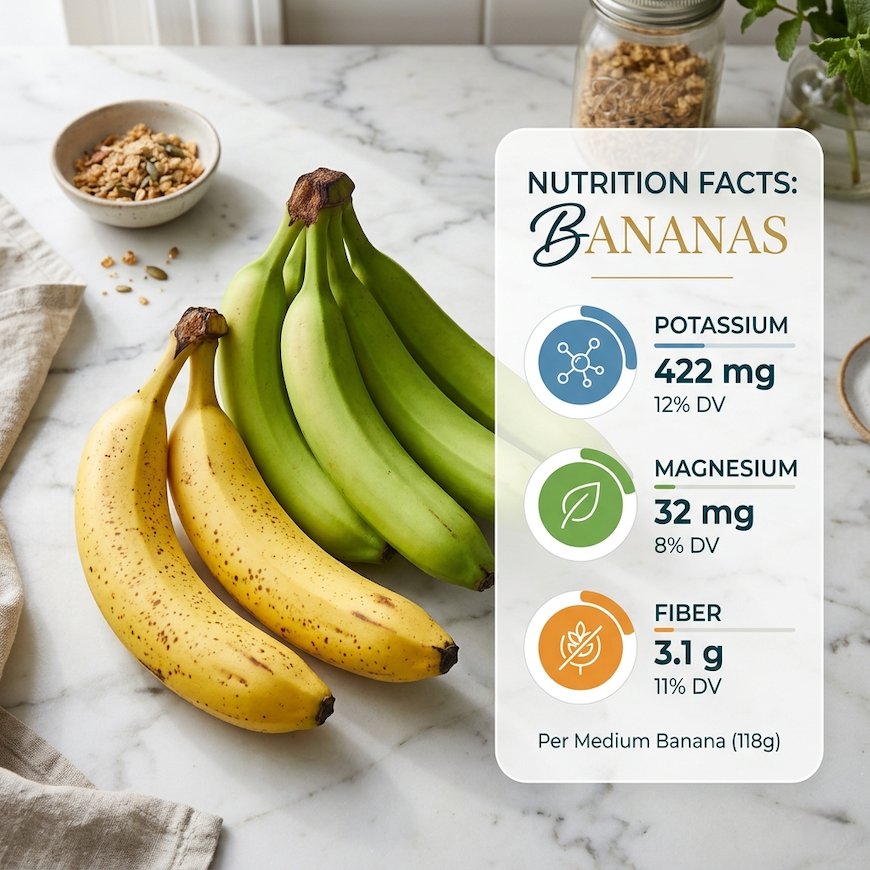
Quick Answer: A medium banana (118g, about 7 to 7.75 inches) contains 112 calories, 29g carbohydrates, 3g fiber, 1g protein, and 0g fat. Banana nutrition highlights: 422mg potassium (10% DV based on 4,700mg AI), 0.4mg vitamin B6 (24% DV), 10.3mg vitamin C (11% DV), 31.9mg magnesium (8% DV), 23.6mcg folate (6% DV), and 0.4mg riboflavin (7% DV). The carbohydrate composition changes a lot with ripeness, and most banana benefits trace back to this nutrient mix.
Full nutrient panel per medium banana (118g, USDA FoodData Central):
| Nutrient | Amount | % Daily Value |
|---|---|---|
| Calories | 112 | n/a |
| Carbohydrates | 28.8g | 10% |
| Fiber | 3.1g | 11% |
| Sugars (total) | 14.4g | n/a |
| Protein | 1.4g | 3% |
| Fat | 0.4g | 1% |
| Potassium | 422mg | 10% |
| Vitamin B6 | 0.4mg | 24% |
| Vitamin C | 10.3mg | 11% |
| Magnesium | 31.9mg | 8% |
| Folate | 23.6mcg | 6% |
| Riboflavin (B2) | 0.4mg | 7% |
| Copper | 0.1mg | 11% |
| Manganese | 0.3mg | 14% |
The carbohydrate shift with ripening: In a green banana, about 70 to 80% of the carbohydrate content is resistant starch (RS2). As the banana ripens, enzymatic activity converts resistant starch to free sugars, mainly sucrose, glucose, and fructose. When the banana is fully ripe with a few brown spots, under 1% of carbohydrates remain as resistant starch. This is the central nutritional difference between green and ripe bananas, and it shapes which banana benefits you get for glycemic impact and gut health.
Potassium, blood pressure, and heart health
Quick Answer: Bananas are one of the most recognized potassium foods, delivering 422mg per medium fruit, about 9% of the adequate intake (AI) of 4,700mg/day. Potassium lowers blood pressure two ways: it increases urinary sodium excretion (natriuresis) via the kidney’s Na/K-ATPase pump, and it directly relaxes arterial smooth muscle tone. The DASH diet, which is high in potassium-rich fruits and vegetables, cut systolic blood pressure by 8.4 mmHg vs control in a 1997 NEJM randomized trial.
These banana benefits for blood pressure aren’t a marketing claim. The mechanism is well established. Potassium and sodium are handled by the same renal transporters. When dietary potassium is high relative to sodium, the kidney preferentially excretes sodium in urine, which lowers blood volume and pressure. This potassium-to-sodium ratio is more predictive of hypertension risk than absolute sodium intake alone in epidemiological data.
The 1997 DASH trial in the New England Journal of Medicine by Appel et al. (N=459) showed that a diet rich in fruits and vegetables, mainly through their potassium and magnesium content, produced an 8.4 mmHg reduction in systolic blood pressure compared to a standard American diet, independent of sodium restriction. The banana benefits here come from contributing to that fruit and vegetable potassium loading.
Magnesium in bananas adds to the cardiovascular picture. Magnesium regulates arterial tone, supports endothelial function, and is involved in over 300 enzymatic reactions including ATP synthesis and protein production. The signs of magnesium deficiency article covers this in detail, including how deficiency affects blood pressure and cardiac rhythm. One banana provides 8% DV magnesium, not a supplement-level dose, but a useful contribution alongside other dietary sources.
Vitamin B6 plays a supporting role: it’s required for the metabolism of homocysteine, an amino acid tied to cardiovascular disease risk when elevated. Higher B6 intake is associated with lower plasma homocysteine levels. One banana provides 24% of the daily B6 requirement, so the banana benefits for heart health stack across several nutrients.
Bananas and blood sugar: the glycemic index by ripeness
Quick Answer: The banana glycemic index runs from about 30 to 42 (green, unripe) to 51 to 62 (ripe) to 65+ (very ripe, spotted). This is one of the largest ripeness-dependent GI swings in any common fruit. The reason is the starch-to-sugar conversion during ripening: green bananas are about 70 to 80% resistant starch, which is not digested in the small intestine. As the banana ripens, amylase activity converts resistant starch to free sugars, raising glycemic impact, so the banana benefits for blood sugar lean on ripeness.
Banana and blood sugar is the question I get asked most often by people managing pre-diabetes or Type 2 diabetes. The answer is more nuanced than “bananas are high in sugar.”
Green banana: GI 30 to 42. Comparable to most non-starchy vegetables. The high RS content means most of the carbohydrates bypass small intestinal digestion entirely and enter the colon for bacterial fermentation. The glucose rise after eating is modest. Strong banana benefits for blood sugar management.
Ripe yellow banana: GI 51 to 62. Medium glycemic, comparable to oatmeal or sweet potato. The fiber (pectin and remaining RS) preserves some banana benefits and still flattens the glucose curve relative to what the total carbohydrate content would suggest on its own. Fine in moderate portions, one medium banana, not two.
Very ripe (brown-spotted) banana: GI 65+. More sugar has been released from starch. The antioxidant profile improves with overripening (dopamine in the peel, which you’re not eating; flavonoid conversion products in the flesh), but the glycemic impact is higher. Better for baking and smoothies where other ingredients dilute the glycemic load.
Practical strategies for blood sugar management:
- Choose less ripe (more yellow-green) bananas
- Pair with 15 to 20g protein (Greek yogurt, a handful of nuts, eggs), since protein blunts the curve after eating
- Eat with meals rather than alone as a standalone snack
- Avoid very ripe bananas as standalone snacks if managing HbA1c
The anti-inflammatory foods article covers the dietary patterns (Mediterranean, DASH) most strongly linked to better insulin sensitivity. Bananas fit within both frameworks at the right ripeness, where the banana benefits hold up best.
Resistant starch in bananas: gut health and satiety
Quick Answer: Resistant starch foods like green bananas contain RS2, raw starch granules that resist small intestinal digestion and act as prebiotic fiber in the large intestine. Gut bacteria ferment RS2 into short-chain fatty acids (SCFAs): mainly butyrate, propionate, and acetate. Butyrate is the primary fuel for colonocytes (colon cells), supports intestinal barrier integrity, and has anti-inflammatory effects. Green banana benefits for the gut differ from ripe banana benefits, and the RS content drops from about 4.7g/100g to under 0.5g/100g as the banana fully ripens.
Resistant starch is what makes a green banana really different from most carbohydrate foods. Unlike digestible starch, RS travels intact to the large intestine, where it selectively feeds Bifidobacterium and Lactobacillus species, two genera consistently linked with positive gut health markers.
The fermentation of RS produces butyrate as the main output. Butyrate does three things:
- Colonocyte fuel: colonocytes (the cells lining your colon) preferentially use butyrate over glucose for energy
- Intestinal barrier support: butyrate upregulates tight junction proteins that keep the intestinal wall intact
- Anti-inflammatory signaling: butyrate inhibits NF-kB activation, reducing local intestinal inflammation
Pectin, the soluble fiber found alongside starch in banana flesh, rounds out the banana benefits for the gut. Pectin forms a gel in water, slowing gastric emptying and the absorption of glucose and cholesterol. It’s the same fiber found in apples and is responsible for the “gel” that forms when you cook fruit.
On satiety: the 2010 British Journal of Nutrition study by Bodinham et al. (N=20) found that eating resistant starch at breakfast cut total food intake at lunch by 9% compared to a digestible starch control. For weight management, the satiety effect of RS matters. It isn’t the same as “eating bananas makes you full,” but the banana benefits include a real delay in the return of hunger. The foods for gut health article covers the 30-plants-per-week framework, where bananas (especially green) count toward prebiotic fiber diversity.
Bananas before and after a workout
Quick Answer: Banana before workout timing has good support: bananas provide quickly available carbohydrates for glycogen fueling, potassium to replace sweat electrolyte losses, and magnesium for muscle contraction. The carbohydrate-to-fiber ratio in ripe bananas works well for pre-exercise: fast enough to be available within 30 to 45 minutes, but buffered enough by fiber to avoid a spike and crash during the workout. Post-workout, the banana benefits include restoring muscle glycogen, and they work particularly well in the 30 to 60 minute window after resistance or endurance training.
The “bananas prevent muscle cramps” claim is partly supported but often overstated. Cramps during endurance events link more to sodium depletion and neuromuscular fatigue than to potassium deficiency. But for people with generally low potassium and magnesium intake, getting more of both from foods like bananas is one of the quieter banana benefits at rest and during low-intensity activity.
Pre-workout (30 to 60 min before):
- 1 medium ripe banana: 29g carbs, 14g natural sugars for quick glycogen availability
- 422mg potassium: begins electrolyte pre-loading before sweat losses
- 31.9mg magnesium: supports ATP production and muscle fiber contraction
- Easy to digest, with none of the GI discomfort common to higher-fat or higher-fiber pre-workout foods
Post-workout (within 60 min):
- Carbohydrate plus potassium supports glycogen resynthesis
- Potassium replaces what’s lost in sweat (typical sweat loss: 150 to 500mg potassium/hour depending on intensity and temperature)
- Pair with 20 to 30g protein to maximize muscle protein synthesis during the post-exercise anabolic window
Compared to commercial sports drinks: one banana delivers comparable potassium (422mg vs 150 to 200mg), more magnesium, and natural sugars without artificial colors or flavors. The sodium content is much lower, which matters for very long endurance events (> 2 hours) where sodium replacement becomes more important. The protein calculator article covers post-workout protein timing in detail, including leucine thresholds for muscle protein synthesis, which is where the post-workout banana benefits matter most.
Bananas and mood: tryptophan, B6, and serotonin
Quick Answer: Bananas contain tryptophan (about 9 to 10mg per medium banana) and vitamin B6 (24% DV). Tryptophan is the dietary precursor to serotonin: tryptophan to 5-hydroxytryptophan (5-HTP) to serotonin, with B6 as a required cofactor at the second step. The practical mood effect from a single banana is modest, but the pairing of tryptophan and carbohydrates (which raise brain tryptophan uptake by reducing competing amino acids via insulin) makes the banana benefits for mood a real, if gentle, contributor to serotonin synthesis.
The banana benefits for mood are real in mechanism but often overstated in size. Here’s the actual pathway.
Tryptophan crosses the blood-brain barrier on a shared large neutral amino acid (LNAA) transporter, competing with leucine, valine, isoleucine, phenylalanine, tyrosine, and methionine. When you eat carbohydrates alongside tryptophan, insulin is released, which drives competing amino acids into muscle. That cuts competition at the transporter and raises the tryptophan-to-LNAA ratio in the blood, letting more into the brain.
This is why the banana-plus-carbohydrate pairing (the banana provides both) works better for serotonin precursor delivery than tryptophan alone. Once in the brain, tryptophan becomes 5-HTP (via tryptophan hydroxylase) and then serotonin (via aromatic amino acid decarboxylase, which requires B6). The 2016 Nutrients review by Jenkins et al. concludes that dietary tryptophan and serotonin availability influence mood, cognition, and anxiety, particularly in vulnerable populations.
The effect is real but modest, and the banana benefits for mood won’t fix clinical depression on their own. For mood support within a dietary pattern, the relevant pieces are B6 adequacy for neurotransmitter synthesis (bananas are one of the best whole-food B6 sources), tryptophan’s contribution to the serotonin precursor pool, and the serotonin-melatonin link (serotonin is the precursor to melatonin, which matters for sleep timing).
Ripe vs unripe bananas: which is actually better?
Quick Answer: There’s no universally “better” banana. Ripe vs unripe banana: green bananas win on resistant starch (4.7g/100g vs <0.5g/100g), glycemic index (30 to 42 vs 51 to 62), and prebiotic fiber for gut bacteria. Ripe bananas shift the banana benefits toward antioxidant bioavailability, digestibility (softer texture, easier on sensitive stomachs), and energy for immediate exercise. Very ripe (brown-spotted) bananas have the highest antioxidant activity and the best flavor for cooking, but the highest glycemic impact.
Green banana (very firm, starchy):
- RS2 content: ~4.7g/100g, the highest prebiotic potential
- GI: 30 to 42
- Lower sugar: 5 to 7g per 100g
- Taste: starchy, slightly astringent
- Best for: blood sugar management and gut-focused banana benefits, plus cooking (green banana flour, boiled green banana)
Ripe yellow banana (soft, sweet):
- Resistant starch: ~0.5g/100g
- GI: 51 to 62
- Sugars: 12 to 15g per 100g (sucrose dominant in mid-ripeness, glucose and fructose dominant later)
- Antioxidants: higher total antioxidant capacity than green (dopamine in flesh increases, flavonoids convert to more bioavailable forms)
- Best for: pre-workout fuel, everyday eating, pairing with protein for blood sugar balance
Very ripe (brown-spotted) banana:
- GI: 62 to 72
- Highest natural sweetness
- Softest texture, easiest digestion
- Highest total antioxidant DPPH activity among ripeness stages
- Best for: baking, smoothies, banana “nice cream,” people with digestive sensitivity
Frozen banana: Freezing and thawing causes starch retrogradation: some digestible starch converts back to resistant starch during the freeze-thaw cycle. Frozen-then-thawed banana has a bit more RS than fresh ripe banana. That’s why blended frozen banana in smoothies has a slightly lower glycemic impact than the raw numbers would suggest.
Frequently Asked Questions
Can people with type 2 diabetes eat bananas?
Yes, with sensible choices: pick less ripe (yellow-green rather than fully ripe or spotted), keep portions moderate (one medium banana rather than two large), and pair with protein or healthy fat to lower the glycemic response. The glycemic load of one medium green banana is about 11 (medium category), comparable to half a cup of rice. People with well-controlled T2D who monitor postprandial glucose can generally include one banana daily. Confirm with your registered dietitian for personalized guidance, since individual glycemic responses vary.
Are bananas good for sleep?
Moderately. The tryptophan and B6 pairing supports serotonin synthesis, the precursor to melatonin (the sleep hormone). Magnesium in bananas activates GABA receptors that support sleep onset, another of the milder banana benefits. The quantity of each nutrient is modest, so a banana contributes to sleep-supportive nutrition but isn't a standalone sleep fix. Timing matters: eating it 1 to 2 hours before bed allows tryptophan absorption and conversion. Avoid large portions close to bedtime, since digestion can interfere with sleep.
Do bananas cause bloating?
In some people, yes, mostly from fructose and from resistant starch fermentation. For people with fructose malabsorption, the banana benefits come with a tradeoff: the fructose in ripe bananas can cause bloating and gas. Green bananas are often better tolerated by people with IBS-D (diarrhea-predominant IBS) because the RS passes through more slowly, while ripe bananas suit IBS-C (constipation-predominant) better thanks to the softening effect of soluble fiber. If bananas consistently bloat you, try a smaller portion (half a banana) or a less ripe one to see whether ripeness changes your tolerance.
Is banana good for high blood pressure?
Yes, mainly through potassium. Higher dietary potassium is one of the most consistently evidence-supported steps for blood pressure reduction, mostly through sodium excretion and vascular smooth muscle relaxation. One banana provides 422mg, and eating one daily alongside other potassium-rich foods (sweet potato, spinach, avocado) contributes to the dietary potassium loading tied to blood pressure reduction in clinical trials. Magnesium adds to the blood pressure banana benefits through endothelial relaxation.
What’s the difference between banana and plantain nutrition?
Plantains are starchier and higher in carbohydrates (31g vs 29g per 100g), with less sugar and more potassium per gram. They're usually cooked rather than eaten raw, given the higher starch content. Plantains keep more resistant starch even when ripe than sweet bananas do. They share the potassium, B6, and magnesium banana benefits but with a lower sugar-to-starch ratio, which makes them a lower-glycemic option when cooked without added fat. Both belong to the same Musa genus; the difference is mainly culinary rather than species-based.
This article provides general nutritional information. Banana nutrition data is based on USDA FoodData Central measurements for a medium banana (about 118g). Individual glycemic responses to banana consumption vary based on overall dietary pattern, gut microbiome composition, and metabolic health. People with chronic kidney disease are advised to monitor potassium intake with their nephrologist, since impaired kidney function reduces potassium regulation capacity.

Mimo Karam is the founder and writer at LifestyleMine. She writes about daily habits, nutrition, sleep, and emotional wellness, turning research into practical advice for people who want to live healthier without making it complicated.