✦
THE LIFESTYLEMINE NEWSLETTER
Simple wellness tips, healthy recipes, and
everyday inspiration delivered to your inbox.
Your Email Address
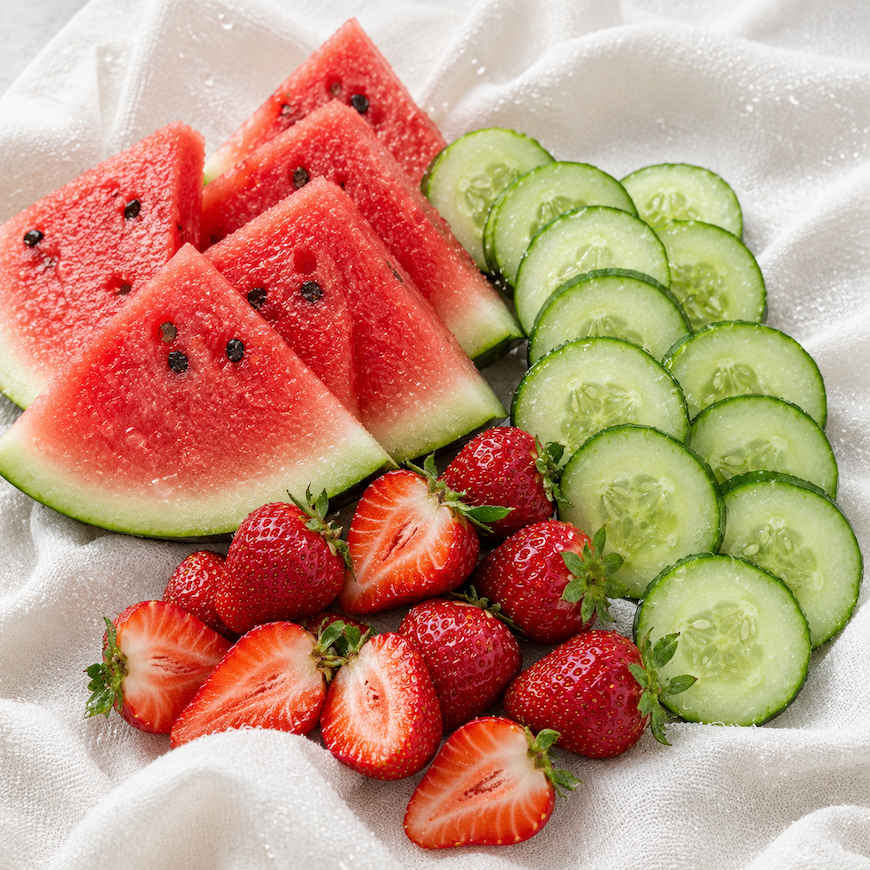
Athletes who develop hyponatremia (dangerously low blood sodium) during endurance events usually get there by drinking large volumes of plain water while sweating out sodium. Hydrating foods sidestep that. A cup of watermelon gives you water plus 170mg potassium and 15mg magnesium. A cucumber gives you water and 442mg potassium. Spinach gives you water, 839mg potassium per cooked cup, and 157mg magnesium, two of the three key electrolytes in one vegetable.
The shift I made was treating this as a morning priority instead of a reaction to thirst. Building hydration into the start of the day makes hitting the target feel effortless rather than disciplined. For other morning habits with outsized payoff, my guide to morning habits that change how you feel covers what has actually moved the needle for me.
You can also see how the CDC frames water and healthy hydration for a baseline reference.
Vegetable
Water content
Key nutritional bonus
Cucumber
96.7%
Silica for connective tissue + skin
Iceberg lettuce
95.6%
Volume food, very low calorie
Celery
95.4%
Phthalides (arterial smooth muscle)
Radishes
95.3%
Glucosinolates (liver enzyme support)
Zucchini
94.8%
17 calories per 100g
Tomatoes
94.5%
Lycopene (prostate + skin UV protection)
Bell peppers (red)
92.2%
169% DV vitamin C per pepper
Cauliflower
92.1%
Choline (liver + brain function)
Spinach
91.4%
Magnesium + folate
Broccoli
89.3%
Sulforaphane (phase II detoxification)
A few things most lists of hydrating foods leave out:
Cucumber at 96.7% water has the highest water content of any solid food, the benchmark every other entry on a list of hydrating foods gets measured against. It also has silica, a mineral used to build glycosaminoglycans, the compounds that help skin hold moisture and keep joint cartilage intact. Silica doesn’t get the press that collagen supplements do, but it’s a required building block for them. One large cucumber (about 300g) gives you roughly 260ml of water straight from food.
Celery at 95.4% has phthalides, compounds shown in lab and animal studies to relax arterial smooth muscle, which is the proposed reason behind celery’s traditional use for blood pressure. The human evidence is thin but suggestive.
Spinach at 91.4% water ranks below iceberg lettuce but is worth far more nutritionally. Magnesium is the reason to reach for spinach over other greens. It’s a cofactor for the sodium-potassium ATPase pumps, the cell membrane proteins that manage fluid distribution across cells. Without enough magnesium your electrolyte balance suffers even when potassium intake is fine. I cover how far the effects of low magnesium reach in signs of magnesium deficiency .
Bell peppers at 92.2% water deserve more credit among hydrating foods. A single red bell pepper gives you 92ml of water plus 169% of the daily value for vitamin C, the cofactor your body can’t make collagen without. Anything that delivers both water and vitamin C is pulling double weight for skin structure.
Fruit
Water content
Key nutritional bonus
Watermelon
91.5%
Lycopene + citrulline (vascular)
Strawberries
91%
148% DV vitamin C per cup
Cantaloupe
90%
106% DV vitamin A
Peaches
89%
Chlorogenic acid + potassium
Grapefruit
88%
Naringenin (fat metabolism)
Raspberries
87%
8g fiber per cup
Pineapple
86%
Bromelain (protein digestion)
Oranges
86%
Hesperidin (vascular anti-inflammatory)
Blueberries
85%
Anthocyanins (cognitive function)
Watermelon is the standout among hydrating foods in the fruit category for two reasons beyond its 91.5% water. First, lycopene, the carotenoid that makes it red, gives cells a degree of UV protection no topical product can match. A 2001 study in the Journal of Nutrition found high lycopene intake linked to noticeably lower susceptibility to UV-induced DNA damage in skin cells. Second, citrulline. Watermelon is the richest natural source of this amino acid, which the kidneys convert to arginine to support nitric oxide production. A 2013 study in Menopause found watermelon extract reduced arterial stiffness in postmenopausal women.
Strawberries at 91% water give you 148% of the daily value for vitamin C per cup. One cup clears the daily vitamin C requirement on its own while delivering 87ml of water. Vitamin C is the cofactor for prolyl hydroxylase, the enzyme that stabilizes the collagen triple helix. Without it, collagen production stops, which is why scurvy shows up as wounds that won’t heal and joints that fall apart.
Cantaloupe at 90% water gives you 106% DV vitamin A per cup. Vitamin A keeps your epithelial cells in good shape, the ones lining skin, the gut, and the lungs. Foods that hold those surfaces together are doing something structural, not just handing you generic antioxidants.
Building meals around hydrating foods that bring water and real nutritional density at once is something I get into in my guide to importance of healthy nutrition .
Water on its own doesn’t hydrate cells. Electrolytes do.
To be precise: electrolytes (sodium, potassium, magnesium, and chloride) control the osmotic gradient that decides whether water moves into or out of cells. Drinking water raises blood volume. Electrolytes decide what happens to that water at the cellular level. Those are two different mechanisms.
That’s why the best hydrating foods aren’t simply high in water. They also carry the minerals that make water usable once it gets to the cell.
Potassium is the main electrolyte inside the cell. Without enough of it, cells struggle to hold water no matter how much you drink. Best produce sources: avocado (975mg per cup), cooked spinach (839mg per cup), cantaloupe (427mg per cup), bananas (422mg each), watermelon (170mg per cup).
Magnesium runs the sodium-potassium ATPase pump, the membrane protein that moves sodium out of cells and potassium in, holding the gradient that keeps cells hydrated. If that pump isn’t working, electrolyte balance falls apart even with enough of both minerals coming in. Best produce sources: cooked spinach (157mg per cup), pumpkin seeds (74mg per ounce), edamame (50mg per half-cup), black beans (60mg per half-cup).
Sodium gets a bad name from processed food, but it’s the main electrolyte outside the cell. Sweating clears sodium, and drinking plain water afterward without replacing any of it slowly dilutes your blood sodium. Natural produce sources: celery (35mg per stalk), tomatoes (9mg per medium), beets (65mg per cup).
If you’re tired all the time despite decent sleep and water, low magnesium affecting cellular hydration and ATP production is worth a look. I cover the wider picture of energy-related nutrition in why you are always tired .
The research behind these intake numbers is laid out in detail by the National Academies of Sciences Dietary Reference Intakes, still the primary authority on fluid intake.
Skin is about 64% water by weight. How well it holds that moisture depends on the stratum corneum and the natural moisturizing factors inside it: amino acids, urocanic acid, and glycosaminoglycans that keep the barrier doing its job of holding water in and irritants out.
Dehydration weakens that barrier directly. A 2015 study in Clinical, Cosmetic and Investigational Dermatology found that raising dietary water intake from food clearly improved skin hydration in people who started out below average.
Past raw water volume, specific nutrients from produce shape skin structure:
Vitamin C (strawberries, bell peppers, citrus): cofactor for prolyl hydroxylase. Every collagen fiber in your body needed vitamin C to form. Skin short on collagen turns thin, loses its bounce, and heals slowly. A cup of strawberries or half a red bell pepper covers the daily requirement.
Lycopene (watermelon, tomatoes): absorbs UV wavelengths at the cellular level. The 2001 Journal of Nutrition study tied high dietary lycopene to lower UV-induced DNA damage. It won’t replace sunscreen, but it’s a real complementary mechanism.
Silica (cucumbers): a structural piece of glycosaminoglycans, which form the extracellular matrix that keeps skin plump. That matrix is the three-dimensional scaffold in the dermis, and silica’s part in maintaining it is why cucumber has a biochemical basis for its skin reputation, not only a cultural one.
Carotenoids (cantaloupe, carrots, bell peppers): a 2015 JAMA Dermatology analysis found higher serum carotenoid levels tied to better skin texture and fewer signs of photoaging, independent of sun exposure.
Vitamin A (cantaloupe, sweet potato, spinach): regulates keratinocyte differentiation, the process by which skin cells mature properly. Too little vitamin A leaves skin rough and dry.
The anti-inflammatory produce that turns up among hydrating foods for skin also overlaps heavily with the evidence for anti-inflammatory eating in general, which I cover in anti-inflammatory foods .
Thirst is a late signal. By the time your hypothalamus fires off the thirst response, you’re usually 1 to 2 percent below optimal hydration. That sounds small. A University of Connecticut study in the Journal of Nutrition found that 1.4% dehydration in women, reached without exercise and at rest, hurt mood, raised fatigue ratings, and reduced working memory.
At 2% dehydration, physical performance drops 10 to 20% in controlled conditions. At 3%, cognitive function and reaction time take a measurable hit.
The problem is that most people pin mild dehydration on something else entirely. Leaning on hydrating foods earlier in the day heads off a lot of this before it starts.
Afternoon energy slump: usually blamed on a post-lunch blood sugar dip or plain work fatigue. Often it’s mild dehydration, especially if your water intake was low in the first half of the day.
Headache: one of the most common dehydration triggers. The brain sits in cerebrospinal fluid, and lower fluid volume lets it shift slightly away from the skull, tugging on the pain-sensitive meninges.
Muscle cramps: during or after exercise, this is often electrolyte loss (sodium, potassium, magnesium) more than pure water dehydration. Replacing fluid without electrolytes won’t fix cramps caused by sodium loss.
Dark urine: the most reliable self-check you have. Pale straw yellow (1 to 3 on the standard 8-point scale) means you’re well hydrated. Dark yellow or amber means meaningful dehydration. Colorless, see-through urine can mean you’ve overdone it.
Chronic mild dehydration hits kidney filtration directly, and adequate fluid intake is the most consistently evidence-based way to prevent kidney stones and keep filtration efficient. I cover the early signs of kidney stress in 6 kidney problems signs .
The National Academies of Sciences recommendations:
Women: 2.7 liters total water per day (all sources)
Men: 3.7 liters total water per day (all sources)
About 20% of that comes from food on a typical Western diet. Eat hydrating foods on purpose and that climbs to 25 to 35%, up to 900ml a day from food alone, which takes a real load off your beverage intake.
A practical day using the produce ranked above:
Meal
Hydrating foods
Water from food
Breakfast
1 cup strawberries + 2 cups spinach in smoothie
~240ml
Mid-morning
1 medium orange
~110ml
Lunch
Large cucumber salad + 2 medium tomatoes
~280ml
Afternoon snack
2 cups watermelon
~300ml
Dinner
Zucchini side dish + half red bell pepper
~200ml
Total from food ~1,130ml
Drink 1.5 to 1.6 liters of extra water across that day and you’ve cleared the recommended total for women (2.7L) without any heroics.
The psychology matters too. A cucumber in a lunch salad doesn’t feel like a hydration strategy. It feels like lunch. Taking away the mental load of tracking and forcing down large volumes of water is what makes consistency stick. That’s the quiet advantage of leaning on hydrating foods rather than willpower.
A simple way to check whether your hydrating foods are doing the job: look at your urine color at 10am and 3pm. Consistently pale straw at both points means you’re on track. Dark yellow at 3pm means front-load hydrating foods at breakfast instead of pouring down more liquid in the afternoon.
Research on specific dehydration markers and cognitive effects is in this NCBI-indexed review on mild dehydration and cognitive performance.
Watermelon and strawberries are both about 91% water, which puts them among the most hydrating foods most people can find year-round. Across all produce, cucumber tops the list at 96.7%. Among fruits alone, watermelon edges strawberries on total water per serving because the typical serving is bigger; two cups of watermelon delivers roughly 300ml of water.
No. Even on a diet built around hydrating foods, food gives you around 20 to 30% of your daily fluid needs, up to about 1,100ml on a very produce-heavy day. You still need to drink roughly 1.5 to 2 liters of water. What food-based hydration changes is that every milliliter from food shows up with electrolytes, which makes it more effective at the cellular level than plain water.
By water content: cucumber (96.7%), iceberg lettuce (95.6%), celery (95.4%), radishes (95.3%), zucchini (94.8%). For hydration and nutrition together, cucumber, spinach, bell peppers, and celery rank highest among hydrating foods, since they pair high water content with real electrolyte or vitamin contributions instead of water alone.
High-water produce like cucumbers, zucchini, and leafy greens has very low caloric density, usually 10 to 20 calories per 100g, but a lot of physical volume. That fills you up without much in the way of calories. Swapping calorie-dense snacks for these hydrating foods cuts total intake while supporting hydration. The clinical evidence aimed specifically at high-water foods in weight loss trials is limited, but the mechanism (low energy density, high volume, high fiber) is well established.
Yes. Strawberries and bell peppers for vitamin C (needed for collagen synthesis), watermelon and tomatoes for lycopene (cellular UV protection), cucumbers for silica (extracellular matrix component), and cantaloupe for vitamin A (epithelial cell maintenance). These aren't generic "eat well for your skin" lines; each has a specific mechanistic pathway. The 2015 Clinical, Cosmetic and Investigational Dermatology study linked dietary water intake to measurable skin hydration.
Urine color is the most reliable check that needs no equipment for tracking how well your hydrating foods are working. Pale straw yellow (1 to 3 on the standard 8-point scale) means adequate hydration. Dark yellow or amber means dehydration. If you're eating 4 to 6 daily servings of hydrating foods from the lists above and drinking 1.5 to 2 liters of water, most healthy adults will hold pale straw urine through the day.
This article is for informational purposes only and is not a substitute for medical advice. General hydration guidelines apply to healthy adults without kidney disease, heart failure, or conditions requiring fluid restriction. If a physician has advised you to limit fluid intake, follow that guidance specifically rather than general population recommendations. Persistent symptoms of dehydration, such as dark urine, dizziness, rapid heartbeat, or confusion, despite adequate intake should be evaluated by a healthcare provider.
Mimo Karam is the founder and writer at LifestyleMine. She writes about daily habits, nutrition, sleep, and emotional wellness, turning research into practical advice for people who want to live healthier without making it complicated.