✦
THE LIFESTYLEMINE NEWSLETTER
Simple wellness tips, healthy recipes, and
everyday inspiration delivered to your inbox.
Your Email Address
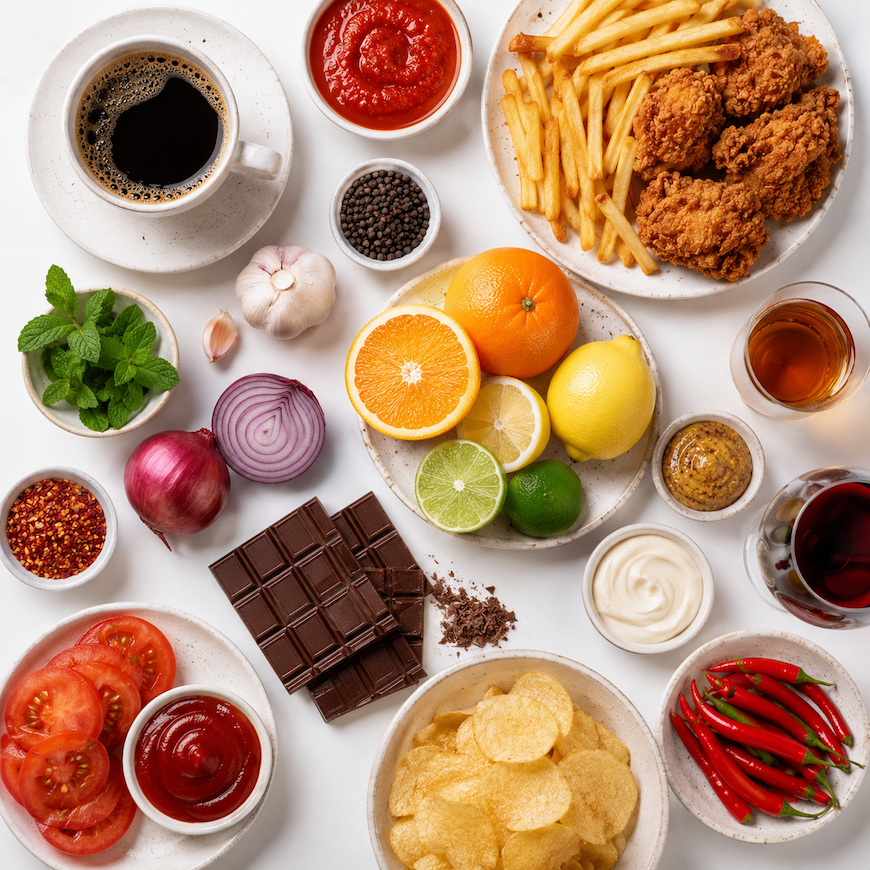
Fat is the most reliable acid reflux trigger in the clinical literature. It works two ways at the same time: it slows stomach emptying and it relaxes the LES.
Fat takes 4 to 5 hours to clear the stomach. Digestible carbs take 1 to 2. So a high-fat meal can sit in the stomach up to 3 hours longer than a comparable carb meal, which gives acid more time to build and more chances for a dip in LES pressure to let it through Kaltenbach et al., PubMed .
The second route is hormonal. Fat triggers the release of cholecystokinin (CCK), the hormone that organizes fat digestion by releasing bile. One of CCK’s other effects is relaxing the LES muscle. That isn’t a glitch; it’s the body doing what it’s supposed to do. But if you’re prone to reflux, it means a fatty meal loosens the LES through a dependable hormonal route, not by chance.
Frying makes all of this worse. It packs in more fat, raises the calorie load, and makes the food harder to break down. A piece of fried chicken that takes 5 hours to leave the stomach, against a baked version at 2, buys you 3 extra hours of acid exposure and a vulnerable LES.
The fix isn’t cutting fat to zero. It’s keeping the fat per meal lower and pairing it with fiber, which slows CCK release, rather than with refined carbs. I get into the wider picture on fat and processed food in nutrition mistakes that make us fat .
Coffee is one of the most studied foods that cause acid reflux, and the reason is more specific than “caffeine equals acid.”
Caffeine prompts gastrin secretion, which ramps up hydrochloric acid production. With more acid sitting in the stomach, any LES event (a swallow, a belch, a shift in posture) can push acid higher into the esophagus. Caffeine also relaxes the LES muscle directly by blocking adenosine receptors in the sphincter.
Here’s the part most articles skip: caffeinated coffee isn’t the only problem. Decaf carries chlorogenic acids, which prompt gastrin secretion on their own. A 1999 comparison found decaf produced about as much gastric acid as regular coffee, only a little less. Switching to decaf helps, but it won’t solve the problem for anyone with serious GERD.
Tea has less caffeine per cup than coffee (around 40mg against 95mg) but it still drives acid production and LES relaxation, black and green teas especially. The neutral or actually helpful options are herbal: chamomile, ginger, licorice root.
Timing counts more than people expect. Coffee with or after a meal slows stomach emptying and spreads the acid-stimulating effect across a few hours. Coffee on an empty stomach concentrates that gastrin spike into a short window, right when the LES has no food above it to keep things in place.
Alcohol fires three independent mechanisms at once, which is what makes it one of the most potent single triggers.
LES relaxation: ethanol lowers LES pressure in a dose-dependent way. Even one or two drinks produce measurable relaxation within half an hour.
More acid: alcohol prompts gastrin and histamine release, both of which tell the parietal cells to crank out hydrochloric acid. The effect peaks 1 to 2 hours after you drink.
Mucosal damage: ethanol breaks down the protective mucus layer over the esophageal lining, so whatever acid does reach it does more harm. That’s part of why heavy alcohol use is tied to Barrett’s esophagus (precancerous changes) regardless of how bad the GERD itself is.
Wine and beer tend to stimulate more acid than spirits, probably because of fermentation compounds beyond the ethanol. Red wine is a double hit for some people, since it also carries histamine, which stimulates acid on its own.
A practical line in the sand: for most people with GERD, even one drink within 3 hours of bed produces measurable nighttime reflux. There’s no truly safe alcohol option here, only quantity, timing, and how much your own body tolerates.
These two sit together because both trigger reflux mainly by relaxing the LES, and both get sold as “digestive aids,” which is backward for anyone with reflux.
Chocolate: it carries theobromine (a methylxanthine related to caffeine), caffeine itself, and fat, so it’s three triggers in one bite. Theobromine relaxes the LES muscle. Caffeine adds acid stimulation. The fat brings the CCK-driven LES relaxation from earlier. Dark chocolate has more theobromine and caffeine than milk chocolate, so it hits harder despite its health-food reputation.
Peppermint and spearmint: the menthol in both relaxes smooth muscle right through the gut, which is why peppermint tea is a folk remedy for bloating and cramps. It eases intestinal spasm. Trouble is, the LES is a smooth muscle ring too, and menthol relaxes it along with everything else. Peppermint tea after dinner shows up again and again with worse nighttime reflux in GERD patients. The enteric-coated peppermint capsules made for IBS, designed to open lower down, skip the LES and are generally fine.
Chamomile and ginger tea are the evidence-backed swaps. Neither relaxes the LES, and ginger actually speeds stomach emptying while settling nausea.
This is where most people carry the wrong model, and clearing it up changes the decisions you make.
The usual assumption goes: citrus is acidic (pH 2 to 4), so it must make stomach acid more acidic and do more damage. That’s wrong.
Your stomach already sits at pH 1.5 to 3.5, far more acidic than anything you could eat. Lemon juice at pH 2 isn’t going to acidify it further. What citrus and tomatoes actually do is prompt gastrin and secretin release, which raises the volume of acid the stomach makes. More volume means more material on hand for a reflux event, and more esophageal exposure each time the LES opens.
Citrus also carries compounds (naringin in grapefruit, hesperidin in oranges) that make the lower esophagus more permeable in some people. That leaves the lining more sensitive to whatever acid reaches it, even at normal stomach pH.
Tomatoes pile on. They hold malic acid, citric acid, and a lot of water. The acids prompt secretin release for more volume, and the water in tomato sauces adds to the liquid pool available to reflux. That’s why pasta with marinara is a classic trigger even for people who handle raw tomatoes fine.
The safer produce for managing acid reflux symptoms: melons (cantaloupe especially, pH 6.1 to 6.8), bananas (pH 5 to 5.3), and non-citrus green vegetables across the board.
This group works through the pressure pathway. Not mainly LES relaxation or acid volume, but mechanical pressure that overpowers the LES.
Onions and garlic: both run high in fructans, a FODMAP (fermentable oligosaccharide) that we lack the enzymes to digest. When fructans reach the colon, gut bacteria ferment them and produce gas. That gas raises pressure inside the stomach and abdomen, shoving acid up against the LES. Raw onions are noticeably worse than cooked, since heat breaks down some of the fructans. For the roughly 30% of people who have both IBS and GERD, this is often the main trigger.
Carbonated drinks: CO2 gas expands in the warm, fluid stomach. A fizzy drink that was a liter in the bottle takes up more room once it’s inside you, and that raises stomach pressure directly. Every belch that follows briefly opens the LES to vent the gas, and acid can ride along. Studies consistently show carbonated drinks raise esophageal acid exposure compared to still water, even with other variables matched.
Sparkling water is a bit better than soda (no sugar, no caffeine, less CO2) but it’s still a problem for frequent sufferers. Plain still water is the neutral baseline.
Spicy food works through a route none of the earlier categories use. Not LES relaxation, not acid volume, not stomach pressure.
Capsaicin, the active compound in chili peppers, switches on TRPV1 receptors in the esophageal lining. TRPV1 is a pain and heat receptor, the thing that makes spicy food feel hot. In the esophagus, capsaicin sensitizes these receptors, so the same amount of acid that used to feel like mild discomfort now burns. It doesn’t necessarily create more acid or more reflux events. It makes the reflux you already have feel a lot worse.
That distinction has a practical payoff. If your heartburn feels worse after spicy food but an esophageal pH monitor shows no real rise in acid events, that’s sensitization, not more reflux. The move is to cut capsaicin exposure long enough for the TRPV1 receptors to settle down, which usually takes 2 to 4 weeks.
High-fat dairy runs on the same mechanism as fried and fatty food: fat prompts CCK release, which relaxes the LES. Full-fat cheese, cream, ice cream, and butter are all real triggers. Low-fat dairy like plain Greek yogurt and low-fat milk tends to go down fine and lands among the best foods for acid reflux, because the protein supports LES tone. Protein is the one macronutrient that raises LES pressure instead of lowering it.
The GERD diet research keeps pointing to a few food groups tied to less frequent, less severe reflux:
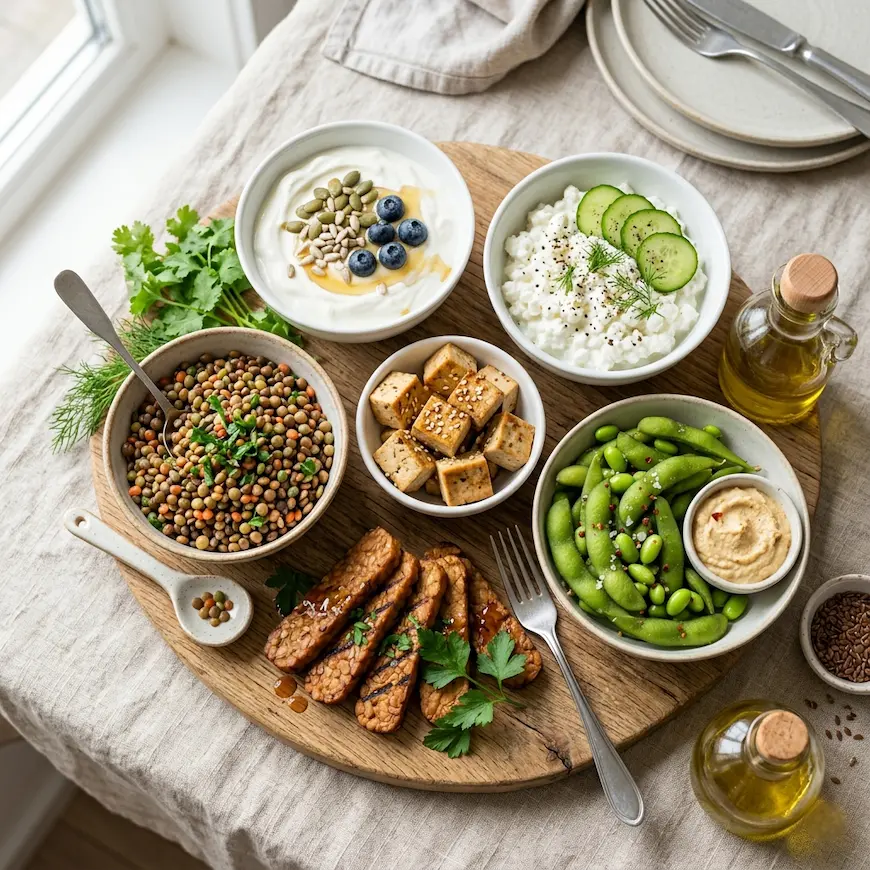
Lean proteins: chicken breast, turkey, fish, egg whites, tofu. Protein is the only macronutrient that raises LES pressure, the opposite of fat. High-protein meals produce less reflux than high-fat or high-carb meals in controlled studies.
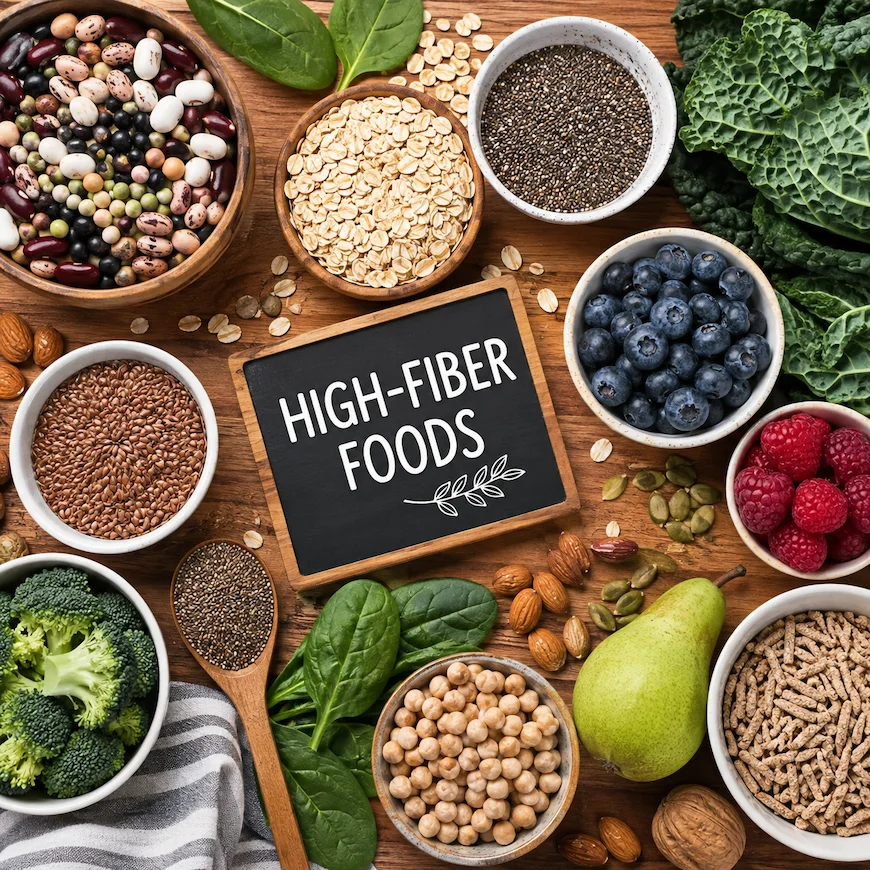
Complex carbohydrates: oatmeal, brown rice, whole grain bread, sweet potato. These clear the stomach faster than fatty food and don’t drive excess gastrin. The fiber in oatmeal also soaks up some stomach acid.
Alkaline vegetables: broccoli, asparagus, green beans, cauliflower, leafy greens. They don’t stimulate gastrin, don’t relax the LES, and bring fiber that keeps the gut moving.
Ginger: it calms the esophageal lining, speeds stomach emptying, and eases nausea. Ginger tea, not peppermint, is the right after-dinner choice.
Bananas and melons: low-acid fruits (pH 5 to 6.8) that don’t prompt gastrin. Bananas also bring pectin, which helps normal stomach motility.
Shifting fully toward foods that help acid reflux while dropping the ten triggers above is a big change. I find it easier to come at through the overall nutrition picture than through a stack of individual food rules. My piece on importance of healthy nutrition covers how to set that up in practice.
The anti-inflammatory diet overlaps heavily with the GERD-protective one. For produce that lowers systemic inflammation and supports digestion at the same time, see anti-inflammatory foods .
Food is only one variable. How much you eat, when you eat it, and what you do afterward each affect acid reflux on their own, sometimes more than the specific foods do.
Meal size: big meals raise both stomach volume and pressure. Eating to about 80% full rather than stuffed produces a measurable drop in post-meal reflux. Smaller meals more often keeps acid volume and stomach pressure down.
Acid reflux at night and the 3-hour rule: lying down within 3 hours of eating takes gravity out of the equation, and gravity is what keeps stomach contents below the LES. Nighttime reflux, the kind that wakes you at 2am, is almost always worse when dinner runs late. Finishing dinner at least 3 hours before bed is the single highest-impact lifestyle change in the GERD research.
Sleep position: sleeping on your left side cuts nighttime acid exposure compared to your right. The reason is anatomical: the stomach curves to the left, so left-side sleeping keeps the fundus, where acid pools, below the LES. Right-side sleeping puts the LES under the acid pool.
BMI and belly fat: each unit of BMI is tied to higher GERD risk, mostly because abdominal fat raises intra-abdominal pressure and pushes acid up. That’s separate from diet. In people who are overweight, losing weight reliably cuts reflux, sometimes clearing it altogether. My rundown of healthy habits, weight management included, is in healthy heart habits you should do .
Morning timing: habits that support digestion in the first half of the day shape the rest of it. See morning habits that change how you feel for the patterns that made the biggest difference for me.
Red flag symptoms that need evaluation now: trouble swallowing (dysphagia), pain on swallowing (odynophagia), unplanned weight loss, black or bloody stool, or vomiting blood. Any of these alongside reflux needs prompt medical attention, not a diet tweak. The NIDDK overview of acid reflux, GER, and GERD in adults lays out when to seek care.
Among the foods that cause acid reflux, fried and fatty foods are the most consistently troublesome across the research because they trigger two mechanisms at once: CCK-driven LES relaxation and slower stomach emptying. Coffee and alcohol are close behind for the same multi-mechanism reason. The worst single pattern is fatty food followed by alcohol or coffee within the hour, which sets off all three pathways together.
Some people with mild reflux handle small amounts, especially with food, which softens the gastrin response. Grapefruit and orange juice are worse than whole oranges, since the liquid absorbs faster and produces a stronger gastrin response. To test your own tolerance, track symptoms for 72 hours after each citrus exposure; delayed reactions are common because inflammation from repeated exposure builds over hours.
Caffeine and fat are the two most consistent triggers in controlled studies. Coffee ranks high because it pairs caffeine (gastrin plus LES relaxation) with chlorogenic acids (more gastrin) in one cup. But fried food, eaten in larger amounts across a day, adds up to more total acid exposure for a lot of people. Response varies, so a food diary over 2 to 3 weeks is the most reliable way to find your own ranking.
Lean proteins (chicken breast, fish, egg whites), complex carbs (oatmeal, brown rice), alkaline vegetables (broccoli, asparagus, leafy greens), bananas, melons, and ginger. These either raise LES pressure (protein), clear the stomach quickly (complex carbs), or calm the esophageal lining (ginger). Plain Greek yogurt and low-fat milk also go down well for most people.
Not necessarily, if your main issue is how bad the heartburn feels rather than how often reflux actually happens. Capsaicin sensitizes pain receptors in the esophagus, so it makes reflux feel worse without creating more. If you have confirmed esophagitis, skipping spicy food while the lining heals makes sense. If your esophagus is structurally normal, a 2 to 4 week break to let the TRPV1 receptors settle, then a gradual reintroduction, helps you find your own tolerance.
Nighttime reflux is most common in the first 2 to 3 hours of sleep, lining up with the post-meal acid peak when dinner was within 3 hours of bed. Alcohol within 3 hours of sleep makes it considerably more likely. The highest-risk mix is a large, fatty meal plus alcohol plus lying down within 2 hours, all of which tend to happen at once at a dinner party, which is why so many GERD sufferers recognize that particular night.
This article is for informational purposes only and does not constitute medical advice, diagnosis, or treatment. Acid reflux and GERD are medical conditions that range from occasional nuisance to serious esophageal disease. The dietary changes described here may help with mild to moderate symptoms but do not replace medical evaluation. If you have difficulty swallowing, pain with swallowing, unintentional weight loss, blood in vomit or stool, or chest pain that could be cardiac, seek medical care immediately. Long-term use of over-the-counter antacids should be discussed with a physician. Do not stop prescribed medication based on dietary information.
Mimo Karam is the founder and writer at LifestyleMine. She writes about daily habits, nutrition, sleep, and emotional wellness, turning research into practical advice for people who want to live healthier without making it complicated.