Typhoid fever is more than just a high temperature and a headache; it is a significant battle for your digestive system. Caused by the Salmonella Typhi bacteria, this infection primarily attacks the intestines, leaving them inflamed, sensitive, and vulnerable. While antibiotics are the front-line soldiers in this fight, your typhoid recovery diet is the logistics team that provides the raw materials for rebuilding and recovery.
In 2026, we understand more than ever that “starving a fever” is a myth of the past. To recover from typhoid without the lingering “post-typhoid weakness,” you need a strategic, phased nutritional approach. This guide provides a unique, 7-day plan to help you navigate from the peak of the fever to the first steps of full strength.
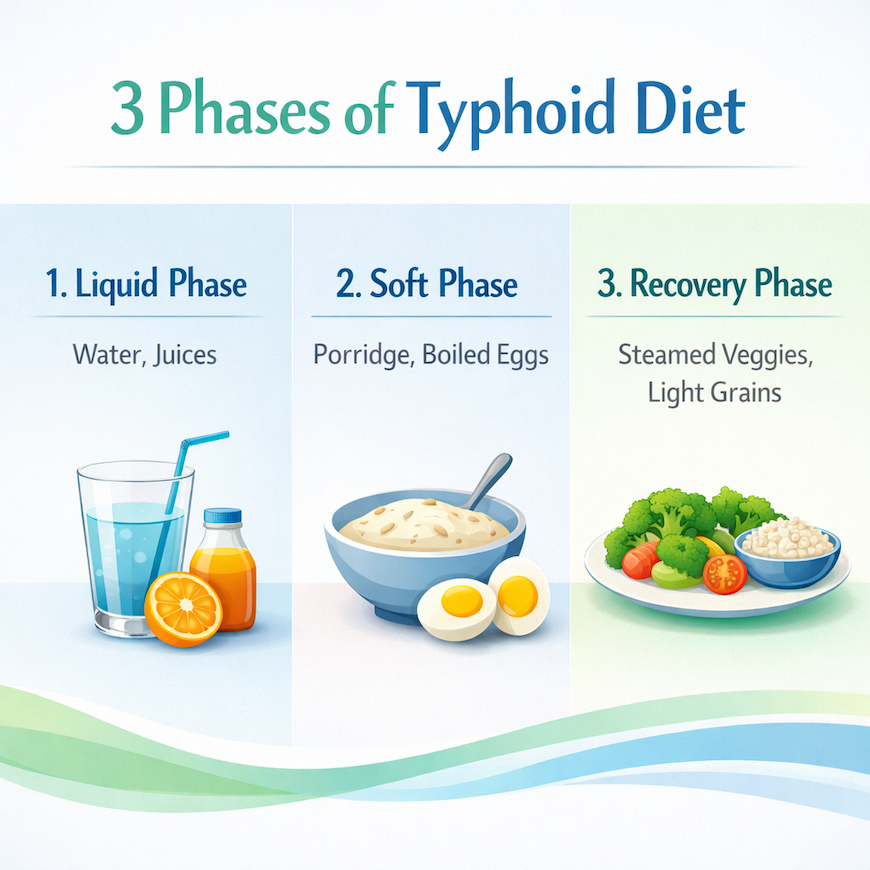
Phase 1: The Rehydration Crisis (Days 1-2)
When the fever is at its highest, your body is losing fluids and electrolytes at an alarming rate. During these first 48 hours, the goal isn’t “eating” in the traditional sense; it is cellular rehydration.
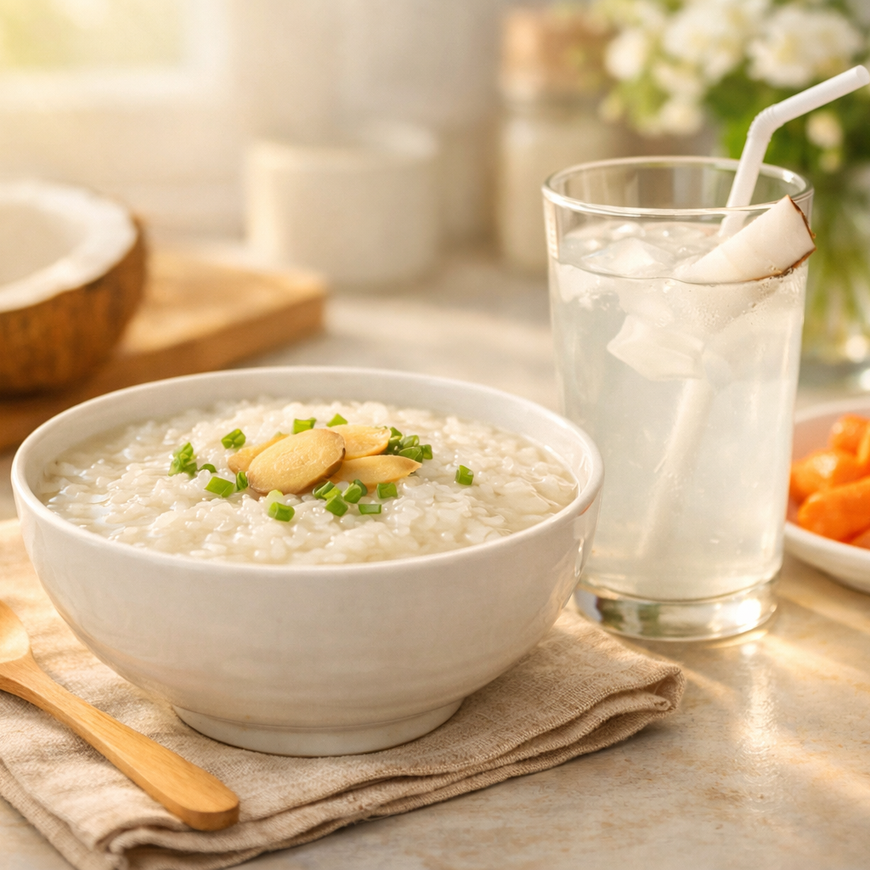
The Liquid Gold: Coconut Water and ORS
Clear Liquids Only
- Barley Water: Traditionally used for its cooling properties and ease of digestion.
- Fruit Juices (Strained): Freshly squeezed orange or lime juice, but it must be strained to remove all pulp and fiber. Fiber is the enemy of an inflamed typhoid gut in the early stages.
- Clear Vegetable Broth: Provides essential minerals without taxing the digestive system.
Phase 2: The Soft Transition (Days 3-5)
The Power of Simple Carbohydrates
- Rice Porridge (Congee): Overcooked, soft white rice is the gold standard. It is extremely easy to break down and provides a steady stream of energy.
- Baked or Boiled Potatoes: Mash them thoroughly. Potatoes are rich in Vitamin C and potassium, which support the immune system.
- White Bread Toasts: Avoid whole wheat or multigrain for now. The goal is “refined” because it requires minimal effort from your gut.
Introducing Soft Proteins
Protein is the building block of repair.
- Soft-Boiled Eggs: These are “pre-digested” proteins that are easy on the stomach.
- Moong Dal (Yellow Lentils): Ensure the lentils are cooked until they are completely mushy. This provides essential amino acids without the gas-inducing properties of heavier beans.
Phase 3: Rebuilding Strength (Days 6-7)
By day six, you should feel a noticeable lift in your energy. Now, we begin to “crowd out” the infection by introducing more substantial nutrition.
Steamed Vegetables: Avoid raw salads at all costs during typhoid. Raw vegetables: carry a high risk of reinfection and are too tough for the gut to process. Instead, focus on:
- Steamed Carrots and Bottle Gourd (Lauki): These are naturally soothing and rich in Vitamin A.
- Boiled Spinach: Pureed or finely chopped to ensure easy absorption.
Probiotic Support: This is the time to start rebuilding your gut microbiome, which has likely been depleted by both the infection and the antibiotics.
- Fresh Curd (Yogurt): Ensure it is homemade or plain, without added sugars. The live cultures in yogurt help restore the “good” bacteria in your gut.
Related: Typhoid Vaccine: Ultimate Traveler’s Guide to Prevention, Types & Safety Tips
The “Forbidden” List: What to Avoid
To prevent a typhoid relapse, which is surprisingly common, you must be strict about what stays off your plate for at least 14 days.
1. High-Fiber Foods: Whole grains, raw vegetables, and fruits with skins (like apples or guavas) can cause intestinal perforation in severe cases.
2. Spices and Chilies: These act as irritants to the already inflamed intestinal lining.
3. Fried and Oily Foods: Fats are difficult to digest and can lead to nausea and diarrhea during recovery.
4. Strong Caffeine: Coffee and strong tea can further dehydrate you and irritate the stomach lining.
7-Day Typhoid Recovery Diet Chart (At-a-Glance)
|
Day
|
Breakfast
|
Lunch
|
Dinner
|
Snack
|
|
Day 1
|
ORS + Coconut Water
|
Clear Vegetable Broth
|
Barley Water
|
Strained Orange Juice
|
|
Day 2
|
Coconut Water
|
Strained Apple Juice
|
Clear Chicken/Veg Soup
|
ORS
|
|
Day 3
|
Soft Rice Porridge
|
Mashed Potato
|
Soft White Toast
|
Moong Dal Soup
|
|
Day 4
|
Boiled Egg (Soft)
|
Rice with Mushy Dal
|
Rice Porridge
|
Fresh Yogurt
|
|
Day 5
|
White Toast + Honey
|
Steamed Carrots + Rice
|
Mashed Banana
|
Coconut Water
|
|
Day 6
|
Scrambled Eggs
|
Boiled Chicken + Rice
|
Pureed Spinach + Rice
|
Fresh Yogurt
|
|
Day 7
|
Oat Porridge (Soft)
|
Steamed Veggie Medley
|
Light Khichdi
|
Baked Apple (Peeled)
|
Final Thoughts: Listen to Your Body

Mimo Karam is the founder and writer at LifestyleMine. She writes about daily habits, nutrition, sleep, and emotional wellness, turning research into practical advice for people who want to live healthier without making it complicated.