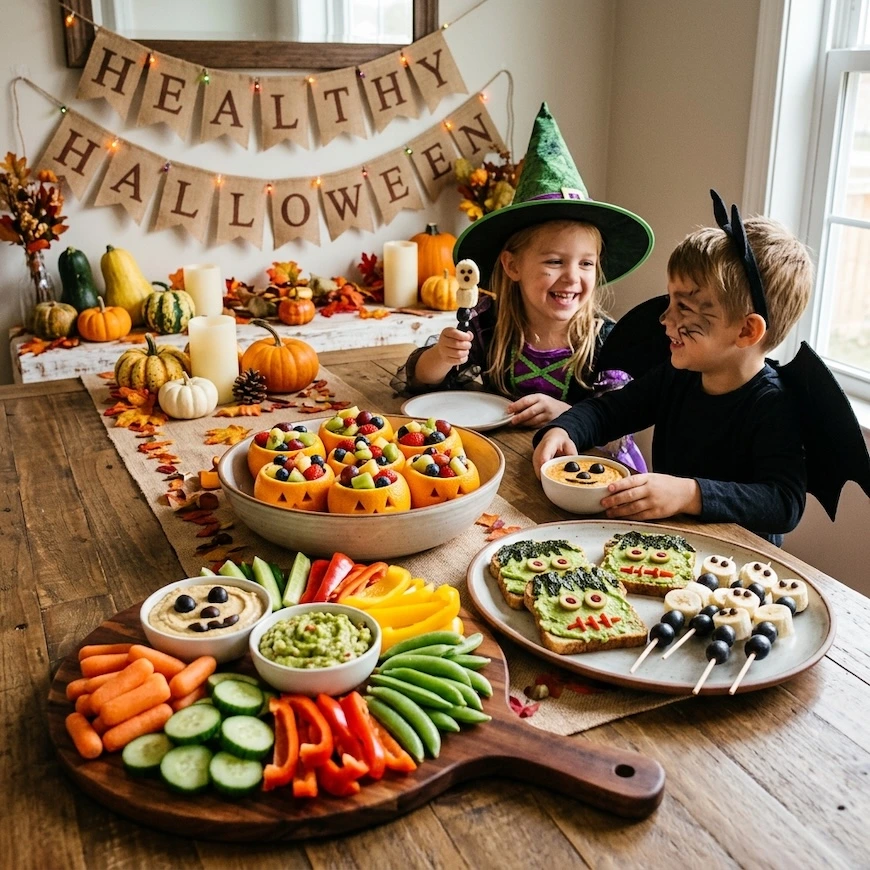
Quick Answer: No, not in the restrictive sense. A healthy Halloween doesn’t mean swapping candy for kale chips or banning sugar for a night. It means keeping a few better options on the table alongside the candy, not instead of it, and a plan for the aftermath that doesn’t turn into a week of negotiating. Research on how children eat shows that restricting treats backfires and makes kids want them more.
Halloween puts a pressure on parents that most holidays don’t. An entire evening, plus the week after, is built around a food most wellness writing treats as the enemy. That tension is where a lot of healthy Halloween advice falls apart, either by pretending candy doesn’t belong in the picture or by loading kids up with fruit-leather treat bags nobody wants.
This healthy Halloween guide takes a different angle. A few better treat options for your own table, some non-candy ideas that don’t feel like a consolation prize, and an honest plan for the leftovers, which is usually where the real stress lives.
Why a Healthy Halloween Doesn’t Have to Be All or Nothing
Quick Answer: Treating Halloween as one night of allowed indulgence, rather than a slippery slope needing damage control, is less stressful and better supported by the research. One night of candy doesn’t meaningfully affect a child’s health. The stress of policing it usually disrupts daily life more than the candy does.
Two approaches dominate healthy Halloween content, and both backfire. One treats the night as a health emergency requiring a reworked, candy-free evening. The other skips moderation and lets Halloween spiral into a three-week free-for-all out of guilt over having said no to anything.
The research points somewhere in between. Controlling or restrictive feeding doesn’t reliably reduce how much of a forbidden food a child eats. It tends to interfere with their ability to read their own hunger and fullness, and it can raise their preference for whatever is being restricted, according to Birch and Fisher’s 1998 review in Pediatrics.
So Halloween itself isn’t the risk. Tight, anxious control around food is more likely to cause trouble long-term than one night of trick-or-treating ever will. That’s the premise a healthy Halloween approach should start from.
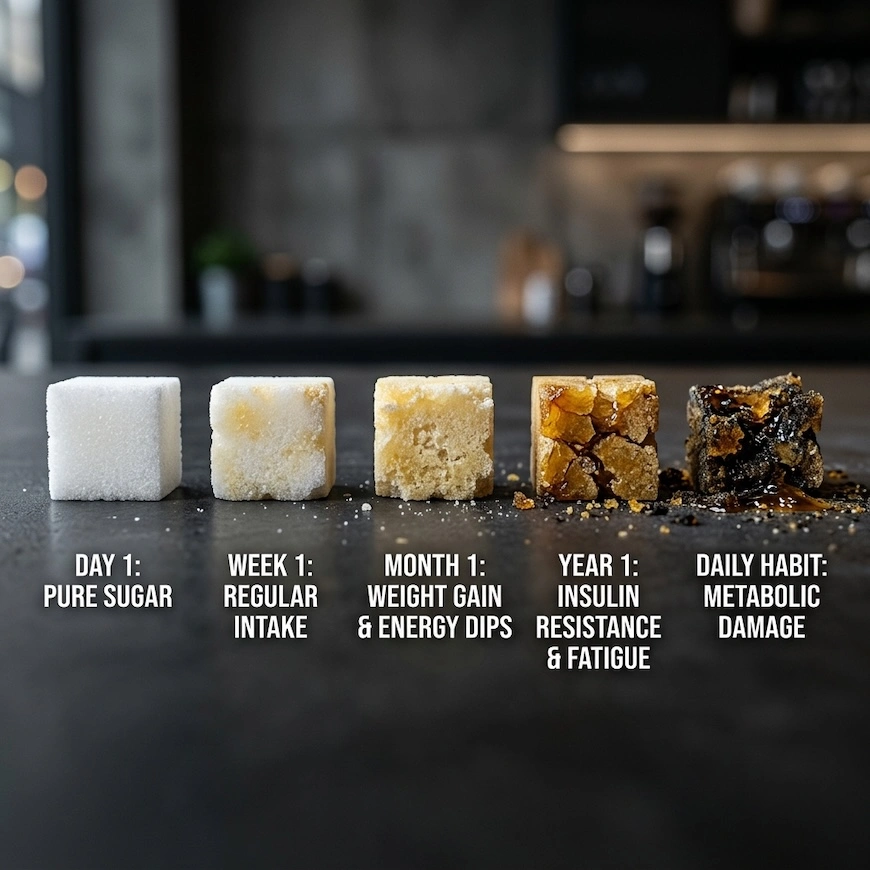
For context: the American Heart Association’s 2017 statement on added sugars in children suggests capping added sugars at about 25 grams a day. That number describes habitual intake, not a single holiday. Trick-or-treating isn’t what pushes a child’s average over the line. Everyday sugary drinks are.
Healthy Halloween Treats That Still Feel Like Halloween
Quick Answer: Healthy Halloween treats that work are the ones that still feel indulgent and holiday-specific, not health food in a costume. Dark chocolate, fun-shaped fruit, and homemade treats made with real ingredients land better than candy substitutes that are obviously trying to be something they aren’t.
Most healthy Halloween treat lists fail the same way. A raisin box next to a candy bar loses every time, not because raisins are bad, but because putting them side by side signals substitution, and that framing backfires.
The healthy Halloween options that actually hold up:
- Dark chocolate at 70% cacao or higher tastes different from milk chocolate candy, not like a worse version of it. It reads as its own thing. Cocoa also turns up regularly on lists of mood-boosting foods, for whatever that’s worth on October 31.
- Halloween-shaped fresh fruit works because it leans into the novelty of the night. Orange segments as candy corn, peeled grapes as eyeballs.
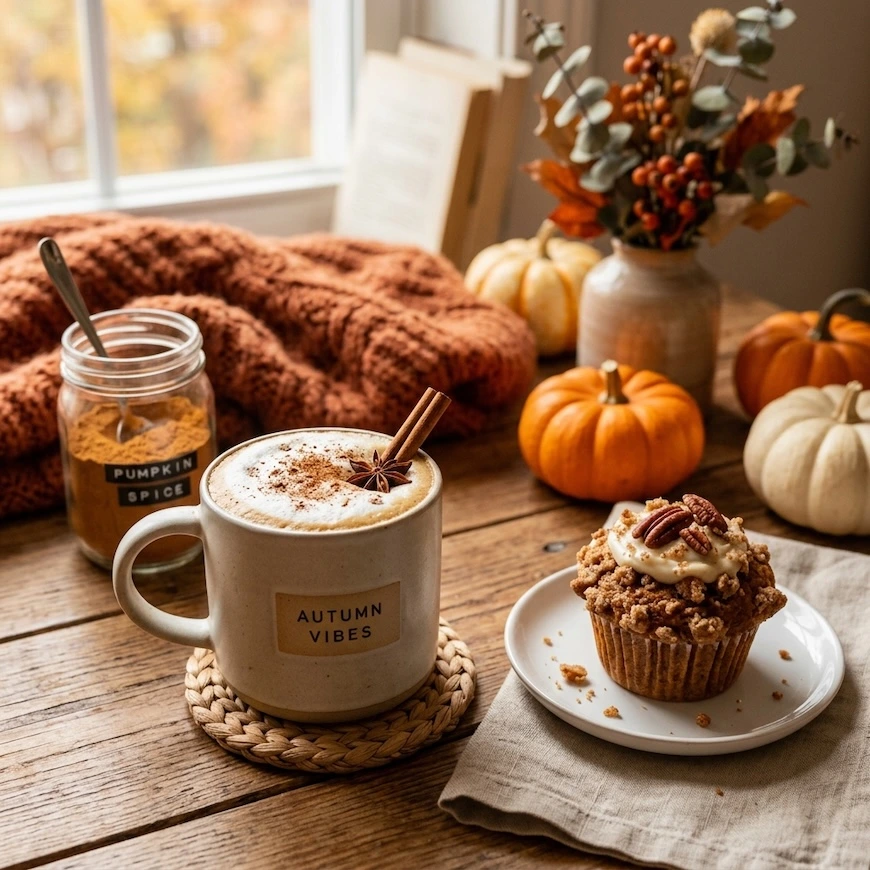
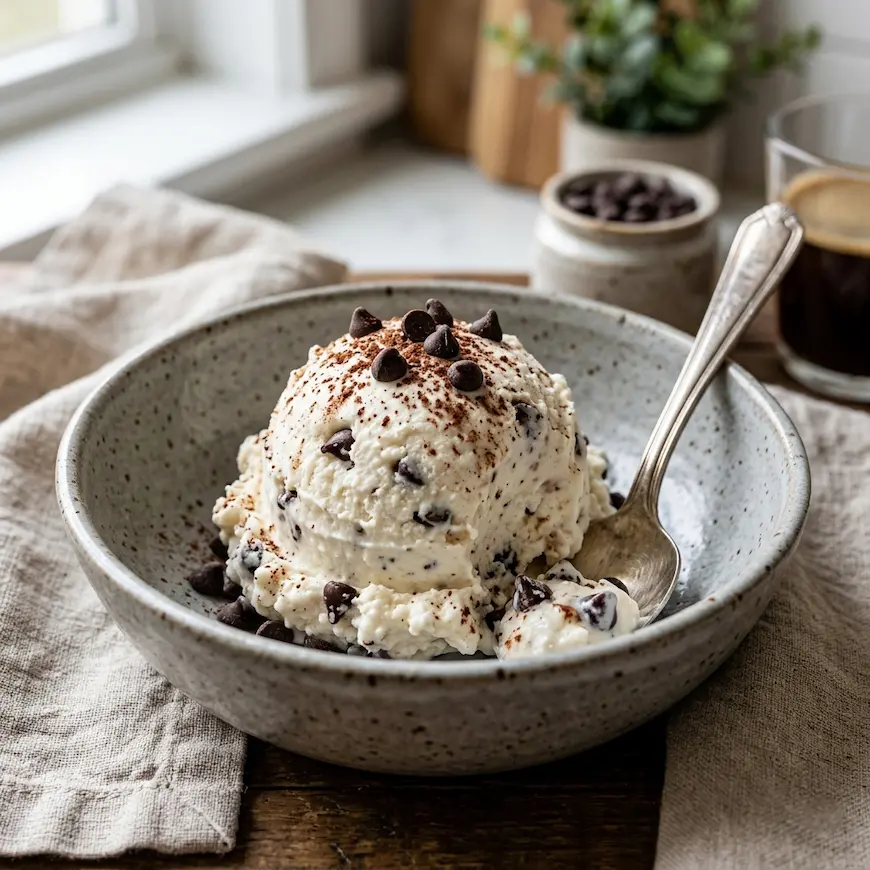
- Homemade treats made with real ingredients feel made for the occasion. Pumpkin muffins, spiced popcorn, or a blended frozen dessert like cottage cheese ice cream if you want something that reads as dessert and still has protein in it.
None of this needs to replace candy at trick-or-treating. A healthy Halloween table just has good options sitting next to the candy bowl.
Non-Candy Healthy Halloween Treat Ideas Kids Actually Like
Quick Answer: The most common non-candy mistake is handing out something a kid will visibly deflate over, like a single pretzel packet. Healthy Halloween treats that land have novelty going for them, not nutrition: glow sticks, stickers, small toys, temporary tattoos.
If your goal is cutting the candy volume in a trick-or-treat bag without disappointing anyone, non-food treats solve it far better than a healthy Halloween snack substitute does.
What works:
- Glow sticks or glow bracelets. Cheap, fun, and useful for walking around in the dark.
- Halloween stickers or temporary tattoos. Low cost, high novelty.
- Small themed toys like spider rings or plastic bugs. They have a treasure-hunt appeal candy doesn’t.
- Pencils and erasers in Halloween designs. Useful and still fun-shaped.
A kid holding a granola bar next to a candy bar feels shortchanged. A kid holding a glow stick doesn’t, because the two aren’t competing.
How to Handle the Trick-or-Treat Haul Without the Guilt Spiral
Quick Answer: The most sustainable healthy Halloween approach to a candy haul is letting kids enjoy some of it freely in the days right after, rather than restricting or hiding it. Sudden limits are the exact pattern that raises a food’s appeal. A relaxed first few days tends to defuse the urgency on its own.
A pair of experiments found that when children were denied access to a food they liked, their later selection of that food and their desire for it both went up compared with children who weren’t restricted, per Fisher and Birch in the American Journal of Clinical Nutrition. Apply that to a candy bucket and the pattern is obvious. The harder you clamp down on November 1, the more interesting the bucket becomes.
The healthy Halloween version of this looks like:
- Let the first evening happen without a strict cap. The danger of one night is overstated.
- After that, treat candy like any other snack in the house. Available, not hidden, not a reward.
- Skip the “eat your vegetables and you can have candy” framing. It teaches kids that vegetables are a chore and candy is the prize.
None of this means unlimited candy forever. It means not turning the first week of November into a standoff.
Pumpkin and Fall Produce for a Healthy Halloween Party Table
Quick Answer: A healthy Halloween party table built around pumpkin, apples, and squash alongside the candy bowl gives guests real choice without positioning produce as a substitute for the fun food. This works better than a candy-free table, which tends to feel like it’s missing the point.
Fall produce suits Halloween’s look in a way most seasons don’t, which makes a healthy Halloween spread an easier sell than most party-food advice.
Ideas that fit the season and the theme:
- Roasted pumpkin seeds with a spice mix, using the pumpkin you already carved. Squash and dark leafy greens also show up on most anti-inflammatory foods lists if you want the table doing double duty.
- Apple monster mouths: apple slices with nut butter and mini marshmallows. Kids like them because they’re silly.
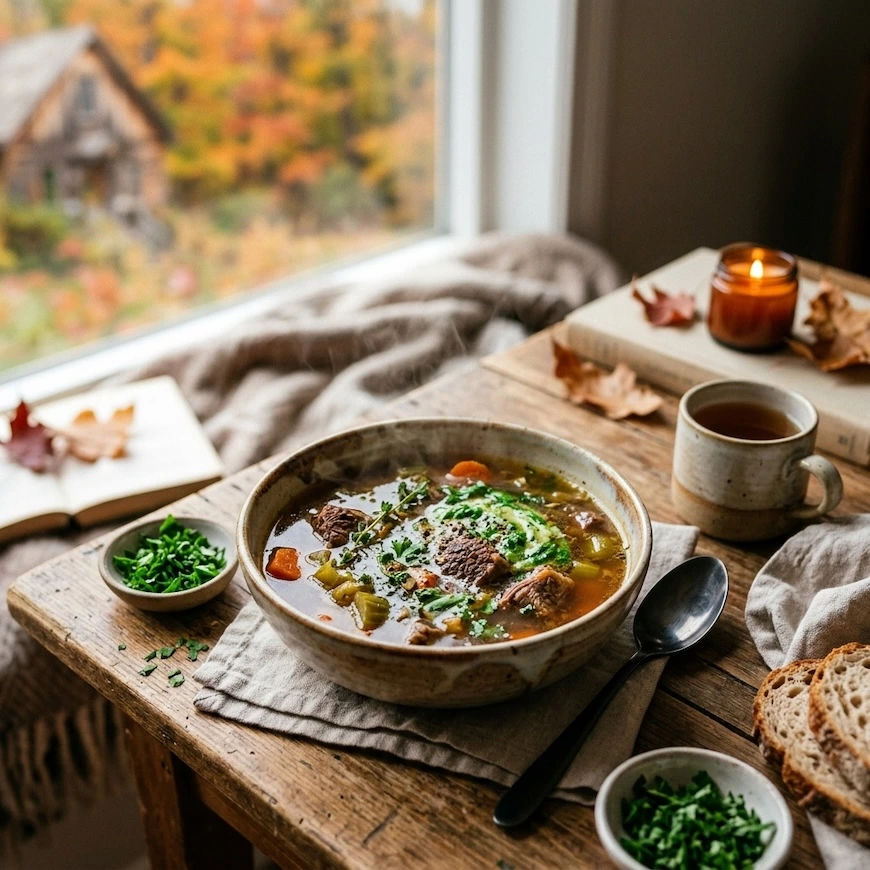
- Pumpkin or squash soup for an evening party. Warm, seasonal, and separate from the sweets.
- A cheese and fruit graveyard board with tombstone-shaped cheese and dark grapes.
The idea behind all of it is the same. Real food earns a spot on a healthy Halloween table because it fits the night, not because it’s standing in for candy.
Healthy Halloween Party Food That Isn’t All Sugar
Quick Answer: A balanced healthy Halloween party pairs a fun sweet-treat table with an equally intentional savory one. Chili, a taco bar, or a soup station gives a party substance, and it naturally cuts how much candy gets eaten by giving people something else to fill up on.
A balanced healthy Halloween spread:
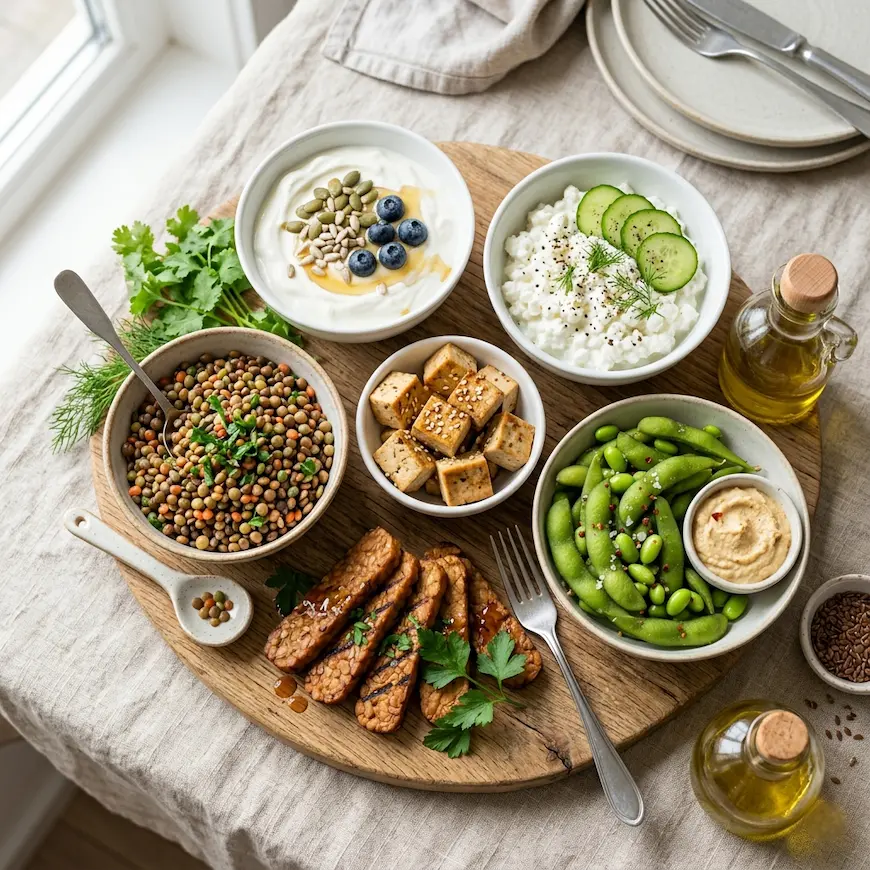
- A warm main like chili, soup, or a taco bar so people eat something before dessert. Lentils, beans, and tofu all work if you’re feeding a mixed crowd, and most of them show up on lists of high-protein vegetarian foods.
- A savory themed dish. Mummy hot dogs, stuffed peppers carved like jack-o’-lanterns.
- Water or a simple punch as the default drink instead of another sugar source.
The sweets table stays exactly as fun as planned. It just isn’t the only thing on offer, which moderates the evening without a single rule being announced.
Teaching Kids a Balanced Relationship With Candy
Quick Answer: The evidence favors modeling a relaxed attitude toward treats over strict rules. Kids who see candy treated as a normal, occasional food, neither forbidden nor earned, tend to regulate themselves around sweets better than kids raised under tight restriction or a reward system.
This is less a Halloween point than the principle the whole healthy Halloween approach rests on.
Decades of feeding research find that highly controlling practices interfere with a child’s ability to regulate intake from their own hunger and fullness cues. That holds whether the control is restrictive (“no candy ever”) or reward-based (“finish dinner and you get dessert”). Kids in households with less anxiety around treats self-regulate better over time.
Around Halloween, that looks like this: candy is one more food. It isn’t forbidden, it isn’t dangled, and nobody calls it good or bad. A healthy Halloween runs on that, and it’s a harder shift than it sounds, since it cuts against most wellness instincts.
What to Actually Do With Leftover Candy
Quick Answer: Throwing out leftover candy or clamping down on it backfires for the same reason blanket restriction does anywhere else. It signals scarcity. The healthy Halloween options are quieter: fold small amounts into normal snacking, freeze a portion to slow things down, or offer a buyback or donation the child chooses rather than one you impose.
Four realistic options:
- Leave it out and treat it like any other snack. In most houses, interest in a static candy bowl fades within a couple of weeks on its own.
- Freeze a portion. This isn’t hiding it. Frozen candy is slightly less convenient, which slows consumption without making it forbidden.
- Offer a voluntary buyback or donation. Some dentists and dance studios run these. Framed as the child’s call, it avoids the restriction pattern entirely.
- Bake with it. Chopped candy in cookies or brownies uses up a large haul without anyone finishing it in one sitting.
None of them treat the candy as dangerous. They just manage volume, which is a different problem.
A Realistic, No-Stress Healthy Halloween Plan
Quick Answer: A workable healthy Halloween snacks plan for kids has three parts: a few good treat and non-candy options for your own table, a relaxed approach to the haul in the days after, and no moralizing about candy being bad. That’s it. No holiday overhaul required.
Pulling the healthy Halloween plan together:
- Before Halloween, stock a couple of good treat options like dark chocolate and fun-shaped fruit, plus a couple of non-candy ideas if you’re handing things out.
- The night of, let it be what it is. One evening isn’t a health event.
- The days after, keep candy accessible and unremarkable. No hiding, no reward system.
- If the haul is overwhelming, offer a buyback, a donation, or a baking project as one option among several.
This isn’t a health hack. It’s mostly about pulling unnecessary stress out of a night that, for most families, is about costumes and the neighborhood, not nutrition.
Frequently Asked Questions
What should I hand out for a healthy Halloween if I don’t want to give candy?
Novelty items like glow sticks, stickers, small toys, and temporary tattoos land better with trick-or-treaters than healthy Halloween snack substitutes do.
How do I stop my kids from eating all their candy in one day?
Avoid framing it as forbidden or rationed. Both raise the urgency. A calm, accessible approach works better than an imposed daily limit.
Are Halloween candy buyback programs worth it?
They can help with a large haul, especially when the child chooses to participate. That preserves the autonomy restriction takes away.
What’s a healthy Halloween party food that isn’t candy-adjacent?
A savory main like chili, tacos, or soup gives a party real substance and naturally moderates how much candy gets eaten.
Should I ban candy from the house after Halloween?
The research doesn't support bans. They raise a food's appeal. Keeping candy accessible and unremarkable works better, which is the whole idea behind a healthy Halloween that doesn't require policing.

Mimo Karam is the founder and writer at LifestyleMine. She writes about daily habits, nutrition, sleep, and emotional wellness, turning research into practical advice for people who want to live healthier without making it complicated.