
As they say, life is not easy. It is absolutely natural to experience some fear or nervousness in certain situations. People experience different types of anxiety such as getting nervous and having trouble sleeping before an important event. But there are some people who constantly have this feeling and it only grows stronger. In this case we become aware that it is not just worry but something more serious which means anxiety disorders. Such conditions are not ordinary worries because anxiety disorders are quite serious problems that many people have to cope with on a regular basis.
But do not think that it is impossible to change the situation if we understand the types of anxiety disorders. There are plenty of treatment methods that can make patients get rid of their problem and become happy again. Anxiety symptoms and treatment are very important to anyone suffering from these types of disorders.
Anxiety Disorders Overview
Anxiety disorders refer to a set of disorders characterized by persistent worry and fear without an apparent cause. The fears that accompany anxiety often stem from individuals having an irregular heartbeat one moment, and finding themselves mired in worry the next.
Unlike the stress and anxiety we face occasionally, anxiety disorders tend to stay around for long periods and negatively affect our ability to enjoy our lives. However, that does not mean that there is no hope of relief from their symptoms or that nothing can be done for them. There are numerous means by which anxiety may be treated, including examples of alternative treatments and other possible treatment methods to explore.
The 7 Key Types of Anxiety Disorders
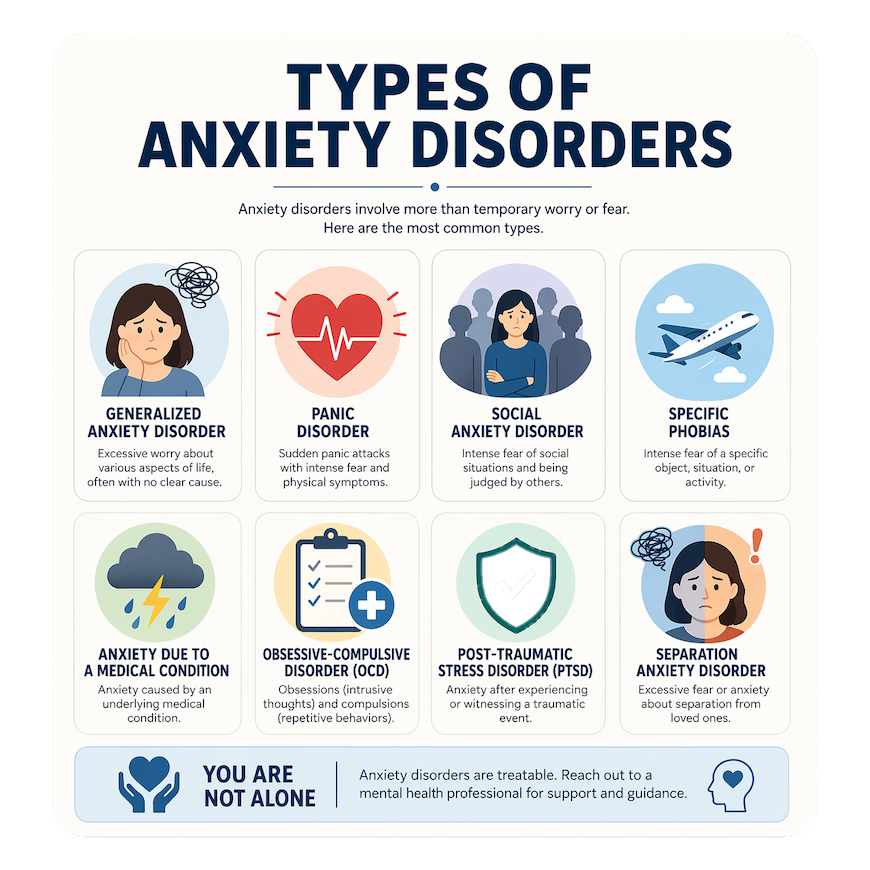
1. Generalized Anxiety Disorder (GAD)
The people who have Generalized Anxiety Disorder worry too much about every little thing that takes place in their lives. Anxiety will continue to plague the individual even after they realize that they may not experience any positive events in the future, so therefore, individuals suffering with panic attacks will find themselves trying to avoid the places they have previously felt anxious about. Such problems may occur because of issues related to work, health, finances or family.
If you feel constantly anxious, seek anxiety treatment options.
2. Panic Disorder
A panic attack is when your mind is overwhelmed by an attack of sheer terror from nowhere. People that experience anxiety feel anxious that others will view them or treat them as inferior. This is draining, but there are many anxiety treatments available specifically for panic attacks.
3. Social Anxiety Disorder (Social Phobia)
Individuals suffering from social phobias are extremely terrified of mingling with people, particularly when they feel observed or engaged. People who experience this type of anxiety have a constant fear of embarrassment, constant inspection, and constant exposure to others. This fear becomes so intense that it results in their avoidance of events, talking in public, eating out, and even attending parties.
People can overcome this fear through proper anxiety treatments.
4. Specific Phobias
However, while it is quite natural to dislike some aspects of our daily lives, phobias are much more serious concerns that affect people’s lifestyles significantly by forcing them to adapt their behavior accordingly. Thus, identifying them as mental conditions that require proper attention and anxiety treatment becomes crucial for coping with such disorders.
5. Agoraphobia
Agoraphobia is a type of anxiety disorder that manifests itself through the excessive fear and avoidance of circumstances that could provoke panic, helplessness, and embarrassment. Fear of going out alone, riding public transportation, or attending large gatherings could lead to developing severe cases of Agoraphobia as a result of Agoraphobia. Patients suffering from agoraphobia usually feel trapped in such situations and prefer avoiding them; however, there are specific methods of treating anxiety in agoraphobia.
6. Separation Anxiety Disorder
In turn, separation anxiety disorder usually occurs in early childhood and is perceived to be one of those mental conditions that children tend to suffer from rather than adults. However, the disorder affects grown-ups as well, and implies excessive fear or anxiety concerning leaving one’s home or being separated from people that he or she is emotionally attached to.
7. Selective Mutism
Selective mutism is an uncommon anxiety disorder characterized by an individual’s inability to speak in particular situations or to certain individuals, despite being generally capable of speech. Generally, it occurs in childhood and interferes with learning and developing friendships. Therefore, you‘ll find a different form of anxiety treatment is necessary to help those with Agoraphobia.
Seeking Help: Effective Anxiety Treatment Options
There are many ways to deal with anxiety disorders, whether you have one or someone close to you does. Many types of mental health treatments are available for anxiety, making it important to seek assistance from an expert . Combining multiple therapies often proves to be one of the most effective treatments for anxiety.
Common treatment options include:

- Psychotherapy (Talk Therapy): Cognitive Behavioral Therapy (CBT) is particularly effective for anxiety disorders. Mental health professionals will assist to identify and change thinking patterns or behaviours that are troublesome to you.
- Medication: Antidepressants and anti-anxiety medications can help manage symptoms. These are often used in conjunction with therapy.
- Changes in your lifestyle: Regular exercise, a healthy diet, enough sleep, and mindfulness practices can all help with professional anxiety treatment.
Don’t give up hope; there are people who understand what you’re going through and you’re not alone. Anxiety should not be viewed as a sign of weakness; but rather, a sign that you are experiencing more challenges than others. It would be beneficial to start learning about all the different types of anxiety that are out there.
It might seem scary to think about getting professional help, but it’s actually a brave thing to do. You will likely discover several different coping mechanisms for managing anxiety. Discovering how to best manage your symptoms will likely take will take some time, effort and patience; however, if you maintain persistence in working towards your goals, you can expect positive results in the end.

Mimo Karam is the founder and writer at LifestyleMine. She writes about daily habits, nutrition, sleep, and emotional wellness, turning research into practical advice for people who want to live healthier without making it complicated.