What Are the Proven Health Benefits of Eating Oranges?
Quick Answer: One medium orange provides 69–70 mg of vitamin C (78–93% of the daily RDA), 237 mg of potassium, 3.1 g of fiber, and hesperidin, a flavonoid shown in RCTs to reduce blood pressure and improve endothelial function. Oranges offer genuine cardiovascular, immune, and skin benefits through specific, well-studied mechanisms, not vague “antioxidant” effects.
Oranges are one of the most studied foods in nutritional science, and one of the most misrepresented. I spent time reading the actual trials behind the vitamin C immune claims, the hesperidin cardiovascular research, and the glycemic index data, and what I found is more interesting than “oranges are healthy because antioxidants.”The health benefits of oranges are real, specific, and mechanistically well-understood. Most coverage of the health benefits of oranges stops at vitamin C, which is a shame, because the fuller picture is genuinely more interesting. This piece covers exact USDA numbers, the hesperidin story most orange articles skip, a correction of the vitamin C claims that don’t quite add up, and the form of oranges that undermines most health benefits of oranges entirely.
Orange nutrition facts: exact USDA numbers
Quick Answer: One medium orange (131 g) contains 69.7 mg vitamin C, 237 mg potassium, 3.1 g fiber, 15.4 g carbohydrate, 1.2 g protein, and only 61.6 calories. The glycemic index is approximately 40-43, low. The glycemic load (accounting for actual carbs per serving) is approximately 5, very low.
Most articles on orange nutrition either omit the numbers entirely or estimate them inaccurately. Here’s what USDA FoodData Central shows for a medium (131 g) navel orange:
| Nutrient | Per medium orange (131g) | % Daily value |
|---|---|---|
| Calories | 61.6 kcal | 3% |
| Carbohydrate | 15.4 g | 6% |
| Dietary fiber | 3.1 g | 11% |
| Sugars | 12.2 g | — |
| Protein | 1.2 g | 2% |
| Vitamin C | 69.7 mg | 78-107%* |
| Folate | 39.4 mcg | 10% |
| Potassium | 237 mg | 5% |
| Thiamine (B1) | 0.11 mg | 9% |
| Calcium | 52.4 mg | 4% |
*Varies by sex: 78% for men (RDA 90mg), 93% for women (RDA 75mg). A large orange (184g) provides 97.9 mg, exceeding both.
Vitamin C correction: The original article stated “a single orange provides more than 100% of your daily Vitamin C needs.” This is only accurate for women eating a large orange, not for men or average-sized fruit. A medium orange provides 78-93% of the RDA, which is still exceptional for a single food but technically not “more than 100%.”The fiber splits roughly 50/50 between soluble pectin (which forms a gel that slows glucose absorption and lowers LDL cholesterol) and insoluble fiber (which promotes bowel regularity). This fiber ratio is part of why whole oranges have a low glycemic response despite their sugar content.
Vitamin C: what it actually does in your body
Quick Answer: Vitamin C is an essential cofactor in at least 8 enzymatic reactions, including collagen synthesis, norepinephrine production, and L-carnitine biosynthesis. Its immune role involves supporting neutrophil and lymphocyte function and acting as a primary antioxidant in plasma. The evidence for reducing cold duration is real but modest: roughly 8-14% shorter duration with consistent supplementation.
Vitamin C is responsible for some of the best-documented health benefits of oranges, and most of them aren’t about colds.
Immune function: Vitamin C accumulates in neutrophils (white blood cells that engulf pathogens) at concentrations 80-fold higher than in blood plasma, suggesting a critical role in immune cell function. A 2017 review in Nutrients (Carr and Maggini) found that supplemental vitamin C reduces cold incidence in people under high physical stress (marathon runners, soldiers in subarctic conditions) and reduces cold duration by 8-14% in the general population. It shortens colds; it doesn’t prevent them.
Collagen synthesis: This is arguably vitamin C’s most clinically important role. It’s an essential cofactor for prolyl hydroxylase and lysyl hydroxylase, the enzymes required to form stable triple-helix collagen strands. Without adequate vitamin C, collagen fibers are structurally weak. This explains scurvy: gum disease, wound non-healing, and joint pain are all consequences of defective collagen. The body doesn’t distinguish between vitamin C from oranges or supplements.
Iron absorption: Vitamin C dramatically enhances non-heme iron absorption (the type found in plant foods) through reduction of ferric iron (Fe³+) to ferrous iron (Fe²+), which is more bioavailable. Eating an orange alongside iron-rich plant foods (lentils, spinach, fortified cereals) meaningfully increases iron uptake, relevant for vegetarians, vegans, and anyone managing iron-deficiency anemia.
Antioxidant function: Vitamin C is the primary water-soluble antioxidant in plasma, neutralizing reactive oxygen species before they can oxidize LDL cholesterol or damage DNA. It also regenerates vitamin E after it has been oxidized, creating a linked antioxidant system.
Hesperidin: the orange flavonoid most articles don’t mention
Quick Answer: Hesperidin is the primary flavonoid in oranges, concentrated in the white pith and membrane. Clinical trials show it reduces systolic blood pressure, improves flow-mediated dilation (a measure of endothelial health), and reduces LDL oxidation. As a standalone supplement, it’s widely used in Europe for venous insufficiency.
Hesperidin is the most underreported of all the health benefits of oranges, partly because most people eat the fruit without the pith where it concentrates, and partly because nutrition coverage defaults to vitamin C.Hesperidin is a flavanone glycoside, part of the broader polyphenol family. In the colon, gut bacteria cleave the sugar moiety to produce hesperetin, which is then absorbed and exerts biological effects.
Cardiovascular evidence: A 2011 double-blind crossover RCT by Morand et al. in the American Journal of Clinical Nutrition gave healthy overweight men (age 50-65) either hesperidin-enriched orange juice, regular orange juice, or a placebo drink for 4 weeks each. The hesperidin-enriched group showed improved postprandial microvascular endothelial reactivity and reduced diastolic blood pressure, with no significant change in LDL.An earlier 2004 study (Reshef et al.) and subsequent meta-analyses support hesperidin’s role in blood pressure reduction, particularly in people with prehypertension. This is one of the lesser-known health benefits of oranges, and the one most directly relevant to cardiovascular risk.
Venous function: The combination of diosmin and hesperidin (Daflon, widely prescribed in Europe and available OTC in the US) is an established treatment for chronic venous insufficiency, hemorrhoids, and leg swelling, backed by multiple positive Cochrane reviews.
Practical implication: To maximize hesperidin, eat the whole fruit rather than juice it. The pith, the bitter white spongy layer between peel and flesh, holds the highest hesperidin concentration. Most people’s instinct to discard it means missing a significant portion of the vascular benefit.
Read also: 12 Surprising Anti-Inflammatory Foods You’ve Probably Never Tried
Vitamin C skin benefits: collagen synthesis and UV protection
Quick Answer: Vitamin C is required to synthesize and stabilize collagen (types I and III), which gives skin its structural integrity. Dietary vitamin C contributes to photoprotection and wound healing. A 2017 review confirmed that adequate vitamin C intake is associated with reduced wrinkling and improved skin barrier function.
The skin contains high concentrations of vitamin C, particularly in the dermis where collagen-producing fibroblasts are active. Dietary vitamin C reaches skin tissue through two mechanisms:
Collagen cross-linking: Vitamin C is a cofactor for the enzymes that hydroxylate proline and lysine residues in procollagen chains. These hydroxylated residues form the cross-links that give collagen its tensile strength. Without adequate vitamin C, collagen is produced but structurally weak, leading to easily damaged skin, slow wound healing, and premature wrinkling.
UV photoprotection: Reactive oxygen species from UV radiation oxidize lipids and proteins in skin cells. Vitamin C neutralizes these free radicals, reducing UV-induced oxidative damage. Not sunscreen-level protection, but a real complementary layer of antioxidant defense.
A 2017 review by Pullar, Carr, and Vissers in Nutrients concluded that adequate skin vitamin C status is associated with decreased wrinkling and dryness, improved wound healing, and reduced UV photodamage compared to vitamin C-deficient skin. The dose needed to maintain skin saturation is roughly the standard RDA; no mega-dosing required.Oranges also provide small amounts of beta-carotene, which the body converts to vitamin A. Vitamin A supports skin cell turnover (keratinocyte differentiation) and reduces comedone formation. One medium orange provides approximately 14 mcg RAE, a modest contribution to this particular benefit; significantly more is available from carrots, sweet potatoes, and leafy greens.
Glycemic index, fiber, and blood sugar: oranges vs orange juice
Quick Answer: Whole oranges have a GI of approximately 40-43 and a glycemic load of only 5 per medium fruit, making them suitable for most people managing blood sugar. Orange juice has a higher glycemic response because fiber is removed during juicing. The 3.1 g of pectin in whole oranges viscously slows small-intestinal glucose absorption.
This is where the orange juice versus whole orange distinction matters most for the health benefits of oranges.The fiber in a whole orange, particularly soluble pectin, forms a viscous gel in the small intestine that slows glucose absorption. This is why whole fruit has a lower glycemic response than juice from the same fruit. When you juice an orange:
- Most of the pith and membrane is discarded (removing hesperidin and much of the fiber)
- Remaining fiber is fragmented by pressing (reducing its viscous gel-forming capacity)
- You typically consume the juice of 3-4 oranges in one glass: 3-4 times the sugar load without proportional satiety signals
A 2013 study in the BMJ (Muraki et al.) found that swapping three servings of fruit juice per week for whole fruits was associated with a 5% lower risk of type 2 diabetes, while consuming one or more servings of fruit juice per day was associated with up to 21% increased risk. The difference was largely driven by fiber content and the resulting glycemic response.This is one of the more consequential health benefits of oranges, and also one of the easiest to undermine: reach for a glass instead of the fruit and the glycemic advantage largely disappears.
For people with diabetes: Whole oranges fit within a balanced diet. Work with a registered dietitian to account for the approximately 15-17 g of carbohydrate per medium orange within your daily meal plan. Avoid making orange juice a regular part of blood sugar management.
Oranges and vision: what they actually contain
Quick Answer: Oranges contain zeaxanthin and small amounts of lutein, both of which accumulate in the macula and help filter blue light and reduce oxidative damage. However, oranges are not a primary lutein source. Leafy greens (kale, spinach) contain 50-100 times more lutein per serving. Vitamin C in oranges does have direct eye evidence: it reduces cataract risk through lens oxidation protection.
Correction: An earlier version of this article framed oranges as a meaningful lutein source alongside leafy greens for macular protection. A medium orange contains approximately 129 mcg of lutein+zeaxanthin combined. One cup of cooked kale contains approximately 23,720 mcg, about 184 times more. The orange claim significantly overstates the lutein contribution.
What oranges do contribute to eye health:
Zeaxanthin: Oranges are a moderate zeaxanthin source, with a ratio weighted toward zeaxanthin rather than lutein, unlike leafy greens. Zeaxanthin is selectively concentrated in the fovea (central macula) and provides photoprotection against blue-light oxidative damage.
Vitamin C and cataract risk: The lens of the eye accumulates oxidative damage over decades, leading to cataract formation. Vitamin C is actively transported into the aqueous humor at concentrations 20-fold higher than in blood plasma, suggesting a protective role. Multiple observational studies have associated higher dietary vitamin C intake with reduced cataract incidence. This is one of the eye-health benefits of oranges that tends to get overlooked in favor of the more familiar lutein narrative, which, as noted above, overstates what oranges actually provide.For meaningful macular protection, prioritize leafy greens as your primary lutein source. Oranges are a useful complement, not a primary vehicle.
D-limonene: the orange peel compound in emerging research
Quick Answer: D-limonene is the primary aromatic compound in orange peel. Preclinical research suggests antioxidant, anti-inflammatory, and potentially anticarcinogenic properties. Human evidence is early-stage. Eating or zesting organic orange peel is the food-first approach.
D-limonene is a monoterpene, found in the essential oil of orange peel at concentrations of 70-90% of the volatile fraction. It’s what makes orange zest aromatic.
Preclinical evidence: Animal studies have found D-limonene inhibits tumor promotion in breast, liver, and colon cancer models, likely through upregulation of Phase II detoxification enzymes and induction of apoptosis in cancer cell lines. Anti-inflammatory effects via suppression of NF-kB and COX-2 have been observed in cell culture. A 2007 double-blind trial (Sun 2007) tested 1,000 mg every other day for 20 days for gastroesophageal reflux, with significant symptom reduction in 89% of participants.
Important caveat: Most D-limonene research is preclinical (cell culture and animal models). Extrapolating to direct human health claims overstates the evidence. This is emerging science worth watching, not an established benefit comparable to vitamin C or hesperidin.
Practical approach: Add organic orange zest to dishes, baked goods, salad dressings, and marinades. This delivers D-limonene as a food component without supplements, while adding a dimension of the health benefits of oranges most people never access because they throw the peel away.
How to get the most from oranges: practical guide
Quick Answer: Eat the whole fruit rather than juicing for maximum fiber, hesperidin, and glycemic benefit. Store oranges at room temperature for up to one week or refrigerate for three weeks. Choose heavy oranges (more juice) with firm skin. Add zest to cooking for D-limonene. Pair with iron-rich plant foods to maximize non-heme iron absorption.
Choosing oranges:
- Weight signals juice content: a heavy orange has more juice than a same-size light one
- Color is not a reliable freshness indicator: some fully ripe oranges retain green patches due to warm growing conditions; it has no effect on flavor or nutrition
- Avoid soft spots, shriveled skin, or mold
Storing oranges:
- Room temperature: up to 1 week
- Refrigerator (crisper drawer): up to 3 weeks without significant nutrient loss
- Cut oranges: refrigerate in an airtight container and consume within 2-3 days; vitamin C begins oxidizing once the flesh is exposed to air
Getting the most from the health benefits of oranges: To actually capture the full health benefits of oranges, a few habits make a real difference:
- Eat the whole fruit, including pith where tolerable, for full hesperidin and fiber
- Pair with iron-rich plant foods (lentil soup and orange slices) to boost non-heme iron absorption
- Add organic orange zest to savory and sweet dishes for D-limonene
- Avoid heating orange juice: vitamin C is heat-sensitive and degrades above 70°C
Varieties and nutrient differences:
- Navel oranges: seedless, easy to eat, moderate vitamin C (~69 mg per medium)
- Blood oranges: contain anthocyanins (red pigment) with additional antioxidant properties; slightly higher antioxidant capacity than navels
- Valencia oranges: higher juice content; good for fresh-squeeze
- Mandarin/clementines: slightly lower vitamin C but higher beta-carotene; very easy to peel and eat whole
Frequently Asked Questions
Are oranges good for skin health?
Yes, primarily through vitamin C's role in collagen synthesis and antioxidant protection against UV-related oxidative damage. One medium orange provides 78-107% of daily vitamin C needs, sufficient to maintain collagen production at normal rates. Dramatic claims about oranges making skin glow or reversing aging are overblown; the benefit is maintaining the normal collagen synthesis rate that adequate vitamin C enables.
Are oranges high in sugar?
A medium orange contains 12.2 g of natural sugars, mainly fructose and sucrose. This comes with 3.1 g of fiber, which slows absorption and creates a glycemic load of only about 5, very low. By comparison, a 240 mL glass of orange juice contains the sugar equivalent of 3-4 oranges with almost none of the fiber. The whole fruit is a low-glycemic food; the juice is not. A medium orange has less sugar than a medium banana and less than a glass of apple juice.
Does cooking or heating oranges destroy their vitamin C?
Yes. Vitamin C (ascorbic acid) is heat-sensitive and water-soluble. Above 70°C, it begins to degrade through oxidation. Pasteurized commercial orange juice loses some vitamin C during processing and more over shelf life. Freshly squeezed juice retains most vitamin C and should be consumed within 24-48 hours for maximum content. Using orange zest in cooked dishes adds D-limonene and flavonoids but minimal vitamin C.
Are blood oranges healthier than regular oranges?
Blood oranges contain anthocyanins, the same red pigments in blueberries and red cabbage, in addition to the standard citrus nutrient profile. Blood oranges have a modestly higher total antioxidant capacity than navels, but the nutritional difference is small in practice. The main advantage is flavor and culinary versatility; treating them as dramatically superior overstates the evidence. The broader health benefits of oranges apply across varieties. Pick what you'll actually eat.
Is it better to take a vitamin C supplement or eat oranges?
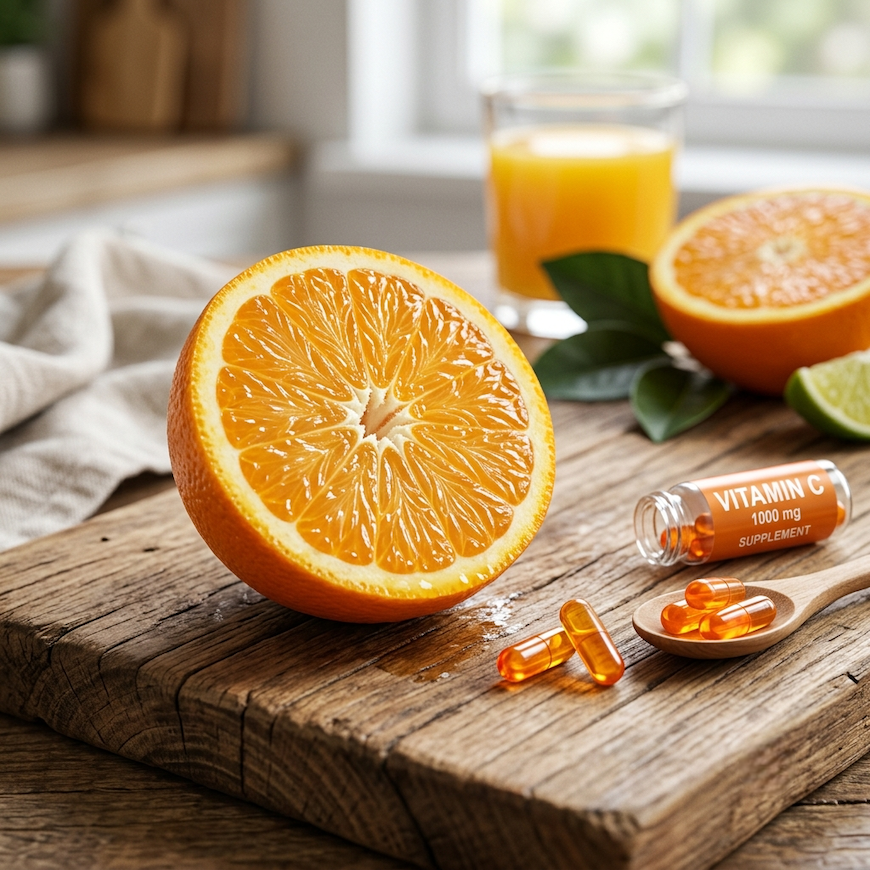
For healthy adults meeting vitamin C needs through diet, whole oranges offer hesperidin, fiber, folate, potassium, zeaxanthin, and D-limonene alongside vitamin C, none of which a supplement provides. Supplements are appropriate when dietary intake is consistently insufficient, during illness when requirements may increase, or when someone can't eat adequate fruit. For most people, one or two oranges per day delivers more nutritionally complete health benefits of oranges than any vitamin C tablet alone can replicate.
This article is for informational purposes only and does not constitute medical advice. While oranges are a nutritious food with well-documented health benefits, they are not a treatment for any medical condition. People with diabetes should account for carbohydrate content within their meal plan and consult a registered dietitian. If you are managing a specific health condition, discuss dietary changes with your healthcare provider.

Mimo Karam is the founder and writer at LifestyleMine. She writes about daily habits, nutrition, sleep, and emotional wellness, turning research into practical advice for people who want to live healthier without making it complicated.