✦
THE LIFESTYLEMINE NEWSLETTER
Simple wellness tips, healthy recipes, and
everyday inspiration delivered to your inbox.
Your Email Address
Quick Answer: The standard cortisol cocktail is orange juice for vitamin C, coconut water for potassium, and sea salt for sodium. Common add-ins include lemon juice, cream of tartar, magnesium powder, coconut cream, collagen, and ginger. There is no standardized recipe and ratios vary widely between versions.
Three ingredients form the base of almost every version. Orange juice supplies vitamin C and sugar. Coconut water supplies potassium and a little more sugar. Sea salt supplies sodium. That is the whole thing.
Past that, recipes fragment. Some swap in cream of tartar for the potassium. Some add magnesium powder, which is the version worth paying attention to and the one covered further down. Others throw in coconut cream, collagen, ginger, or sparkling water. Ratios are all over the place, from equal parts juice and coconut water to four-to-one in favor of coconut water.
That variation is a real problem for anyone asking whether a cortisol cocktail works, because the question assumes there is one thing to evaluate. A version built around a proper dose of magnesium glycinate and a version that is basically salted juice are not the same intervention, and lumping them together is how a modest hydration drink ends up carrying claims it cannot support.
Quick Answer: Cortisol is an adrenal hormone that regulates blood sugar, blood pressure, inflammation, and the sleep-wake cycle. It rises sharply in the first 30 to 45 minutes after waking, then declines through the day. The problem is dysregulated cortisol timing, not cortisol itself.
Cortisol has become the villain of wellness content, which is worth pushing back on before evaluating anything that promises to lower it.
Your adrenal glands produce cortisol, and it does a lot of necessary work: mobilizing energy by regulating blood sugar, holding up blood pressure, managing inflammation, and structuring your sleep-wake cycle. A healthy cortisol pattern is not low and flat. It follows a curve, spiking within roughly 30 to 45 minutes of waking, a pattern researchers call the cortisol awakening response , then tapering off until it bottoms out near bedtime.
Most cortisol cocktail marketing skips right past this. The goal of a functioning cortisol system is not less cortisol, it is cortisol arriving at the right times in the right amounts. That morning spike is not a malfunction. It is the mechanism that gets you out of bed.
What actually goes wrong looks different: cortisol staying elevated late into the evening, or the daily curve flattening out entirely under chronic stress and poor sleep. Neither of those is fixed by drinking something. And there is an awkward implication for the trend here, since the popular convention is to drink a cortisol cocktail first thing in the morning, precisely when cortisol is supposed to be climbing.
Quick Answer: Adrenal fatigue, the concept underpinning the cortisol cocktail trend, is not recognized by any endocrinology society. A 2016 systematic review of 58 studies found no substantiation for it. Genuine adrenal insufficiency is a rare, diagnosable medical condition unrelated to everyday stress.
This is the part most cortisol cocktail content leaves out, and it matters more than any ingredient analysis.
The drink’s entire premise rests on adrenal fatigue. A 2016 systematic review in BMC Endocrine Disorders looked at 58 studies and concluded there is no evidence the condition exists . No endocrinology society recognizes it. Healthy adrenal glands do not get worn out by a stressful job.
Adrenal insufficiency is real, but it is a different thing entirely: a rare condition, usually autoimmune in origin, diagnosed with morning serum cortisol and ACTH testing and treated with hormone replacement. It is not something a glass of salted orange juice addresses, and treating persistent fatigue as an adrenal problem you can drink your way out of can delay finding out what is actually causing it.
None of this makes the cortisol cocktail dangerous. It does mean the story built around it is wrong at the foundation, and that is worth knowing before deciding how much weight to give the rest of the claims.
Quick Answer: No clinical research has tested the cortisol cocktail as a cortisol-lowering intervention. Some individual ingredients have relevant evidence, particularly magnesium, but the drink as a whole is unstudied, and the popular morning timing works against the body’s natural cortisol rhythm.
Here is the direct answer, without hedging: nobody has studied this drink.
There is no trial of orange juice plus coconut water plus salt measured against cortisol output. That absence is not proof the drink does nothing, but it does mean anyone selling a cortisol-lowering mix is well ahead of the evidence, and the burden sits with them rather than with the skeptics.
What the individual ingredients can claim is thinner than it sounds. Coconut water hydrates and supplies potassium. Sodium supports fluid balance, though adding extra salt does nothing for cortisol in someone who is not deficient, and most people are not. Vitamin C has been studied in one specific and fairly extreme context: ultramarathon runners taking 1500 mg daily showed lower post-race cortisol than placebo after a 90 km event. That is a supplemental dose in athletes under severe physical stress, and it does not transfer to half a cup of orange juice at your kitchen counter.
So the honest verdict on a cortisol cocktail: not a scam, not harmful for most healthy people, not a demonstrated cortisol intervention either. It is a hydration drink with a very good name.
Quick Answer: Magnesium has genuine research support for reducing subjective anxiety and stress, and it plays a direct role in regulating the HPA axis. Of everything that goes into a cortisol cocktail, magnesium is the only ingredient with a real evidence base, and it is usually optional.
If anything in this drink has a legitimate physiological thread, it is magnesium. Notably, it is also the ingredient most recipes leave out.
Magnesium is involved in regulating the hypothalamic-pituitary-adrenal axis, the system that governs the stress response and cortisol release. A systematic review of magnesium supplementation and subjective anxiety found supportive evidence for its role there, which puts it in a different category from the speculative claims made about salt and coconut water.
This lines up with the site’s existing coverage. The magnesium glycinate for sleep guide covers the same mechanism from the sleep side, and the signs of magnesium deficiency guide covers how common shortfalls actually are. That last point is the one that matters here, because the magnesium and cortisol connection shows up most clearly in people correcting a genuine deficiency, not in people topping up an already adequate intake.
The practical takeaway is a little funny. If the cortisol cocktail trend is what finally gets someone to address a real magnesium gap, that is a genuine benefit arrived at by accident. The juice and salt are passengers.
Quick Answer: Medical and nutrition professionals covering the trend have been consistently skeptical, acknowledging hydration benefits while rejecting the cortisol-lowering framing. Some have warned that juice-heavy versions without protein or slow carbs can spike and crash blood sugar, worsening the fatigue they claim to fix.
The 2025 wave of coverage was unusually unified, which does not happen often with wellness trends.
Cleveland Clinic’s position was that cortisol cocktails are not harmful but are not doing what people think, and that lifestyle changes matter far more for fatigue than any drink. Gastroenterologist Omar Khokhar told OSF HealthCare the drink does not affect cortisol levels, while noting coconut water genuinely helps with rehydration after exercise or illness. Endocrinologist Anat Ben-Shlomo pushed back specifically on the adrenal fatigue framing.
The sharper warning came from nutritionist Brooke Kelly, quoted in Best Life : a drink leaning heavily on fruit juice with no protein or slow-burning carbs to buffer it produces a blood sugar spike and crash, and for someone already dealing with fatigue, anxiety, or poor sleep, that swing can make things worse rather than better.
There is also a straightforward calorie point that gets lost in the wellness framing. Eight ounces of orange juice is around 110 calories and eight ounces of coconut water around 60. Water is zero. If you are drinking a cortisol cocktail daily on top of everything else, that adds up.
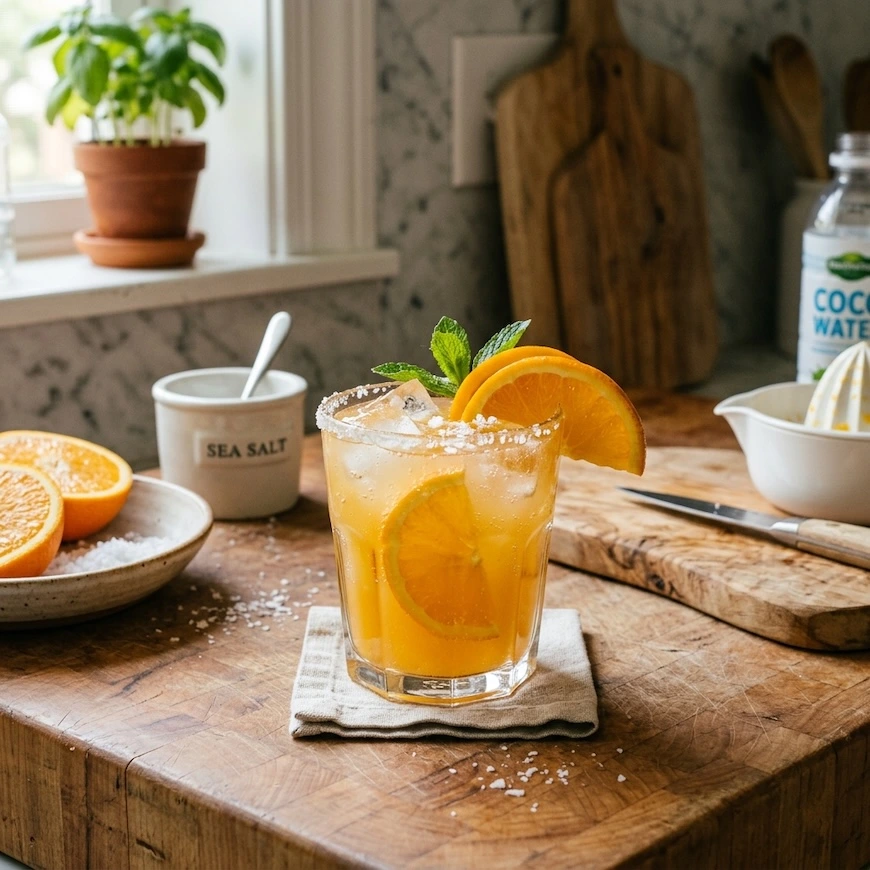
Quick Answer: A reasonable cortisol cocktail recipe: half a cup of orange juice, half a cup of coconut water, and a pinch of sea salt, with an optional serving of magnesium glycinate. Treat it as a hydrating drink rather than a cortisol treatment, and consider afternoon over morning timing.
If you want to try it, here is a version that does not oversell itself.
Ingredients
1/2 cup orange juice, the least processed you can find
1/2 cup coconut water
A pinch of sea salt, roughly 1/8 teaspoon
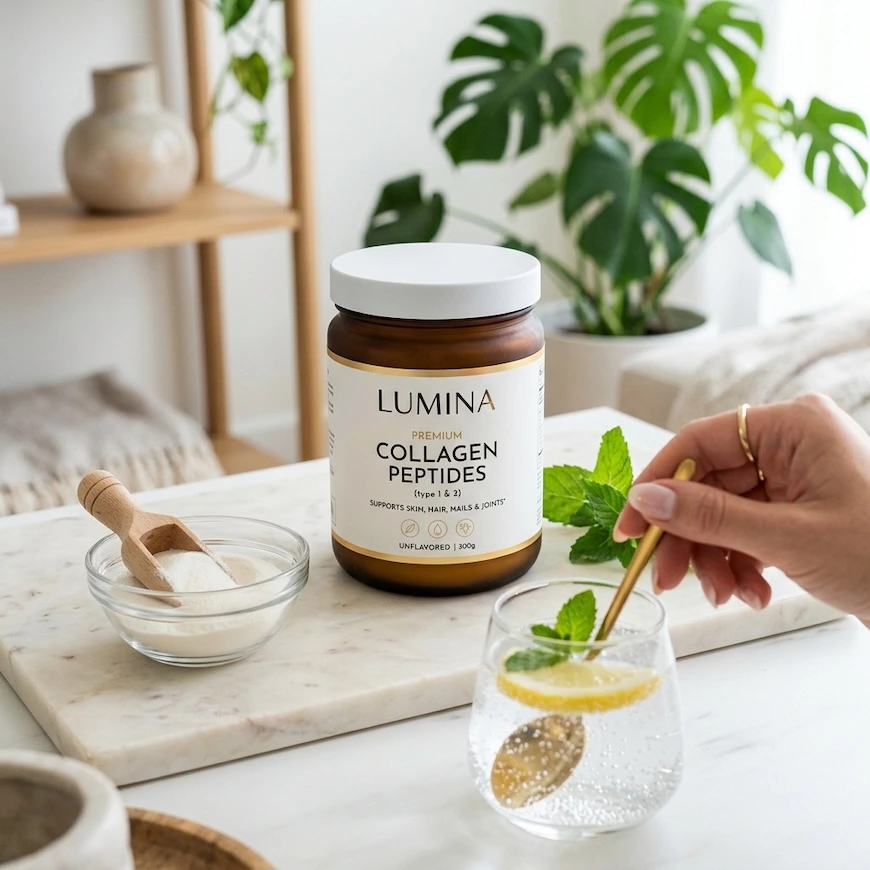
Optional: one serving of magnesium glycinate powder
Method
Combine the orange juice, coconut water, and salt in a glass and stir.
If you are adding magnesium, follow the product’s serving size and stir until dissolved.
Drink it whenever. There is no clinically established best time, though mid-afternoon makes more sense than first thing, given how the morning cortisol curve works.
What to realistically expect: a pleasant, hydrating drink with some electrolytes. If it contains a meaningful dose of magnesium and you were running low, you may notice a calming effect over a few weeks. That would be the magnesium, not the coconut water.
Anyone who wants the magnesium without guessing at the dose is better off with a dedicated supplement, where you know exactly what you are getting.
A note on who should skip it: if you have high blood pressure, heart disease, kidney issues, or diabetes, the sodium and sugar in this drink are worth a conversation with your doctor first. The acidity is also hard on tooth enamel if you make it a daily habit.
Quick Answer: Consistent sleep, regular moderate exercise, correcting a genuine magnesium deficiency, and reducing chronic stress all have stronger evidence for cortisol regulation than any drink. These address the causes of cortisol dysregulation rather than adding a beverage on top of them.
If cortisol regulation is the actual goal rather than trying the trend, four things do more work than the cortisol cocktail ever will.
Sleep comes first, because it directly governs the cortisol awakening response and the shape of the entire daily curve. The site’s sleepmaxxing guide covers what holds up and what does not in that space.
Regular moderate exercise has some of the most consistent evidence of any lifestyle lever for healthy cortisol regulation, with the caveat that both sedentary living and chronic overtraining dysregulate it, in opposite directions.
Correcting an actual magnesium deficiency, rather than adding an unmeasured splash to a drink, is the single most evidence-supported piece of this whole trend. The magnesium deficiency guide covers what a real shortfall looks like.
And addressing chronic stress at the source matters more than any supplement, since cortisol dysregulation is a response to sustained stress load. That connects to the brain fog guide , because chronically elevated cortisol is one of the more common drivers of brain fog.
None of this makes the drink itself a bad idea. It just means the drink is the smallest lever available.
Orange juice for vitamin C, coconut water for potassium, and sea salt for sodium. Optional additions include lemon juice, cream of tartar, magnesium powder, coconut cream, collagen, and ginger. There is no standard recipe and proportions vary widely.
No research has tested it. Magnesium, in adequate doses, has real evidence for stress regulation, but the drink as commonly made has not been studied as a cortisol intervention, and the popular morning timing runs against the body's natural rhythm.
Coconut water hydrates well and supplies potassium, both useful. There is no evidence it lowers cortisol specifically. Its place in the cortisol cocktail comes from general wellness association rather than any demonstrated hormonal effect.
Yes, and most recipes do. But magnesium is the ingredient with the strongest evidence for anything stress-related, so a version without it is essentially a hydrating electrolyte drink with no specific mechanism behind the name.
No. A 2016 systematic review of 58 studies found no substantiation for it, and no endocrinology society recognizes it as a condition. Adrenal insufficiency is real but rare, diagnosable through blood testing, and unrelated to ordinary stress.
If you like the taste and you are otherwise healthy, there is little reason not to. If you want to genuinely improve cortisol regulation, sleep, exercise, correcting a real magnesium deficiency, and reducing chronic stress will get you considerably further.
Mimo Karam is the founder and writer at LifestyleMine. She writes about daily habits, nutrition, sleep, and emotional wellness, turning research into practical advice for people who want to live healthier without making it complicated.