What Is Crohn’s Disease?
Quick Answer: Crohn’s disease is a chronic inflammatory bowel disease (IBD) that can affect any segment of the GI tract from mouth to anus, but most commonly involves the terminal ileum (end of small intestine) and proximal colon. Unlike ulcerative colitis, which is limited to the colon’s inner lining, Crohn’s inflammation is transmural (penetrates the full thickness of the bowel wall) and characteristically occurs in skip lesions, inflamed segments with normal tissue between them. It affects approximately 780,000 Americans and has no known cure, but significant remission is achievable with modern treatment, particularly biologic therapies.
Crohn’s disease is one of the more misunderstood chronic conditions in general health media. Articles tend to treat it as a digestive problem that messes with bowel habits, and while that’s true, it misses the clinical picture. Crohn’s is a systemic inflammatory disease with effects in the joints, skin, eyes, liver, and kidneys, driven by immune dysregulation that only recently became something targeted therapy could meaningfully interrupt.
Treatment has changed enormously in the past 15 years. Crohn’s disease symptoms once meant decades of corticosteroids, progressive bowel damage, and repeated surgery is now increasingly manageable at a cellular level, but only for patients who get appropriate biologic therapy, which is often still delayed by the traditional “step-up” approach that waits until simpler treatments fail.
This article covers the full clinical picture of Crohn’s disease symptoms, how the disease is diagnosed, what separates it from ulcerative colitis, the treatment hierarchy including biologic therapy, the diet protocol for flares and remission, and the emergency signs every patient and caregiver should recognize.
Crohn’s disease symptoms: GI, systemic, and extraintestinal
Quick answer Crohn’s disease symptoms fall into three groups: GI (diarrhea, abdominal pain, rectal bleeding, weight loss), systemic (fatigue, fever, anemia), and extraintestinal manifestations or EIMs (joint pain, skin lesions, eye inflammation, liver involvement). These Crohn’s disease symptoms show up in 25 to 40% of patients and often track disease activity, flaring and settling in step with gut inflammation. Their presence matters diagnostically and should prompt an IBD workup even without prominent gut complaints.
The GI side covers the Crohn’s disease symptoms most people picture.
GI symptoms:
- Diarrhea, often 6 or more loose stools a day during active disease, sometimes bloody
- Cramping abdominal pain, most often in the right lower quadrant (terminal ileum) or around the navel
- Rectal bleeding, more common in colonic Crohn’s
- Perianal disease (fissures, fistulas, abscesses around the anus) in 30 to 40% of patients, sometimes the first sign
- Nausea and vomiting, especially with small bowel stricturing (blockage from scar tissue)
- Bloating and early satiety
Beyond the gut, a second cluster of Crohn’s disease symptoms affects the whole body.
Systemic symptoms:
- Fatigue, one of the most disabling Crohn’s disease symptoms and rarely from a single cause (anemia, active inflammation, malabsorption, poor sleep from pain all feed it)
- Low-grade fever during active disease
- Unintentional weight loss from malabsorption, reduced intake because of pain, and inflammation raising metabolic demand
- Growth failure in children and adolescents whose Crohn’s disease symptoms stay uncontrolled
Extraintestinal manifestations (the 25 to 40% picture):
| EIM category | Specific manifestation | Notes |
|---|---|---|
| Joints | Peripheral arthritis, spondyloarthropathy, sacroiliitis | Most common EIM |
| Skin | Erythema nodosum, pyoderma gangrenosum | Painful nodules or ulcers |
| Eyes | Episcleritis, uveitis | Uveitis needs urgent ophthalmology |
| Liver/biliary | Primary sclerosing cholangitis | More common in UC, can occur in Crohn’s |
| Kidneys | Oxalate kidney stones, hydronephrosis | Fatty acid-oxalate binding disrupted in Crohn’s |
| Oral | Aphthous ulcers, cobblestone mucosa | Can be the first sign |
The pattern of Crohn’s disease symptoms also reflects the underlying disease behavior.
Crohn’s phenotypes and why they matter for treatment. Modern IBD classification (the Montreal system) sorts disease into three behaviors:
- B1, inflammatory (non-stricturing, non-penetrating): active mucosal inflammation without complications, the most responsive to medical therapy.
- B2, stricturing: scar tissue from healed inflammation creates fixed narrowing, causes bowel obstruction, and often needs surgery.
- B3, penetrating (fistulizing): inflammation breaks through the bowel wall to form fistulas (abnormal connections between bowel and skin, bladder, vagina, or other bowel loops) or abscesses. This is the most severe phenotype.
Location matters too. Ileal-only disease has a different drug-response profile than colonic-predominant disease (vedolizumab, for instance, produces lower remission rates in ileal-only Crohn’s than in colonic Crohn’s).
Crohn’s vs ulcerative colitis: the key differences
Quick answer Crohn’s and ulcerative colitis are both inflammatory bowel diseases but are clinically and pathologically distinct. Crohn’s can hit any GI location, inflames the full thickness of the bowel wall, produces skip lesions, can cause fistulas, and sends 30 to 40% of patients to surgery within 5 years of diagnosis. UC is confined to the colon (always including the rectum), inflames the mucosa only, runs continuously, never causes fistulas, and is cured by colectomy. Blood in stool is more consistent in UC, while the Crohn’s disease symptoms that point most clearly to Crohn’s are perianal fistulas and small bowel involvement.
| Feature | Crohn’s disease | Ulcerative colitis |
|---|---|---|
| Location | Any GI segment, mouth to anus | Colon only, always including rectum |
| Depth of inflammation | Transmural (full bowel wall) | Mucosal only |
| Pattern | Skip lesions (normal tissue between inflamed areas) | Continuous |
| Fistulas/abscesses | Yes, 30 to 40% of patients | No |
| Strictures | Common (transmural scarring) | Rare |
| Rectal sparing | Possible (an important diagnostic clue) | Never, the rectum is always involved |
| Blood in stool | Variable (more in colonic Crohn’s) | Almost universal in active disease |
| Granulomas on biopsy | About 50% | Never |
| Surgery curative? | No, disease recurs at the anastomosis | Yes, colectomy removes diseased tissue |
| Primary surgery type | Bowel-sparing (strictureplasty, limited resection) | Total colectomy |
This split matters for treatment because some drugs have different evidence in the two conditions. Vedolizumab is FDA-approved for both but has stronger evidence in UC, and methotrexate has evidence in Crohn’s but not UC.
What the research shows about causes
Quick answer Crohn’s disease symptoms arise from an abnormal immune response to intestinal bacteria in genetically susceptible people, set off by environmental factors. No single cause explains every case. The strongest threads: genetics (NOD2 mutations in 15 to 30% of patients; over 240 IBD risk loci from GWAS), gut microbiome dysbiosis (reduced diversity and specific bacterial imbalances), the Western diet and environment (IBD rates rise in countries adopting Western eating patterns), and immune dysregulation (a CD4+ T-helper imbalance between Th1/Th17 and regulatory T cells).
Genetics. Crohn’s runs in families. First-degree relatives of patients carry a 5 to 20-fold higher risk. NOD2/CARD15 mutations impair how the innate immune system recognizes bacterial cell wall components, which leads to dysregulated inflammation. More than 240 genetic loci are linked to IBD risk, but genes account for only about 20 to 25% of disease risk, which is why environmental triggers matter so much.
The hygiene hypothesis and rising incidence. IBD is rising worldwide, fastest in newly industrialized countries adopting Western lifestyles. The leading idea: less early-life microbial exposure (urban environments, antibiotics, less contact with farm animals and soil bacteria, caesarean birth, formula feeding) leaves the gut immune system poorly educated and prone to overreacting to its own commensal bacteria. Appendectomy before age 20 is tied to lower UC risk (though not Crohn’s), which fits the immune-education idea.
Diet and the microbiome. A Western diet (heavy in ultra-processed food, saturated fat, and refined sugar, low in fiber) cuts microbial diversity and favors pro-inflammatory bacteria. Both the Specific Carbohydrate Diet and the Mediterranean diet have shown benefit in small IBD trials. The microbiome link is also why our piece on what happens when you stop eating meat is relevant for IBD patients, since TMAO, butyrate production, and microbiome diversity all intersect with intestinal inflammation.
Smoking. Smoking roughly doubles Crohn’s risk and worsens Crohn’s disease symptoms once the disease is diagnosed. It’s the single most significant modifiable environmental risk factor for Crohn’s.
Diagnosing Crohn’s: the tests and what they show
Quick answer When Crohn’s disease symptoms suggest IBD, diagnosis rests on colonoscopy with biopsy as the gold standard. No blood test alone can confirm Crohn’s. The workup also includes fecal calprotectin (separates IBD from IBS), blood inflammatory markers (CRP, ESR), a CBC (for anemia), and cross-sectional imaging (MRI enterography is preferred over CT for the small bowel, to limit radiation given the young age at diagnosis and the need for repeat imaging).
Fecal calprotectin, the key non-invasive screen. Calprotectin is a protein neutrophils release in the gut during inflammation. A level above 50 to 100 μg/g is elevated and warrants endoscopy; above 250 μg/g strongly suggests active IBD. A normal result makes active IBD unlikely and IBS more probable, which makes this the most useful first test for telling Crohn’s disease symptoms apart from functional bowel disease.
Colonoscopy and biopsy. The definitive test. Classic findings: aphthous ulcers and cobblestoning, skip lesions, rectal sparing, transmural inflammation, and granulomas (in about 50% of biopsies). The features that separate it from UC are rectal sparing (UC always involves the rectum), ileal involvement, and a non-contiguous pattern.
MRI enterography. The preferred imaging for small bowel Crohn’s. It shows transmural disease, strictures, fistulas, and mesenteric involvement without radiation. CT enterography is the fallback when MRI isn’t available, but repeated CT adds up to a meaningful radiation dose given the young average age at diagnosis (around 20 to 30) and a lifetime disease course.
Capsule endoscopy. A swallowable pill camera that photographs the entire small bowel, useful for suspected small bowel disease that colonoscopy can’t reach. It’s contraindicated when stricturing is suspected, because the capsule can get stuck.
Crohn’s disease treatment: the full hierarchy
Quick answer Treatment of Crohn’s disease symptoms runs on two tracks, induction (stopping active flares) and maintenance (preventing relapse). Modern guidelines favor introducing biologic therapy early in moderate-to-severe disease. The “treat-to-target” strategy aims for deep remission (symptom control plus mucosal healing), not just feeling better. The hierarchy: aminosalicylates (mild disease or induction only), immunomodulators (azathioprine, methotrexate, for maintenance), corticosteroids (short-term induction only, never maintenance), biologics (first-line for moderate-to-severe disease), and surgery for complications.
Corticosteroids. Good at inducing remission in an active flare, but never appropriate as maintenance. Long-term steroid use causes real harm: osteoporosis, adrenal suppression, weight gain, cataracts, high blood sugar, and higher infection risk. Budesonide, a topical steroid with high first-pass liver metabolism and less systemic effect, is preferred for ileal and right-colonic Crohn’s to limit that exposure.
Immunomodulators (azathioprine, 6-mercaptopurine, methotrexate). Thiopurines (azathioprine, 6-MP) suppress T-cell activity and are used to maintain remission. They take 3 to 4 months to act on Crohn’s disease symptoms and are often paired with early biologic therapy to prevent anti-drug antibodies. TPMT and NUDT15 genetic testing before starting a thiopurine prevents life-threatening toxicity in patients with variant enzyme activity. Methotrexate (25 mg weekly, injectable) is the alternative for people who can’t tolerate thiopurines, and it specifically has evidence in Crohn’s, not UC.
Surgery. About 50% of patients need surgery within 10 years of diagnosis. The usual reasons: strictures causing obstruction, fistulas or abscesses, failed medical therapy, and complications (perforation, severe bleeding, the rare toxic megacolon in colonic Crohn’s). Unlike UC, surgery isn’t curative here. Disease comes back at or near the surgical join in 50 to 75% of patients within 5 years. Strictureplasty, which widens the bowel without removing it, is preferred over resection when possible to preserve bowel length and avoid short bowel syndrome.
Biologic therapy: the treatments that changed the field
Quick answer Biologics are large-molecule drugs that target the specific inflammatory pathways behind Crohn’s. Four main classes are FDA-approved: anti-TNF agents (infliximab/Remicade, adalimumab/Humira, certolizumab/Cimzia), anti-integrin (vedolizumab/Entyvio), anti-IL-12/23 (ustekinumab/Stelara), and the newer anti-IL-23 (risankizumab/Skyrizi, approved 2022) and JAK inhibitor (upadacitinib/Rinvoq, approved for Crohn’s in 2023). In head-to-head data, a biologic combined with an immunomodulator beats either alone.
Anti-TNF agents, the first-generation biologics. Infliximab (Remicade), adalimumab (Humira), and certolizumab pegol (Cimzia) neutralize tumor necrosis factor alpha (TNF-α), the master cytokine driving gut inflammation in Crohn’s. The SONIC trial (Colombel et al. 2010, New England Journal of Medicine, PMID 20393175) randomized 508 patients to infliximab alone, azathioprine alone, or the combination. The combination hit steroid-free remission in 56.8%, versus 44.4% for infliximab alone and 30.0% for azathioprine alone at 26 weeks, which established combination therapy as the stronger approach. Anti-TNF agents also work in fistulizing disease (reducing drainage and closing fistulas), which makes them the preferred biologic for perianal Crohn’s.
Vedolizumab (Entyvio), gut-selective. Vedolizumab targets α4β7 integrin, a receptor on gut-homing T lymphocytes, and blocks them from migrating into the intestinal lining. Because the mechanism is gut-selective, it carries a favorable safety profile with minimal systemic immunosuppression. The GEMINI 2 trial (Sandborn, Feagan et al. 2013, NEJM, PMID 23964933) showed significantly higher clinical remission at 52 weeks versus placebo. It’s preferred in patients with recurrent infections or other conditions where systemic immunosuppression is riskier.
Ustekinumab (Stelara), anti-IL-12/23. Blocks both IL-12 and IL-23, cytokines that drive Th1 and Th17 differentiation. FDA-approved for Crohn’s in 2016, given as an IV loading dose then subcutaneous maintenance. It controls Crohn’s disease symptoms well in anti-TNF-refractory patients and has a favorable safety profile, which makes it useful for people who’ve lost response to, or can’t tolerate, anti-TNF therapy.
Risankizumab (Skyrizi), anti-IL-23 (2022 approval). Selectively targets IL-23 (not IL-12), a more upstream cytokine in the Th17 pathway. The ADVANCE and MOTIVATE trials showed clinical remission around 45% at week 12 in anti-TNF-refractory patients, the highest induction remission seen in that population in any biologic trial. It currently sits as a second-line biologic after anti-TNF failure, though first-line evidence is building.
Upadacitinib (Rinvoq), JAK inhibitor (2023 approval for Crohn’s). The first oral advanced therapy approved for moderate-to-severe Crohn’s. JAK inhibitors block intracellular signaling downstream of several cytokine receptors at once. Short-term efficacy is high. It carries a class warning on cardiovascular events, malignancy, and thrombosis, so patient selection matters and it isn’t appropriate for people with cardiovascular risk factors.
Treat-to-target, the monitoring shift. Modern IBD care doesn’t stop when Crohn’s disease symptoms ease. Fecal calprotectin and CRP get checked about every 3 months during treatment, and the target is mucosal healing confirmed by endoscopy or calprotectin normalization, not just feeling better. Inflammation that persists despite symptom improvement keeps damaging the bowel. This treat-to-target approach, backed by current ACG and ECCO guidelines, means patients keep getting monitored even when they feel well.
Crohn’s disease diet: flare protocol and remission nutrition
Quick answer Diet changes a lot between an active flare and remission, and it can blunt or aggravate Crohn’s disease symptoms. During flares: low-fiber, low-residue, low-fat eating to reduce mechanical stimulation of the bowel, with elemental or polymeric enteral nutrition sometimes used to rest the gut entirely. In remission: gradual reintroduction of vegetables, fruits, and whole grains, an anti-inflammatory Mediterranean-style pattern, and individual trigger-spotting through a structured food diary. Exclusive enteral nutrition (EEN) induces remission in 60 to 80% of pediatric patients and is increasingly used in adult steroid-avoidance.
During a flare, the low-residue protocol.
- Avoid raw vegetables, whole grains, nuts, seeds, and fruit skins
- Well-cooked, soft vegetables (carrots, zucchini, peeled potatoes) are usually tolerated
- Lean protein: chicken, fish, eggs, well-cooked tofu
- Avoid high-fat foods, which speed intestinal motility and worsen diarrhea
- Avoid dairy if secondary lactose intolerance is suspected (common with small bowel involvement)
- Small, frequent meals (4 to 6 a day) reduce the bolus stimulation of inflamed segments
Elemental and polymeric enteral nutrition. Enteral nutrition, liquid formulas that deliver complete nutrition in a pre-digested or easily absorbed form, can be used on its own to induce remission. EEN works in roughly 60 to 80% of pediatric patients and is standard pediatric therapy, preferred over corticosteroids in children to protect growth. In adults, EEN can induce short-term remission, particularly for patients who want to avoid steroids or are preparing for surgery.
In remission, an anti-inflammatory approach. A Mediterranean-style diet (olive oil, fatty fish, vegetables, fruits, legumes, reintroduced gradually based on tolerance) is tied to lower relapse rates and milder Crohn’s disease symptoms in observational studies. The Specific Carbohydrate Diet has shown benefit in small pediatric trials. Curcumin with piperine has been studied in IBD maintenance with some positive results, and its mechanism (NF-κB and COX-2 inhibition) lines up with the inflammatory pathways behind Crohn’s disease symptoms, as covered in our turmeric and ginger guide.
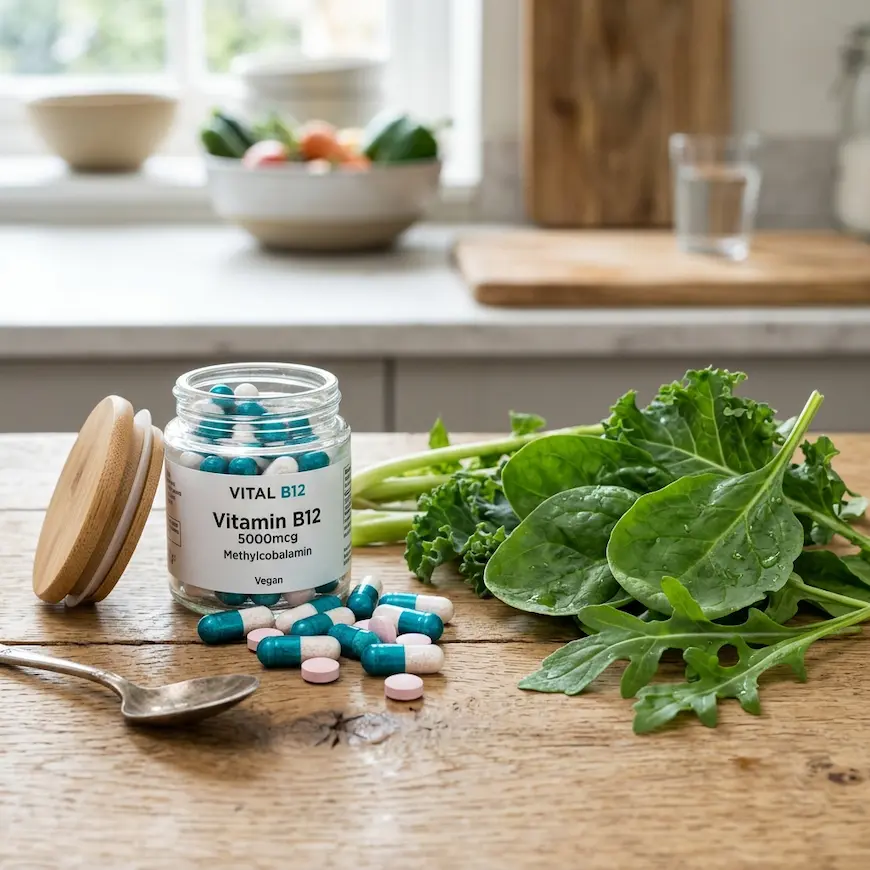
Nutritional deficiencies that need active management. Patients with small bowel involvement are at high risk for specific deficiencies based on where the disease sits: terminal ileum (vitamin B12, absorbed only here, plus fat-soluble vitamins A, D, E, K), proximal small bowel (iron, folate, calcium), and any location (zinc, magnesium, and vitamin D, since inflammation suppresses its conversion). Annual monitoring of B12, vitamin D, iron and ferritin, folate, and zinc is standard in Crohn’s care.
An important correction. The original article recommended probiotics as a supportive tool for Crohn’s. The evidence for probiotics in Crohn’s is very limited, in contrast to ulcerative colitis, where certain strains (VSL#3) have modest evidence for maintenance. Current ACG guidelines (Lichtenstein et al. 2018, Am J Gastroenterol, PMID 29610508) do not recommend probiotics for inducing or maintaining remission in Crohn’s. That distinction matters, because it can mislead patients into relying on probiotics with no supporting evidence.
Frequently Asked Questions
Can Crohn’s cause cancer?
Yes. Crohn's involving the colon raises colorectal cancer risk, especially with long-standing, extensive colonic disease, and the risk is similar to UC with equivalent colonic involvement. Guidelines recommend surveillance colonoscopy starting 8 to 10 years after diagnosis in patients with colonic involvement, then every 1 to 3 years depending on risk. Small bowel Crohn's slightly raises small bowel adenocarcinoma risk, though that remains rare in absolute terms.
Is Crohn’s genetic, and will my children get it?
A parent with Crohn's raises a child's lifetime risk of Crohn's disease symptoms roughly 5 to 20-fold above the general population (from about 0.3% to around 5 to 15%). Two parents with IBD raises it much further. Genetic testing for specific NOD2/CARD15 variants exists but doesn't predict disease reliably, since over 240 loci are involved and environment is critical. Telling your gastroenterologist about first-degree relatives with IBD matters, because it informs your own risk and the threshold for investigating symptomatic children.
What is life expectancy with Crohn’s?
Life expectancy is close to normal, particularly with well-controlled disease. Crohn's-related deaths mostly trace to surgical complications, colorectal cancer (in poorly controlled colonic disease), and medication-related adverse events (infection from immunosuppression). The bigger danger is undertreated, chronically active disease, where ignored Crohn's disease symptoms lead to strictures, malnutrition, and bowel damage, which is why deep remission matters.
Can stress make Crohn’s disease symptoms flare?
Yes, the gut-brain axis is clinically real in IBD. Psychological stress activates the HPA axis and sympathetic nervous system, which directly affect intestinal immune activity and permeability. Prospective studies link high stress to more frequent flares of Crohn's disease symptoms. This doesn't make Crohn's a psychological disorder, but it makes stress management a legitimate part of care alongside medication.
What’s the difference between Crohn’s and “leaky gut”?
Intestinal hyperpermeability (the real phenomenon behind "leaky gut") is measurable and documented in Crohn's, and it's part of the pathology. In Crohn's, the inflamed bowel wall loses tight-junction integrity, which lets bacterial products cross into the submucosa and keep the immune response going. But "leaky gut" as sold in wellness circles, a standalone condition causing a wide range of vague symptoms and treated with supplements, doesn't have the same evidence base as the IBD-associated permeability research.
This article is for informational purposes only and does not constitute medical advice. Crohn’s disease needs specialist gastroenterology management; treatment decisions, biologic selection, and monitoring must be individualized by a qualified physician. If you have severe abdominal pain, signs of bowel obstruction (inability to pass gas or stool, severe distension), high fever with abdominal pain (possible abscess or perforation), or significant rectal bleeding, seek emergency care immediately.

Mimo Karam is the founder and writer at LifestyleMine. She writes about daily habits, nutrition, sleep, and emotional wellness, turning research into practical advice for people who want to live healthier without making it complicated.