✦
THE LIFESTYLEMINE NEWSLETTER
Simple wellness tips, healthy recipes, and
everyday inspiration delivered to your inbox.
Your Email Address
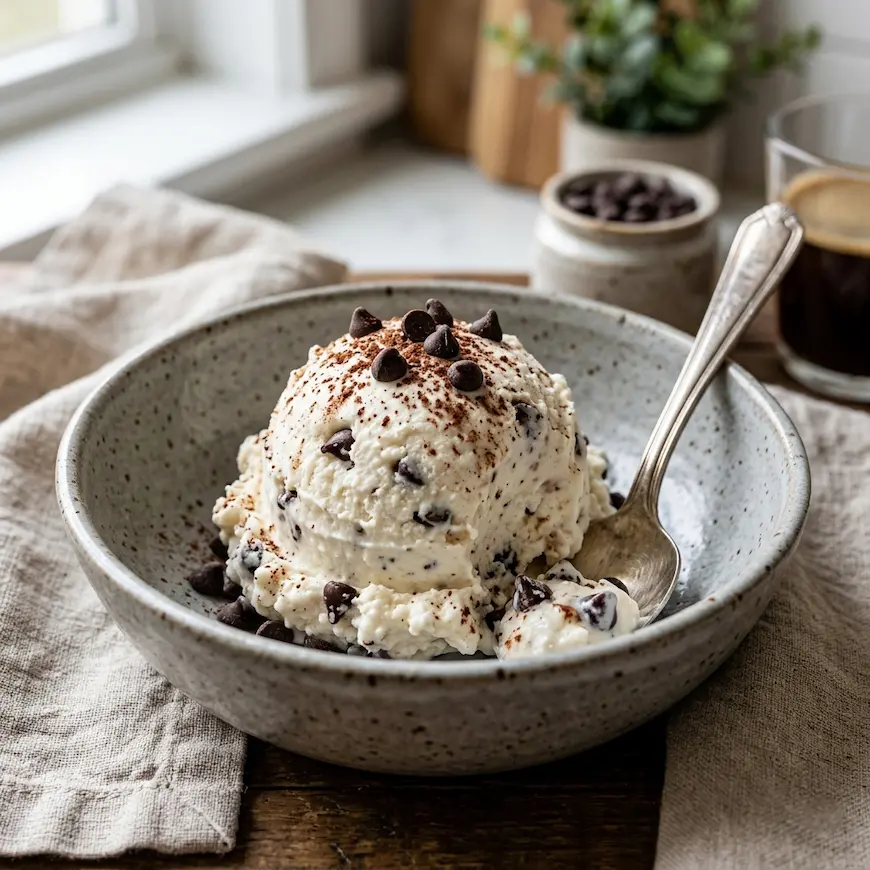
The base 4-ingredient recipe (blender method)
Quick Answer: The base cottage cheese ice cream recipe blends 2 cups of full-fat cottage cheese, 2 to 3 tablespoons of honey or maple syrup, 1 teaspoon of vanilla, and a pinch of salt until smooth, then freezes for 4 to 6 hours. A high-speed blender or food processor is the only equipment required.
Ingredients:
2 cups full-fat (4%) cottage cheese
Instructions:
Add everything to a high-speed blender or food processor.
Nutrition per serving (makes about 4): roughly 90 to 110 calories and 11 to 14 grams of protein, before any flavor additions.
The mistake almost everyone makes the first time they attempt cottage cheese ice cream is stopping the blender early. If you can still see specks of curd, those specks become ice crystals in the freezer and the texture goes grainy. When you are unsure, give it another 30 seconds. Since the blender does all the work here, it is the one piece of equipment worth having a decent version of, and The Ninja Creami 7-in-1 Ice Cream Maker handles this kind of thick, low-liquid base without stalling.
Quick Answer: For a texture closer to soft serve, blend the same base, freeze it solid in a Ninja Creami pint for a full 24 hours, then run the “Lite Ice Cream” or “Ice Cream” cycle. The machine shaves the frozen block into fine layers, which beats what a static freeze can do on its own.
If a Ninja Creami is already on your counter, this version of cottage cheese ice cream is noticeably smoother than the blend-and-freeze approach.
Make the same base (cottage cheese, sweetener, vanilla, salt, blended smooth).
The machine wins because it shaves the frozen block into extremely fine layers instead of leaving the initial freeze to determine the final texture. Ice crystals get broken up mechanically rather than prevented chemically.
If you are weighing the purchase, The Ninja Creami 7-in-1 Ice Cream Maker is the model most home cooks use for cottage cheese ice cream and similar frozen protein recipes.
Quick Answer: The base cottage cheese ice cream recipe adapts into coffee, chocolate, chocolate mint, lemon blueberry, mango lassi, and coconut lime by blending in one or two extra ingredients before freezing. The 4-ingredient base stays the same in every version.
Once the base method is down, the cottage cheese ice cream variations are easy:
Coffee: 1 teaspoon instant espresso powder or a shot of cooled espresso, added before blending. This is the one I make most. The espresso covers any lingering tang so completely that nobody guesses the base.
Chocolate: 2 to 3 tablespoons unsweetened cocoa powder plus an extra tablespoon of honey to offset the bitterness.
Chocolate mint: the chocolate version plus 1/4 teaspoon peppermint extract. Start with less, it is stronger than you think. Fold mini chocolate chips in after blending.
Lemon blueberry: zest of one lemon and a tablespoon of juice into the base, then fold in 1/2 cup of blueberries after blending so you keep visible fruit rather than a uniform purple.
Mango lassi: swap the vanilla for 1/2 cup mango puree and a pinch of cardamom.
Coconut lime: zest and juice of one lime plus 2 tablespoons unsweetened shredded coconut, folded in after blending.
For anything fruit-based, fold the fruit in at the end instead of blending it. Blended fruit dilutes the base and flattens the color into something muddy. Folded fruit gives you swirls and better texture, and berries bring polyphenols worth having in their own right, which is the same reasoning behind most anti-inflammatory foods worth building into a regular rotation.
Quick Answer: The base delivers 11 to 14 grams of protein per serving before add-ins. Most variations land between 10 and 16 grams, with coffee and chocolate at the top since they add almost no volume, and fruit versions slightly lower because the fruit dilutes protein density.
Approximate nutrition per serving, with each batch divided into four:
Flavor Calories Protein
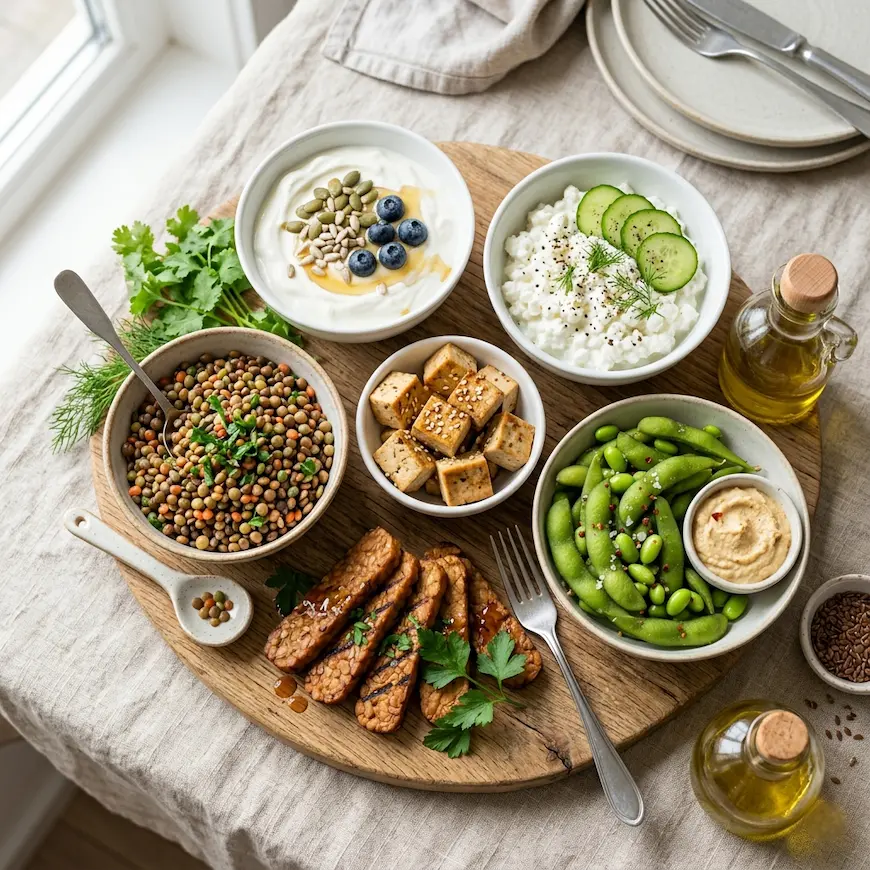
A half-cup of premium supermarket ice cream gives you 3 to 5 grams of protein at the same calories or more. That gap is the whole appeal. You are getting roughly triple the protein for comparable calories in something that still reads as dessert rather than as a supplement, which puts cottage cheese ice cream in the same practical category as the whole-food options in our guide to high protein snacks .
To push cottage cheese ice cream higher still, blend in a scoop of unflavored or vanilla protein powder and pull back slightly on the sweetener. That takes a serving past 20 grams. Vegan Vanilla Plant-Based Protein Powder
Quick Answer: Cottage cheese ice cream keeps for up to two weeks in an airtight container, but it freezes harder than commercial ice cream because it has more protein, less fat, and no stabilizers. Budget 8 to 10 minutes on the counter before scooping. A liquid sweetener like honey keeps the final texture softer than granulated sugar does.
Storage: airtight, freezer-safe container, up to two weeks. With no stabilizers or emulsifiers in the mix, texture peaks in the first 5 to 7 days.
Why it freezes so hard: commercial ice cream carries more fat plus stabilizers that keep it scoopable straight from the freezer. This version has neither, so it sets into a firmer block. Give it 8 to 10 minutes out of the freezer rather than the 5 you would give a supermarket pint.
If it comes out icy: the cause is almost always under-blending or low-fat cottage cheese. Switch to 4% and blend the full 90 seconds. That fixes it nearly every time.
If it is still too hard after resting: blend in a tablespoon of coconut oil or cream cheese. The extra fat lowers the freezing point a little and keeps things softer.
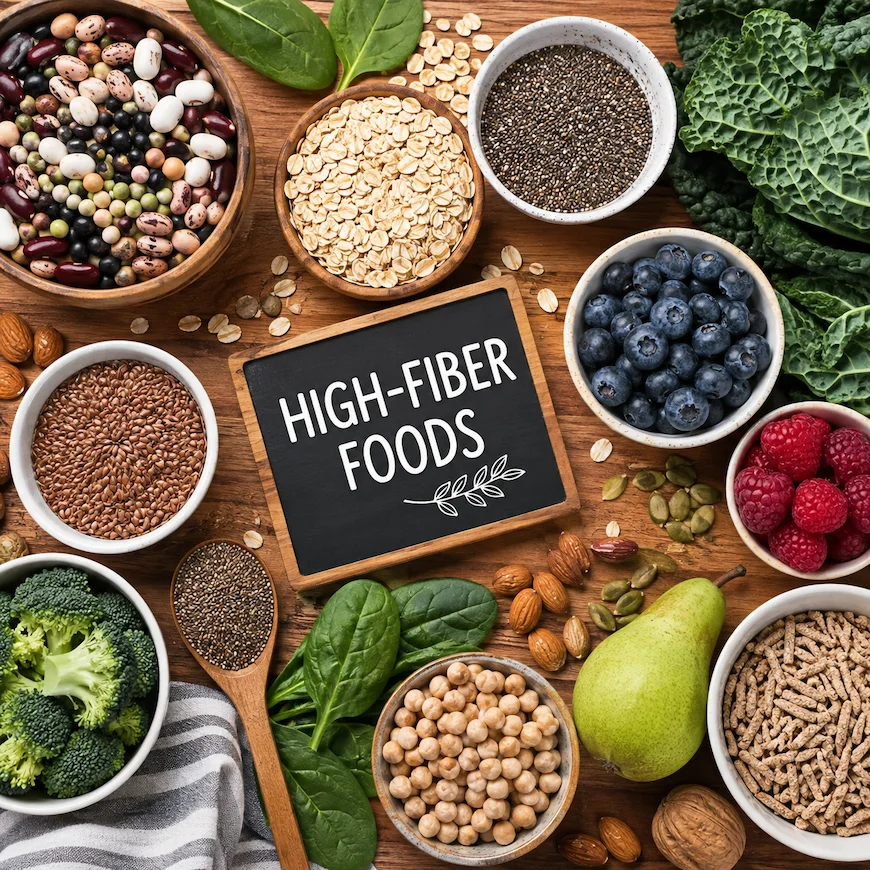
Make-ahead: the recipe doubles and triples without trouble. Portion it into small individual containers before freezing and you have single servings ready all week. It slots into a weekly prep routine the same way most people already use cottage cheese benefits in savory form, and if you are also working on fiber intake, pairing a portion with berries or seeds covers ground that plain dairy cannot, which is the core idea behind fibermaxxing .
Quick Answer: Against commercial protein ice cream, the homemade version uses fewer additives and artificial sweeteners, costs less per serving, and matches or beats it on protein per calorie. Commercial brands still win on texture straight out of the container.
The protein ice cream aisle is crowded now, so the comparison is worth making directly.
Ingredients: most commercial protein ice cream leans on milk protein isolate plus sugar alcohols and sometimes artificial sweeteners to hit high protein and low sugar at once. The homemade version uses four whole ingredients with honey or maple syrup as the only sweetener.
Cost: a commercial pint runs $6 to $8. Four or five dollars of cottage cheese and pantry staples makes a comparable or larger batch.
Protein density: commercial brands engineer to a number, usually 20 grams per serving, using isolates. The homemade version gets to 11 to 16 grams from whole-food dairy protein, or past 20 with added powder.
Texture from the freezer: commercial wins here. Professional formulations use stabilizers and tuned fat-to-sugar ratios to stay scoopable, and no home version fully matches that without a Creami step.
For most people the trade favors homemade on ingredients and cost, with the store-bought pint winning on convenience.
Quick Answer: It is a nutrient-dense dessert compared with traditional ice cream, with more protein and usually less added sugar. It is not a low-calorie free food. Judged as a dessert swap rather than a health food, the nutritional case is solid.
Cottage cheese ice cream deserves an honest answer here instead of trend enthusiasm.
The protein is real and meaningfully higher than what you get from traditional ice cream. Cottage cheese also brings calcium and B12, and dairy calcium absorbs well because it arrives packaged with the fat-soluble vitamins that help the body use it (Miller GD, Jarvis JK, McBean LD, 2001, Journal of the American College of Nutrition, PMID 11349940 ). Using honey or maple syrup keeps added sugar below what most commercial pints carry, which often run 14 to 20 grams per serving.
The satiety piece is the part with the best research behind it. Protein suppresses appetite more effectively than the same calories from carbohydrate or fat (Anderson GH, Moore SE, 2004, Journal of Nutrition, PMID 15051857 ), and a moderately higher protein intake supports both satiety and weight management in practice (Paddon-Jones D, Westman E, Mattes RD, et al., 2008, American Journal of Clinical Nutrition, PMID 18469287 ). In plain terms: you are less likely to go back for a third bowl.
What does not hold up is calling this a health food. It is a dessert. It contains added sugar. It belongs inside an overall pattern of eating, not on a pedestal above one.
So: as a swap for someone who already eats ice cream and wants more protein without giving up the things they like, cottage cheese ice cream is a well-designed option. As a meal replacement or a diet food, it is neither, and it was never built to be.
About 11 to 14 grams per serving with the batch split four ways, and most variations land between 10 and 16. A scoop of protein powder takes a serving past 20 grams, which is where the "22g protein" number attached to the viral version comes from.
Yes, and the texture is noticeably closer to soft serve. Blend as usual, freeze solid in the Creami pint for a full 24 hours, then run "Lite Ice Cream" or "Ice Cream."
Either you stopped blending too soon or you used low-fat cottage cheese. Blend the full 60 to 90 seconds, use 4%, and the problem usually disappears.
You can. Ricotta starts smoother because it has no curd structure to break down, but it carries less protein per serving, so the final count comes out lower.
No. The four-ingredient base already delivers 11 to 14 grams per serving from the cottage cheese alone. Powder is for pushing the number higher, not for reaching it.
Honey and maple syrup, mostly because liquid sweeteners blend in cleanly and keep the frozen texture a little softer than granulated sugar. For lower sugar, liquid monk fruit or allulose substitutes directly without hurting texture.
Anderson GH, Moore SE (2004). Dietary proteins in the regulation of food intake and body weight in humans. Journal of Nutrition, 134(4):974S-979S. PMID: 15051857
Paddon-Jones D, Westman E, Mattes RD, Wolfe RR, Astrup A, Westerterp-Plantenga M (2008). Protein, weight management, and satiety. American Journal of Clinical Nutrition, 87(5):1558S-1561S. PMID: 18469287
Miller GD, Jarvis JK, McBean LD (2001). The importance of meeting calcium needs with foods. Journal of the American College of Nutrition, 20(2 Suppl):168S-185S. PMID: 11349940
Mimo Karam is the founder and writer at LifestyleMine. She writes about daily habits, nutrition, sleep, and emotional wellness, turning research into practical advice for people who want to live healthier without making it complicated.