✦
THE LIFESTYLEMINE NEWSLETTER
Simple wellness tips, healthy recipes, and
everyday inspiration delivered to your inbox.
Your Email Address
Understanding these two terms makes the egg debate much easier.
Dietary cholesterol is the cholesterol naturally found in animal foods, including eggs, meat, and dairy products.
Blood cholesterol refers to cholesterol circulating in your bloodstream, carried by particles called lipoproteins.
Your blood cholesterol levels are influenced by several factors, including genetics, diet, metabolic health, and certain medical conditions. Eating more dietary cholesterol can raise LDL cholesterol in some people, but the effect is not identical for everyone.
A large egg contains approximately 186 milligrams of cholesterol, almost entirely in the yolk. That sounds like a lot, especially if you’ve heard older recommendations about limiting dietary cholesterol. But an egg also provides several important nutrients.
Nutrient
Approximate amount
Calories
72
Protein
6.3 g
Total fat
4.8 g
Saturated fat
1.6 g
Cholesterol
186 mg
Carbohydrates
Less than 1 g
Values are approximate and vary by egg size and preparation method.
Eggs also provide choline, selenium, vitamin B12, riboflavin, and smaller amounts of vitamin D. They contain high-quality protein with all nine essential amino acids. The yolk supplies much of the egg’s vitamins, minerals, and fat, while the white provides protein with very little fat and no cholesterol.
The takeaway: Eggs are relatively high in dietary cholesterol but comparatively low in saturated fat.
A heart-conscious eating pattern includes more than limiting cholesterol. Incorporating vegetables, whole grains, legumes, and anti-inflammatory foods can help improve the overall quality of your diet. The relationship between eggs and heart disease has been studied for decades. The results aren’t perfectly consistent, partly because researchers are asking different questions. Some studies examine what happens to LDL cholesterol when people eat eggs for several weeks.
Others follow thousands of people for years to see whether egg consumption is associated with heart attacks or strokes. These approaches provide different kinds of evidence.
The American Heart Association’s scientific advisory on dietary cholesterol explains that healthy individuals can generally include up to one whole egg daily as part of a healthy dietary pattern. However, it also recommends additional consideration for people with dyslipidemia, diabetes, or certain cardiovascular risks.
The emphasis is not on treating one food as either completely healthy or unhealthy. Instead, it is on the overall eating pattern. A diet rich in vegetables, fruits, whole grains, legumes, nuts, and unsaturated fats can support cardiovascular health.
A diet consistently high in saturated fat, refined carbohydrates, and heavily processed foods is a different story.
A randomized crossover trial published in The American Journal of Clinical Nutrition in 2025 examined how dietary cholesterol from eggs and saturated fat affected LDL cholesterol. The study enrolled 61 adults and compared three dietary approaches over separate five-week periods.
One diet included two eggs daily while keeping saturated fat relatively low. Another contained less cholesterol but more saturated fat. A third served as a higher-saturated-fat comparison diet.
Researchers found that saturated fat intake was positively associated with LDL cholesterol, while dietary cholesterol was not significantly associated with LDL in their analysis. The low-saturated-fat diet containing two eggs daily produced lower average LDL cholesterol than the comparison diet.
However, the study also observed changes in LDL particle characteristics, and the trial was not designed to determine long-term heart attack or stroke risk. This distinction matters.
The study does not prove that eating two eggs every day prevents heart disease. It suggests that the saturated fat content of the overall diet can be more influential than egg cholesterol alone.
Imagine two people who each eat seven eggs per week. One regularly enjoys eggs with sautéed spinach, tomatoes, beans, and whole-grain bread. The other usually eats eggs with processed meat, butter, and refined breakfast pastries.
If researchers simply count how many eggs each person eats, they may miss important differences in the rest of their diets. Long-term observational studies also cannot completely eliminate the influence of lifestyle, health status, and other factors. That’s why a single headline about eggs increasing or decreasing heart disease risk rarely tells the whole story.
LDL stands for low-density lipoprotein. It’s often called “bad cholesterol” because elevated levels of LDL particles contribute to plaque buildup in artery walls. Over time, this process can increase the risk of heart attack and stroke.
Eggs contain dietary cholesterol, and some people experience an increase in LDL cholesterol when they eat more eggs. But LDL levels are also influenced by saturated fat intake, genetics, body weight, certain medical conditions, and medications. If your LDL cholesterol is already elevated, the question isn’t simply whether eggs are allowed.
It’s whether your overall diet is helping you reach the LDL target recommended for your individual cardiovascular risk. For some people, reducing egg yolks may be a reasonable part of a cholesterol-lowering plan. For others, replacing butter, processed meats, and other sources of saturated fat may make a larger difference.
HDL stands for high-density lipoprotein. It helps transport cholesterol from tissues back toward the liver. Some egg-feeding studies have found increases in HDL cholesterol.
However, raising HDL cholesterol is not automatically proof that a food protects against heart disease. Doctors generally place greater emphasis on lowering elevated LDL cholesterol and managing overall cardiovascular risk. So, while changes in HDL may be interesting, they shouldn’t be used to dismiss a rise in LDL.
This is probably the question most people want answered. And the answer depends on your health. For many healthy adults, eating approximately one whole egg per day can fit within a balanced, heart-healthy eating pattern. That doesn’t mean everyone needs to eat an egg daily, or that one egg is a universal maximum.
It is a practical reference point supported by American Heart Association guidance. Your ideal intake may differ depending on your cholesterol levels, family history, diabetes status, medications, and the rest of your diet.
Health situation
Practical guidance
Healthy adults with normal cholesterol
Around one whole egg daily can fit a heart-healthy diet
Adults with elevated LDL cholesterol
Consider individualized limits on yolks and dietary cholesterol
People with diabetes
Consider overall cardiovascular risk and seek personalized advice
People with existing heart disease
Follow a clinician-guided heart-healthy eating plan
People with familial hypercholesterolemia
Seek specialist guidance on dietary cholesterol and LDL management
These are general considerations, not individualized medical prescriptions.
Not necessarily for every person. Some short-term studies have found that two eggs daily can fit into a low-saturated-fat diet without worsening average LDL cholesterol. But those results do not establish that two eggs daily are appropriate for everyone over the long term.
If you have elevated LDL cholesterol or significant cardiovascular risk factors, ask your healthcare professional whether that amount fits your treatment goals.
Having high cholesterol doesn’t automatically mean you must eliminate eggs. However, it does mean you should be more thoughtful about how often you eat egg yolks and what you eat alongside them. One useful strategy is to combine a whole egg with additional egg whites.
For example, an omelet made with one whole egg and two egg whites provides protein while containing less dietary cholesterol than an omelet made with three whole eggs. You can add vegetables such as spinach, mushrooms, tomatoes, and peppers to increase the meal’s fiber-containing plant foods and overall nutritional value. It’s also worth paying attention to foods that often accompany eggs.
Processed breakfast meats, butter, and high-fat cheese can substantially increase the saturated fat content of a meal. And if your LDL cholesterol remains high despite dietary changes, medication may be necessary. Food choices are important, but they are only one part of cholesterol management.
Egg whites and egg yolks have different nutritional strengths.
Egg whites provide protein with very little fat and no dietary cholesterol. They can be useful when someone wants to increase protein intake while limiting cholesterol or calories.
Egg yolks contain most of the egg’s dietary cholesterol, but they also provide valuable nutrients, including choline and carotenoids such as lutein and zeaxanthin. These compounds contribute to normal body functions, including brain and eye health. Removing the yolk reduces dietary cholesterol, but it also removes several nutrients.
For healthy people, whole eggs can be a nutritious choice. For people who need to limit dietary cholesterol, using more egg whites and fewer yolks can be a practical compromise. Neither option needs to be treated as inherently good or bad. The best choice depends on your individual nutritional needs.
People with diabetes often have a higher baseline risk of cardiovascular disease. This makes the relationship between eggs, cholesterol, and heart health especially important. Research examining egg consumption in people with diabetes has produced mixed findings.
Some studies suggest moderate egg intake can be incorporated into a healthy diet without major changes in certain cardiovascular markers. Other observational research has raised concerns about higher egg consumption in particular populations. Because the evidence is not completely consistent, a personalized approach is sensible.
For people with diabetes, the overall quality of the diet, LDL cholesterol levels, blood pressure, blood sugar management, and other risk factors deserve attention. Eggs may fit into that plan, but they should not distract from the bigger picture.
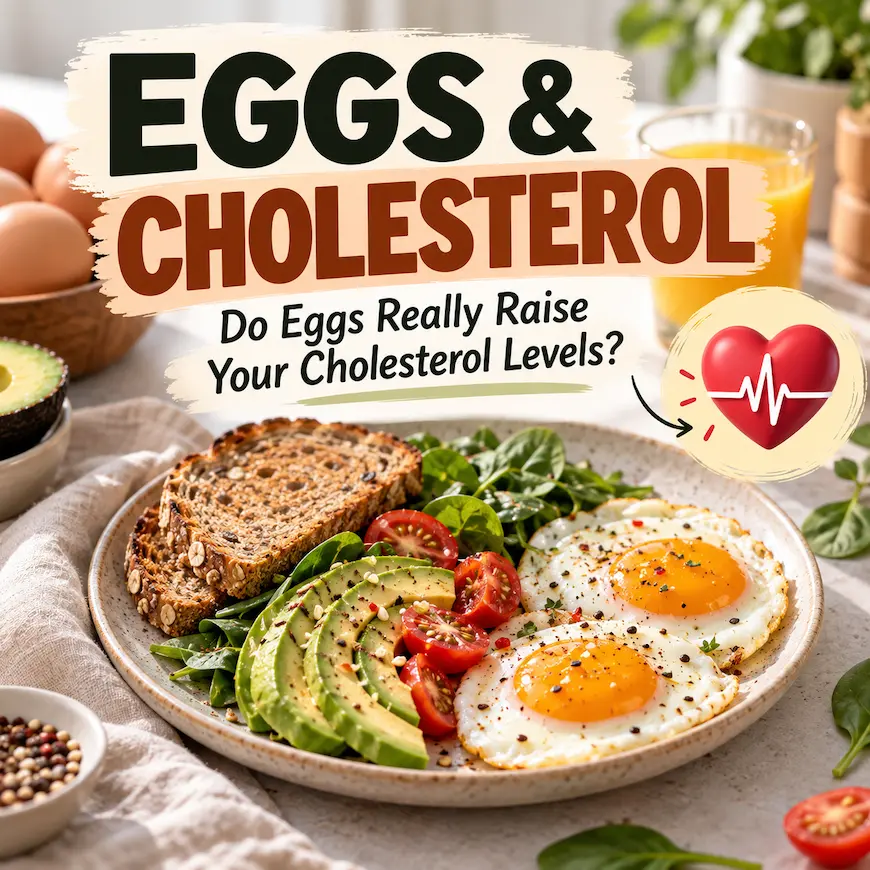
For a satisfying breakfast, pair eggs with vegetables, whole-grain toast, and healthy fats. You can find more inspiration in our guide to foods to eat when you’re feeling exhausted . You don’t have to give up enjoyable breakfasts to eat with heart health in mind. Sometimes, changing what goes around the eggs makes the biggest difference.
1. Make a vegetable-packed omelet
Use one whole egg with additional egg whites, then add spinach, mushrooms, onions, and tomatoes. Cook with a modest amount of olive oil instead of butter.
2. Pair eggs with whole-grain toast
Whole grains provide fiber and can help create a more balanced breakfast. Choose whole-grain bread rather than relying on refined pastries or butter-heavy biscuits.
3. Add avocado instead of processed meat
Avocado provides mostly unsaturated fats. Pairing eggs with avocado and vegetables can be an alternative to bacon or sausage.
4. Try eggs with beans
Beans provide fiber and plant protein. A breakfast bowl with eggs, black beans, tomatoes, and greens can be filling and nutritious.
5. Make boiled eggs for convenient meals
Hard-boiled eggs are easy to prepare ahead of time. Serve them with fruit, vegetables, or whole grains rather than treating them as the entire meal.
6. Build a Mediterranean-inspired breakfast
Combine an egg with tomatoes, cucumbers, whole-grain toast, and a small amount of olive oil. This approach emphasizes a variety of plant foods and unsaturated fats.
7. Alternate eggs with other healthy breakfasts
Eggs don’t need to be your only breakfast protein. Try oatmeal with nuts, Greek yogurt with berries, or whole-grain toast with nut butter on other mornings. Variety helps you obtain a wider range of nutrients.
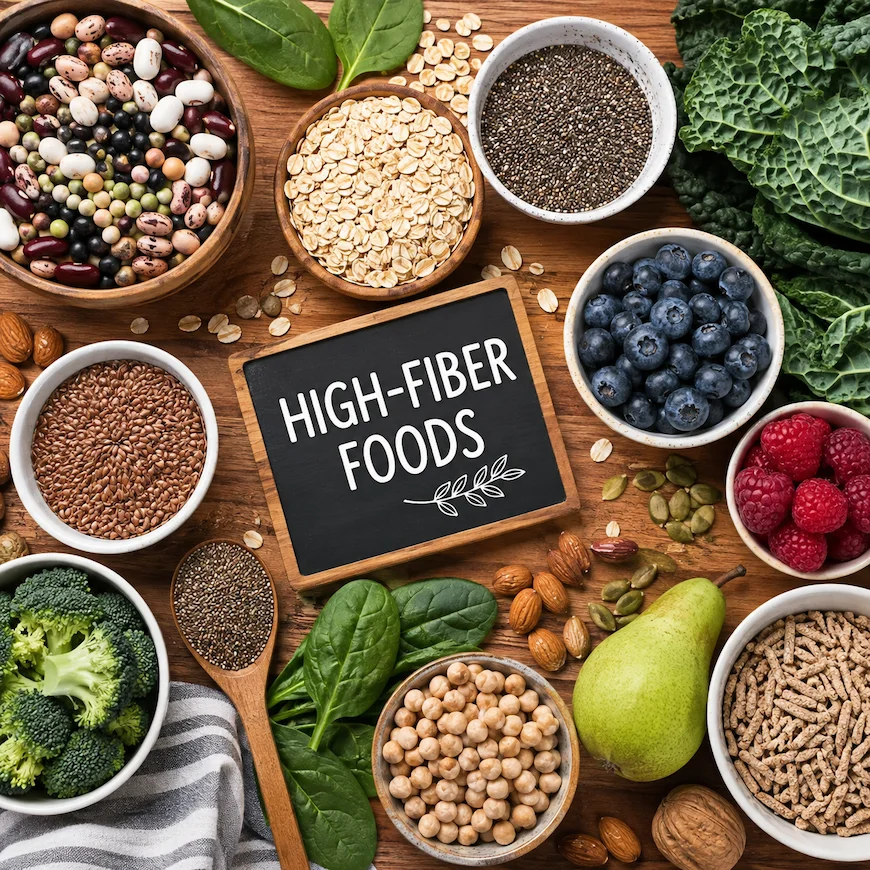
One particularly useful dietary change is increasing soluble fiber. Foods such as oats, beans, and barley can help lower LDL cholesterol. Our fibermaxxing guide explains how to gradually increase your daily fiber intake. If your goal is lowering LDL cholesterol, it’s worth looking beyond the egg carton. The overall balance of saturated and unsaturated fats is especially important.
Consider eating less often
Try more often
Bacon and sausage
Beans, lentils, and other plant proteins
Butter
Olive or canola oil
High-fat processed meats
Fish and leaner protein choices
Pastries rich in butter
Oatmeal and whole-grain foods
Meals high in saturated fat
Vegetables, nuts, seeds, and legumes
Soluble fiber is another important consideration. Foods such as oats, beans, barley, and certain fruits can help reduce LDL cholesterol as part of a balanced diet. Rather than obsessing over whether one egg is harmful, look at the habits you repeat throughout the week. Those habits are often more meaningful than any single breakfast.
If you’re looking to improve your overall heart health, consider the bigger picture. Our article on what happens when you stop eating meat explores how replacing certain animal foods with plant-based alternatives can influence cholesterol levels.
Eggs don’t deserve their reputation as an automatic heart-health villain. But they aren’t a free pass to ignore cholesterol, either. For many healthy adults, moderate egg consumption can be part of a nutritious, heart-conscious diet. Eggs provide high-quality protein and valuable nutrients, and their relatively low saturated fat content makes them different from many other cholesterol-containing animal foods.
At the same time, dietary cholesterol can affect LDL levels in some people, especially those who are more responsive to it. The most useful question isn’t simply, “Are eggs good or bad?” It’s this:
What does my overall diet look like, and is it helping me maintain healthy cholesterol levels?
An egg served with vegetables, beans, and whole grains fits into a very different eating pattern from a breakfast built around processed meat and butter. And that distinction is worth remembering. If your cholesterol is elevated, work with your healthcare professional to establish an appropriate LDL goal and a realistic eating plan. You may not need to eliminate eggs completely. You may simply need to look at the bigger picture.
Boiled eggs contain dietary cholesterol, just like scrambled or poached eggs. Boiling does not remove cholesterol from the yolk. However, boiled eggs do not require added butter or oil, making them a convenient preparation method.
Scrambled eggs are not inherently unhealthy. Their nutritional impact depends partly on how they are prepared. Adding substantial amounts of butter, cream, or high-fat cheese increases saturated fat intake.
For many healthy adults, one egg daily can fit into a balanced diet. People with elevated LDL cholesterol or specific cardiovascular conditions may need different recommendations.
Yes, it can increase LDL cholesterol in some people, although the response varies. The overall diet, especially saturated fat intake, also matters.
Shell color does not reliably indicate a healthier egg. Brown and white eggs have broadly similar nutritional profiles, although their composition can vary with the hen's diet and other factors.
Eggs are not generally a major driver of triglyceride levels. Triglycerides are influenced by factors such as excess calorie intake, refined carbohydrates, alcohol, metabolic health, and genetics.
Not necessarily. Egg whites can help reduce dietary cholesterol intake, but whether whole eggs need to be limited depends on individual LDL levels and cardiovascular risk.
Yes, for some people. Eggs can be included in a dietary pattern emphasizing vegetables, whole grains, legumes, nuts, and unsaturated fats, although the appropriate amount may need to be individualized.
American Heart Association — Dietary Cholesterol and Cardiovascular Risk American Heart Association — Here’s the Latest on Dietary Cholesterol Carter et al., 2025 — Impact of Dietary Cholesterol From Eggs and Saturated Fat on LDL Cholesterol Levels USDA — What Is the Cholesterol Content of Eggs? American Heart Association — 2026 Dietary Guidance to Improve Cardiovascular Health
Last editorial review: October 2026. This article is intended for general education and should be medically reviewed before publication.
Mimo Karam is the founder and writer at LifestyleMine. She writes about daily habits, nutrition, sleep, and emotional wellness, turning research into practical advice for people who want to live healthier without making it complicated.