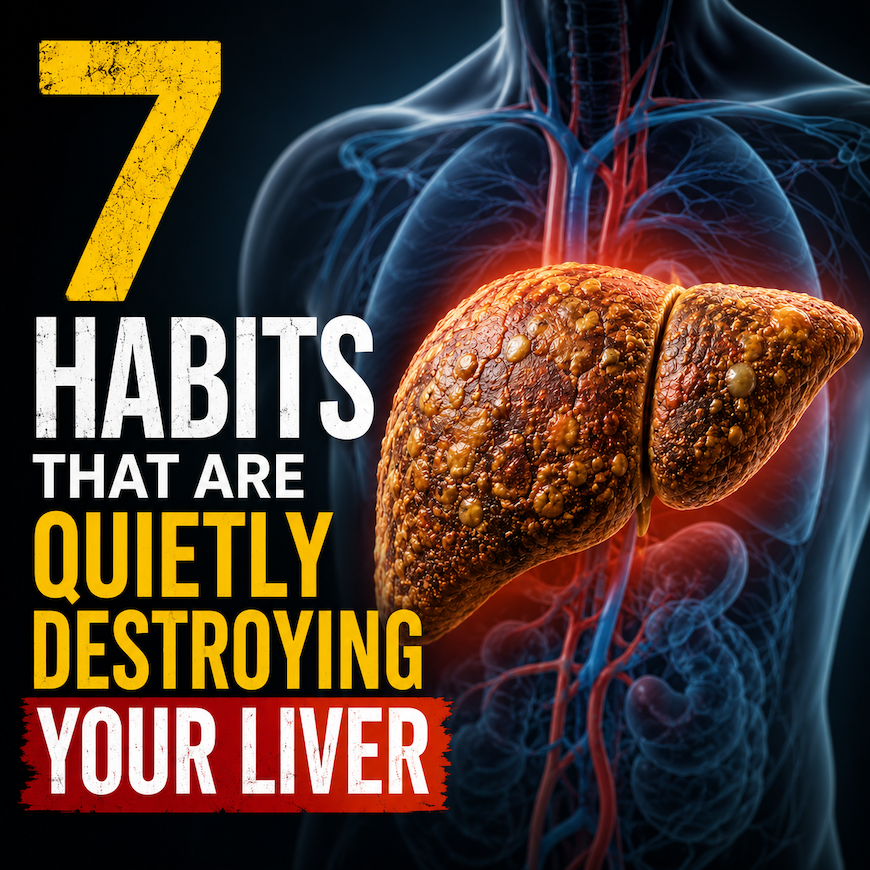
The liver runs more than 500 separate jobs. Not a figure of speech, a documented count. It processes everything you eat and drink, makes bile for fat digestion, manufactures cholesterol and clotting factors, stores glycogen, turns ammonia into urea, and filters around 1.4 liters of blood a minute.
It also regrows. That’s what makes people careless about their liver in a way they’d never be about their heart or kidneys. It can rebuild from as little as 25% of its original tissue. Sounds indestructible.
It isn’t. Regeneration has a ceiling, and when damage keeps coming it outpaces repair, so scar tissue starts to build. That scarring, called fibrosis, doesn’t regrow. Pile up enough and you have cirrhosis, which is permanent.
The thing about liver destroying habits is that the damage stacks up quietly. The liver has no pain receptors, so you feel nothing while it happens. By the time the warning signs appear, jaundice, a swollen abdomen, fatigue, easy bruising, the damage is often well along. The NIH’s liver disease overview is a good primer if you want the clinical picture.
I learned this the hard way. A routine panel put my ALT at 32. Normal tops out at 40, so on paper I was fine, but my doctor noticed it had been creeping up for three years. For most of that stretch I’d been taking a high-dose green tea extract supplement daily for “metabolism support.” More on that later.
Habit 1: Excessive alcohol
I’ll start here because the evidence leaves no room for argument.
The liver breaks alcohol down with two enzymes: alcohol dehydrogenase and, in heavy drinkers, the CYP2E1 pathway. Both produce acetaldehyde, a toxic compound that damages liver cells outright and sets off inflammatory cytokines that harm the surrounding tissue.
Alcoholic liver disease tends to move through three stages.
Alcoholic fatty liver (steatosis): Fat builds up in the liver cells. Usually no symptoms. It reverses if you stop drinking, the liver clearing the fat over a few weeks.
Alcoholic hepatitis: Inflammation sets in, and symptoms can surface: discomfort on the right side, fatigue, jaundice. Acute cases can turn life-threatening. Caught early, abstinence reverses part of it.
Alcoholic cirrhosis: Permanent scarring that doesn’t reverse. It brings portal hypertension, esophageal varices, the risk of liver failure, and a sharply higher risk of liver cancer.
So what counts as too much? More than two standard drinks a day for men, or one for women, sustained over time, lines up with real liver disease risk. That’s a lower bar than most expect, and it’s where any list of liver destroying habits has to begin, since nothing else produces cirrhosis as reliably as years of heavy drinking.
Habit 2: Excess fructose and ultra-processed food
Of the liver destroying habits people never see coming, this is the big one.
Non-alcoholic fatty liver disease (NAFLD) now affects roughly 25% of adults worldwide, the most common chronic liver disease there is. Alcohol isn’t the driver. Diet is, specifically fructose from added sugar and a lot of ultra-processed food. The American Liver Foundation’s NAFLD page covers the condition in plain language.
The mechanism is worth knowing. Fructose is processed almost entirely in the liver. Glucose gets shared across the body for energy, but fructose skips the usual regulatory steps and goes straight to the liver, which turns it into fat through de novo lipogenesis and stores it as triglycerides. Do that often enough and you get a fatty liver, no alcohol involved.
The fructose that causes trouble isn’t from fruit, where fiber and water slow its absorption right down. It’s the high-fructose corn syrup and sucrose in sugary drinks, processed snacks, sauces, dressings, and “health” foods like flavored yogurt and granola bars.
Ultra-processed food piles on in other ways, through inflammatory seed oils, emulsifiers, and sweeteners that can shift the gut microbiome and make the intestinal lining leakier. That sends more inflammatory compounds to the liver through the portal vein, the gut-liver axis at work. Worth reading up on the gut-liver axis and fermented drinks if this is new to you.
Here’s the part that catches people: your drinking can be perfectly normal and you can still end up with serious liver disease purely from how you eat. It’s one of the liver destroying habits that looks totally harmless from the outside.
Habit 3: Overusing OTC medications, especially acetaminophen
This one surprises people.
Acetaminophen (paracetamol, sold as Tylenol) is the leading cause of acute liver failure in both the US and the UK. Not alcohol, not hepatitis, not misused prescriptions. It sits over the counter in every pharmacy and hides in hundreds of combination cold and pain products.
At normal doses, acetaminophen becomes a toxic byproduct called NAPQI, which glutathione neutralizes fast. Push the dose higher, or take a standard dose when your glutathione is already low (from malnutrition, heavy drinking, or certain genetic variants), and NAPQI builds up and kills liver cells directly. A lot of them at once.
The cap is 4,000mg a day for healthy adults, though the FDA suggests staying under 3,000mg for a safety margin. The catch is those combinations: Nyquil, plus a generic painkiller, plus a prescription opioid combo can quietly push you past the limit with nobody adding it up.
This is one of the more medically serious liver destroying habits precisely because it looks like careful, responsible medicine. “I’m only taking Tylenol, not drinking” doesn’t carry the safety guarantee people think it does.
Habit 4: Sleep deprivation
Your liver keeps its own circadian rhythm. It isn’t just a passive filter; it runs molecular clocks that time its enzyme activity, fat metabolism, glucose output, and detox cycles to the hour.
Throw that clock off, through chronic short sleep, shift work, or irregular hours, and the liver falls out of sync with the master clock in your brain. The result is impaired glucose handling, disrupted fat processing, and inflammatory signaling in the tissue.
Studies in both animals and people tie chronic short sleep (under six hours) to higher NAFLD risk, raised liver enzymes, and faster progression of existing disease. Part is the circadian disruption itself, part is knock-on: people short on sleep eat more, reach for more processed food, and move less, all of which land on the liver.
If you’re already worried about your liver health, bad sleep isn’t a minor footnote. The liver does its most active repair and detox during deep sleep. Cut sleep short and you cut its recovery short.
Habit 5: Crash dieting and rapid weight loss
This is the counterintuitive one.
Losing weight is usually good for the liver; it’s the main NAFLD treatment, in fact. But the speed matters more than people realize.
Drop weight too fast (more than about 1.5 to 2kg a week, the pace of very-low-calorie diets, long fasts, or severe restriction) and your body dumps stored fat into circulation faster than the liver can handle. It floods in quicker than the liver can package and ship out, and the organ gets fattier for a while, not leaner.
This has been documented in patients losing weight rapidly before bariatric surgery. So crash dieting becomes one of those liver destroying habits people take on while trying to get healthier. Lose it at a steadier 0.5 to 1kg a week and you skip the surge, giving the liver time to keep up. If fasting is your route, lean toward safe weight loss approaches for liver health and steady rates rather than extreme restriction.
A simple rule: if the scale moves fast enough to watch day to day, it’s probably moving too fast for your liver.
Habit 6: Unregulated supplement use
I mentioned the green tea extract earlier. Here’s the fuller story.
People assume supplements are safe because they’re “natural.” It’s more complicated. A number of common ones carry documented liver risk, meaning they can damage liver cells, sometimes badly.
Green tea extract (high dose). Brewed green tea is fine and may even protect the liver. Concentrated extract is another matter: at around 700 to 1,000mg of catechins a day it’s been tied to liver injury in case reports and controlled studies. The culprit is oxidative stress from a flood of catechins, EGCG especially, overwhelming the liver’s antioxidants. That was my problem.
Kava. Taken for anxiety and sleep. The extract has caused dozens of documented cases of severe liver failure worldwide, including deaths and transplants, which is why several countries have restricted or banned it.
Anabolic steroids and “testosterone boosters.” Oral anabolic steroids block bile flow, a distinctive kind of liver injury. Plenty of over-the-counter “test boosters” quietly contain anabolic compounds they don’t list.
Too much vitamin A (preformed retinol). The vitamin A in plants (beta-carotene) is safe, since your body controls the conversion. But preformed retinol from supplements, at 10,000 IU or more a day long-term, can cause toxic hepatitis. That’s not hypothetical, it’s in the case literature.
Supplements earn their spot on any list of liver destroying habits because, in most countries, the industry faces no pre-market safety testing at all. Check the NIH LiverTox database before you start anything new.
Habit 7: A sedentary lifestyle
Inactivity is its own independent risk factor for NAFLD, separate from diet and weight, even though it makes both worse.
Exercise pushes the liver to burn its stored fat, during the activity and after. It sharpens insulin sensitivity, so there’s less glucose for the liver to turn into fat in the first place. And it lowers systemic inflammation, easing the load on liver tissue.
The research is consistent: even moderate aerobic exercise, about 150 minutes a week, a brisk 30-minute walk five days running, measurably cuts liver fat and inflammatory markers regardless of how much you eat. Add resistance training and the effect grows.
A day of desk work followed by an evening of screens, with no real exercise in between, is one of those liver destroying habits so normal we’ve stopped seeing it. The liver pays for it all the same.
What actually protects the liver
One more thing before I wrap up: the liver responds to good treatment as readily as bad. Most liver destroying habits are reversible up to a point, and a few protective ones have solid evidence behind them.
Coffee. Probably the best-evidenced liver protector available to almost everyone. Big cohort studies repeatedly link regular coffee (2 to 4 cups a day) with lower rates of cirrhosis, slower fibrosis, and less liver cancer. Nobody’s fully pinned down why, though it seems to be the polyphenols and cafestol rather than caffeine, since filtered coffee carries the benefit. It’s also one of the morning habits that reduce liver burden.
Cruciferous vegetables. Broccoli, cauliflower, cabbage, Brussels sprouts. Their glucosinolates switch on the Nrf2 pathways that boost the liver’s own antioxidant and detox enzymes, and sulforaphane in particular has been shown in animals to slow NAFLD. Think of them as anti-inflammatory foods that support liver health.
Losing weight gradually. A sustainable 5 to 10% drop in body weight, in overweight people with NAFLD, reliably improves liver enzymes, liver fat, and inflammation.
Regular blood panels. AST and ALT are the main liver enzyme markers, with alkaline phosphatase and GGT filling in the rest. Annual checks catch trends early, including the nutrient deficiencies that affect liver enzyme levels. An ALT drifting up year over year, like mine, is the moment to look closer, not after it crosses the line.
The bottom line
The liver handles everything, quietly and painlessly, until the damage is real. The liver destroying habits on this list, heavy drinking, too much fructose, acetaminophen overuse, poor sleep, crash dieting, unregulated supplements, and sitting all day, are common, mostly normalized, and serious once they add up.
None of this calls for a dramatic overhaul. Modest, steady changes to each are enough to bend the curve. The liver answers to improvement at every stage short of cirrhosis, so the window to act is long. Don’t wait for symptoms to make the decision for you.
The information provided here is not a substitute for professional medical advice. Always consult with a licensed healthcare provider before beginning any new treatment or making wellness changes.

Mimo Karam is the founder and writer at LifestyleMine. She writes about daily habits, nutrition, sleep, and emotional wellness, turning research into practical advice for people who want to live healthier without making it complicated.