✦
THE LIFESTYLEMINE NEWSLETTER
Simple wellness tips, healthy recipes, and
everyday inspiration delivered to your inbox.
Your Email Address
Medication overuse headache (MOH) is exactly what happened to me. It sets in when pain medication gets taken too often and the nervous system responds by lowering its pain threshold. Triptans, NSAIDs, and even plain acetaminophen can trigger it when used more than 10 to 15 days a month. It’s one of the most important causes to rule out before trying anything else, because nothing else works well on top of an active rebound cycle.
If you’re not sure which type you have, track four things: location (one-sided or both), character (throbbing or pressure), associated symptoms (nausea, light sensitivity), and how many days a month you take medication.
The simplest of the natural headache remedies is also the one most often skipped, because it feels too obvious to bother with.
Your brain is about 73% water and floats in cerebrospinal fluid inside the skull. When body water drops, even by 1 to 2%, the brain’s volume shrinks a little and tugs on the pain-sensitive dura mater, the membrane wrapped around it. That mechanical pull triggers pain through the trigeminal nerve system, the same pathway behind migraine pain.
A small study in the journal Cephalalgia measured what 500ml of water did for people whose headaches were tied to low water intake, and it produced relief within 30 minutes for most of them. Dehydration headaches respond to water faster than to anything else, because it fixes the cause rather than muffling the pain signal.
In practice: when a headache starts, drink 500ml of water before you reach for any other remedy or medication. If it’s been building for more than an hour, pair the water with whatever else you’re doing. Chronic under-drinking keeps the trigger coming back, so better morning habits , like a big glass of water when you wake, tackle this at the prevention level, not just acute relief.
Among natural headache remedies, magnesium has the strongest clinical evidence, especially for migraines, and it’s the one most doctors skip in a routine appointment.
Magnesium has a direct hand in how excitable your neurons are. It blocks NMDA glutamate receptors, the main receptors involved in cortical spreading depression, the electrical wave that kicks off migraines. When magnesium runs low, those receptors aren’t blocked as well, the threshold for that wave drops, and migraines get more frequent.
A 1996 study in Neurology found that over half of migraine patients were deficient in ionized magnesium during acute attacks. Plenty of trials since have backed daily oral magnesium (400 to 600mg a day) as a preventive. The American Headache Society rates it a Level B recommendation for migraine prevention, meaning reasonable evidence from at least two Class II studies.
This isn’t the same as taking magnesium to stop a headache in progress, though IV magnesium is used for acute migraine in the ER. Oral supplements work as prevention, over weeks to months of consistent use.
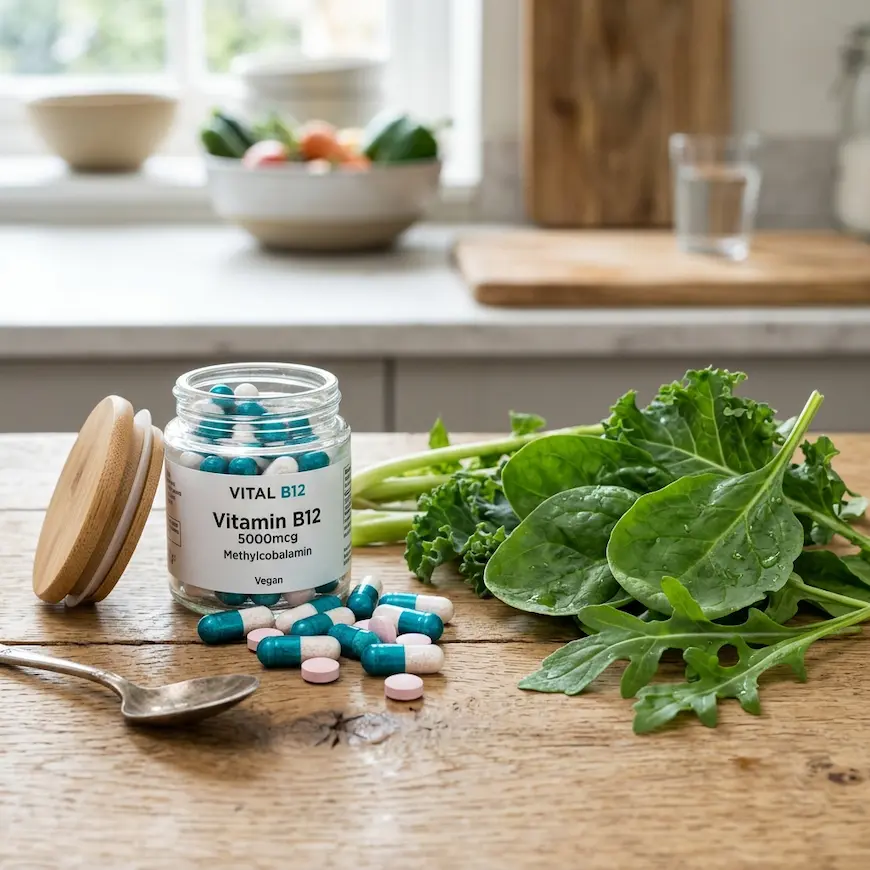
So this one is a daily habit, not an on-demand fix. The signs of magnesium deficiency are worth a look if headaches keep recurring for you. Dietary magnesium shortfalls are common in Western diets heavy on processed food, and most people never connect it to their headache pattern. For absorption, magnesium glycinate and magnesium malate are the most bioavailable and the least likely to cause the loose stools that magnesium oxide can. Start at 200mg and build up.
Heat and cold are dependable natural headache remedies when you match them to the right headache, but the wrong one for the wrong type can make things worse.
Cold is for migraines. Migraines involve dilated blood vessels inside the skull, and cold narrows them, easing the pulsating, throbbing quality of the pain. Put a cold pack or a cloth-wrapped bag of frozen peas on your temples, forehead, or the back of your neck. The cooling effect on blood moving through the temporal artery is what does it, which is why most migraine sufferers reach for cold instinctively.
Heat is for tension headaches. These come from muscle contraction, and heat boosts blood flow to those tight muscles, loosens them, and releases the grip around the skull. Lay a warm compress, heated towel, or heating pad across the back of your neck and upper shoulders for 15 to 20 minutes, aiming at the trapezius and suboccipital muscles.
Heat on a migraine usually makes it worse by dilating vessels that are already too open. Cold on a tension headache tends to do less, since there’s no vascular component to address. Knowing your type from the earlier section tells you which of these natural headache remedies to grab.
Contrast therapy (alternating hot and cold) can help tension headaches with a vascular element: two minutes of heat, one minute of cold, repeated three or four times. The switching creates a vascular pumping effect.
Acupressure is one of the more accessible natural headache remedies, since it needs nothing but your hands and works anywhere.
The most studied point for headache is LI4 (Large Intestine 4), in the fleshy web between thumb and index finger. Press firmly and steadily with the thumb and index finger of the opposite hand for 30 to 60 seconds. A dull ache at the spot is the sensation you want; it means you’re in the right place. Several small trials show LI4 stimulation lowers pain intensity in both tension headaches and migraines, probably by working the spinal cord’s gate-control system and releasing endorphins.
Two more points worth knowing. GB20 (Gates of Consciousness) sits at the base of the skull, in the two hollows on either side of the spine where the neck muscles meet it; press firmly upward with both thumbs for 30 to 60 seconds, which works well for tension headaches coming from suboccipital tightness. PC6 (Pericardium 6) is on the inner wrist, about three finger-widths below the crease, between the two central tendons, and it helps headaches that come with nausea, since it’s the same point used for motion sickness.
These points combine fine with the other natural headache remedies. They’re especially handy when medication isn’t available or isn’t appropriate, and they carry no side effects.
The suboccipital muscles at the base of the skull are the most direct muscular contributor to tension headaches, and they’re among the easiest to reach with targeted stretching.
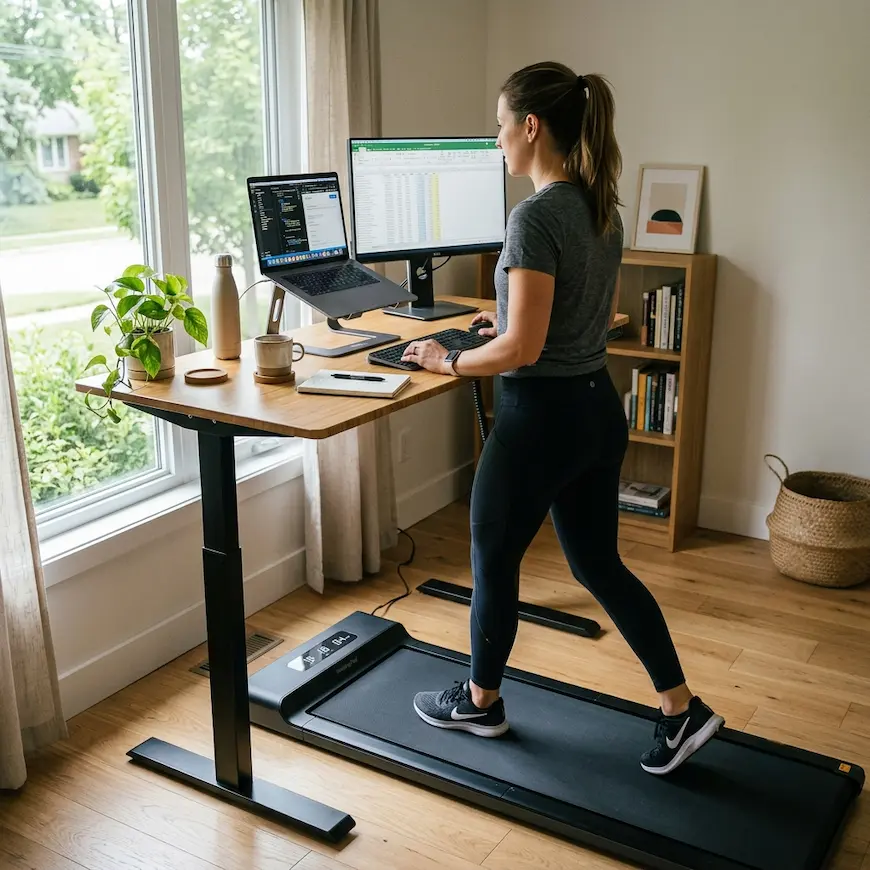
Forward head posture, which afflicts nearly everyone who uses screens, adds about 10 pounds of load to the cervical spine per inch the head sits ahead of the shoulders. With an average head weighing 10 to 12 pounds, a 2-inch forward lean puts roughly 30 pounds on the neck muscles. They fatigue, contract, and refer pain up into the head.
Three stretches have the best evidence for tension headache relief. The first is neck range-of-motion rolls: lower your chin slowly to your chest, roll your head to the right shoulder, back to center, to the left shoulder, and back, never rolling backward (that compresses the cervical vertebrae), 5 to 10 reps, twice a day. The second is chin tucks: sit upright and pull your chin straight back to make a double chin, which repositions the head over the shoulders and stretches the suboccipital muscles directly, held for 5 seconds and repeated 10 times. This is one of the most effective options for people who work at a screen for hours. The third is the upper trapezius stretch: tilt your right ear toward your right shoulder, use your right hand to apply light downward pressure on the left side of your head, hold 30 seconds, then switch sides.
The research on stretching, one of the slower-acting natural headache remedies, points the same way every time: it cuts headache frequency over time rather than delivering instant relief. The payoff builds over two to four weeks of consistent practice.
Stress is one of the most common headache triggers, and its route is direct. Cortisol from acute or chronic stress fires up the sympathetic nervous system, ramps muscle tension (the neck and shoulders especially), and stokes inflammation. For migraine sufferers, cortisol swings can lower the threshold for cortical spreading depression outright.
Controlled breathing flips on the parasympathetic nervous system by stretching out the exhale, which tells the heart to slow and cortisol to fall. The 4-7-8 technique: inhale through the nose for 4 counts, hold for 7, exhale fully through the mouth for 8. Four cycles. The long exhale drives the parasympathetic response harder than the inhale does.
This one is for stress-triggered tension headaches specifically. It won’t unwind a migraine that’s already in full swing, but caught early, when you feel the tension rising, controlled breathing can interrupt the tension cycle before it locks in.
Evidence-backed ways to reduce stress keep showing that the physiological sigh (a double inhale through the nose followed by a long exhale) drops cortisol faster than single-breath methods. Either one earns its place among natural headache remedies for stress-driven pain; the trick is catching the stress response early. A consistent meditation practice (10 to 20 minutes a day) has been shown across multiple trials, including a 2018 review in the Chinese Medical Journal, to reduce chronic headache frequency, pain intensity, and the anxiety that rides along with it.
Diet is both a source of natural headache remedies and one of the most reliable headache triggers, depending on what’s on the plate.
Nitrates and nitrites, in processed meats like hot dogs, deli meat, bacon, and sausage, dilate blood vessels, which is the route to migraine-type pain. It isn’t universal, but in nitrite-sensitive people the effect is consistent and repeatable.
Tyramine, in aged cheeses, fermented foods (soy sauce, miso, vinegar, sourdough), red wine, and some nuts, blocks the enzyme that breaks down norepinephrine, causing vessels to constrict and then dilate. That one-two vascular shift is a reliable migraine trigger in susceptible people.
Caffeine is the paradox. In small acute doses it constricts vessels and sharpens pain relief, which is why it’s in Excedrin. But daily intake over 200mg builds dependence, and when the usual dose runs late, withdrawal starts within 12 to 24 hours and brings a rebound headache. That morning ache before the first coffee, or the weekend one when you sleep in and push coffee back, is usually caffeine withdrawal.
Aspartame, in diet sodas and artificially sweetened products, has a murkier mechanism, but consistent reports and a few small studies tie it to migraine in sensitive people.
On the helpful side, foods that lower systemic inflammation lower your overall susceptibility to headache. The same anti-inflammatory foods that calm cardiovascular and joint inflammation also calm the neuroinflammation that sharpens headache sensitivity. Omega-3s in particular (fatty fish, walnuts, flaxseed) cut the production of prostaglandins and other compounds that sensitize the trigeminal pain pathways. Riboflavin (vitamin B2) and CoQ10 have some evidence for migraine prevention: riboflavin at 400mg a day produced significant reductions in a well-cited Belgian trial, and CoQ10 at 300mg a day helped in a 2005 Neurology trial. Neither is as solid as magnesium, and the American Headache Society lists both as Level C, meaning possible efficacy without enough evidence for a strong recommendation.
This is the most important section in the article, and it’s missing from almost every list of natural headache remedies out there.
Medication overuse headache, sometimes called rebound headache, is a chronic daily headache driven by frequent pain-medication use. It affects an estimated 1 to 2% of people worldwide, and most have no idea their medication is the cause.
The mechanism: frequent pain-medication use makes the nervous system turn down its own built-in pain suppression. The baseline threshold drops. Headaches get more frequent. Each one needs more medication to relieve, which lowers the threshold further. The loop reinforces itself and can run for years.
The criteria: taking OTC pain medication (aspirin, ibuprofen, acetaminophen, naproxen) on 15 or more days a month, or triptans on 10 or more, for over three consecutive months.
Breaking the cycle is genuinely hard and should happen with physician supervision, because withdrawal spikes headache severity for 7 to 10 days before things improve. Most guidelines call for a medication detox followed by preventive treatment, which may include some of the natural headache remedies here, magnesium especially, and possibly prescription preventives depending on the headache type. The NHS guidance on medication overuse headache lays out the withdrawal protocol clearly and is worth reading if you suspect you’re in this cycle.
If you’re taking OTC pain medication more than 10 days a month, none of the natural headache remedies will work consistently until you deal with the overuse first.
Natural headache remedies work well for frequent tension headaches and as preventive tools for episodic migraines. They don’t replace medical evaluation or treatment for certain presentations.
See a physician promptly if any of the following apply:
A headache that comes on suddenly and severely (a “thunderclap headache,” the worst of your life), which can signal a subarachnoid hemorrhage, a medical emergency.
Headache with fever, a stiff neck, or a rash, which can point to meningitis.
Headache with new neurological symptoms (vision changes, weakness, speech difficulty, confusion).
Headache that reliably wakes you from sleep.
Headaches climbing in frequency or severity over weeks with no clear cause.
Headache after a head injury.
A new headache pattern after age 50.
Chronic migraine (15+ headache days a month, 8+ of them migraines) has FDA-approved treatments well beyond the scope of any home remedy. Botox (onabotulinumtoxinA) was approved in 2010 for chronic migraine and has strong trial evidence for cutting headache days by roughly 50% in qualifying patients. CGRP monoclonal antibodies (erenumab, fremanezumab, galcanezumab) are newer preventives with real efficacy. All of these need physician evaluation and a prescription, and their approval rests on large-scale trials, not anecdote.
Here, natural headache remedies serve as an addition to medical treatment, not a substitute for it. Working with a headache specialist rather than a general practitioner tends to produce much better outcomes in complex migraine cases. Managing the underlying stress load that compounds headache frequency is one place where lifestyle approaches genuinely move the needle even for medicated patients.
For dehydration-triggered headaches, 500ml of water can ease the pain within 30 minutes. For tension headaches, stacking chin-tuck stretches with firm pressure on the LI4 point (the thumb-index web) and a cold or warm compress beats any single one of the natural headache remedies on its own. The cold-or-warm call depends on the type: cold for throbbing migraine-type pain, warm for the pressure of a tension headache.
Magnesium works as a preventive, not an acute fix. Daily supplementation of 400 to 600mg (as glycinate or malate) over four to six weeks reliably reduces migraine frequency in people who are deficient. It won't stop a headache that's already started, which is why it sits best inside a broader set of natural headache remedies that also cover trigger identification and stress management. If headaches are frequent for you, getting magnesium checked with a red blood cell magnesium test (more accurate than standard serum) is a worthwhile first step.
This is a common belief that the research doesn't really support. Most people with hypertension get no headaches from it. A severe hypertensive crisis (above 180/120) can cause headache, but routine high blood pressure usually doesn't. The natural headache remedies that double as vascular-health habits, consistent aerobic exercise, a lower-sodium diet, and stress management, support healthy blood pressure too, but the link is about lowering overall vascular reactivity, not treating a blood-pressure headache.
Morning headaches have a few usual causes: sleep apnea (overnight drops in oxygen shift pain sensitivity), caffeine withdrawal (if you drink coffee soon after waking, the morning ache is often withdrawal from yesterday's caffeine), teeth grinding (bruxism strains the jaw and suboccipital muscles), and dehydration from the overnight fast. Chronic fatigue and sleep quality are worth investigating before pinning morning headaches on anything else. Sleep apnea in particular is underdiagnosed and a very common cause of morning headache that won't respond to the usual natural headache remedies.
Track how many days a month you take any OTC pain medication for headache. If it's 10 to 15 days or more across three consecutive months, medication overuse headache is the likely primary diagnosis. The telltale pattern: headaches most days, often worse in the morning, that respond briefly to medication and then return fast, and that have been worsening over months. Remedies don't work consistently against an MOH backdrop, because the nervous system's pain threshold stays chronically low. Dealing with the overuse first is the prerequisite.
Both, depending on the pattern. A single cup during an active headache can give mild relief by constricting vessels, which is why caffeine is in combination medications like Excedrin. But regular daily intake above 200mg (about two cups) builds dependence, and missing the usual dose by a couple of hours triggers a withdrawal headache. If you're a daily coffee drinker with frequent headaches, the single highest-impact natural headache remedy you can test is a slow caffeine taper over four to six weeks. Withdrawal headaches during the taper are expected and temporary.
This article is for educational purposes only and isn’t a substitute for professional medical care. Headaches can occasionally signal serious conditions. If you have a sudden severe headache, a headache with neurological symptoms, or any change in your usual pattern, seek medical evaluation promptly. Every medication named here, including prescription migraine treatments, requires evaluation and a prescription from a licensed physician.
Mimo Karam is the founder and writer at LifestyleMine. She writes about daily habits, nutrition, sleep, and emotional wellness, turning research into practical advice for people who want to live healthier without making it complicated.