Author: Paulo Coelho
Published: 1988
Genre: Fiction, Philosophy, Self Help
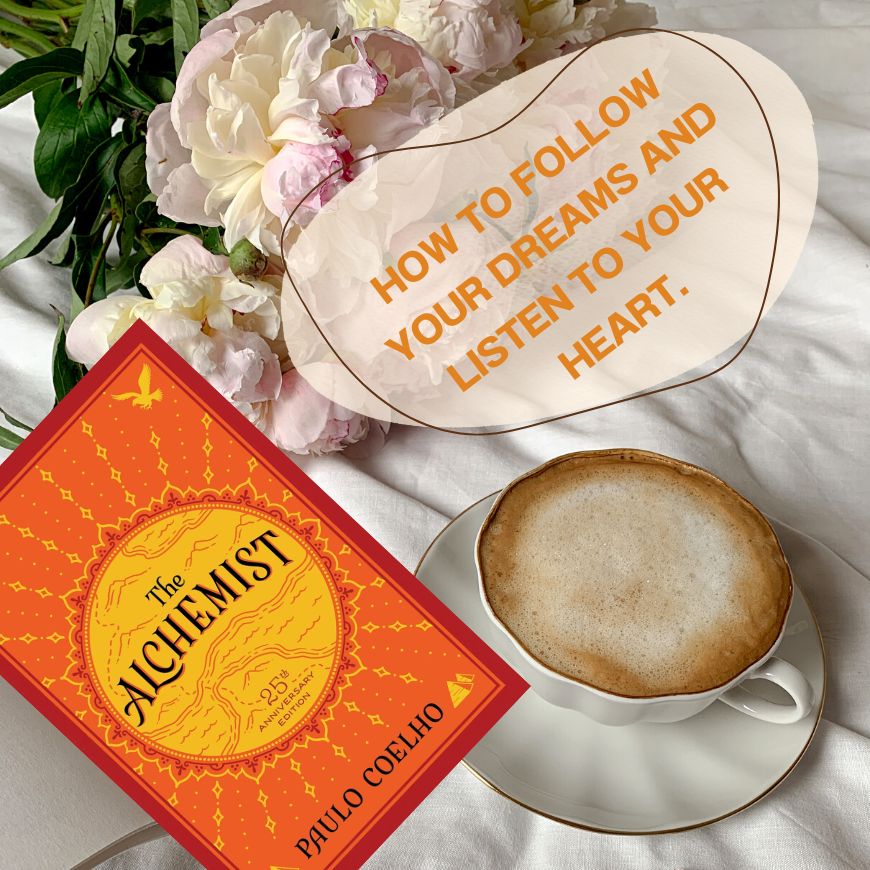
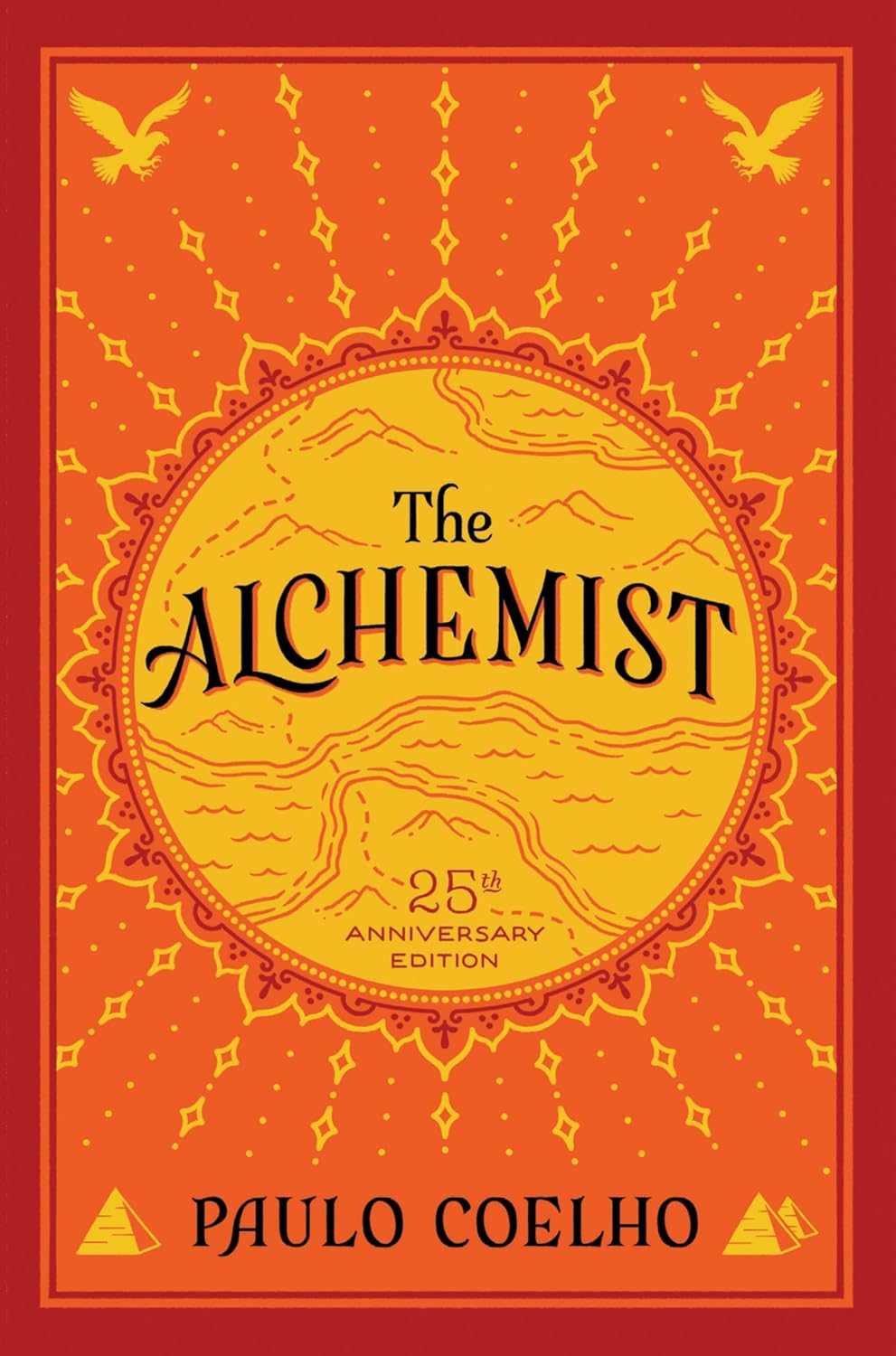
What is The Alchemist about? A complete plot summary
Quick Answer: The Alchemist is a 1988 philosophical novel by Paulo Coelho following Santiago, an Andalusian shepherd who abandons his flock to chase a recurring dream about treasure buried near the Egyptian pyramids. The journey transforms him, and in the end reveals that the treasure was where he started. It is a book about the cost, and the necessity, of following your own purpose.
This The Alchemist summary begins with Santiago, a young shepherd from Andalusia, Spain, who sleeps one night under a sycamore tree at an abandoned church and has a recurring dream: a child takes him to the Egyptian pyramids and shows him where a treasure is buried. He seeks out a gypsy woman who interprets dreams, and she tells him the dream is prophetic. This The Alchemist summary keeps Santiago’s choices front and center.
Before he can dismiss the idea, an old man named Melchizedek approaches him in a village square. He claims to be the King of Salem, and he reveals that Santiago has a Personal Legend, a specific life purpose the universe wants him to fulfill. Melchizedek gives Santiago two stones, Urim and Thummim, to help him read omens, and urges him to sell his sheep and travel to Africa. The Alchemist summary treats that push as the real start of the story.
Santiago does. Within hours of arriving in Tangier, he is robbed by a stranger and left with nothing. Forced to find work, he takes a job with a crystal merchant and spends nearly a year rebuilding his savings. During that time he transforms the merchant’s failing shop, and himself. When his savings exceed what his flock was worth, Santiago faces a choice: return home in comfort or keep going toward the pyramids.
He continues.
Santiago joins a desert caravan, where he meets an Englishman searching for a 200-year-old alchemist living at an oasis called Al-Fayoum. At the oasis, Santiago meets Fatima, whose beauty nearly convinces him to stop. He also meets the Alchemist himself, who agrees to guide him to the pyramids on one condition: Santiago must face the ultimate test of his Personal Legend. From here The Alchemist summary becomes a test of nerve more than luck.
After surviving tribal warfare and showing he can communicate with the desert and the wind through pure presence, Santiago finally reaches the pyramids. He digs for treasure and finds nothing. A soldier who catches him mocks him, then mentions his own recurring dream: treasure buried under a ruined church in Spain, near a sycamore tree.
Santiago recognizes the church. He returns home and finds the treasure exactly where his journey began. That twist is what most people remember, but the rest of this The Alchemist summary is where the actual meaning lives.
The Personal Legend: the core concept explained
Quick Answer: A Personal Legend is Coelho’s term for a person’s unique life purpose: the thing you most want to accomplish, which the universe actively helps you achieve if you pursue it. The four obstacles standing between most people and their Personal Legend are social conditioning, fear of losing love, fear of failure after early progress, and fear of actually achieving the dream.
The Personal Legend is the philosophical center of the novel, and no The Alchemist summary is complete without it. Melchizedek defines it directly: “It’s what you have always wanted to accomplish. Everyone, when they are young, knows what their Personal Legend is. At that point in their lives, everything is clear and everything is possible. They are not afraid to dream.” Every The Alchemist summary tends to circle back to that one sentence.
Coelho identifies four obstacles that cause people to abandon their Personal Legend.
Obstacle 1: Social conditioning. From childhood, the world communicates, through parents, teachers, and convention, that your specific dream is impractical, dangerous, or selfish. The accumulated weight of those messages convinces most people to stop before they start. The Alchemist summary returns to this obstacle more than any other.
Obstacle 2: Love. When you meet someone you love, you fear that pursuing your dream means leaving them behind. Santiago nearly abandons his journey for Fatima at the oasis. Coelho’s counterintuitive answer is that someone who genuinely loves you will not ask you to betray your purpose, and that the universe will reunite you if the love is real.
Obstacle 3: Fear of defeat. After initial progress, real setbacks arrive. Santiago is robbed in Tangier and nearly turns back. Coelho frames this as the universe testing commitment, not punishing ambition. A careful The Alchemist summary reads the robbery as a turning point, not a tragedy.
Obstacle 4: Fear of realizing the dream. The most counterintuitive obstacle is the fear that succeeding will leave you with nothing to pursue, or that you are not worthy of what you wanted. The guilt of achievement. The Alchemist summary lingers here because most readers recognize it.
This four-obstacle framework is what separates The Alchemist from simple “follow your dreams” advice. The book admits the obstacles are real, the path is costly, and most people stop at one of these four points, not because they lack desire but because they lack a map of the territory. That map is what a good The Alchemist summary is really trying to hand you.
The Soul of the World and the language of omens
Quick Answer: The Soul of the World is Coelho’s idea of an interconnected universal spirit that communicates through signs and coincidences, what the book calls “the language of the world.” Santiago learns to read these omens across his journey: the two hawks, the recurring dream, chance encounters that carry meaning. Read it literally or metaphorically, the practical effect is the same: trained attention reveals what inattention misses.
One of the most distinctive elements in any The Alchemist summary is the idea that reality itself has a language. Coelho calls it the Language of the World, or the Soul of the World, a spiritual substrate that speaks through coincidences, recurring patterns, dreams, and what the book calls omens. The Alchemist summary leans on this idea heavily.
This concept shows up across traditions: the Stoic logos (the rational order underlying nature), Carl Jung’s synchronicity (meaningful coincidences that carry psychological weight), and several religious frameworks. Coelho folds them into an accessible narrative.
For Santiago, reading omens is a learnable skill, not a mystical gift. When he watches two hawks fighting and reads it as a warning of an impending tribal attack on the oasis, he saves hundreds of lives. The Alchemist praises him: “You’ve learned that the Soul of the World is generous to those who dare.” Any The Alchemist summary has to take the omens seriously, even read skeptically.
Whether or not you accept the metaphysics, the behavioral mechanism is observable. When a person commits to a specific goal, the brain’s reticular activating system starts filtering information differently, making relevant patterns and opportunities more visible. The universe does not rearrange itself; attention does. Coelho’s mysticism and modern cognitive science describe the same behavioral pattern from opposite directions. The Alchemist summary sits comfortably at that intersection.
The four core themes of The Alchemist
Quick Answer: The four central themes are following your Personal Legend despite obstacles, the journey as transformation rather than the destination as reward, reading the language of omens as a practice of trained attention, and love as a force that should expand rather than constrain each person’s purpose. Each theme plays out through Santiago’s specific experiences rather than through abstraction.
The themes are best understood through specific moments in the narrative, so this part of The Alchemist summary walks through them one at a time.
Theme 1: Purpose over security. Santiago sells his entire flock, his livelihood and identity, to chase a dream. Every time he reaches stability (the crystal shop, the oasis), the story asks whether comfort is a reason to stop. Coelho’s answer is consistently no: comfort that disconnects you from your purpose is just another version of Obstacle 1.
Theme 2: The journey as the real content. Santiago begins the story able to read “only a book about people who had died.” By the end, he can speak to the wind and the desert. That transformation does not happen because he found treasure. It happens because of the merchant who taught him courage, the Englishman who taught him that knowledge must be lived rather than catalogued, Fatima who taught him that love can survive distance, and the Alchemist who taught him that the Soul of the World speaks to those who listen. The destination is a frame; the journey is the content. This is the line of The Alchemist summary that readers quote most.
Theme 3: Attention as a practice. The Language of the World is not superstition. It is practiced attention. Santiago learns to notice what caravan elders notice, to observe the desert the way the Alchemist observes it. In secular terms, this is what researchers call domain expertise, the trained perception that develops in any field when someone pays sustained attention over time. The Alchemist summary calls this attention a skill, not a gift.
Theme 4: Love that expands rather than constrains. Fatima’s role is often misread. She does not hold Santiago back. She explicitly releases him: “If you go away, you will return to me. If you don’t, you were never truly mine.” Coelho’s vision of love is one that enlarges each person’s space rather than shrinking it. The Alchemist summary treats Fatima as a teacher, not an obstacle.
The Alchemist’s most memorable quotes (and what they actually mean)
Quick Answer: The most famous line, “When you want something, all the universe conspires in helping you to achieve it,” describes committed intention and changed attention, not passivity or magical thinking. Coelho’s universe conspires; it does not deliver. Santiago still has to cross a desert, get robbed, work a year at a crystal shop, and nearly die in tribal warfare before he finds anything.
The quotes circulate widely, but context changes their meaning, and a careful The Alchemist summary has to put them back in context.
“When you want something, all the universe conspires in helping you to achieve it.” This appears early, spoken by Melchizedek. The word “want” in the original Portuguese (quer) carries a sense closer to “deeply will” than to “passively wish.” The sentence describes the effect of committed pursuit on attention and opportunity recognition, not a promise of effortless success. This The Alchemist summary stresses the work that the famous line leaves out.
“It’s the possibility of having a dream come true that makes life interesting.” Said by Santiago in the opening pages. The engine is not certainty of success but the vitality of pursuing something uncertain. Books about finding your purpose keep returning to this insight: it is the active search for meaning, more than its achievement, that most correlates with wellbeing. The Alchemist summary keeps pointing back to the search itself.
“The secret of happiness is to see all the marvels of the world, and never to forget the drops of oil on the spoon.” From a parable within the novel. A wise man sends a young man to observe his palace for two days while balancing two drops of oil on a spoon. The young man sees nothing the first time (focused entirely on the oil) and spills the oil the second time (distracted by everything else). The lesson: presence and purpose have to coexist. Neither awareness without intention nor intention without awareness is enough. The Alchemist summary treats that balance as the whole lesson.
“Wherever your heart is, there you will find your treasure.” Spoken by the Alchemist. The treasure under the church was always there. Santiago had to travel to Egypt to discover what was already home. Most people do not know what they already have until distance, loss, or contrast reveals it. The Alchemist summary saves this reveal for the final pages.
“Maktub.” Arabic for “it is written.” Used throughout the novel whenever a character accepts an outcome they did not choose. Coelho deploys it not as fatalism but as surrender, the recognition that some forces are larger than our resistance to them, and that accepting this is a form of clarity rather than defeat. The Alchemist summary uses this word at every hinge point.
What psychology says about living with purpose
Quick Answer: Research consistently shows that people with a strong sense of life purpose have lower rates of depression, better physical health outcomes, and slower cognitive decline. A 2010 Rush University study of more than 900 older adults found that those with the highest purpose-in-life scores had a 2.4-fold lower risk of developing Alzheimer’s disease over seven years. Purpose is not merely inspirational. It is measurably protective. The Alchemist summary borrows its weight here from the research, not the novel.
Books about finding your purpose sell in every era because the research on what purposeful living produces is striking enough to make the search feel urgent. Three findings stand out, and they give this The Alchemist summary an evidence base the novel itself never claims.
Purpose protects the brain. Boyle et al. (2010) followed more than 900 community-dwelling older adults over seven years and found that those scoring highest on a purpose-in-life measure had a 2.4-fold reduced risk of developing Alzheimer’s disease, independent of age, education, and depression (Boyle et al., Arch Gen Psychiatry 2010). The mechanism is not fully understood, but the finding has held up across multiple aging cohorts. The Alchemist summary uses this study to ground its claims about purpose.
Meaning correlates with wellbeing independent of momentary happiness. Steger et al. (2006) developed and validated the Meaning in Life Questionnaire (MLQ) and found that both the presence of meaning and the active search for meaning correlate with life satisfaction, positive affect, and reduced depression. The active search for meaning predicted greater engagement with life even when present meaning was low (Steger et al., J Couns Psychol 2006, doi:10.1037/0022-0167.53.1.80). This supports the novel’s core logic: the journey toward purpose matters even before the treasure is found. The Alchemist summary treats that as its central claim.
Purpose-building interventions have measurable, lasting effects. Seligman et al. (2005) tested a set of positive psychology exercises in a large online study and found that the exercises involving meaning and engagement produced some of the most durable wellbeing gains, larger than exercises focused purely on positive emotion (Seligman et al., Am Psychol 2005, doi:10.1037/0003-066X.60.5.410). The exercise with effects still measurable at six months was “using signature strengths in a new way,” which requires identifying and acting on core values. The Alchemist summary connects this directly to the Personal Legend exercise.
The Alchemist is a narrative version of this research. It does not cite studies, but it captures through allegory what the data consistently shows: pursuing something you genuinely care about, despite real obstacles, is one of the most reliable paths to a life that feels well-lived. The Alchemist summary and the research land in the same place.
Practical lessons from The Alchemist you can use today
Quick Answer: The most actionable lesson is not “follow your dreams” but “write your Personal Legend as a single concrete sentence, identify which of the four obstacles you are currently at, and take the smallest possible next step today.” Santiago did not reach the pyramids by wishing. He sold his flock, found work, saved money, joined a caravan, and kept moving. The philosophy is inseparable from the action it requires.
Personal development books often fail at the gap between inspiration and implementation. Here is how the specific lessons of this The Alchemist summary translate into practice.
Write your Personal Legend as a single sentence. Not a vague aspiration (“I want to be successful”) but a specific, testable statement. Santiago’s was clear: reach the Egyptian pyramids and find the treasure. Clarity determines whether you can recognize progress and whether you can name the obstacles blocking you. The Alchemist summary makes this the first practical step.
Name the obstacle you are currently at. Using Coelho’s four-obstacle framework: are you held back by what others told you was impossible (Obstacle 1)? By a relationship that feels threatened by your ambition (Obstacle 2)? By a setback after early success (Obstacle 3)? By the fear of actually succeeding (Obstacle 4)? Naming the obstacle turns a vague paralysis into a specific problem with a specific solution. The Alchemist summary treats naming the obstacle as half the work.
Use habit architecture to make the first step automatic. As our review of Atomic Habits by James Clear covers in detail, the gap between intention and action closes most reliably through environment design and identity-based habit formation. If your Personal Legend requires writing daily, the habit of opening a notebook before your morning coffee is more durable than relying on daily motivation. The Alchemist summary points readers toward habit design for exactly this reason.
Treat setbacks as information, not verdicts. Santiago’s robbery in Tangier delayed his journey by nearly a year. He used that time to build skills (business judgment, Arabic, knowledge of trade routes) he would need later. Every obstacle in the novel, including the ones that feel catastrophic, turns out to have been preparation. The strategic question after any setback is not “why did this happen to me” but “what is this making possible that was not possible before.” The Alchemist summary frames every setback this way.
Read slowly, not for plot. The Alchemist is under 200 pages. Its value is not in knowing the destination, because the narrative structure is transparent from the first chapter. The value is in the quality of attention it trains at specific moments: the drops-of-oil parable, the year at the crystal shop, the desert conversation before the wind scene. Knowing the ending does not diminish these. The Alchemist summary is meant to deepen a reread, not replace one.
Honest criticism: what The Alchemist gets wrong
Quick Answer: The Alchemist’s central weakness is survivorship bias. The novel is told entirely from the perspective of someone whose Personal Legend worked out. It has no language for people who sold their flocks, crossed deserts, and found no treasure. The message is coherent as inspiration but incomplete as philosophy. For readers navigating genuine loss or constrained circumstances, the limits are real.
No honest The Alchemist summary is complete without naming what the book does not do well.
The survivorship bias problem. Santiago’s quest succeeds. The novel does not tell the story of the shepherd who sold his sheep, got robbed in Tangier, stayed at the crystal shop until he was old, and never found the pyramids. “The universe conspires to help those who pursue their Personal Legend” is only visible in retrospect, in success stories. For people mid-journey, or post-failure, this framing offers little. An honest The Alchemist summary has to say so plainly.
The privilege of mobility. Santiago can abandon his flock and travel to Africa because he has no dependents, no debt, and lives in a society that lets him move freely. The novel does not speak to readers whose obligations (children, aging parents, financial survival) make “following your Personal Legend” a choice they cannot currently afford. The metaphor needs a context that not everyone has. The Alchemist summary should name that limit rather than hide it.
The vagueness of the Personal Legend concept. Coelho never explains how you distinguish a genuine Personal Legend from a passing desire, an addiction, or a destructive fixation. The novel trusts the reader to already know the difference. Readers who cited the book as inspiration for genuinely unwise decisions also believed they were following their Personal Legend. The Alchemist summary cannot resolve this gap, and neither does the novel.
The metaphysics are unfalsifiable. The Soul of the World either exists or it does not, and no human experience can settle the question. Coelho presents it as fact. Readers who experienced the universe conspiring against them despite sincere commitment are not addressed.
These criticisms do not make The Alchemist a bad book. They make it a partial one, most useful for readers stuck at Obstacle 1 or Obstacle 3, who need permission to begin or to continue. That is the audience this The Alchemist summary serves best. For readers navigating genuine loss or structural constraint, other books serve better.
Books to read after The Alchemist
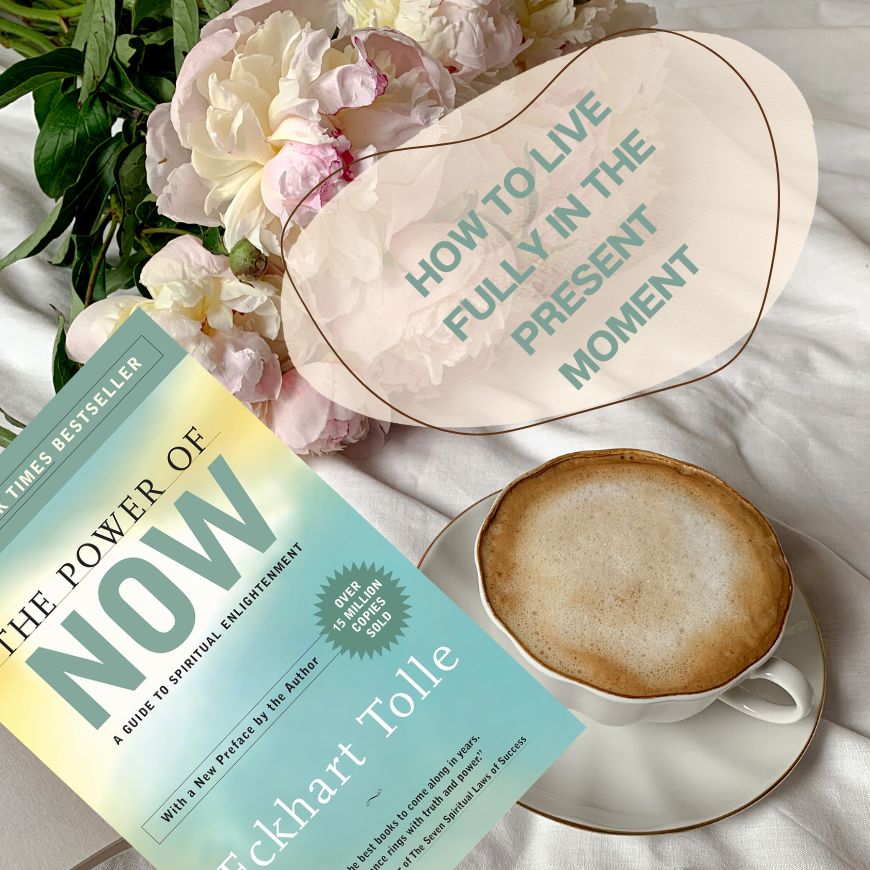
Quick Answer: The three books that best extend The Alchemist are Viktor Frankl’s Man’s Search for Meaning (purpose under extreme constraint, the research foundation for Personal Legend under impossible conditions), Eckhart Tolle’s The Power of Now (presence as a practice, what Coelho calls “living in the soul of the world”), and BJ Fogg’s Tiny Habits (the practical architecture for taking the first step toward any Personal Legend when motivation is low).
If this The Alchemist summary has you wanting to go deeper, these are the best next reads.
| Book | Author | Core connection | Best for |
|---|---|---|---|
| Man’s Search for Meaning | Viktor Frankl | Purpose under extreme constraint; logotherapy as the psychology behind Personal Legend | Readers questioning whether purpose is meaningful when circumstances are terrible |
| The Power of Now | Eckhart Tolle | The present moment as the only place the Soul of the World can be heard | Readers drawn to The Alchemist’s mystical and spiritual side |
| Tiny Habits | BJ Fogg | B=MAP: how to make the first step toward any goal small enough to actually take | Readers who know their Personal Legend but cannot start |
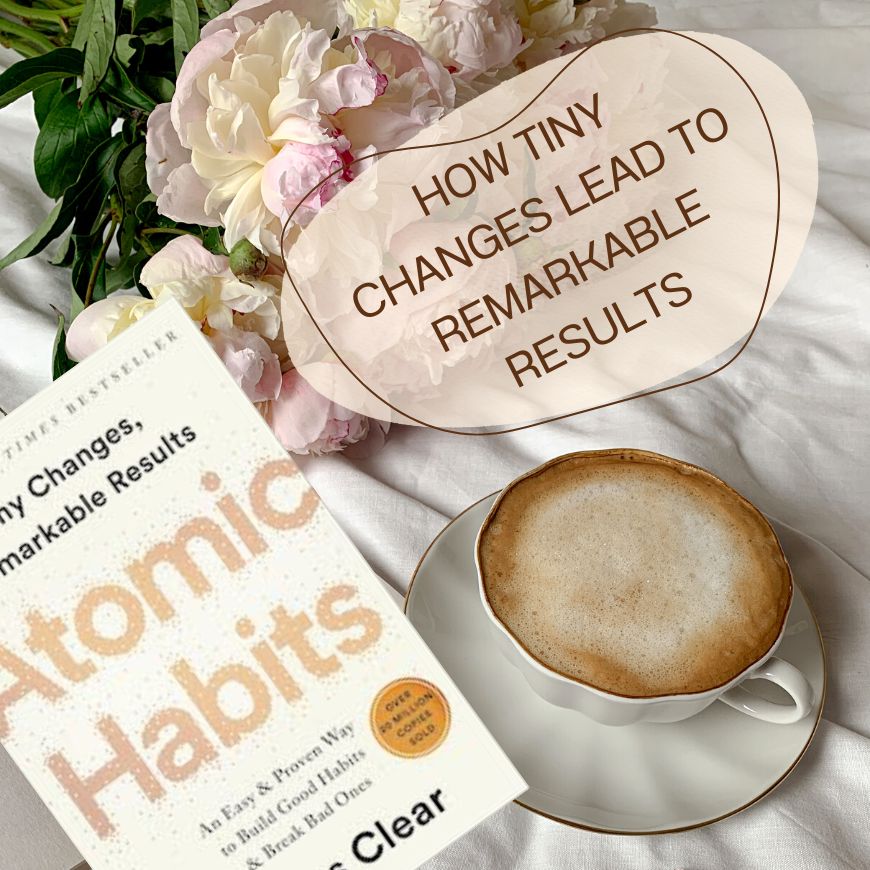
| Atomic Habits | James Clear | Identity-based habit formation: who you become on the journey matters as much as the destination | Readers who want behavioral science behind Santiago’s transformation |
| The Zahir | Paulo Coelho | Coelho’s later work revisiting obsession and purpose with more psychological complexity | Readers who want more Coelho after The Alchemist |
Our full reviews of The Power of Now, Tiny Habits, and Atomic Habits cover each book in full if you want to continue this reading path. For self-discovery books beyond Coelho, Man’s Search for Meaning is the most direct follow-up; Frankl’s argument that meaning can be found even in suffering answers the survivorship-bias criticism of The Alchemist head-on.
Frequently asked questions
What are the main symbols in The Alchemist?
The most important symbols are the treasure (self-knowledge and ultimate purpose), the desert (the space between who you are and who you are becoming), the Alchemist himself (the guide who appears when the student is ready), the lead-to-gold transformation (the personal equivalent of turning base material into something refined), and the two stones Urim and Thummim (the ability to recognize omens, permission and refusal made tangible).
Is The Alchemist fiction or self-help?
It is both. Coelho published it as a novel, and it is shelved as fiction, but it reads more like a philosophical parable in the tradition of Antoine de Saint-Exupery's The Little Prince than like conventional literary fiction. Its characters are allegorical rather than psychologically realistic. Its main job is to transmit a philosophy of life through story.
What is the difference between The Alchemist and other Paulo Coelho books?
The Alchemist is Coelho's most accessible and universally applicable work. His later books, including The Valkyries, By the River Piedra I Sat Down and Wept, and Veronika Decides to Die, are more psychologically complex and autobiographically grounded. The Alchemist is most readers' entry point because the allegory is clean and the message is universal.
Does The Alchemist have a sequel?
No direct sequel exists. Coelho later wrote The Zahir, which revisits obsession and purpose with greater psychological complexity, and The Valkyries, which draws on some of the same spiritual themes. Neither continues Santiago's story.

Mimo Karam is the founder and writer at LifestyleMine. She writes about daily habits, nutrition, sleep, and emotional wellness, turning research into practical advice for people who want to live healthier without making it complicated.