Author: BJ Fogg, PhD
Tags: how to build habits, habit change tips, start small habits, abc formula habits, how to break bad habits.
What is the Tiny Habits BJ Fogg method?
Quick Answer: The Tiny Habits BJ Fogg method is built on one insight: behavior change fails because people start too big, not because they lack motivation. The method uses three parts. An Anchor (an existing habit), a Tiny Behavior (scaled to 30 seconds or less), and a Celebration (an immediate positive emotion). Together these three elements wire new behaviors into neural pathways without depending on motivation or willpower.
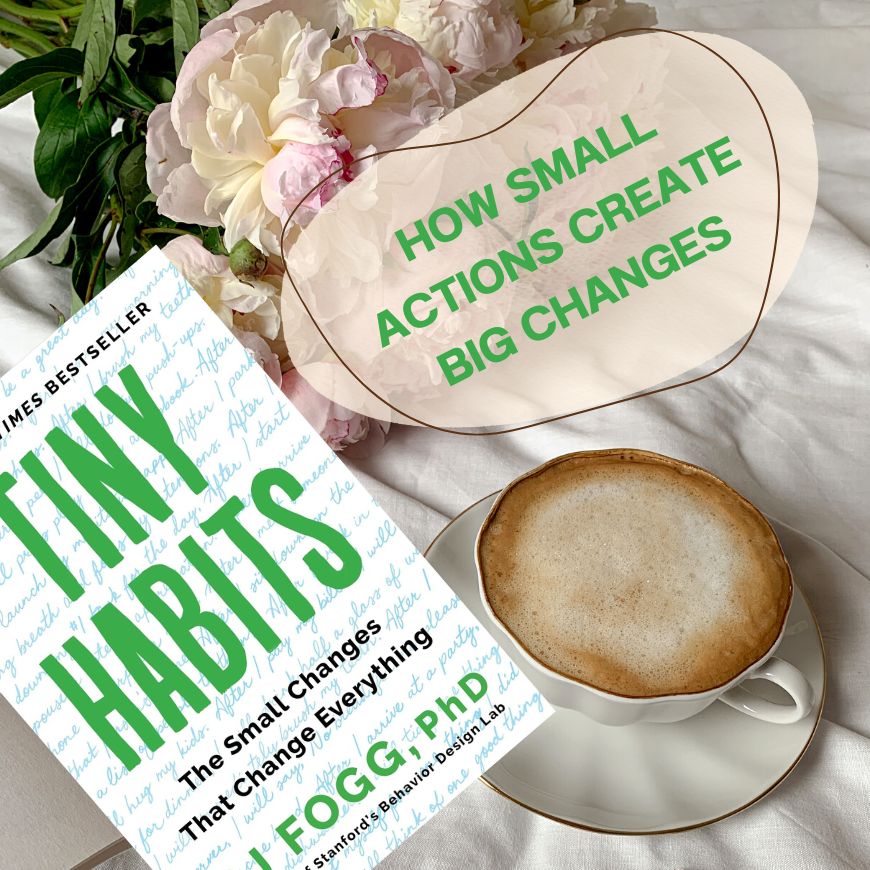
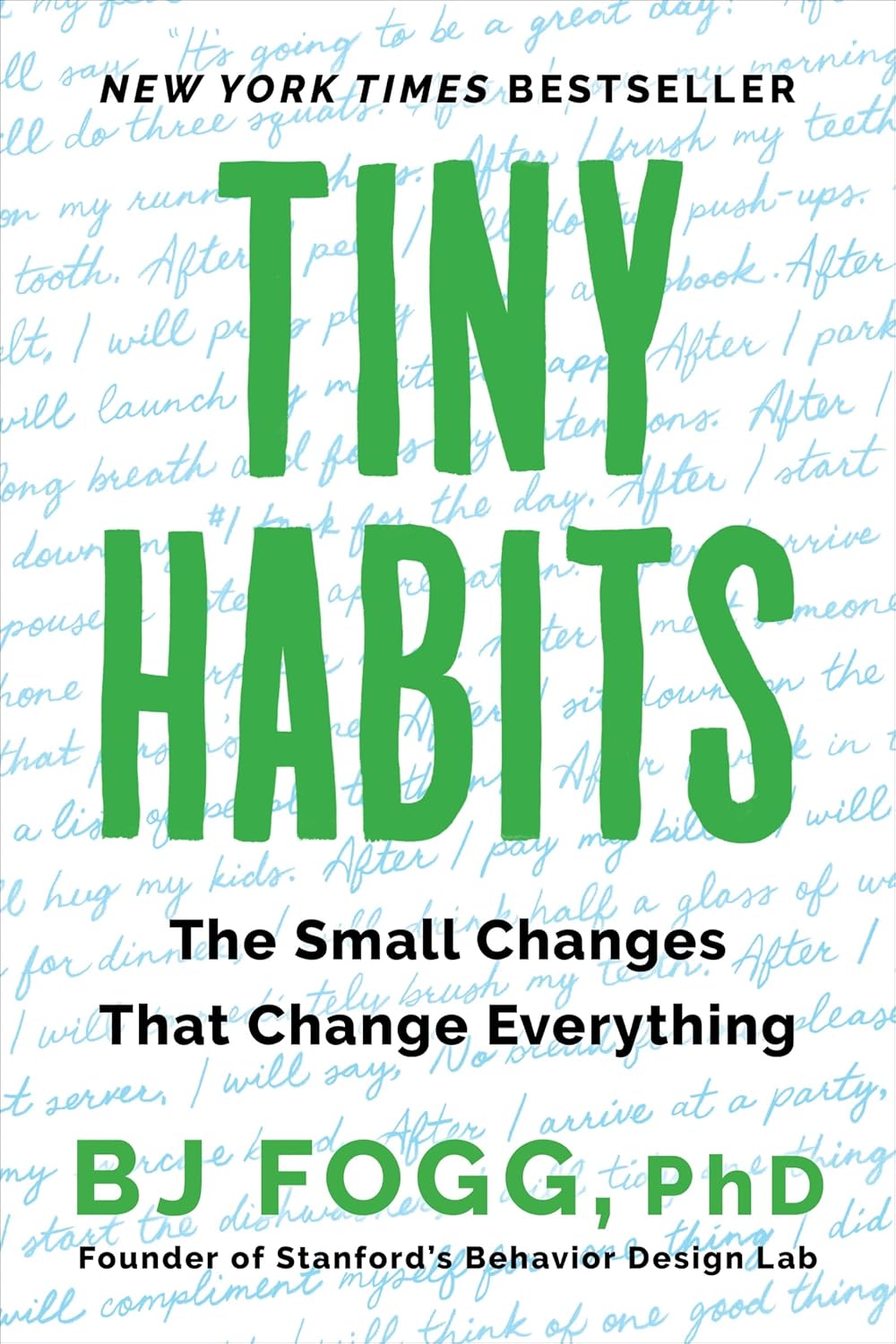
BJ Fogg has spent more than 20 years running the Behavior Design Lab at Stanford University, and Tiny Habits is the distillation of that research into a method anyone can apply right away. The book was a bestseller and is now used in corporate wellness programs, clinical behavior change settings, and personal development communities.
What makes the Tiny Habits BJ Fogg approach unusual among self improvement books is that it does not ask you to be more motivated or more disciplined. It argues, with supporting behavioral science, that motivation is the wrong variable to optimize. The right variables are Ability (making the behavior easy enough to always do) and Prompt (anchoring the behavior to something that reliably happens).
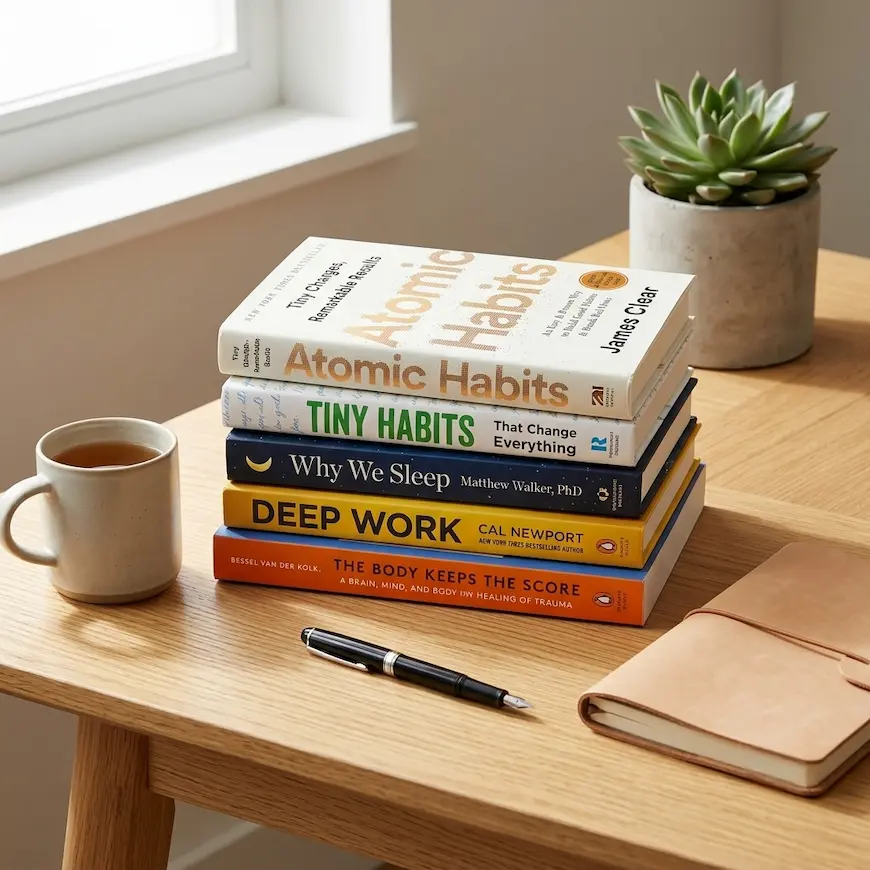
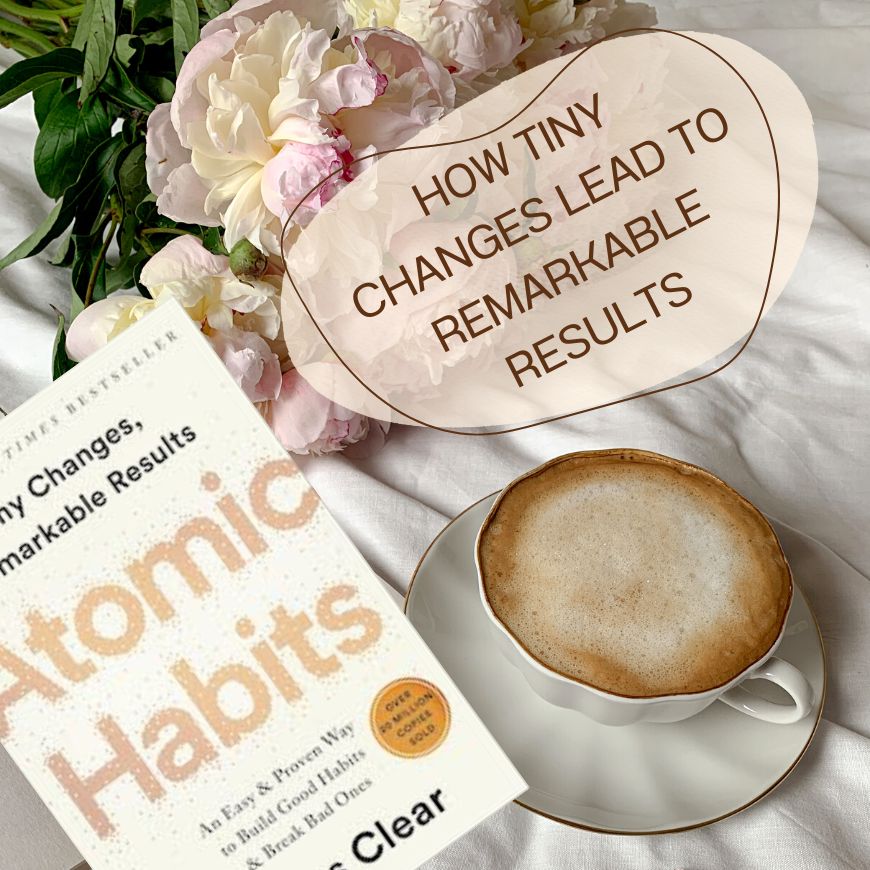
If you have read James Clear’s Atomic Habits and found it useful but still struggle with consistency, Fogg’s model addresses the exact gap: what to do when even a well-designed system still needs motivation you do not always have. Where Clear’s system is comprehensive, the Tiny Habits BJ Fogg method is deliberately minimal. Both are worth reading, but they solve slightly different problems.
The Fogg behavior model: B = MAP
Quick Answer: The Fogg behavior model says a behavior happens when Motivation, Ability, and Prompt converge at the same moment. Written as B=MAP: Behavior = Motivation × Ability × Prompt. If any one of the three is missing, even if the other two are strong, the behavior does not happen. The Tiny Habits BJ Fogg method specifically targets Ability, reducing it so far that even minimal Motivation is enough to cross the behavior threshold.
The B=MAP model is the scientific framework underlying everything in the book, and understanding it is what makes the Tiny Habits BJ Fogg method make sense rather than feeling like another collection of habit tips.
Motivation (M): Your desire or willingness to do the behavior at that moment. Fogg’s key point is that motivation fluctuates constantly. It is high when you are inspired and low when you are tired or overwhelmed. Any system that depends on consistently high motivation will fail during the inevitable low days.
Ability (A): How easy the behavior is to do. Fogg maps this on a scale from “hard” (requires significant time, money, or effort) to “easy” (can be done in seconds without special resources). Ability is stable. It does not swing the way motivation does.
Prompt (P): A cue that triggers the behavior at a specific moment. Without a prompt, even high motivation and high ability produce nothing, because the person simply does not think to do the habit at the right time.
Fogg’s research identified an “Action Line,” a threshold above which a behavior happens and below which it does not. That threshold shifts based on Motivation. When motivation is high, you can do difficult (low-Ability) behaviors. When motivation is low, only easy (high-Ability) behaviors make it over the threshold.
The Tiny Habits BJ Fogg system targets Ability so aggressively, scaling behaviors to 30 seconds or less, that they sit far above the Action Line no matter how your motivation runs that day. The behavior happens whether you feel like it or not. This is why flossing one tooth works as a habit foundation. It requires almost no ability, so it succeeds on the days when you are tired, sick, or discouraged.
The tiny habit recipe: anchor + behavior + celebration
Quick Answer: A Tiny Habit Recipe has three parts: “After I [ANCHOR], I will [TINY BEHAVIOR]. Then I will [CELEBRATE].” The Anchor is an existing, reliable habit that serves as the prompt. The Tiny Behavior is scaled to 30 seconds or fewer. The Celebration happens immediately at the moment of completion, not hours later, to lock in the neural circuit through dopamine release.
The recipe format is the most immediately usable tool in the Tiny Habits BJ Fogg framework. Fogg provides hundreds of examples; here are a few across common goals.
Health habits:
- “After I pour my morning coffee, I will do two push-ups. Then I will say ‘I’m getting stronger.'”
- “After I sit down for dinner, I will take three deep breaths. Then I will smile.”
- “After I get into bed, I will think of one thing I am grateful for. Then I will feel the calm of that thought.”
Productivity habits:
- “After I open my laptop in the morning, I will write my top three priorities for the day. Then I will feel the satisfaction of starting with clarity.”
- “After I finish a meeting, I will write one action item. Then I will give myself a mental fist bump.”
Medical compliance:
- “After I brush my teeth in the morning, I will take my medication. Then I will feel good about taking care of myself.”
The specificity of the Anchor matters. “After I eat breakfast” is too vague, because breakfast varies. “After I put my coffee cup on the counter after my first sip” is specific and reliable. The more precisely you pin down the Anchor, the more reliably the Prompt fires.
The Tiny Habits BJ Fogg program recommends starting with 3–5 recipes at once, not one at a time and not 10. Three to five is enough to build momentum without overwhelming any single behavior. Supplements work well here too: a daily dose of creatine is a clean tiny habit because the anchor and the behavior are both obvious (“After I set out my morning coffee, I will take my creatine”).
Why ability beats motivation: the threshold graph
Quick Answer: Fogg maps behaviors on a two-axis graph: Motivation (vertical) and Ability (horizontal, from “hard to do” to “easy to do”). The Action Line runs diagonally. Behaviors above it happen; behaviors below it don’t. As a habit gets easier (moves right on the Ability axis), the Motivation it needs drops. The Tiny Habits BJ Fogg method exploits this by pushing behaviors so far right on the Ability axis that almost no Motivation is required.
This is one of those behavior change ideas that feels obvious in hindsight but gets ignored by an industry that defaults to motivational content rather than design.
Compare “go to the gym every day” (hard to do, far left on the Ability axis, needs high motivation) with “put on workout clothes after waking” (easy to do, far right on the Ability axis, needs almost no motivation). Both are steps toward fitness. Only one succeeds reliably, because only one works across the full range of daily motivation levels.
A 2007 review of habit research in Psychological Review (Wood & Neal) found that habits form most reliably when the behavior is performed consistently in the same context, not when the person is highly motivated. The contextual cue (the Anchor) drives the behavior more reliably than internal motivation does. The Tiny Habits BJ Fogg system is designed around exactly that finding.
The practical takeaway is counterintuitive: if a new habit requires you to feel motivated to do it, you have not made it tiny enough. Keep scaling down until the behavior succeeds on your worst day. Then grow it from there. In practice that means picking the smallest version of the behavior you can imagine, then shrinking it again.
The celebration: why “shine” wires habits in
Quick Answer: Fogg’s most distinctive contribution is the Celebration technique. Dopamine is released right after a rewarding experience, and that release strengthens the neural circuit that preceded it. By celebrating the exact moment a Tiny Habit is completed (not hours later), you trigger the dopamine signal that helps wire the habit into long-term memory. The Tiny Habits BJ Fogg method calls this feeling “Shine.”
The Celebration is the part of the Tiny Habits BJ Fogg method that gets dismissed most often and works better than people expect. It feels embarrassing to clap for yourself after two push-ups or say “I did it!” after flossing one tooth. Fogg addresses this directly: the embarrassment is the habitual self-critic talking, and the neuroscience does not care whether the celebration feels dignified.
The timing requirement is specific. The celebration has to land at the moment of completion, not afterward, because the dopamine signal that encodes memory is precise in time. It tags the behavior that came immediately before it as “worth repeating.” A celebration 10 minutes later does not encode the two-minute-ago behavior.
Types of celebrations Fogg recommends:
- Verbal: “Yes!” “I’m awesome!” “That’s what I’m talking about!” The genuine tone matters more than the words.
- Physical: A fist pump, a chest tap, arms up like a winning athlete.
- Internal: A real feeling of satisfaction or pride, for people who find external celebration too awkward.
- Musical: A brief internal soundtrack of triumph.
The supporting research is solid. A 2012 paper on habit formation by Gardner and colleagues (British Journal of General Practice, PMID 23211256) describes how behaviors become automatic through repetition in a consistent context, which is the mechanism the Anchor and Celebration are built to support. The Tiny Habits BJ Fogg method turns that principle into specific techniques that most habit frameworks skip.
The key difference from reward-based systems is that the celebration is not a reward you collect later (watch a show after working out). It is a positive emotional signal you generate yourself at the exact moment of completion. That makes it available at any scale. You can celebrate flossing one tooth just as genuinely as finishing a marathon.
Growing a tiny habit into a big one
Quick Answer: Tiny Habits are designed to grow on their own through what Fogg calls natural motivation momentum. As the identity of “someone who does X” strengthens, the behavior grows without forcing. Fogg discourages setting growth targets at the start. He recommends doing the Tiny Habit consistently until the desire to do more shows up on its own. The two-push-up habit becomes a five-push-up habit when you feel like doing more, not when you schedule it.
Fogg’s metaphor is plants, not buildings. You cannot force a plant to grow by stacking bricks on top of it. You prepare the soil (reduce friction, design the anchor, celebrate) and let growth happen. This is different from Clear’s approach in Atomic Habits, which encourages deliberately scaling habits up as part of building a chosen identity.
The Tiny Habits BJ Fogg method calls its most powerful habits “Golden Behaviors,” the ones that sit where high motivation (you actually want to do this) meets high impact (it will meaningfully change your life). Finding yours takes some introspection: which habits do you keep starting and never sustaining? Those are your high-motivation targets. Then scale them tiny.
“Pearl habits” are behaviors where a small positive change quietly sets off a cascade. Fogg documents cases where someone who started with “floss one tooth” was flossing every tooth within weeks, then started exercising, then changed their diet. Not because they planned a cascade, but because the early success shifted how they saw themselves. Each small win cast a vote for “I am someone who takes care of myself.” Diet is a common place this shows up; people often build one tiny food habit, like adding anti-inflammatory foods to a meal they already eat, and let it grow from there.
This connects directly to the identity-based habit theory in Atomic Habits. Both the Tiny Habits BJ Fogg method and Atomic Habits land on the same observation: self-image drives sustained behavior more reliably than willpower.
Breaking bad habits the tiny way
Quick Answer: To disrupt an unwanted habit, the Tiny Habits BJ Fogg method inverts B=MAP: remove or hide the Prompt, reduce Motivation by reframing the habit’s appeal, and add friction in the Ability dimension. You design against the behavior instead of forcing self-control against it.
The same B=MAP logic that builds habits dismantles them. Research on how to break bad habits consistently shows that trying to stop a behavior through willpower alone has poor long-term success, because the behavior comes back when motivation drops (Adriaanse et al., 2011).
The Tiny Habits BJ Fogg disruption strategy runs in three steps:
1. Remove the Prompt. If the cue never appears, the chain never starts. For phone use, delete social media apps from the home screen so each extra tap adds friction to impulsive opening. For late-night snacking, take food off visible counters, since the visual cue is the prompt. You are redesigning the environment to target the prompt, not the motivation.
2. Increase friction. Move the behavior from “easy to do” toward “hard to do” on the Ability axis. Log out of streaming services after each use. Put the TV remote in a drawer. Keep unhealthy food at the back of the fridge behind the healthy options. Each layer is small on its own, but together they push the behavior below the Action Line.
3. Redesign the motivation relationship. Fogg suggests reframing a bad habit by connecting it to its actual consequences, not through guilt (“I am bad for doing this”) but through accurate self-knowledge (“this specific behavior makes me feel worse two hours later”). Guilt and shame erode the self-efficacy you need to change. Honest awareness of consequences, without self-judgment, gives you something to work with.
Tiny Habits vs. Atomic Habits: what’s the difference?
Quick Answer: Both books are excellent and address different parts of habit change. Atomic Habits is the more comprehensive system, covering identity, environment, the Four Laws, habit stacking, and long-term growth. The Tiny Habits BJ Fogg method is the more surgical one, better at the specific problem of habits you keep failing to start. If Clear gives you the full system, Fogg gives you the toolkit for when the system isn’t working.
This is one of the most searched questions in the habit-book space, and both titles sit in our Bookshelf Mine section.
| Dimension | Tiny Habits (Fogg) | Atomic Habits (Clear) |
|---|---|---|
| Core mechanism | Ability reduction + Celebration | Identity + Four Laws |
| Starting point | Scale down until it always works | Build identity, then behaviors |
| Motivation stance | Motivation is unreliable; engineer around it | Motivation follows identity |
| Celebration technique | Central and specific (Shine) | Mentioned but not primary |
| Environment design | Prompt engineering | Full chapter; friction and rewards |
| Growth trajectory | Natural momentum, no forced scaling | Deliberate 1% improvement |
| Best for | People who can’t get habits to start | People who want a complete system |
| Research depth | B=MAP model (Fogg’s own Stanford research) | Synthesizes existing behavioral science |
The most useful move is reading both. The Tiny Habits BJ Fogg method explains why behaviors fail to start and gives you a minimal viable starting point. Clear explains how to design the full context around a behavior once you have gotten it going.
An honest assessment: what Tiny Habits gets right and wrong
Quick Answer: The Tiny Habits BJ Fogg method is one of the most research-grounded approaches available. Its main limitation: it assumes that failure to build habits is mostly a design problem, not a psychological one. For people dealing with depression, trauma, ADHD, or severe anxiety, the model’s assumptions about behavioral agency may not fully hold. The celebration technique also needs genuine emotional engagement, and for people with anhedonia, generating authentic “Shine” can feel impossible.
What it gets right:
- The B=MAP model is the clearest, most usable framework for understanding why a behavior fails.
- Targeting Ability instead of Motivation is both counterintuitive and correct.
- The Anchor system (habit stacking built into the method) reliably supplies Prompts.
- The Celebration technique is distinctive, grounded in neuroscience, and consistently underrated by readers who skip it.
Where it has limits:
- The Tiny Habits BJ Fogg method works best for people who are already functional but stuck on specific habits. It is less suited to people whose barriers are rooted in mental health conditions.
- Generating authentic celebration requires emotional availability, and depression or anhedonia can put “Shine” out of reach.
- The book is stronger on starting habits than on sustaining them through months of low motivation. Clear’s system handles long-term maintenance better.
- Fogg’s style is informal and repetitive, and readers who want academic rigor may find it padded.
If even tiny habits don’t stick, it is worth checking whether ADHD or chronic sleep loss is undermining your ability to form new patterns. Both significantly impair habit formation. Our sleep deprivation article covers how sleep affects the memory consolidation that new behaviors depend on.
Frequently Asked Questions
Can I use Tiny Habits for exercise?
Yes. Exercise is one of the most common applications of the Tiny Habits BJ Fogg method. The trick is anchoring to a reliable existing behavior and making the exercise component so small it cannot be skipped: "After I put on my shoes in the morning, I will do two squats." Most people then do more than two, but the two-squat commitment is what keeps the behavior alive on hard days. Over weeks it grows on its own, without a forced target.
What are good anchor habits to use?
The best anchors are things you do at consistent times every day: making coffee, brushing teeth, sitting at your desk, starting your car, getting into bed. The anchor should be specific in time and place. Not "after breakfast" (which varies) but "after I put my breakfast plate in the sink." Fogg also distinguishes Anchor Moments (a specific moment, like sitting down) from the Trailing Edge (the end of an existing behavior, like finishing brushing your teeth). Trailing Edge anchors tend to fire more reliably.
Is Tiny Habits good for breaking phone addiction?
Yes, through the habit-disruption side of the method. Remove the Prompt (delete apps from the home screen, turn off notifications), add friction (put the charger in another room), and build a competing behavior anchored to the moments when phone-checking usually happens: "After I sit in a waiting room, I will take three deep breaths instead of reaching for my phone." The Tiny Habits BJ Fogg method covers digital habit disruption directly and gives specific recipes for social media overuse.
Who is Tiny Habits best for?
The Tiny Habits BJ Fogg method is best for people who keep starting habits and lose them within the first week; people who feel overwhelmed by ambitious self-improvement plans; anyone who has tried willpower-based change repeatedly without success; and people who are functional but want a research-grounded framework for sustainable change. It is less suited to people dealing with clinical depression, ADHD, or trauma-related patterns, though it can work alongside professional support in those cases.
Should I buy Tiny Habits or Atomic Habits?
If you can only pick one, choose based on your specific problem. If you struggle to start habits at all, and the first week is always where things fall apart, Tiny Habits addresses that more directly. If you can start habits but struggle with long-term consistency and identity-level alignment, Atomic Habits is more comprehensive. Ideally, read both: Fogg for the starting mechanism, Clear for the broader architecture.

Mimo Karam is the founder and writer at LifestyleMine. She writes about daily habits, nutrition, sleep, and emotional wellness, turning research into practical advice for people who want to live healthier without making it complicated.