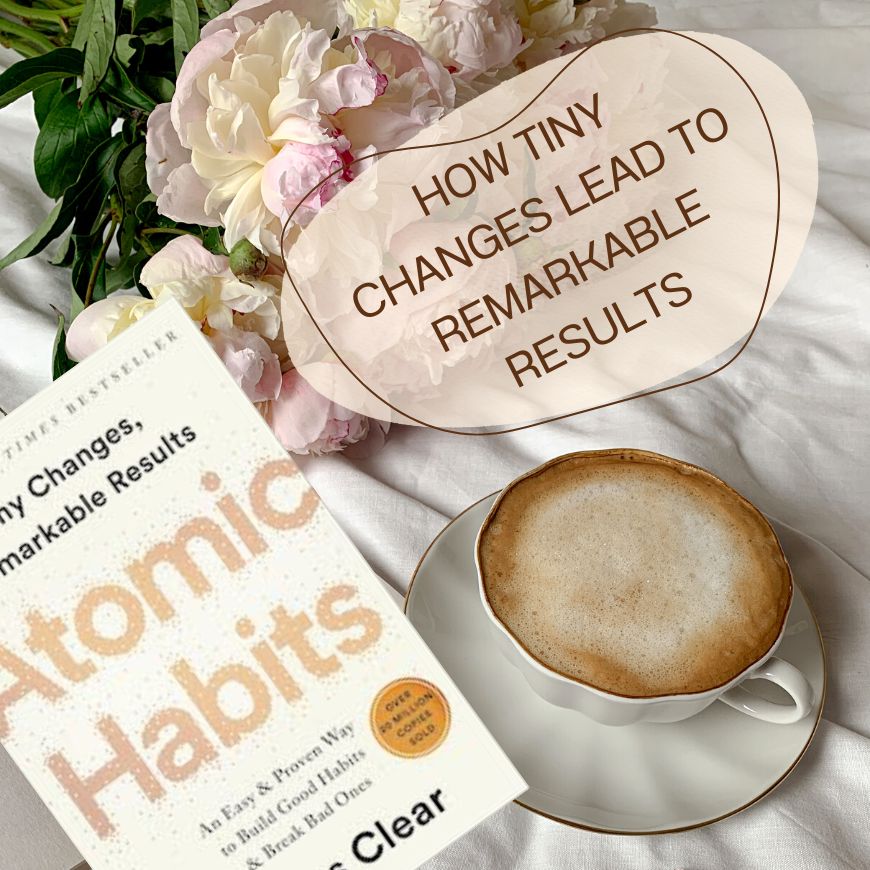
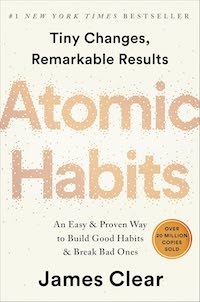
Author: James Clear | Read Time: 5 to 7 hours (320 pages)
Tags: Atomic Habits, James Clear, Self-Improvement, Productivity, Habit Change.
What Is the Core Idea of Atomic Habits?
Quick Answer: Atomic Habits argues that lasting behavior change comes from identity, not outcomes. Instead of setting goals (“I want to run a marathon”), Clear argues you should build identity (“I am a runner”). Habits then become the votes you cast for your identity. The system is built around four behavioral laws: Make It Obvious, Make It Attractive, Make It Easy, and Make It Satisfying — each one targeting a specific stage of the habit loop.
James Clear got into the behavioral science of habits the slow way, after a bad injury knocked him out of high school baseball. The book he eventually wrote, Atomic Habits, sold more than 15 million copies in its first five years and became one of the most-quoted productivity books of the decade. It didn’t get there by inventing new science. It got there by taking research that already existed and turning it into a system almost anyone can run without leaning on willpower. That system is why this Atomic Habits book review spends most of its time on how the ideas work in practice rather than on plot summary.
That last point matters. Atomic Habits is really a book about designing systems so the good behavior becomes the easy default and the bad behavior takes a little more effort. It isn’t about motivation, discipline, or mental toughness. Clear treats motivation as unreliable, which lines up with the ego depletion research of Baumeister and colleagues, and puts the weight on environment, identity, and cutting friction instead.
This review covers the core frameworks in enough depth that you can actually use them, not just describe the book at a dinner party.
The 1% rule: why small changes compound
Quick Answer: Improve by 1% a day for a year and you end up about 37.78 times better than you started (1.01^365 = 37.78). Slip by 1% a day and you drop to roughly 3% of where you began (0.99^365 = 0.03). The math is a way of showing how tiny habits stack up into big results over time, and how tiny bad habits quietly stack up into real damage.
This is the number that opens the book and the one most people quote back. The math is simple: 1.01 to the power of 365 is 37.78, and 0.99 to the power of 365 is 0.03. The gap between those two figures comes from nothing more than 1% moves in one direction or the other, and that gap is the whole case for atomic habits, the small molecule-sized improvements, over dramatic overhauls.
Clear is careful to call this a motivational illustration, not a literal forecast of skill. Skills don’t compound like interest. They tend to follow S-curves: quick early gains, a long flat stretch, then mastery. The direction still holds, though. Over years, the distance between someone improving 1% a day and someone slipping 1% a day is huge, even when the daily difference is invisible.
The takeaway is to stop asking “will this habit matter today?” and start asking “will this matter in five years?” A 20-minute daily walk does almost nothing in a week. Over a decade it changes your heart health, your weight, and how well your brain holds up. The real question isn’t whether today’s 1% matters. It’s whether the trajectory points the right way.
The plateau of latent potential: why most people quit too early
Quick Answer: Clear uses an ice cube analogy. Picture a frozen room slowly warming: -6°C, then -5, -4, -3, and the cube doesn’t budge. The moment it crosses 0°C, it starts to melt. None of that earlier warming was wasted; it was latent, building toward the change. Habits behave the same way. The results stay invisible while you build, then show up in a jump. Most people quit on the flat stretch, right before the breakthrough.
The plateau of latent potential is the most motivating idea in the book.
The “valley of disappointment” is Clear’s name for the gap between the effort you put in and the results you see in the first weeks and months of a habit. You meditate every day for three weeks and feel no calmer. You exercise six days a week for a month and look the same in the mirror. You read daily and feel no smarter. That’s the valley. Most people read the lack of visible results as proof the habit isn’t working, and they quit.
What they don’t see is everything piling up under the surface. Neural pathways are getting reinforced, the body is adapting, and your sense of who you are is slowly shifting. The payoff doesn’t come in a straight line. It comes in a jump, once the accumulated work crosses a threshold.
This is why Clear puts systems above goals. A goal is binary, hit or miss, which makes the valley feel like failure. A system has no failure state; you’re either running it or you’re not. “Fall in love with the process” isn’t a motivational poster here. It’s the practical way to survive the stretch before the results show up.
Identity-based habits: the overlooked foundation
Quick Answer: Most people set outcome goals (“lose 10 pounds”) or process goals (“exercise three times a week”). Clear pushes a third option: identity-based habits. The question shifts from “what do I want to achieve?” to “who do I want to become?” Once identity changes, habits start to reinforce themselves. Someone who sees themselves as an athlete doesn’t debate whether to train today; it’s just what athletes do.
The identity layer is what sets Atomic Habits apart from most habit books, and it’s the part most summaries skate past. It’s also where this Atomic Habits book review pushes hardest, because skipping it is where most readers go wrong.
Clear’s argument rests on one observation: every time you do a habit, you cast a vote for a type of person. Read a few pages and you’ve voted for “reader.” Cook a real meal and you’ve voted for “someone who looks after their health.” Over hundreds of reps, those small votes add up to a self-image. Once that image sets, behavior that fits it gets easy, and behavior that contradicts it feels wrong.
It also explains why cold-turkey changes fail so often. Someone who’s called themselves a smoker for 20 years doesn’t quit by grinding willpower against their own identity. They have to become a non-smoker first, which is a different kind of work. The behavior changes after the identity does, not before.
How to apply identity-based habits:
- Ask what a person with that identity would do right now.
- Start with the smallest possible proof of the identity, not the most impressive one.
- Don’t say “I’m trying to run.” Say “I’m a runner,” even if you’ve run once this week.
- Every habit you want maps onto a kind of person: reader, healthy eater, athlete, morning person, focused worker.
- Proof compounds. A hundred small votes build a self-image solid enough that one big setback won’t topple it.
The four laws of behavior change
Quick Answer: The Four Laws map onto each stage of the habit loop (cue → craving → response → reward). To build a habit: make it obvious (design the cue), make it attractive (build the craving), make it easy (cut the friction), and make it satisfying (lock in the reward). To break one, flip each law: make it invisible, unattractive, difficult, and unsatisfying.
Law 1: Make it obvious
The cue triggers the habit. If you can’t see the cue, the habit never starts. Clear gives two main tools.
Implementation intentions. Pin down when and where you’ll do the habit with the formula “I will [behavior] at [time] in [location].” This format, studied by Gollwitzer in 1999, sharply raises follow-through. “I will meditate for 5 minutes at 7:00 am at my kitchen table” is far more likely to happen than “I want to meditate more.”
Habit stacking. The formula is “After I [current habit], I will [new habit].” You bolt the new behavior onto one you already do, so the established routine becomes the trigger. A few examples:
- “After I pour my morning coffee, I’ll write one sentence in my journal.”
- “After I sit down at my desk, I’ll open my task list before my email.”
- “After I take my shoes off at home, I’ll change into workout clothes.”
Habit stacking is one of the most reliable techniques in the book.
Designing the environment. Put the cue for the habit you want where you can’t miss it. Guitar in the living room, not the closet. Book on your pillow, not the nightstand. Vitamins next to the coffee maker. Reducing friction starts with making the cue visible.
Law 2: Make it attractive
Habits form partly because dopamine fires not only when you get a reward but when you expect one. The craving is what drives the action. Clear’s tool here is temptation bundling:
- Pair something you want to do with something you need to do.
- Only watch your favorite show while you’re on the exercise bike.
- Only listen to your favorite podcast while cooking a healthy meal.
- Only scroll for fun while you run through a five-minute stretch.
It works by borrowing the dopamine from the thing you want to pull along the thing you need. Over time the link strengthens, and the habit starts to feel attractive on its own instead of needing the bundle.
Another Law 2 move is joining a group where the behavior you want is already normal. People are wired to fit in. If everyone around you trains, training gets more appealing and skipping it feels a little awkward. The habit becomes attractive because belonging runs through it.
Law 3: Make it easy
The two-minute rule is the book’s most useful tool for getting started. Shrink a new habit to under two minutes: “read before bed” becomes “read one page,” “do yoga” becomes “put on the yoga pants,” “study Spanish” becomes “open the app.”
It works because starting is the hard part. A habit that only takes two minutes to begin almost always runs past two minutes once you’re in motion. More to the point, it kills the “too tired to do the whole thing” excuse that derails most attempts.
The deeper idea is friction: the fewer steps between intention and action, the more often the action happens. That’s why people who are good at this design their environment instead of trusting motivation. Lower friction for what you want, raise it for what you don’t:
- Lay out workout clothes the night before, so the morning has fewer decisions in it.
- Pull social apps off your phone’s home screen; the extra taps cut a lot of impulsive opens.
- Prep vegetables on Sunday, so a healthy dinner is a 10-minute job instead of 30.
- Put your phone in another room during focused work, which removes both the cue and the reach for it.
Law 4: Make it satisfying
The reward has to land quickly for a habit to stick. The brain discounts delayed rewards hard; a payoff 20 years out barely registers next to a cost you feel right now. That’s why eating well is tough. The benefit (better health decades from now) is far away, and the cost (skipping the cookie) is immediate.
Habit tracking fixes this by handing you an immediate reward: crossing off the day. “Don’t break the chain” is the mechanism. A run of tracked days is visible proof of who you’re becoming, and the small hit of marking it keeps you going.
A plain paper tracker tends to work better than most apps here; physically making a mark reinforces the behavior more than tapping a checkbox. If you want a habit tracker to go alongside the book, a good dot-grid journal or a dedicated habit tracker is the best companion to Atomic Habits.
[AMAZON AFFILIATE LINK — Atomic Habits Habit Tracker Journal]
The one tracking rule Clear hammers on: never miss twice. Missing once is an accident. Missing twice is the start of a new habit, the habit of skipping. Getting back to it the next day, even a tiny version, matters far more than keeping a perfect streak.
The “21 days to form a habit” myth
Quick Answer: The idea that habits form in 21 days is a pop-psychology myth. It traces back to plastic surgeon Maxwell Maltz, who in 1960 noticed patients took about 21 days to adjust to a changed appearance. That has nothing to do with habit science. A 2010 study by Lally and colleagues tracked 96 people building real habits over 12 weeks and found formation took anywhere from 18 to 254 days, with a median of 66.
The Lally data matters because it sets expectations right. If you expect a new exercise habit to feel automatic by day 21 and it doesn’t, it’s easy to decide you’re failing. You’re not; you’re sitting in the normal range of the curve. More complex habits take longer. Simple ones, like taking a pill with breakfast, lock in faster. Gym routines, diet changes, and study habits sit on the long end.
The practical version: give a change 90 days before you judge it. A verdict at day 21, when the habit still feels like work, is made on too little data. Most people quit just before the point where it would have gone automatic.
What Atomic Habits gets wrong: an honest assessment
Quick Answer: Atomic Habits is excellent for the problem it actually addresses: habits in reasonably functioning adults who have some control over their environment. It’s a poor fit for habit problems rooted in trauma, mental illness, addiction, poverty, or structural barriers a person can’t simply redesign. The framework is strong. Its scope is narrower than the marketing implies.
Any honest Atomic Habits book review has to admit where it falls short.
1. It assumes you control your environment. The strongest tools here, habit stacking, friction reduction, and environment design, all assume you can meaningfully shape your surroundings. Someone working two jobs, raising kids alone, stuck in an abusive home, or living without reliable food has limited room to “redesign their environment.” The framework shines for people with at least moderate control over their day.
2. It underweights trauma and mental health. When habits tangle with depression, anxiety, ADHD, or trauma, willpower and clever system design often aren’t enough. Someone with clinical depression can’t just “make exercise obvious” and expect to follow through; the reward circuitry itself is impaired. The book could use a chapter on where its framework runs out and professional help is the right call.
3. Identity-based change has limits. The identity model works well for things you aspire to. It’s weaker for stopping behaviors that are already woven into identity, like addiction, disordered eating, or compulsions, where “I’m not an X” is far trickier than “I’m a Y.”
4. It doesn’t deal with habit conflicts. Real life is full of competing habits and values. Clear’s system tunes habits one at a time but says little about what happens when staying out late with friends collides with waking at 5am.
None of this makes the book less useful for the readers it’s built for. These are limits of scope, not flaws in the logic. Atomic Habits is the best practical book on habit formation for people with reasonable control over their lives. It isn’t a complete behavioral health resource.
Who should read Atomic Habits?
Quick Answer: Atomic Habits is best for the person who has tried to build habits on motivation and discipline and kept failing. It moves the problem off personal weakness and onto system design, which is both more accurate (motivation is unreliable, environment is controllable) and more useful. It’s less suited to someone dealing with clinical depression, addiction, or serious trauma, where its assumptions about agency may not hold.
Read it if:
- You’ve been stuck on the same goals for months or years.
- You know which habits you want but keep not doing them.
- You’ve tried motivation, accountability, and raw willpower and found them flaky.
- You’re a leader, manager, or parent who wants to understand behavior design beyond your own habits.
Pair it with:
- The Power of Habit by Charles Duhigg. Stronger on the neuroscience of the habit loop, weaker on what to actually do; the two fit together well.
- Tiny Habits by BJ Fogg. His “motivation wave” and celebration technique sit nicely beside Clear’s Four Laws. Different framing, similar destination.
- A physical habit tracker, the single most effective tool for Law 4.
If you take one thing from this Atomic Habits book review, make it this: pick one habit, shrink it under two minutes, and start tonight.
[BOOK AMAZON LINK — Atomic Habits by James Clear]
[NOTEBOOK AMAZON LINK — Habit Tracker Journal / Notebook]
Frequently Asked Questions
What is the best chapter in Atomic Habits?
Readers most often point to chapter 6 ("Motivation Is Overrated; Environment Often Matters More") and chapter 13 ("How to Stop Procrastinating by Using the Two-Minute Rule") as the most immediately useful. The identity chapter early in the book is the most foundational; people who skip it tend to run the tactics without grasping why they work, and they're quicker to drop the system when motivation dips.
Does Atomic Habits work for breaking bad habits?
Yes. Clear gives equal time to breaking habits by flipping the Four Laws: make it invisible (remove the cue), unattractive (reframe the craving), difficult (add friction), and unsatisfying (attach an immediate cost). The inverted version gets less airtime in summaries but is just as practical. For serious addictions, treat it as a complement to addiction medicine, therapy, or a structured recovery program, not a replacement for them.
How is Atomic Habits different from other habit books?
A few things. First, the identity-based framing, which most habit books skip. Second, the Four Laws as one complete system rather than a pile of tips. Third, the specificity; Clear's instructions are concrete enough to act on, not just nod along to. Fourth, the honest inclusion of both building and breaking habits in the same framework. Next to Duhigg's The Power of Habit it's more actionable; next to Fogg's Tiny Habits it's more comprehensive; next to Covey's 7 Habits it leans more on behavioral science and less on values and principles.
Should I read Atomic Habits or just use a summary?
A summary like this Atomic Habits book review gives you the frameworks but loses the case studies, the longer examples, and the narrative pull that make the ideas stick. The book runs 320 pages but moves fast; most people finish in 4–6 hours over a week. If you actually plan to run the system, the full book is worth it, because the context and repetition are what turn understanding into changed behavior. If all you have time for is a summary, memorize the Four Laws and start habit stacking this week.

Mimo Karam is the founder and writer at LifestyleMine. She writes about daily habits, nutrition, sleep, and emotional wellness, turning research into practical advice for people who want to live healthier without making it complicated.