✦
THE LIFESTYLEMINE NEWSLETTER
Simple wellness tips, healthy recipes, and
everyday inspiration delivered to your inbox.
Your Email Address
Pinning down the cause is what points you to the right lower back pain relief.
Muscle strain and ligament sprain is the most common acute cause, usually from an awkward movement, a sudden twist, or lifting badly. It tends to settle within two to six weeks with sensible management.Disc herniation happens when the nucleus pulposus pushes through a tear in the annulus, causing localized pain and sometimes referred leg pain (sciatica). Around 90% of cases resolve within 6 to 12 weeks without surgery when they’re managed with movement and targeted exercises.Spinal stenosis , a narrowing of the spinal canal that compresses the cord or nerve roots, becomes more common with age. The tell is leg pain and weakness that worsens with walking and eases when you sit (neurogenic claudication).Facet joint arthritis is wear in the small joints between the vertebrae. It tends to hurt with backward bending and rotation, and is often worst in the morning.Strain from sitting , the desk-worker version, comes from shortened hip flexors (especially the psoas, which attaches to the lumbar vertebrae) pulling the spine into too much lordosis when you stand. It’s the usual mechanism behind sitting-related lower back pain.Non-spinal causes such as kidney stones, kidney infections, and aortic aneurysm can all present as back pain, which is why anything new, severe, or unusual needs a medical look before you treat it yourself.
Most exercise advice aimed at lower back pain relief tells you to strengthen the “core.” McGill’s research found something more specific: spinal stability comes from muscle endurance, not strength, the ability to hold a safe position under load rather than to generate maximum force. And the three exercises that build that endurance best aren’t crunches or sit-ups.
Traditional sit-ups and crunches flex the lumbar spine under load over and over. McGill’s intradiscal pressure work showed this creates compressive forces that are specifically a bad idea for disc herniations, the most common cause of lower back pain in working-age adults.
Here are the three.
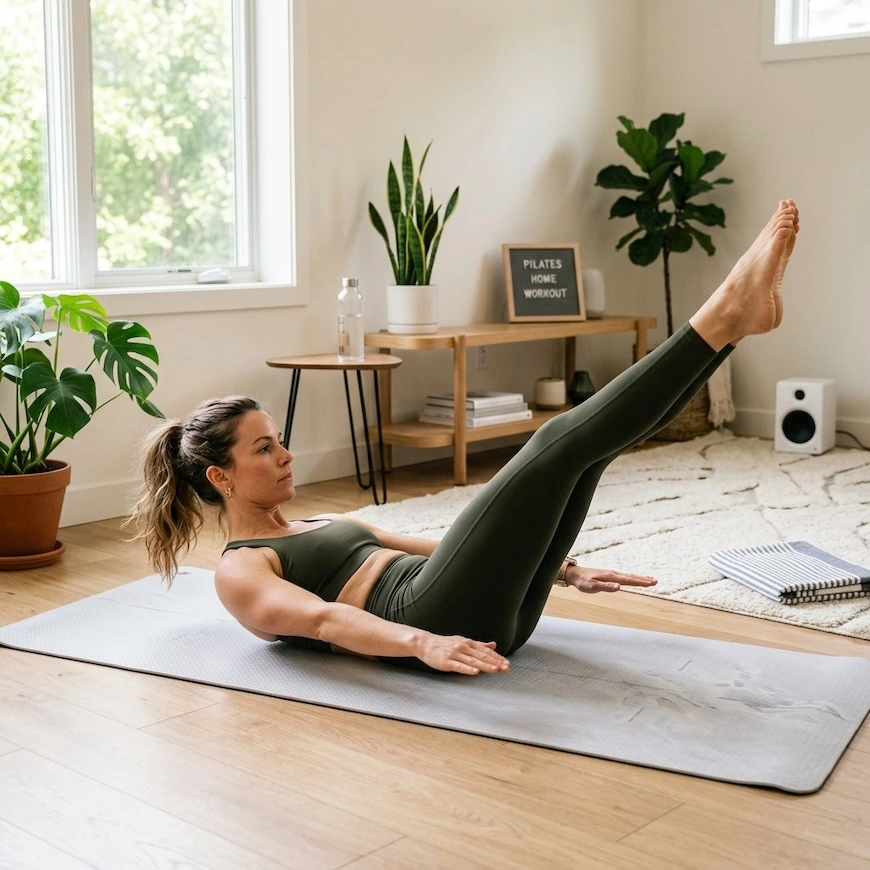
Modified curl-up. Lie on your back with one knee bent and the other leg flat. Put your hands under your lower back, not flat on the floor, which keeps the natural lumbar curve. Brace your whole core as if you’re about to take a punch. Lift only your head and shoulders 2 to 3 cm; it isn’t a crunch or a sit-up. Hold for 10 seconds, three sets of 8 to 10. The point is that the lumbar spine never flexes, so you train the front of the core while protecting the discs.
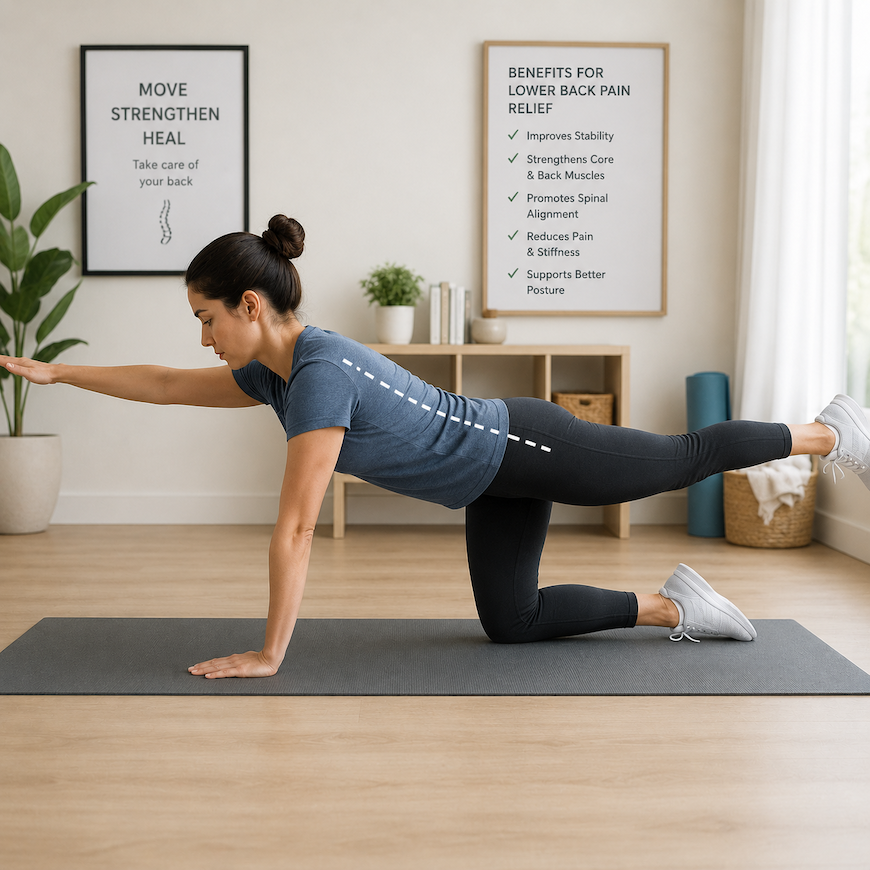
Bird-dog. Start on all fours with a neutral spine, no sagging or arching. Extend one arm forward and the opposite leg back at the same time, holding the spine perfectly still. Hold 10 seconds per side, three sets of 8 each side. This fires the multifidus (the deep spinal stabilizer) and the gluteus maximus together, the two muscles most reliably weak in people with chronic lower back pain. It’s the single exercise McGill’s work most consistently tied to lasting lower back pain relief.
Side plank. Lie on your side, propped on your forearm and the side of your foot (or your knee if you’re starting out). Keep your body in a straight line. Hold 10 to 30 seconds per side, building over weeks. This targets the quadratus lumborum, a deep side muscle that stabilizes the spine laterally. Weakness there is a major driver of recurring lower back pain.
In McGill’s clinical studies, doing the Big 3 consistently beat standard physiotherapy programs for cutting lower back pain recurrence at 12-month follow-up. The whole routine takes about 8 to 10 minutes, six days a week. For many people it’s the most dependable lower back pain relief on this list.
For the overlap between tendon rehab and spinal stabilization, especially the eccentric loading ideas, my article on what is tendinitis covers the evidence.
Read also: Best Mattress for Lower Back Pain: 5 Amazon Bestsellers Ranked
A few stretches earn their place for lower back pain relief.
The knee-to-chest stretch: lying on your back, pull one knee toward your chest with the other leg flat, and hold 20 to 30 seconds each side. It gently decompresses the posterior lumbar structures and the sacroiliac joint, and it’s a safe source of lower back pain relief for most causes.
The kneeling hip flexor stretch: from a kneeling lunge (right knee down, left foot forward), push the right hip slightly forward until you feel a stretch in the front of the hip. Hold 30 to 45 seconds. This goes after the psoas shortening from sitting that pulls the lumbar spine forward.
Child’s pose: from kneeling, fold forward and reach your arms ahead, holding 30 to 60 seconds. Tractioning the spine in mild flexion lowers disc pressure and stretches the erector spinae.
The McKenzie extension press-up, for disc herniations specifically: lie face down, place your hands under your shoulders, and press your upper body up while keeping your hips on the floor. Hold briefly and repeat about 10 times. The idea is that extension tends to centralize disc pain, pulling symptoms from the leg back toward the spine, which is a good sign the disc is responding. If it makes leg symptoms worse, stop and see a physiotherapist.
One warning on what not to stretch: aggressive spinal twisting (seated torso rotations, deep end-range yoga twists) can raise shear force inside the disc and may worsen a herniation. If rotation sends symptoms down your leg, stop.
If your lower back pain flares at night, disrupts sleep, or leaves you stiff in the morning, sleep position and mattress choice have real clinical evidence behind them, and both are reliable routes to lower back pain relief overnight.
Side sleeping with a pillow between the knees is the most evidence-based position for most types of lower back pain. The pillow keeps the hips stacked so the top knee doesn’t drop forward and rotate the lumbar spine, which is the main cause of night-time strain.
Back sleeping with a pillow under the knees reduces lumbar lordosis and disc pressure, and it’s especially good for spinal stenosis, where extension makes things worse. If you sleep on your side, a pillow that fills the gap between your ear and shoulder keeps the neck aligned too, since one that’s too flat or too thick tilts the whole spine and undoes the alignment the knee pillow gives you.
Stomach sleeping is consistently linked to worse outcomes. It forces the lumbar spine into hyperextension and rotates the neck at the same time. If it’s the only way you can sleep, put a pillow under your abdomen to ease the extension.
On mattresses, a 2003 randomized controlled trial in The Lancet assigned 313 people with chronic lower back pain to a medium-firm or a firm mattress for 90 days. The medium-firm group did significantly better on both pain and disability Kovacs et al., The Lancet, 2003 . The familiar advice to “sleep on a firm mattress for back pain” doesn’t hold up in the trial evidence.
There’s a magnesium angle here too: magnesium deficiency causes night-time muscle cramps and higher muscle tension, which can both cause and worsen lower back pain at night. I cover it in signs of magnesium deficiency .
The desk-worker version of lower back pain from sitting comes down to one mechanism: intradiscal pressure builds up faster than the disc can recover when you sit still for long stretches.
The fix isn’t an expensive ergonomic chair, though support helps. It’s how often you move.
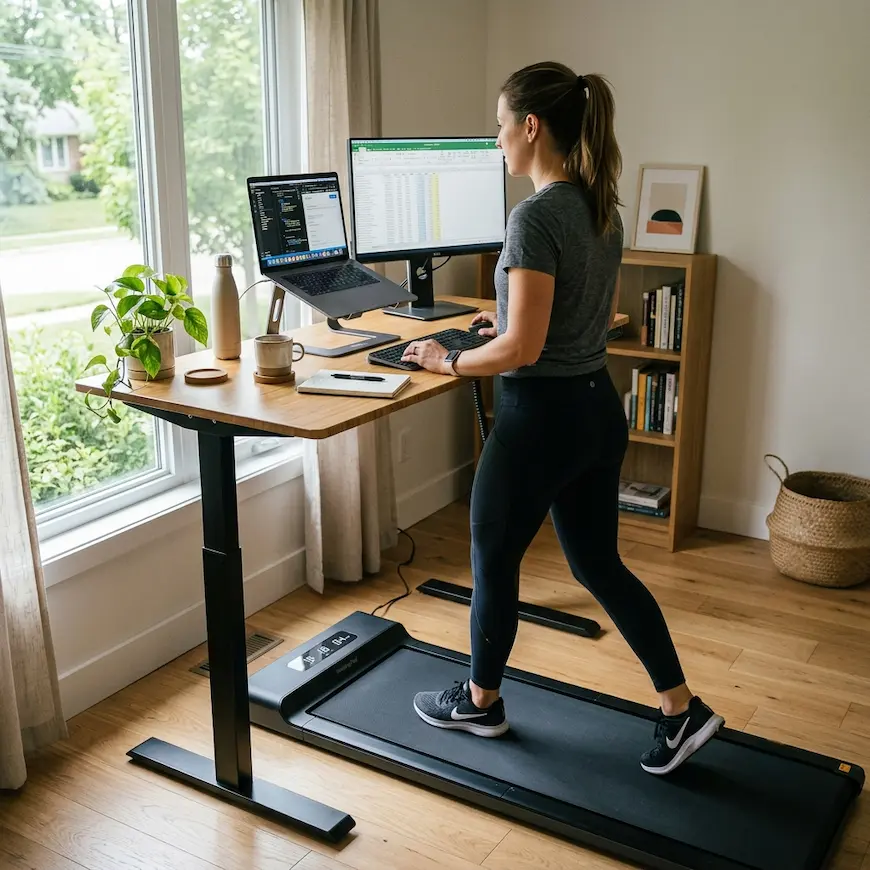
A simple pattern, sometimes called 20-8-2, comes out of ergonomics research: over each half hour, aim for roughly 20 minutes sitting, 8 minutes standing, and 2 minutes of light movement such as walking or a standing stretch. That roughly mimics the load-and-unload cycle the disc needs for nutrition, and heading off that cumulative stress is one of the most practical sources of lower back pain relief for office workers.
Standing desks get mixed results. Standing all day just trades disc loading for static fatigue in the lower back and legs. The benefit isn’t standing, it’s variety, and that variety is what delivers lower back pain relief, so a height-adjustable desk you actually alternate on beats a fixed standing desk.
For sitting itself, a few things lower disc loading: keep the natural inward curve of the lower back (a small lumbar roll helps), set your knees around 90 degrees with feet flat, and avoid leaning toward the screen, which pushes intradiscal pressure from about 140% up past 185%. Keep your head over your shoulders, since every inch of forward head adds roughly 10 lbs of effective load to the neck that ripples down to the lumbar spine. A footrest, a backrest reclined slightly to about 100 to 110 degrees, and armrests that take some weight off your shoulders all cut the pressure your discs absorb across a long day.
For the foot-to-back connection, footwear with poor cushioning or support changes your gait and loads the lumbar spine differently than supportive shoes do. I get into foot care and the kinetic chain in treat your feet, ways to take care of your feet .
For the first 0 to 72 hours after an acute injury, use cold. Ice calms acute inflammation by constricting blood vessels and reducing swelling. For a fresh muscle strain or a sudden bout of lower back pain, cold packs for 15 to 20 minutes every couple of hours through the first 72 hours is the evidence-based move. Wrap the pack in a thin towel rather than putting ice straight on the skin, and leave at least an hour between applications.
After 72 hours, switch to heat. Once the acute inflammatory phase passes, heat boosts local blood flow, relaxes muscle spasm, and makes tissue more pliable. A Cochrane review found that heat wrap therapy gives meaningful short-term lower back pain relief for acute episodes French et al., Cochrane, 2006 .
The common mistake is putting heat on an injury in the first 24 to 48 hours. Heat there drives more blood into an already inflamed area, which can increase swelling and drag out recovery.
The same anti-inflammatory principle applies to diet: lowering systemic inflammation through food gives you a lower baseline, which makes lower back pain episodes less severe and slower to turn chronic. I cover the best-supported options in anti-inflammatory foods .
For acute lower back pain (under 6 weeks), the evidence-based options are NSAIDs such as naproxen or ibuprofen, which NICE lists as the first-line drug choice for short-term use of 7 to 14 days, taken with food and under medical guidance NICE guideline NG59 ; heat as described above; and continued gentle movement, since bed rest beyond 48 hours reliably makes things worse and is no longer recommended. A physiotherapy referral helps here, because the McKenzie method and McGill-based programs outperform passive treatments like massage, ultrasound, or passive heat for acute episodes, and they tend to deliver more durable lower back pain relief.
For chronic lower back pain (beyond 12 weeks), physiotherapy with specific exercise rehab is the main recommended treatment and the most reliable route to lasting lower back pain relief. Cognitive behavioral therapy helps with the fear-avoidance pattern that sets in once pain becomes chronic, where avoiding movement out of fear leads to deconditioning that makes the pain worse. Low-dose antidepressants have some evidence for chronic back pain independent of depression, but they’re prescription-only and need a physician. Steroid injections have short-term evidence for nerve-related (radicular) symptoms; the six-week data is positive, but by 12 months recurrence rates look similar to physiotherapy alone. Surgery is reserved for specific structural problems (a large disc herniation with progressive neurological deficit, spinal stenosis that doesn’t respond to conservative care, or cauda equina syndrome), not for non-specific lower back pain.
For the lifestyle and cardiovascular factors that overlap with back pain risk (BMI, conditioning, inflammation), I cover the evidence in healthy heart habits you should do .
Most lower back pain is musculoskeletal and self-limiting. A few presentations need urgent evaluation. Get immediate medical care if your back pain comes with any of these:
Bowel or bladder dysfunction , meaning losing control or being unable to urinate. This points to cauda equina syndrome, a surgical emergency where a severe central disc herniation compresses the whole nerve bundle below the lumbar spine. Delay can cause permanent paralysis and incontinence.Progressive leg weakness , such as a foot that drags, an inability to lift the front of the foot (foot drop), or quickly worsening leg strength.Back pain after significant trauma , like a fall from height or a car accident.Night pain that wakes you , especially pain that’s present and worsening at rest and won’t ease in any position, which can signal spinal infection, tumor, or inflammatory arthritis.Back pain with fever , which raises the possibility of spinal infection such as discitis or an epidural abscess.Back pain with unintentional weight loss , which warrants a workup for a systemic cause.Back pain in anyone with a history of cancer , which has to be evaluated to rule out metastatic disease.
For an acute muscle strain: a cold pack for 15 to 20 minutes during the first 72 hours, then heat afterward, plus NSAIDs (ibuprofen or naproxen with food) if you tolerate them. Keeping up gentle movement, short walks rather than bed rest, reliably produces faster recovery than either resting or training hard. Most acute lower back pain clears within two to six weeks this way.
Start with the McGill Big 3 at the easiest level: modified curl-up with feet flat, bird-dog from all fours rather than full extension, and a side plank from the knee instead of the foot. Do three sets of 8 per exercise, six days a week, before adding anything else. These build the stability foundation everything else depends on. Once they're comfortable for two to three weeks, add hip flexor stretching and progressive walking.
No. Disc-related pain from sitting is largely reversible with changes to how you move and the right exercise. The disc recovers from accumulated loading better with regular movement and weight-bearing exercise that promotes fluid exchange. That said, structural changes such as disc degeneration or facet arthritis that build up over years of poor loading can become permanent even after symptoms settle.
Skip aggressive end-range spinal twisting (seated twists, deep yoga rotations) if you have disc symptoms, since they raise shear force on the annulus. Skip traditional sit-ups and crunches with a disc herniation, because they create compressive forces that are specifically contraindicated. And skip the seated hamstring stretch (reaching for your toes while sitting) if your pain runs down your leg, since that position stresses the sciatic nerve directly.
The fastest lower back pain relief at night is usually positional. Move to side sleeping with a pillow between your knees to keep the pelvis neutral. If your mattress is more than eight years old or very firm, medium-firm is the evidence-based upgrade. A few minutes of the knee-to-chest stretch and child's pose before bed help decompress the spine. If night pain consistently wakes you, and especially if it's worse at rest than during activity, see a physician, because that pattern needs investigation beyond mechanical causes.
If you haven't meaningfully improved after 4 to 6 weeks of sensible self-management, see your GP. If you have any of the red flags above (bowel or bladder changes, leg weakness, fever, night pain, recent trauma, cancer history), get seen immediately rather than waiting. And if your leg pain is worse than your back pain or radiates below the knee, a physiotherapy assessment within a week or two is the right call.
This article is for informational purposes only and does not constitute medical advice, diagnosis, or treatment. Lower back pain has many causes, some of which need medical evaluation and treatment. The exercises and strategies here suit most people with non-specific mechanical lower back pain but may be inappropriate for specific structural conditions, including severe disc herniation, spinal fracture, spinal infection, or tumor. If you have bowel or bladder changes alongside back pain, seek emergency care immediately, as it can be a surgical emergency. Always consult a qualified physiotherapist or physician before starting a new exercise program if you have a diagnosed spinal condition.
Mimo Karam is the founder and writer at LifestyleMine. She writes about daily habits, nutrition, sleep, and emotional wellness, turning research into practical advice for people who want to live healthier without making it complicated.