✦
THE LIFESTYLEMINE NEWSLETTER
Simple wellness tips, healthy recipes, and
everyday inspiration delivered to your inbox.
Your Email Address
Physical health effects, the long-term compounding. The physical toll of sleep deprivation builds quietly over months before it shows up on a chart.
System
Effect of chronic sleep deprivation (under 7 hours)
Mechanism
Cardiovascular
Roughly doubled hypertension risk; higher heart attack and stroke risk
Elevated cortisol and sympathetic activity; endothelial dysfunction
Metabolic
Reduced insulin sensitivity; higher type 2 diabetes risk
Impaired glucose metabolism; cortisol elevation
Immune
Sharp drop in NK cell activity after a week at 6 hours
Reduced cytokine production; impaired T-cell function
Weight
Ghrelin up (+28%), leptin down (-18%)
Hunger-hormone dysregulation; higher calorie intake
Brain
Faster amyloid-beta accumulation
Impaired glymphatic clearance during reduced deep sleep
The immune costs of sleep deprivation are well documented in the research literature PMID 31289370 , which maps how sleep loss dysregulates inflammatory and antiviral responses.
Sleep and weight. The ghrelin and leptin shift above is the neurochemical reason sleep-deprived people crave high-calorie food. Ghrelin (hunger) rises; leptin (fullness) falls. Because sleep deprivation pushes appetite up, consistent sleep keeps showing up as one of the most reliable pieces of weight management in our 3-month weight loss guide .
Quick answer Sleep isn’t a single state. It runs in 4 to 5 cycles a night, each with light sleep (N1/N2), deep slow-wave sleep (N3), and REM. Each stage does a different job: N3 is when growth hormone is released and physical repair happens; REM is when emotional memories get processed and consolidated. Sleep deprivation preferentially strips out the most restorative stages, early-night deep sleep and late-night REM, so you lose the restoration while still believing you “got some sleep.”
The four stages.
N1 (light sleep, about 5% of the night) is the handoff from wakefulness. Brain waves slow, muscle jerks are common, and it’s easily disrupted.
N2 (light sleep, about 45% of the night) is where sleep spindles appear, bursts of neural activity that shield sleep from noise. Memory consolidation begins here, and it’s the most common stage across the night.
N3, slow-wave sleep (20 to 25% of the night), is the most physically restorative stage. Most of the day’s growth hormone is released here (about 70% of daily output). The glymphatic system peaks, clearing waste including amyloid-beta and tau, and the immune system consolidates. N3 dominates the first half of the night and gets hit hard by both alcohol and sleep deprivation, which strip it out of the second half.
REM (about 25% of the night) is the stage of vivid dreaming. The brain replays emotional experiences with reduced norepinephrine, essentially draining the charge out of difficult memories, and it consolidates creativity and procedural learning. REM dominates the final 2 to 3 hours of an 8-hour night, which is why cutting from 8 hours to 6 cuts REM out of proportion: you lose the REM-rich final stretch.
Why timing within the night matters. “Getting 6 hours” isn’t the same 6 hours whenever it happens. Early sleep is dominated by deep sleep; late sleep is dominated by REM. Sleeping midnight to 6am mostly costs you REM (emotional processing, creativity). Sleeping 10pm to 4am keeps more deep sleep (physical recovery) but still loses REM. Neither 6-hour window matches the restorative profile of 7.5 to 8 hours of undisturbed sleep.
Quick answer The causes of sleep deprivation split into behavioral (lifestyle, irregular schedules), psychological (anxiety, depression, hyperarousal, the most common driver of insomnia), medical (sleep apnea affects about 30 million Americans and is badly underdiagnosed), and pharmacological (stimulants, SSRIs, beta-blockers, and corticosteroids all degrade sleep). Sleep-hygiene fixes only touch the behavioral layer. For anyone with established insomnia or non-restorative sleep, the psychological and medical layers need direct treatment.
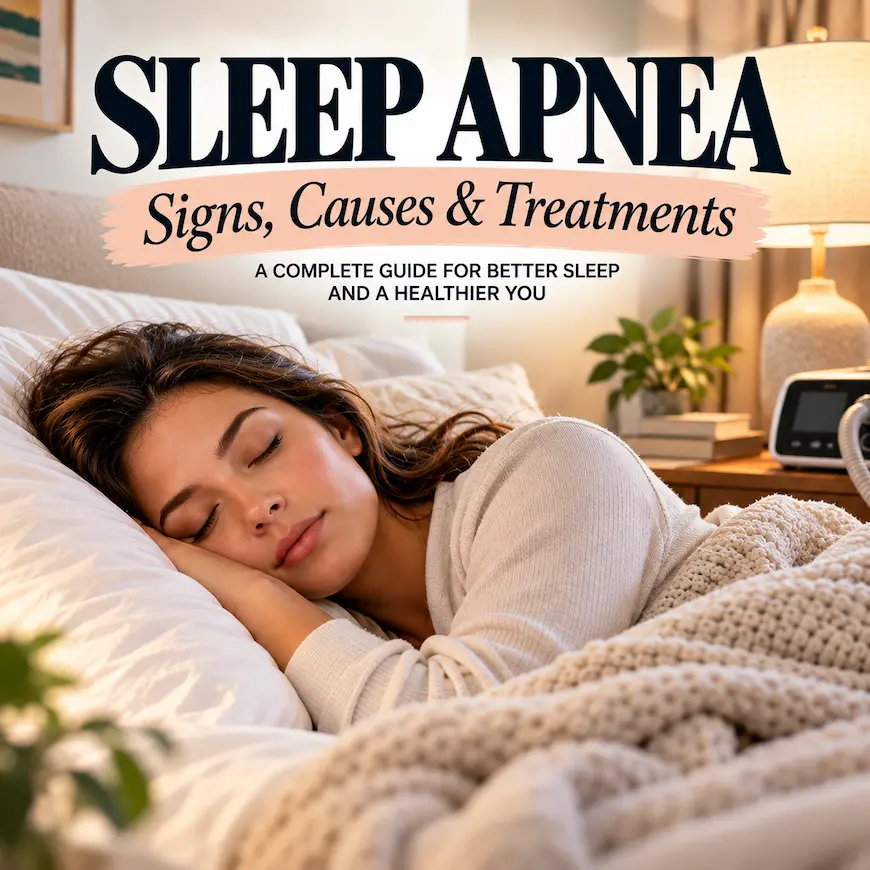
Obstructive sleep apnea, the most underdiagnosed cause. Sleep apnea affects an estimated 30 million Americans, and roughly 80% are undiagnosed. In OSA, the upper airway collapses during sleep, causing repeated breathing interruptions that fragment sleep without fully waking the person, so they live in a state of hidden sleep deprivation despite “8 hours in bed.” Signs: loud snoring, breathing pauses a partner notices, morning headaches, daytime sleepiness, waking unrefreshed. Risk factors: obesity, large neck circumference, male sex, over 40, and alcohol use. A home sleep test or in-lab polysomnography makes the diagnosis. CPAP resolves the fragmentation in most patients within days of consistent use, and the effect is fast and dramatic. Untreated apnea carries a 2 to 3 times higher cardiovascular mortality.
Hyperarousal, the real mechanism of insomnia. Most chronic insomnia isn’t just “bad sleep hygiene.” It runs on physiological and cognitive hyperarousal: the brain is stuck in a high-alert state at bedtime, which makes falling asleep impossible. Cortisol in chronic insomnia patients is elevated through the day and especially in the evening, when it should be falling. And it’s self-sustaining: poor sleep leads to anxiety about sleep, which adds arousal, which worsens sleep. Treating that arousal cycle, not just the bedroom setup, is why CBT-I beats sleep-hygiene advice.
Circadian phase disorders. Night owls (delayed sleep phase) genuinely can’t fall asleep early; their melatonin rises 2 to 3 hours later than average. This is biologically set (PER3 gene variants) and willpower won’t fully override it. Forcing early wake times on a delayed-phase person produces chronic sleep deprivation. Morning bright light (10,000 lux, 20 to 30 minutes right after waking) is the most effective tool for shifting the clock earlier.
Quick answer CBT-I (cognitive behavioral therapy for insomnia) is the first-line insomnia treatment under both the American College of Physicians and the American Academy of Sleep Medicine, recommended ahead of sleeping pills for chronic insomnia. A 2024 network meta-analysis found that starting treatment with CBT-I produced better long-term remission than starting with pharmacotherapy (high-certainty evidence). CBT-I has five core parts: stimulus control, sleep restriction, relaxation training, cognitive restructuring, and sleep-hygiene education.
The strongest comparative evidence comes from Furukawa and colleagues’ 2024 network meta-analysis PMID 39188094 , which found CBT-I more effective than pharmacotherapy for long-term remission (odds ratio 1.82), with fewer dropouts. Here are the five components.
1. Stimulus control. Train the brain to link the bed only with sleep (and sex). No screens, reading, working, or lying awake in bed, so the bedroom becomes a cue for sleep rather than frustration. If you’re still awake after 15 to 20 minutes, get up, do something calm in dim light until you’re sleepy, then go back. It feels backwards, but it’s one of the most effective techniques in CBT-I.
2. Sleep restriction. The most powerful technique, and the most uncomfortable. Time in bed is cut to actual sleep time at first (if you’re sleeping 5 hours, you’re allowed 5 hours in bed, say midnight to 5am). Sleep pressure builds and sleep efficiency climbs. Once efficiency passes 85%, time in bed gets extended gradually. This isn’t appropriate for people with seizure disorders, bipolar disorder, or safety-critical jobs where extreme sleepiness is dangerous.
3. Cognitive restructuring. Targets the catastrophic thinking that keeps insomnia going (“I’ll never sleep,” “tomorrow will be ruined,” “I need to sleep right now or I’ll get sick”). Those thoughts raise arousal and trip the fight-or-flight response at bedtime. Naming and defusing them removes the cognitive amplification of being awake.
4. Relaxation training. Progressive muscle relaxation, diaphragmatic breathing, guided imagery, all of which lower the physical arousal that blocks sleep onset. Especially useful for people who notice physical tension (clenched jaw, tight shoulders) at bedtime.
5. Sleep-hygiene education. The part most articles cover exclusively, and the weakest one on its own. Temperature (65 to 68°F is optimal), darkness, quiet, consistent sleep and wake times, and limiting caffeine (its half-life is 5 to 7 hours, so a 2pm coffee still has half its caffeine in you at 7 to 9pm). Useful for mild disruption, not enough for established insomnia.
Digital CBT-I. If you can’t get to a therapist who specializes in CBT-I, validated digital programs include Sleepio (covered by many US health plans), SleepStation, and the free CBTI-Coach app from the Department of Veterans Affairs. These don’t replace a clinical workup for underlying causes like apnea or restless legs, but they work well for primary insomnia.
Quick answer For acute sleep deprivation (a few bad nights), 2 to 3 nights of full sleep largely restores acute cognitive impairment. For chronic sleep deprivation (weeks or months of too little), recovery is slower and only partial; give it 1 to 2 weeks of consistent 8 to 9 hour nights before expecting full restoration. Don’t try to “bank” sleep with 12-hour marathons, which disrupt your circadian rhythm and lower the next night’s sleep pressure, keeping the cycle going.
Week 1. Hold a consistent bedtime and wake time above everything else, since wake time is the strongest circadian anchor. Aim for 8 to 8.5 hours in bed (earlier bedtime, same wake time is the most sustainable route). Cut alcohol during recovery, since it suppresses deep sleep and REM and defeats the point. Get screens out of the bedroom, use blackout curtains or a sleep mask, and keep the room around 65 to 67°F. Get 20 minutes of bright light (outdoors or a 10,000 lux box) within 30 minutes of waking, which resets and advances your clock within 3 to 5 days. Keep caffeine to the morning during this stretch; an afternoon cup quietly trims the deep sleep you need most on these nights.
Week 2. Most acute cognitive impairment should be noticeably better. Keep the same wake time even on weekends, because “social jet lag” (sleeping in on weekends) drags out recovery. Start or keep up regular exercise; even 20 to 30 minutes a day is tied to meaningful sleep-quality gains in meta-analyses. Use this window, when sleep is improving and motivation is higher, to deal with root causes like screen habits, alcohol, and stress.
Napping, when it helps and when it doesn’t. A 20-minute nap (set an alarm, because if you slip into deep sleep you’ll wake groggy) between 1 and 3pm improves afternoon performance by roughly a third. Naps after 3pm, or longer than 30 minutes, eat into nighttime sleep pressure and make overnight sleep worse for people with insomnia. Leaning on daytime naps to paper over nighttime sleep deprivation just feeds the cycle.
Quick answer The supplement with the most consistent evidence for easing sleep deprivation is magnesium, specifically magnesium glycinate or magnesium L-threonate, not magnesium oxide, which is poorly absorbed for neurological effects. Magnesium activates GABA receptors (the brain’s main inhibitory neurotransmitter), lowers cortisol, and supports muscle relaxation. Melatonin’s evidence is strongest for shifting circadian timing (jet lag, shift work) rather than ordinary insomnia, and the effective dose is 0.5 to 1 mg, far below most over-the-counter tablets.
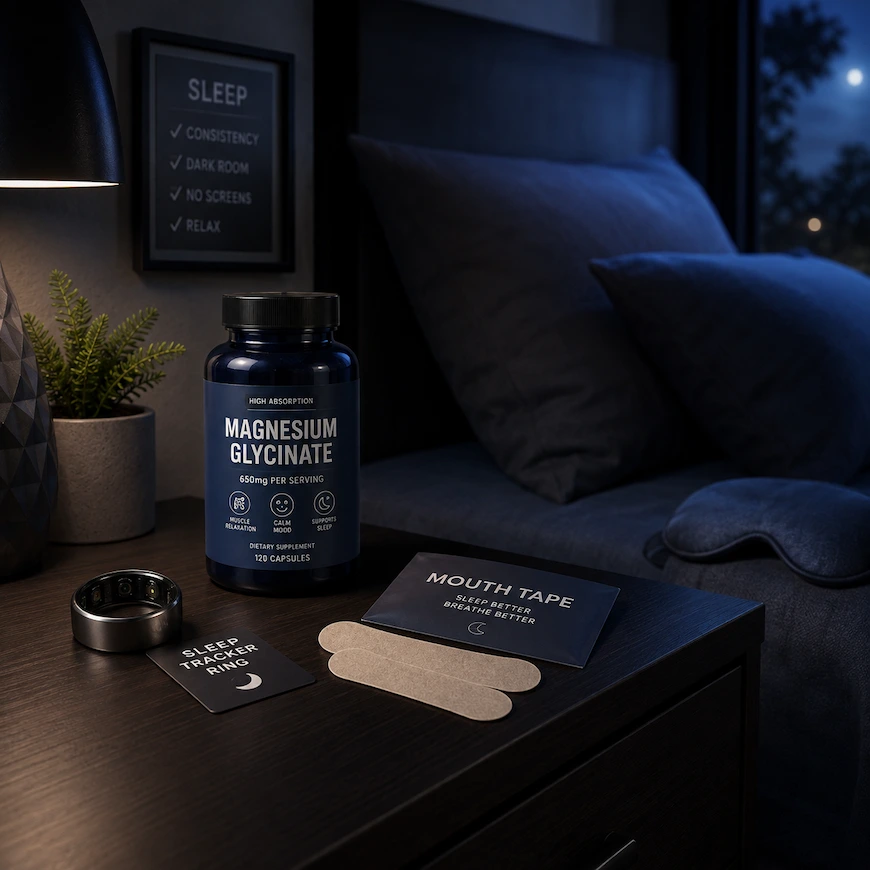
Magnesium glycinate. Magnesium shortfall is common, with 50 to 60% of Americans eating below the RDA. Magnesium activates GABA-A receptors, the same system benzodiazepines target (though far more gently), which produces a calming effect that takes the edge off sleep deprivation. The glycinate form absorbs better and avoids the GI upset of magnesium oxide. Dose: 200 to 400 mg of elemental magnesium as glycinate, 30 to 60 minutes before bed, with a little food to limit stomach upset. The effect is biggest in people who are actually low on magnesium; if your levels are already fine, the sleep benefit is more modest. Our supplements guide covers this in depth.
Magnesium L-threonate. This form is built to cross the blood-brain barrier and raises brain magnesium more effectively than the others. There’s emerging evidence for cognitive benefits alongside sleep. It costs more than glycinate, and the premium may be worth it for people who tried glycinate without enough effect.
Melatonin, used correctly. Melatonin is a circadian signal, not a sedative. It doesn’t meaningfully increase total sleep time in trials for ordinary insomnia. What it does well is shift circadian timing. The uses with strong evidence: jet lag (0.5 mg at the destination bedtime for 3 to 4 days), shift work (time the dose to your desired sleep window, ideally with guidance from an occupational health physician), and delayed sleep phase (0.5 mg taken 5 to 6 hours before your target sleep time can advance the clock over 1 to 2 weeks). A dose of 0.5 to 1 mg is physiologically effective. The 5 mg and 10 mg tablets are supraphysiological; they don’t produce better sleep and may suppress your own melatonin production over time.
L-theanine. An amino acid from green tea, L-theanine (100 to 200 mg) promotes alpha brain-wave activity, the relaxed-but-alert state. It doesn’t sedate, but it lowers the arousal and anxious rumination that delay sleep onset. It’s most useful when the main problem is a racing mind, a frequent entry point to sleep deprivation, rather than staying asleep, and it’s well tolerated with no sign of dependence or tolerance.
Valerian root. The trial evidence for valerian is inconsistent. Some studies show a small improvement in how fast people fall asleep; others show nothing over placebo. The fair read is that valerian may help some people but can’t be recommended as a reliable option. It’s safe for short-term use.
What doesn’t work. Alcohol is the most common self-prescribed sleep aid. It does get you to sleep faster, but it fragments the second half of the night by suppressing REM and deep sleep, which produces early-morning waking and unrefreshing sleep. Regular use is a net negative for sleep and a common hidden driver of sleep deprivation. Cannabis (THC) similarly reduces REM with regular use, and stopping produces a REM rebound with vivid dreams. Neither is an effective long-term strategy, and both can deepen sleep deprivation over time.
Quick answer Light is the main zeitgeber, the time-giver that syncs the circadian clock to the 24-hour day. Morning bright light (a 10,000 lux box or outdoor light within 30 minutes of waking) is the most powerful tool for setting that clock and unwinding sleep deprivation, and it costs nothing outdoors. Cutting evening blue light helps too, but its effect is smaller than morning light’s, not larger as popular coverage implies. Temperature (65 to 68°F), darkness, and a consistent wake time round out the setup.
Morning light, the underused one. Light hits specialized retinal cells (ipRGCs) that contain melanopsin and send a direct signal to the suprachiasmatic nucleus, the master clock. The signal says “morning.” It anchors the rhythm and starts a roughly 16-hour countdown to that evening’s melatonin onset. Twenty to thirty minutes of morning light (outdoors without sunglasses, or a 10,000 lux box) within 30 minutes of waking produces measurable phase advancement within 3 days. For delayed sleep phase (night owls who can’t fall asleep at normal times), morning light is the primary evidence-based fix for the chronic sleep deprivation it causes.
Evening light, calibrate rather than obsess. Blue-blocking glasses and orange-tinted screens cut melatonin suppression from devices. But evening light’s effect on insomnia is smaller than morning light’s effect on circadian timing. For most people, avoiding bright overhead lighting after 9pm and using dim, warm-toned lights is enough. The no-screen hour before bed that sleep physicians recommend to head off sleep deprivation is mostly about content (news, social media, work email) rather than photons.
Temperature. Core body temperature has to fall by about 1°C to start sleep, and a bedroom at 65 to 68°F helps that happen. The old trick of a warm bath or shower 1 to 2 hours before bed works backwards from how it feels: the warm water dilates blood vessels, which dumps heat from the skin and speeds the core-temperature drop once you’re out. That mechanism, not the relaxation, is why warm baths help you fall asleep.
There's no universal number. Rare genetic variants (including BHLHE41 mutations) let a small slice of people, maybe 1 to 3%, genuinely do well on 6 hours. For the other 97 to 99%, regularly sleeping under 7 hours is chronic sleep deprivation, and it produces measurable cognitive, physical, and metabolic impairment even when you don't strongly feel sleepy. The catch is that people who chronically sleep 6 hours reliably overestimate their own performance. If you're sure you're one of the rare short sleepers, you almost certainly aren't.
Total sleep deprivation (no sleep at all) is fatal in animal models after about 2 to 3 weeks, through immune collapse and multi-organ failure. In humans, the genetic prion disease fatal familial insomnia causes a complete inability to sleep and is uniformly fatal within 7 to 18 months. For ordinary sleep deprivation, the danger is indirect but real: cardiovascular disease (chronic short sleep roughly doubles long-term risk), accidents (drowsy driving causes about 72,000 US crashes a year), and the accelerated neurodegenerative change from impaired amyloid clearance.
Waking specifically at 3am is common enough to have its own search query. The usual causes: the natural lightening of sleep in the second half of the night (deep sleep is mostly done and REM is more fragmented), cortisol starting its normal rise around 3 to 4am, blood-sugar regulation (cortisol-driven gluconeogenesis can briefly wake people with insulin-sensitivity issues), alcohol (rebound arousal in the back half of the night), and anxiety or rumination that surfaces during lighter REM-dominant sleep. On their own these awakenings are normal; night after night, they add up to real sleep deprivation.
Yes, exercise is one of the most consistently supported behavioral tools for sleep quality. A large meta-analysis of 66 studies found that regular aerobic exercise improved sleep quality, reduced insomnia symptoms, and increased deep sleep. Exercise won't replace sleep, but it buffers some of the damage of sleep deprivation. The benefit is strongest for moderate-intensity aerobic exercise done consistently, not a single session. On timing, finishing exercise 4 or more hours before bed is fine for most people, while vigorous exercise within 2 hours of bed can delay sleep onset in some people through raised core temperature and sympathetic activation.
Medication can blunt short-term sleep deprivation, but it isn't a cure. For short-term insomnia (acute, situational sleep trouble), physicians may prescribe zolpidem (Ambien), eszopiclone (Lunesta), or suvorexant (Belsomra, an orexin antagonist with a different mechanism and somewhat lower dependence risk). These are short-term tools, measured in weeks, not months. For chronic insomnia, ACP guidelines put CBT-I first, ahead of medication. Sleeping pills bring tolerance, rebound insomnia, and dependence with long-term use, while CBT-I produces lasting change. The distinction: medication manages symptoms, CBT-I addresses the underlying hyperarousal.
On the morning after sleep deprivation, accept the partial impairment and compensate behaviorally. The most effective acute moves: a 20-minute nap before 2pm (it meaningfully restores afternoon alertness), caffeine timed well (150 to 200 mg about 30 minutes before the part of the day that matters most, but nothing after 2pm if you want to sleep that night), and bright light (outdoor or 10,000 lux) to lift alertness. Don't lean on repeated large caffeine doses through the day; that overshoots the useful range and wrecks the next night. One or two well-timed caffeinated drinks beat a steady drip of caffeine all day.
This article is for informational purposes only and isn’t medical advice. Persistent sleep problems can have treatable medical causes, including sleep apnea, and chronic sleep loss carries real health risks. If sleep deprivation is affecting your daily functioning, talk to a physician or a sleep specialist for evaluation and individualized care.
Mimo Karam is the founder and writer at LifestyleMine. She writes about daily habits, nutrition, sleep, and emotional wellness, turning research into practical advice for people who want to live healthier without making it complicated.