✦
THE LIFESTYLEMINE NEWSLETTER
Simple wellness tips, healthy recipes, and
everyday inspiration delivered to your inbox.
Your Email Address
The terpene degradation cascade:
Limonene (in citrus, tea tree, and peppermint oils) starts fragmenting above 200°C. The main products are benzene (a known human carcinogen, IARC Group 1) and formaldehyde (also IARC Group 1, WHO ceiling 0.08 ppm). Limonene is one of the most common terpenes across commercial essential oil products.
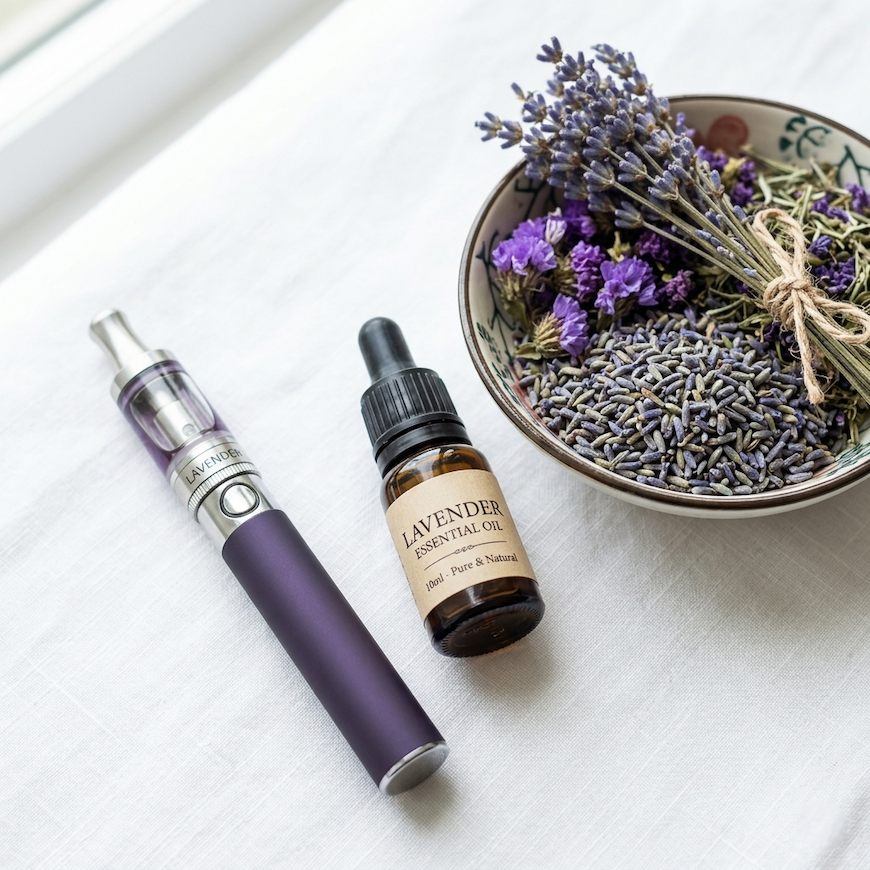
Linalool (the main terpene in lavender, also in rose, bergamot, and ylang-ylang) dehydrates and oxidizes above 150°C into acrolein (prop-2-enal). Acrolein is a highly reactive aldehyde that alkylates proteins and DNA in the cells lining your airways. The EPA classifies it as a Group C probable carcinogen, OSHA regulates it, and it’s the compound behind the stale-cigarette-smoke smell of secondhand smoke.
Eucalyptol (1,8-cineole) , the defining terpene in eucalyptus, tea tree, and rosemary oils, produces a mix of irritant aldehydes and ketones above 200°C. Eucalyptus oil is among the most heavily marketed essential oil vape products. Eucalyptol is fine for steam inhalation, but its decomposition products at vaping temperatures aren’t the same substance.
The temperature context. Home ultrasonic diffusers run at room temperature. Steam diffusers reach about 100°C, the boiling point of water. Neither causes meaningful terpene pyrolysis. The same compounds that show measurable benefits in aromatherapy research are studied at temperatures far below what a vape coil reaches, so the safety and benefit data from aromatherapy don’t transfer to vaping essential oils.
Quick Answer: Documented side effects of vaping essential oils include coughing (a bronchoconstrictive response to irritants), bronchospasm (airway smooth muscle contraction), worsening asthma (acrolein is a known trigger), allergic sensitization (heat-modified terpenes can become haptens and open new allergy pathways the unheated oil never created), and throat and mucosal irritation from direct aldehyde contact. Long-term effects aren’t established in the literature, because no controlled longitudinal study has followed essential oil vape users specifically.
The risks of vaping essential oils aren’t abstract. Those side effects, coughing, bronchospasm, asthma flares, itching, throat swelling, get listed often enough, but the mechanism is what tells you how serious they are.
Immediate respiratory effects. Acrolein triggers bronchoconstriction by activating TRPA1 (transient receptor potential ankyrin-1) channels in airway sensory nerves, the same mechanism as tear gas, and it doesn’t take much. Anyone with pre-existing asthma or reactive airway disease faces a much higher risk of severe bronchospasm.
Allergic sensitization. This one gets discussed less. Heating terpenes can create novel haptenic structures, small molecules that bind to skin or mucosal proteins and set off type IV (delayed) hypersensitivity. So someone who isn’t allergic to lavender oil on their skin could become sensitized to heat-degraded lavender aerosol, and the reverse can happen too. Contact allergy to essential oils is a documented hazard for aromatherapists, and vaping concentrates and chemically modifies that exposure.
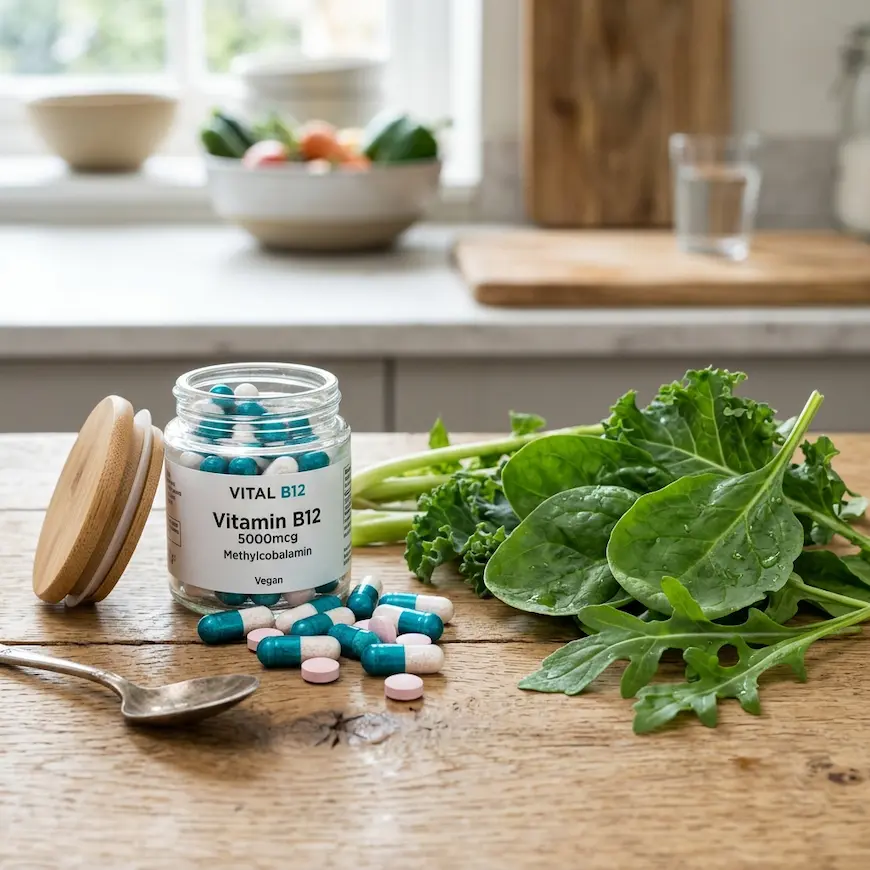
Vitamin additives in vape products. Some essential oil vape pens add vitamins, B12, C, D, and claim inhalable delivery. Pharmacology doesn’t back that up. Vitamins need oral ingestion and digestion to be absorbed meaningfully, and fat-soluble vitamins (A, D, E, K) inhaled as aerosols deposit straight into lung tissue without the metabolic conversion that makes them usable. Vitamin E acetate, added as a thickener, was the main cause of EVALI (next section); heating it creates vitamin E radicals and byproducts with demonstrated lung toxicity.
Quick Answer: EVALI (e-cigarette or vaping product use-associated lung injury) is a serious lung condition first identified in August 2019. By February 2020, the CDC had documented 2,807 hospitalized cases and 68 deaths across the US. The main culprit was vitamin E acetate, an oil-based thickener in illicit THC products. The mechanism: inhaled oil droplets settle in the alveoli and block gas exchange, causing lipoid pneumonia. Essential oils are also oil-based, and that mechanism isn’t specific to vitamin E acetate.
EVALI is the single most important piece of evidence in any honest discussion of vaping essential oils, and it rarely shows up in the marketing.
How EVALI happened. Illicit THC cartridges were thickened with vitamin E acetate, a viscous, odorless, oil-soluble form of vitamin E that mimicked pure THC oil. Vaped, the aerosol carried oil droplets rather than true vapor. Those droplets settled in the alveoli (the air sacs where gas exchange happens) and weren’t cleared by normal mucociliary mechanisms, because oil isn’t water-soluble. The result was lipoid pneumonia, visible on CT imaging, with oil-laden macrophages in bronchoalveolar lavage fluid.
Why this maps directly onto essential oils. Essential oils are oil-based, lipid-soluble plant extracts. Aerosolized by a vape device, they make oil-containing droplets with the same lipoid pneumonia mechanism as vitamin E acetate, even at lower concentrations. The alveoli can’t tell the difference between vitamin E acetate and eucalyptus oil as the offending lipid.
Most EVALI cases were tied to illicit THC products, not nicotine or commercial essential oil vapes, and that distinction matters: cases from pure essential oil vaping have never been systematically tracked. But no documented cases in a new, untracked category isn’t evidence of safety. It’s evidence of limited surveillance.
Quick Answer: Nicotine vaping delivers nicotine (a cardiovascular stimulant and addictive substance) through aerosolized propylene glycol and vegetable glycerin. At high temperatures, PG degrades into propylene oxide (IARC Group 2B possible carcinogen) and acetaldehyde. Flavoring chemicals, diacetyl in particular, are linked to bronchiolitis obliterans (“popcorn lung”), a progressive, irreversible obstructive lung disease. Vaping essential oils adds terpene thermal decomposition products and lipoid pneumonia risk on top of all that. Neither category has FDA approval as a safe inhalation product, and neither has evidence supporting use for quitting smoking.
The comparison to nicotine vaping matters because it’s the “safer alternative” framing that drives a lot of essential oil vape marketing.
“Nicotine-free means safer” is incomplete. Taking nicotine out doesn’t remove the respiratory risk from the heating process itself. The propylene glycol and vegetable glycerin base still throw off toxic aldehydes at high temperatures, the flavoring chemicals carry their own toxicity regardless of nicotine, and the terpenes add decomposition products that nicotine-only vapes don’t have.
Where the FDA stands. Neither e-cigarettes nor essential oil diffusers are FDA-approved as smoking cessation aids. The FDA has approved two medications for that (varenicline and bupropion) plus nicotine replacement therapies. Any claim that vaping essential oils helps you quit smoking is unsubstantiated.
Is vaping bad for you regardless of what’s in it? The heating element alone is a problem. Coils in cheap devices, made from metals like chromium, nickel, and sometimes lead, shed metal particles into the aerosol, independent of the liquid you use. A 2019 review in the BMJ found e-cigarette aerosols consistently carried metal particle concentrations above occupational safety limits [verify URL before publishing].
Quick Answer: Beyond the oils themselves, the most hazardous things in vape products are propylene glycol (PG), which degrades into acetaldehyde and propylene oxide above 250°C; diacetyl, a buttery flavoring linked to bronchiolitis obliterans at chronic exposure levels; vitamin E acetate, the EVALI culprit, now FDA-banned from e-cigarettes but still in unregulated products; and heavy metals from low-quality coils (chromium, nickel, lead). No independent regulatory testing is required for vape liquids sold in the US.
Vaping essential oils means inhaling more than the oil: the carrier, flavoring, and coil metals each bring their own hazard.
Propylene glycol (PG) and vegetable glycerin (VG). The most common carriers in both nicotine vapes and some essential oil vapes. At vaping temperatures, PG produces acetaldehyde (IARC Group 1 carcinogen), acetic acid, and formaldehyde. VG produces acrolein and formaldehyde under the same conditions. Both are FDA-classified as “generally recognized as safe” (GRAS), but that status applies to eating them, not inhaling them. The FDA has never assessed PG or VG for inhalation safety.
Diacetyl. A butter-flavoring compound used in popcorn, pastries, and some vape products. Chronic occupational inhalation caused bronchiolitis obliterans (“popcorn lung”) in microwave popcorn workers, an irreversible destruction of the bronchioles. A 2016 study found diacetyl in 39 of 51 tested flavored e-cigarette products above occupational safety thresholds [verify citation before publishing]. Essential oil vapes that add flavors to mask the oil taste can contain it too.
Vitamin E acetate. Banned from legal US e-cigarettes after the EVALI investigation, but still in some unregulated or counterfeit products. Anything sold outside established retail channels should be assumed to carry this risk.
No third-party testing requirement. Vape products don’t have to disclose every ingredient. The “natural” or “plant-based” labeling on essential oil vapes refers to the oil, not the carrier, flavoring, or coil materials.
Quick Answer: The benefits people attribute to aromatherapy, lavender easing anxiety (multiple RCTs), peppermint oil easing nausea and tension headaches, eucalyptus opening up congestion, come from studies using cold or steam diffusion, not vaping. Ultrasonic diffusers aerosolize essential oils at room temperature with high-frequency vibration, leaving the terpene structure intact. That delivers the compounds aromatherapy has actually studied, in the concentrations studied, without thermal decomposition products. These are the safer, more evidence-aligned options.
There’s genuine evidence for aromatherapy. There just isn’t any for vaping the oils. Moving from vaping essential oils to an ultrasonic diffuser keeps whatever benefit they were after and drops the thermal decomposition risk entirely.
Ultrasonic (cool mist) diffuser. Runs at room temperature, using high-frequency vibration to break essential oil into fine microdroplets in water vapor. No heat, terpene structure intact, the same compounds studied in lavender anxiety and peppermint nausea trials. A reasonable diffusion time is 30 to 60 minutes with breaks, not continuously.
Passive inhalation. A few drops on a tissue, pillowcase, or a personal inhaler stick (a blank nasal tube filled with cotton). Good for lavender (sleep, anxiety), peppermint (nausea, headache), and eucalyptus (congestion). No device, no electrical parts, no aerosolization.
Topical application (diluted). Many essential oil compounds absorb through skin. Dilute to 2 to 5% for adults (2 to 3 drops per teaspoon of carrier oil). The anti-anxiety and sleep effects attributed to lavender in topical RCTs probably involve both skin absorption and passive inhalation of the intact, unheated oil. The relaxation techniques article covers evidence-based approaches, with aromatherapy as one tool among several.
What aromatherapy can and can’t do. The evidence is for symptom management, not treating medical conditions. Lavender has RCT support for pre-procedure anxiety and sleep quality, peppermint oil for tension headache and post-op nausea, and eucalyptus for symptomatic relief of upper-respiratory congestion. None of these need a vape device, and the delivery methods with evidence are consistently non-heated diffusion or topical use.
The anti-inflammatory foods article covers dietary approaches that support respiratory and immune health if you’re dealing with chronic lung irritation.
Vaping essential oils for anxiety has no clinical evidence behind it. Lavender's anxiety-reducing effects have been studied through oral supplementation (Silexan capsules) and passive inhalation from ultrasonic diffusers. The compound responsible, linalool, breaks down into acrolein at vaping temperatures, so you wouldn't inhale the therapeutic compound at all. Oral lavender at 80mg/day (Silexan) has the strongest clinical evidence for anxiety, including an ESCOP-approved indication.
No essential oil vape pen on the market has been shown safe in clinical testing, and no regulatory framework requires safety testing before sale. Some use lower-temperature heating (180 to 200°C) that may reduce, not eliminate, terpene breakdown. The lipoid pneumonia risk from oil-based aerosols stays at any temperature high enough to aerosolize an oil. Absence of evidence of harm isn't evidence of safety for products nobody has tested.
That's meaningfully different from vaping essential oils. Steam-shower aromatherapy uses water vapor at about 100°C as the carrier, well below the terpene pyrolysis threshold, and the concentration you inhale passively is far lower than from a vape pen. These methods aren't known to cause the harms linked to vaping. It's still worth patch-testing oils before using them in enclosed spaces like saunas or steam rooms to catch contact sensitivities.
General long-term vaping research (not essential-oil-specific) consistently shows respiratory function declining with use. A 2019 BMJ review of e-cigarette respiratory effects found consistent links to airway oxidative stress, mitochondrial dysfunction in respiratory epithelial cells, and impaired mucociliary clearance even in short-term users. Research specific to vaping essential oils isn't available yet, because the category is too new and too unregulated to have produced longitudinal data.
No. Secondhand aerosol from any vape device shouldn't be inhaled by children, whose airways are narrower and respiratory lining more permeable. The exhaled aerosol carries terpene breakdown byproducts, PG degradation products, and metal particles from coils. The NCCIH recommends avoiding direct diffusion of essential oils around infants under three months and caution around young children, and that goes double for vape aerosol.
No. The National Center for Complementary and Integrative Health (NCCIH) notes that essential oils aren't FDA-approved to treat any medical condition and that safety data for vaping them is absent. Every major respiratory health organization's position is that you should avoid inhaling any vaping product given the current evidence [verify before publishing].
This article is for educational purposes and isn’t medical advice. If you’re having respiratory symptoms you think are related to vaping, see a healthcare provider promptly. If symptoms are severe (chest pain, extreme shortness of breath, coughing up blood), get emergency care. Don’t use this article to evaluate or treat a medical condition.