What Does Omega-3 Actually Do for Your Body?
Quick Answer: Omega-3 fatty acids serve two separate roles depending on type. EPA (eicosapentaenoic acid) manages inflammation by producing resolvins and protectins — specialized compounds that actively resolve inflammatory cascades, not just suppress them. DHA (docosahexaenoic acid) is structural: it comprises roughly 40% of brain polyunsaturated fatty acids and 60% of retinal fatty acid content. Most Western diets are significantly deficient in both.
The human body runs on a ratio.
For most of our evolutionary history, the ratio of omega-6 to omega-3 fatty acids in the human diet sat somewhere between 4:1 and 1:1. The enzyme systems that metabolize the two compete for the same pathways, and that ratio shaped how inflammatory signals got amplified, resolved, and balanced.
The current Western diet runs that ratio at roughly 15:1 to 20:1 in favor of omega-6. That imbalance is the backdrop for every honest conversation about omega-3 benefits.
This isn’t a supplement pitch. The real story is a structural imbalance in the modern food supply: vegetable oil dominance, processed food everywhere, and fatty fish giving way to grain-fed meat. The result is a chronic low-grade inflammatory baseline that sets you up for nearly every major chronic disease pattern, independent of the usual individual risk factors.
So the omega-3 benefits worth talking about aren’t about a magic pill. They’re about correcting a deficit most people are running at baseline, often without knowing it.
In late 2023, I switched from standard fish oil to krill oil capsules after reading the phospholipid absorption research. My triglycerides had already improved (218 to 164 mg/dL over 12 weeks on fish oil, documented in the fish oil effects article, but I wanted better brain absorption. The fishy aftertaste that had been a small daily annoyance was gone within a week on krill. Six months later, my omega-3 index blood test came back at 8.4%, into the “low cardiovascular risk” zone for the first time.
Here’s what you need to know about the real omega-3 benefits, and how to actually capture them.
What omega-3 fatty acids are (and why most diets are deficient)
Quick Answer: Omega-3 fatty acids are a family of polyunsaturated fats with three clinically relevant members: ALA (alpha-linolenic acid) from plants, EPA (eicosapentaenoic acid) from marine sources, and DHA (docosahexaenoic acid), also marine. The body can in theory convert ALA into EPA and DHA, but conversion in healthy adults averages just 5–10% for EPA and under 1% for DHA, which makes plant ALA an unreliable substitute for direct EPA and DHA.
Omega-3s aren’t a single nutrient. They’re a family, and the members do very different jobs, so the omega-3 benefits you get depend on which one you’re actually taking.
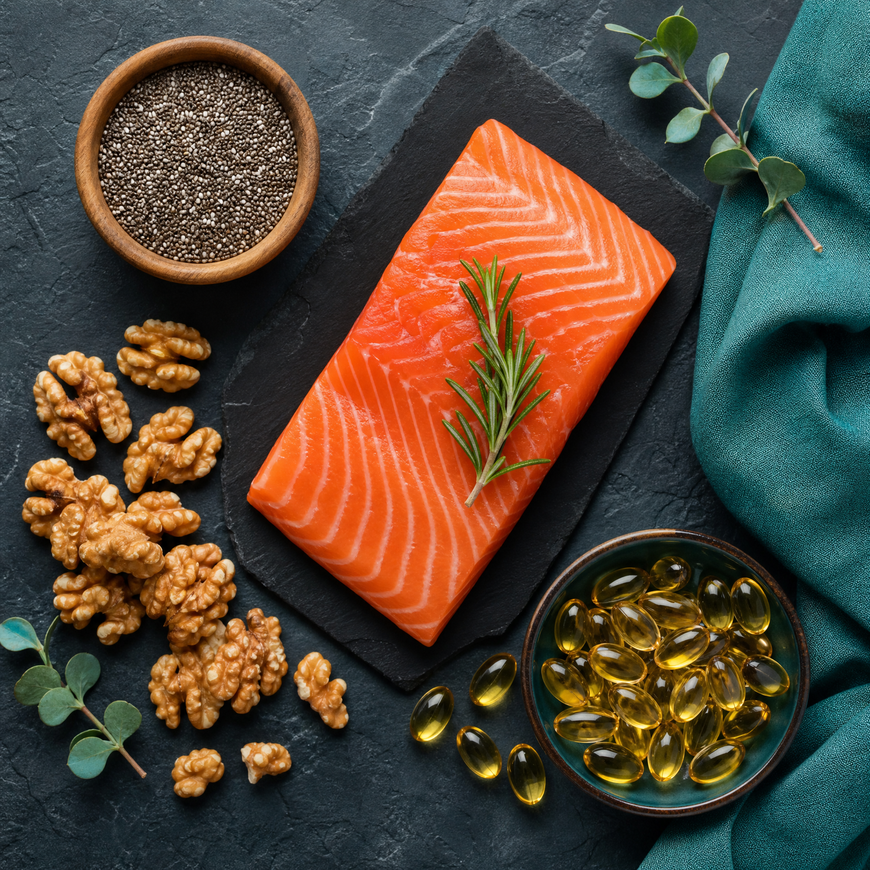
ALA (alpha-linolenic acid). Found in flaxseed, chia, walnuts, and hemp. This is the dietary omega-3 most people assume they’re getting enough of through “healthy eating.” ALA is essential, since the body can’t make it, but on its own it has limited direct biological activity. Its main value is as a precursor for EPA and DHA, so the omega-3 benefits from ALA are mostly indirect.
EPA (eicosapentaenoic acid). Found in fatty fish, fish oil, krill oil, and algae. Most of the omega-3 benefits people notice for mood and inflammation trace back here. This is the omega-3 tied to inflammation control, mood, and cardiovascular function. EPA is the direct precursor to anti-inflammatory eicosanoids and to the specialized pro-resolving mediators (SPMs) that actively shut inflammation down.
DHA (docosahexaenoic acid). Same marine sources. This is the structural omega-3, built directly into cell membranes across the brain, nervous system, and retina. DHA isn’t mainly a signaling molecule; it’s a building block. You don’t feel DHA working. You feel the consequences of not having enough.
The omega-3 deficiency symptoms reported most often in clinic are dry, flaky skin, dry eyes, joint stiffness, trouble concentrating, high triglycerides, and low mood. The most accurate way to measure a deficit is an omega-3 index test, which reports EPA and DHA as a percentage of red blood cell fatty acids. Below 4% lines up with clearly elevated cardiovascular risk, and 8% and above goes with the lowest risk.
Most people in Western countries land between 4 and 6%, which leaves a lot of omega-3 benefits on the table.
EPA vs DHA: two fatty acids with completely different jobs
Quick Answer: EPA (eicosapentaenoic acid) is the functional omega-3. It drives production of resolvins, protectins, and anti-inflammatory eicosanoids, and it’s the active compound behind omega-3’s antidepressant and cardiovascular effects. DHA (docosahexaenoic acid) is the structural omega-3, making up about 40% of polyunsaturated fatty acids in the brain and 60% of fatty acid content in the retina, where it governs membrane fluidity, receptor density, and signal transduction. Most articles blur the two, but the difference decides which supplement fits which goal.
This distinction matters in practice, and most fish oil labels hide it, which is why people miss the omega-3 benefits they’re paying for.
EPA vs DHA, what each does.
EPA produces eicosanoids (signaling molecules) that compete with the pro-inflammatory compounds made from omega-6 arachidonic acid. It also yields resolvins and protectins, a class of compounds Harvard researcher Charles Serhan identified in the early 2000s. These don’t just damp inflammation; they actively resolve it, switching off inflammatory cascades and clearing cellular debris. That difference, resolution versus suppression, is one of the real omega-3 benefits, and it’s almost entirely missing from the marketing.
DHA doesn’t mostly signal. It integrates. DHA gets built into the phospholipid bilayer of cell membranes throughout the brain and nervous system, where it affects membrane fluidity, the density and function of receptors, and how efficiently synapses fire. Low DHA doesn’t cause acute symptoms. It produces a slow background decline in cognitive sharpness, visual acuity, and neural efficiency that creeps in too gradually to pin on any one cause.
Practical implications.
For mood and depression, the omega-3 benefits come from EPA. A 2019 meta-analysis in JAMA Psychiatry found that EPA had to make up 60% or more of total EPA+DHA in the supplement to produce a measurable antidepressant effect. Pure DHA showed no mood benefit. If you’re supplementing for mood, read the label ratio and pick something EPA-dominant.
For brain health and cognitive aging, the omega-3 benefits come mainly from DHA. For pregnancy, DHA is critical (ACOG recommends at least 200mg/day for fetal brain and retina development). For triglycerides, both, but mainly EPA at higher doses. For joint inflammation, EPA.
This is why the label matters. A 1,000mg fish oil capsule that delivers only 300mg combined EPA+DHA, with no ratio listed, gives you no way to tell whether you’re getting the right form for your goal.
The omega-6 to omega-3 ratio: the real problem
Quick Answer: Omega-6 and omega-3 compete for the same metabolic enzyme (delta-6-desaturase), so excess omega-6 suppresses omega-3 metabolism no matter how much omega-3 you take. The human evolutionary diet held an estimated omega-6 to omega-3 ratio of 4:1 or lower; the current Western diet averages 15:1 to 20:1. At that ratio, omega-6-derived arachidonic acid dominates eicosanoid production and drives a chronic pro-inflammatory baseline. Raising omega-3 intake helps more than cutting omega-6 alone, but doing both works best.
Most omega-3 conversations start and end at “take more omega-3,” and miss the denominator, and with it half the omega-3 benefits.
Omega-6 and omega-3 compete for the same processing enzymes, delta-6-desaturase and delta-5-desaturase, in the liver. Those enzymes convert dietary precursors into the long-chain, biologically active forms (EPA, DHA, arachidonic acid). When your dietary ratio of omega-6 to omega-3 is very high, omega-6 crowds omega-3 out at the enzyme level. You can eat a reasonable amount of omega-3 and still convert little of it to EPA and DHA, because omega-6 is dominating the queue and quietly capping your omega-3 benefits.
The main dietary omega-6 is linoleic acid, abundant in corn, soybean, sunflower, and safflower oils, and by extension in nearly every processed food, fast food, and restaurant meal in the Western diet. The flood of these oils into the food supply since the mid-20th century is the main driver of the ratio shift.
In practice, cutting high-omega-6 vegetable oils while adding fatty fish or marine supplements moves the ratio from both ends at once. For inflammation, that ratio correction matters more for your omega-3 benefits than the absolute gram count. Someone who cuts processed-food omega-6 and adds 1g of EPA+DHA a day may get more anti-inflammatory effect than someone who piles 3g of EPA+DHA on top of a high-omega-6 diet.
Omega-3 and inflammation: resolution, not just suppression
Quick Answer: Omega-3s manage inflammation two ways. First, competitive inhibition: EPA competes with arachidonic acid for cyclooxygenase enzymes, lowering pro-inflammatory prostaglandin and leukotriene production. Second, active resolution: EPA and DHA convert into resolvins, protectins, and maresins, specialized pro-resolving mediators that actively terminate inflammatory cascades. That second mechanism, resolution rather than suppression, was identified by Charles Serhan at Harvard and works in a fundamentally different way than NSAIDs or corticosteroids.
The usual explanation for omega-3 and inflammation goes like this: omega-3 competes with omega-6 arachidonic acid for cyclooxygenase enzymes, so you produce fewer inflammatory eicosanoids. True, but only half the story of the omega-3 benefits here.
The other half: EPA and DHA are precursors to specialized pro-resolving mediators (SPMs), namely resolvins (from EPA), protectins (from DHA), and maresins. These aren’t anti-inflammatory in the blunt, suppressive sense. They’re pro-resolution. They signal the immune system to wind a response down, clear the debris, and put tissue back to baseline, which is where many of the omega-3 benefits for joints and recovery come from.
That difference matters in the clinic. NSAIDs block the inflammatory signal but leave resolution unfinished. SPMs finish it. It’s part of why anti-inflammatory drugs can sometimes drag out low-grade inflammation even as they lower its intensity: they interrupt without resolving.
The clinical evidence shows up in joint pain and stiffness (cartilage produces resolvins from EPA, and 12-week supplementation at 2g/day has reduced morning joint stiffness in rheumatoid arthritis patients), in post-exercise recovery (SPMs help clear exercise-induced inflammation faster), and in the growing metabolic-syndrome research, where chronic low-grade inflammation is the central problem.
The anti-inflammatory foods article covers the dietary side. Supplementation works at a mechanistic level that diet alone won’t reach in a matter of weeks. The two complement each other rather than swapping in, so you stack the omega-3 benefits with the dietary ones.
Brain health, mood, and depression: what the evidence actually says
Quick Answer: DHA makes up about 40% of the polyunsaturated fatty acids in the brain and is built into neuron membranes, where it affects receptor density, membrane fluidity, and synaptic efficiency. For mood and depression specifically, EPA is the active compound: a 2019 JAMA Psychiatry meta-analysis found omega-3 supplements with EPA at 60% or more of total EPA+DHA produced a significant antidepressant effect, while pure DHA produced none. Cognitive effects from DHA take 12–24 weeks to show up.
The omega-3 benefits for the brain are easy to oversell: DHA won’t make you smarter, but it maintains the physical substrate your intelligence runs on.
Brain health rests on a structural fact: the human brain is roughly 60% fat by dry weight, and DHA is the most abundant polyunsaturated fatty acid in neural tissue. It’s built straight into the phospholipid bilayer of neuron membranes, where it sets membrane fluidity, receptor mobility, and how well ion channels work. Low DHA leaves neuron membranes less fluid, less responsive to neurotransmitter signals, and less efficient at passing them along.
The timeline: DHA gets incorporated into neural membranes over weeks to months. Measurable cognitive effects (processing speed, working memory, attention) tend to show up in trials between 12 and 24 weeks of consistent use in adults. In developing infants and children the effects are faster and larger, because neural DHA incorporation is still running during a critical growth window.
For depression, the omega-3 benefits come from EPA, not DHA.
A 2019 meta-analysis in JAMA Psychiatry covering 26 trials found that supplements with EPA at 60% or more of combined EPA+DHA produced significant antidepressant effects, with effect sizes that rivaled second-line antidepressants in some analyses. Formulations with less EPA, or pure DHA, showed no significant mood effect.
EPA’s mood mechanism runs through a few channels: lower neuroinflammation (cytokines such as IL-6 and TNF-alpha run high in major depression), competition with arachidonic acid, and possibly effects on the phospholipase A2 pathway that regulates membrane signaling.
One caveat worth stating plainly: these effects are adjunctive for clinical depression. They improve outcomes alongside standard treatment, not as a standalone therapy for moderate-to-severe major depression. For subclinical low mood, the case for EPA-dominant supplementation, and its omega-3 benefits, is reasonably strong.
Heart health: what the major trials actually show (including the negative ones)
Quick Answer: The big randomized trials are mixed on cardiovascular benefit. ASCEND (2018) and VITAL (2019) found no significant drop in major cardiovascular events at standard doses (840mg to 1g EPA+DHA/day) in primary prevention. REDUCE-IT (2019), using high-dose EPA alone (4g/day icosapentaenoic acid), found a 25% reduction in events, though its mineral oil placebo raised methodological questions. The clearest, most consistent effect is on triglycerides: at 2g/day or more of EPA+DHA, omega-3 cuts triglycerides by 15–30%, with a dependable dose-response.
Most claims about omega-3 benefits lean on the heart. The honest picture of the cardiovascular omega-3 benefits is messier than the marketing.
What the major trials found.
ASCEND (2018, NEJM). 15,480 diabetic patients, 840mg EPA+DHA/day, mean follow-up 7.4 years. No significant reduction in major vascular events versus placebo. The fish oil group had slightly fewer heart attacks, offset by slightly more strokes, so the net came out statistically non-significant.
VITAL (2019, NEJM). 25,871 participants, 840mg EPA+DHA/day, 5.3 years. No significant reduction in major adverse cardiovascular events in primary prevention. A post-hoc analysis did find benefit among people who rarely ate fish at baseline, which suggests dietary context matters.
REDUCE-IT (2019, NEJM). 8,179 high-risk patients, 4g/day icosapentaenoic acid (EPA only, not EPA+DHA). A 25% reduction in major events. The catch: the placebo was mineral oil, which on its own raised LDL cholesterol and inflammatory markers in the control group, which likely inflated the apparent benefit. The effect is real, but its size is disputed.
What the evidence supports consistently.
Triglyceride reduction. At 2g/day or more of EPA+DHA, omega-3 lowers triglycerides by 15–30% across many well-controlled trials. It’s one of the most replicated omega-3 benefits in nutrition research. The mechanism is direct inhibition of hepatic VLDL synthesis. My own triglycerides fell from 218 to 164 mg/dL in 12 weeks on 2g of EPA+DHA a day, in line with the trial data, and one of the few omega-3 benefits you can watch on a lab report.
If high triglycerides are your concern, the NIH ODS omega-3 guidance lists current clinical thresholds and dosing.
Plant-based sources and the ALA conversion problem
Quick Answer: Flaxseed, chia, walnuts, and hemp supply alpha-linolenic acid (ALA), which the body converts to EPA and DHA. Average conversion in healthy adults runs 5–10% of ALA to EPA and under 1% of ALA to DHA. High omega-6 intake (which competes for the same enzymes), poor thyroid function, aging, and dietary trans fats all push conversion lower. Relying only on plant sources doesn’t reliably keep EPA up, and almost never keeps DHA at an optimal level.
The flaxseed story, and the plant-based omega-3 benefits people hope it delivers, needs some clarity, because the wellness internet has oversold it.
Plant foods give you ALA, and with it a narrower slice of the omega-3 benefits. ALA is essential, but it’s a precursor, not a replacement. The conversion runs from ALA to SDA to EPA to DPA to DHA, and each enzymatic step has its own low, variable conversion rate. In well-controlled studies of healthy adults eating enough ALA, EPA in the blood may rise a little (5–10% of ALA converting to EPA), but DHA stays essentially flat on ALA alone (under 1% conversion).
This has real consequences for vegans. A 2014 study in The American Journal of Clinical Nutrition found long-term vegetarians had measurably lower blood EPA and DHA than omnivores eating the same total fat, even though they often ate more ALA from flaxseed and walnuts. That DHA gap specifically tracks with differences in cognitive aging in longitudinal data.
What ALA does contribute. ALA has its own modest direct anti-inflammatory activity and matters for membrane integrity in some tissues. Getting enough ALA (2g+/day) is worthwhile. It just doesn’t deliver the full omega-3 benefits of marine EPA+DHA.
The plant-based solution. Algae-based omega-3. This is where marine omega-3 comes from in the first place: fish accumulate EPA and DHA by eating algae, or by eating smaller fish that ate algae. Algae supplements deliver DHA directly, and increasingly EPA too, so vegans can still get most of the omega-3 benefits in a form that’s bioavailable and free of heavy-metal worries. It’s also the most sustainable option in the supply chain. (See the comparison below.)
Krill oil vs fish oil vs algae: how to choose and how much to take
Quick Answer: Fish oil delivers EPA and DHA in triglyceride form (standard bioavailability). Krill oil delivers them in phospholipid form, with roughly 68% higher bioavailability, plus astaxanthin, an antioxidant that also slows the oil’s oxidation in the capsule. Algae-based omega-3 is the original marine source (the origin of fish oil itself), supplies DHA reliably and EPA in newer formulations, and suits vegans. On dosage: the evidence threshold for most benefits is 1–2g combined EPA+DHA/day; for triglycerides, 2–4g/day; for adjunctive depression use, EPA-dominant at 1–2g EPA/day.
Fish oil. The standard route to the omega-3 benefits, with EPA and DHA in triglyceride form. Bioavailability is decent but variable; enteric-coated capsules and taking it with a fat-containing meal improve absorption by 50–60%. Quality varies enormously, and a rancid capsule erases the omega-3 benefits. Check the TOTOX value, a measure of oxidation (fresh is under 10, acceptable is under 26, higher than that means rancid). A rancid capsule can generate more lipid peroxidation than benefit. Nordic Naturals and Carlson Labs score well on third-party oxidation testing. Detailed product selection is in the fish oil article.
Krill oil. EPA and DHA in phospholipid form. That phospholipid structure slots into cell membranes more readily, giving roughly 68% better bioavailability than standard triglyceride fish oil in head-to-head absorption trials. It carries astaxanthin (a carotenoid antioxidant) at about 0.1–0.5mg per capsule, which adds antioxidant benefit and keeps the oil from oxidizing in the capsule. You get the omega-3 benefits at a smaller effective dose, but you pay more per gram of EPA+DHA than with standard fish oil.
Algae-based omega-3. DHA-dominant, though some newer formulations include meaningful EPA. The big advantage is that it sidesteps heavy-metal accumulation (algae-based DHA doesn’t concentrate methylmercury the way predatory fish do), and it suits vegetarians and vegans. Algae oil is what the fish eat, so you’re taking the molecule from the primary source rather than the secondary one. Solid brands include Nordic Naturals Algae Omega, Ovega-3, and Testa.
Krill oil vs fish oil, the bottom line. If cost is the constraint, standard fish oil from a quality brand with a verified TOTOX value. If absorption and brain delivery matter most, krill oil. If you’re vegan or worried about sustainability and heavy metals, algae. All three deliver the omega-3 benefits, and none is dramatically better for most uses.
Omega-3 dosage, practical targets.
- General health and maintenance: 1–2g combined EPA+DHA/day
- Triglyceride reduction: 2–4g/day (prescription-grade icosapentaenoic acid at 4g/day for severe hypertriglyceridemia, with a physician)
- Depression, adjunctive: 1–2g EPA/day in an EPA-dominant formulation
- Pregnancy: at least 200mg DHA/day (ACOG), with 300–600mg DHA preferable
- Cognitive aging: 1–2g/day of a DHA-rich formulation, sustained for at least 6 months
The omega-3 benefits track the active EPA+DHA, so check the actual amount per serving, not the “fish oil” dose. A 1,000mg fish oil capsule from a low-concentration brand may hold only 300mg of EPA+DHA, so you’d need three capsules to reach 1g of active omega-3.
Timeline expectations.
- Triglycerides: 4–8 weeks
- Inflammation markers: 8–12 weeks
- Mood (EPA-dominant): 12–16 weeks
- Cognitive effects: 12–24 weeks
- Brain structural changes: 6+ months
The most common reason people decide omega-3 “didn’t work” is quitting at 8 weeks, before the slower omega-3 benefits have had time to develop.
Frequently Asked Questions
Can you get enough omega-3 from food alone?
Two 3oz servings of fatty fish a week (salmon, sardines, mackerel, herring) give you roughly 1,000–2,000mg of EPA+DHA, enough for the general-maintenance omega-3 benefits. If your fish intake is irregular or low, a supplement hits that threshold more reliably. Plant foods give you ALA, not EPA or DHA directly, so "eating flaxseed" doesn't stand in for marine sources.
What are the signs that omega-3 is working?
The first measurable response is usually triglycerides; a blood panel at 8 weeks will show it if the dose is adequate. Skin hydration often improves within 4–6 weeks as DHA gets into skin cell membranes. Joint stiffness eases over 8–12 weeks. Mood, on an EPA-dominant formula, shifts around 12–16 weeks. Cognitive clarity from brain DHA takes 3–6 months. Most omega-3 benefits are measured before they're felt, so don't expect much in the first month for most of these.
Is there anyone who shouldn’t take omega-3?
People on blood thinners (warfarin, clopidogrel) should check with their physician first, since omega-3 has mild antiplatelet effects that can add to bleeding risk above 3g/day. Surgical patients are usually told to pause omega-3 one to two weeks before an operation for the same reason. At standard doses (1–2g/day), the large majority of adults can get the omega-3 benefits safely, including in pregnancy at appropriate doses.
Why do some fish oil capsules smell and taste strongly of fish?
A strong fish smell signals oxidation, the lipid peroxidation products (aldehydes, peroxides) that form when omega-3 fatty acids meet heat, light, or air during processing or storage. Fresh, high-quality fish oil should barely smell, even with a capsule cut open. A strong fishy odor, or fishy burps hours after taking it, is a reliable sign of rancidity. Refrigerating fish oil after opening and checking the TOTOX value at purchase are the two best ways to avoid it.
How is omega-3 different from omega-6?
Both are polyunsaturated fatty acids, but they produce opposing downstream signals. Omega-6, mostly through arachidonic acid, produces pro-inflammatory eicosanoids. Omega-3, through EPA and DHA, produces anti-inflammatory and pro-resolving mediators. Both are essential; omega-6 is critical for immune function and wound healing. The problem is the ratio, not omega-6 itself. The omega-3 benefits come from fixing the ratio toward 4:1 or lower, not from wiping out omega-6.
This article is for informational purposes only. Omega-3 supplements are generally safe at standard doses, but individuals with bleeding disorders, on anticoagulant medications, or with specific medical conditions should consult a physician before supplementing. Do not discontinue prescribed medications in favor of supplements.

Mimo Karam is the founder and writer at LifestyleMine. She writes about daily habits, nutrition, sleep, and emotional wellness, turning research into practical advice for people who want to live healthier without making it complicated.