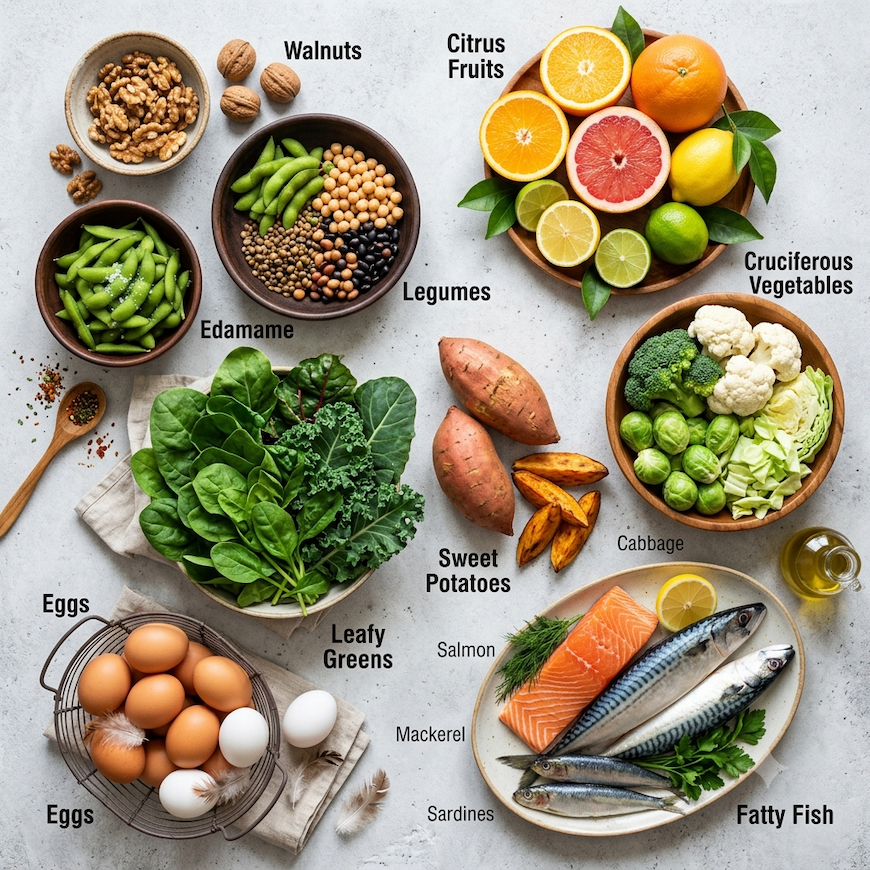
Somewhere in 2024 I started paying closer attention to what I was actually eating. Not counting calories, not following a protocol. Just noticing which foods kept showing up in my week and which didn’t. Six months in, I had a rough list of eight that I’d been eating regularly, and a clear sense that something had shifted. My energy held steadier through the day. I slept better. The 3pm crash I’d written off as normal just stopped happening.
I won’t pin all of that on eight foods. But these are the ones that kept surfacing when I went looking for why I felt different. None of it is trendy or expensive. Just foods your biology puts to work in specific, well-documented ways that most people never hear about.
Not because a wellness influencer ranked them, but because of what happens in your cells when you eat them regularly. These are the foods your body needs.
ADVERTISEMENT
1. Fatty fish (salmon, mackerel, sardines)
If there’s one food your body needs that most Western diets fall short on, it’s the long-chain omega-3 fats EPA and DHA.
EPA (eicosapentaenoic acid) works mostly on inflammation. It competes with arachidonic acid in the body’s inflammatory pathways and tamps down the pro-inflammatory signaling molecules that come out of them. That matters, because chronic low-grade inflammation sits underneath heart disease, metabolic syndrome, neurodegenerative conditions, and mood disorders. It’s what puts oily fish near the top of any list of foods that reduce systemic inflammation.
DHA (docosahexaenoic acid) does something different. It’s structural. It builds itself into your cell membranes, especially in neurons. Your brain is roughly 60% fat by dry weight, and DHA makes up a big share of the fatty acids in gray matter. Get enough and you’re looking at better cognition, lower dementia risk, and steadier mood. That’s not some downstream side effect. It comes straight from membrane fluidity, which governs how cleanly neurons fire signals. That also lands fatty fish among the foods that support brain chemistry and mood.
The catch: your body can’t make EPA and DHA efficiently from ALA, the plant omega-3 in walnuts and flaxseed. Conversion tops out around 5 to 10%. For a reliable DHA status, marine sources are the way there. The NIH’s omega-3 fact sheet has the intake numbers.
How much: Two servings of fatty fish a week is the standard American Heart Association recommendation. A serving runs about 100 to 140g cooked.
Wild vs. farmed: Wild salmon carries a better omega-3 to omega-6 ratio. Farmed salmon can run high in omega-3 too, depending on what it’s fed, though it also tends to carry more contaminants. Norwegian farmed Atlantic salmon is usually one of the cleaner picks. Sardines and mackerel sit low on the food chain, so they’re low in mercury, high in omega-3, and cheap.
How to cook: High heat wrecks omega-3s. Poach, steam, or bake at 180°C instead of frying hot.