About two years before I understood why, I went through a season where my nails kept splitting at the tips. Not breaking dramatically, just splitting, in a way they never had before. My hair felt different too. Thinner in texture. Duller at the ends.
I was in a phase of eating what I thought was “lighter.” Less meat, less fat, simpler meals. I felt fine. But my dermatologist asked me, fairly directly, what I’d been eating, and I didn’t have a useful answer.
She explained that hair, skin, and nails are the tissues the body treats as low priority in how it distributes nutrients. When intake is adequate, these tissues get what they need. When intake drops, even modestly, the body sends nutrients to more critical systems first, and hair, skin, and nails show the shortfall early.
It took about three months of eating differently before my nails stopped splitting. The hair took closer to five. I won’t pretend it was a dramatic transformation, because it wasn’t. But the link between what I was eating and what was happening to these tissues was, in hindsight, completely direct.
This article covers the eight foods for healthy hair, skin, and nails with the strongest evidence behind them. Not as beauty-food promises, but as nutritional inputs into biological systems that need specific raw materials to do their job.
Why Hair, Skin & Nails Show Deficiency First
Hair, skin, and nails are all built from proteins, mainly keratin (hair and nails) and collagen (skin), and producing them takes a steady supply of specific amino acids, vitamins, and minerals. The body can’t stockpile most of these in any quantity. So when dietary intake drops, production slows.
Hair grows about 1 to 1.5 centimeters a month from follicles that constantly cycle through growth and rest phases. When a nutrient deficiency disrupts a follicle’s growth phase, that hair falls out, but it shows up in your brush 2 to 4 months later, because that’s how long the cycle takes. That lag is exactly why connecting diet to hair loss takes time and attention.
Skin’s collagen layer turns over more slowly still, so changes appear over months rather than weeks. Nails grow about 3 millimeters a month, and nail changes usually reflect what was going on nutritionally 3 to 6 months ago.
The practical implication is simple: foods for healthy hair, skin, and nails need to be consistent dietary habits, not occasional additions.
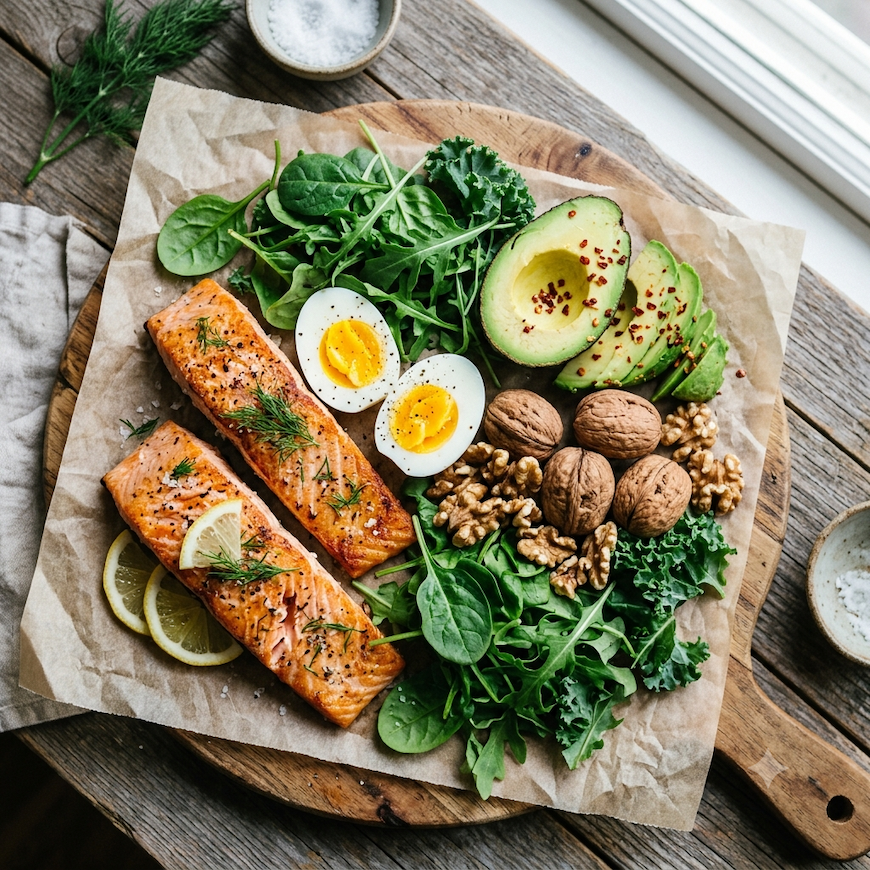
1. Fatty Fish (Salmon, Sardines, Mackerel)
For sheer coverage, fatty fish is the single most complete food for healthy hair and skin on this list.
What it provides: Omega-3 fatty acids (DHA and EPA), complete protein, vitamin D, and selenium.
What omega-3 does: Sebum is the natural oil that keeps the scalp moisturized and the hair shaft protected. DHA is a structural component of both sebum and the cell membranes in skin tissue. Low omega-3 intake tracks consistently with a dry, flaky scalp, dull hair, and a weaker skin barrier. EPA brings down systemic inflammation, which drives hair follicle miniaturization (early hair thinning) and faster skin aging.
What the protein does: Hair is roughly 95% keratin, a protein the body assembles from amino acids. Without enough dietary protein, keratin production slows. Fatty fish gives you a complete amino acid profile, including cysteine, which matters a lot for keratin’s cross-linked structure.
Practical guidance: Two to three servings of fatty fish a week hits the omega-3 and protein levels research links to measurable hair and skin benefits. Sardines are the most nutrient-dense option for the money.
2. Eggs: Biotin, Protein, and the Nail-Strength Nutrient
Eggs are probably the most targeted food for healthy hair, skin, and nails because they cover the exact deficiency most people with brittle nails and slow hair growth are missing.
What they provide: Biotin (vitamin B7), complete protein, zinc, selenium, and vitamin D in the yolk.
What biotin does: Biotin is a cofactor for the enzymes involved in keratin synthesis. Biotin deficiency, even mild, is directly linked to brittle nails, hair thinning, and skin rash. The NIH Office of Dietary Supplements notes that data is limited on biotin’s effect in people who are NOT deficient, which means the supplement industry’s “biotin for hair growth” pitch really only applies to people who are actually low in it.
Two whole eggs hold roughly 20mcg of biotin, about 67% of the adequate daily intake, and the yolk holds all of it. Egg whites contain avidin, a protein that binds biotin and blocks its absorption when eaten raw, which is why cooked eggs do more for your biotin status than raw ones.
What zinc does: Zinc is required for protein synthesis and cell division in the fast-dividing cells of the follicle. Low zinc is a documented cause of hair loss, and in people who are deficient, zinc supplementation reverses it.
Practical guidance: Two eggs most mornings delivers biotin, zinc, and complete protein in one go. Cook them, always, since raw egg whites block biotin absorption.
3. Sweet Potatoes: Vitamin A for Sebum and Cell Turnover
Sweet potatoes rank among the best foods for healthy skin, and they work through the vitamin A pathway.
What they provide: Beta-carotene (which the body converts to vitamin A), vitamin C, and B6.
What vitamin A does: Vitamin A regulates sebum production in hair follicles and skin glands. Without enough of it, follicles clog, the scalp dries out, and skin cell turnover slows. Retinol (preformed vitamin A) and beta-carotene (the plant-based provitamin A) both feed this, but beta-carotene is self-regulating. The body converts only what it needs, so a high intake doesn’t carry the toxicity risks tied to preformed vitamin A supplements.
One medium sweet potato delivers 4 to 5 times the daily recommended vitamin A as beta-carotene, and that’s entirely safe precisely because the conversion is regulated.
Vitamin A also supports the skin barrier, the outermost layer that holds in moisture and fends off environmental damage. Low intake shows up as rough, dry skin texture and slower healing.
Practical guidance: Two to three sweet potatoes a week, roasted, mashed, or in a stew, gives your follicles and skin barrier the beta-carotene they need.
4. Leafy Greens: Iron and Vitamin C for Hair Structure
Leafy greens hit two of the most common deficiency-driven causes of hair loss at once: low iron and low vitamin C.
What they provide: Non-heme iron, vitamin C, folate, and vitamin K.
Why iron matters for hair: Ferritin (stored iron) is needed for the follicle’s growth phase. When ferritin drops, even short of full anemia, follicles enter the resting phase early and shed prematurely. Iron-deficiency hair loss is the most common nutritional hair loss in women, and it gets missed routinely because serum iron can read normal even when ferritin is low. The American Academy of Dermatology specifically lists low ferritin as a common, treatable cause of hair loss in women.
Why vitamin C matters: Vitamin C is required for collagen synthesis (collagen being the structural protein of skin), and it sharply boosts absorption of non-heme iron from plant foods. Eating spinach alongside a vitamin C source, or dressing a salad with lemon, can raise iron absorption from that meal by up to three times.
Practical guidance: A large handful of spinach or kale daily, dressed with lemon juice for the vitamin C, covers both mechanisms.
Related: Anti-inflammatory foods: how chronic dietary inflammation affects skin and hair over time →
5. Nuts and Seeds: Vitamin E, Zinc, and Selenium
Nuts and seeds are foods for healthy hair, skin, and nails through three distinct pathways.
Almonds and sunflower seeds → Vitamin E: Vitamin E is a fat-soluble antioxidant that concentrates in skin tissue, where it shields cell membranes from oxidative damage, the slow accumulation from UV, pollution, and ordinary metabolism that produces visible skin aging. Almonds are one of the single richest dietary sources of vitamin E.
Pumpkin seeds and cashews → Zinc: As above, zinc is needed for protein synthesis in the fast-dividing cells of the hair follicle. Pumpkin seeds are among the richest plant sources of it.
Brazil nuts → Selenium: One Brazil nut holds roughly 75mcg of selenium, about 140% of the daily requirement. Selenium is a cofactor for antioxidant enzymes in skin tissue and is essential for thyroid function, and low thyroid activity causes hair loss on its own, regardless of nutritional status. Two Brazil nuts a week is an efficient, sufficient dose.
Walnuts → Omega-3: Plant-based ALA omega-3, plus copper, which the body needs to make the melanin that gives hair its color.
Practical guidance: A mixed 30-gram handful a day (almonds, pumpkin seeds, one Brazil nut) covers vitamin E, zinc, selenium, and plant omega-3 efficiently.
6. Avocado: Skin’s Lipid Barrier and Vitamin E
Avocados are foods for healthy skin mostly because of their fat composition.
What they provide: Monounsaturated fats, vitamin E, vitamin C, B vitamins, and potassium.
A lipid barrier in the outermost layer of skin protects it from moisture loss. When dietary fat runs too low, that barrier gets compromised, so skin loses water faster, dries out, and ages more visibly. Avocado’s monounsaturated fats suit this barrier especially well, because they get built into skin cell membranes.
Avocado also brings a meaningful vitamin E dose (about 21% of daily needs per half) alongside that fat, and since vitamin E is fat-soluble, it absorbs better in the presence of dietary fat. In effect, the avocado delivers its own absorption system.
One of the clearest signs of dietary fat restriction is skin dryness that won’t respond to topical moisturizer, because you can only hydrate what’s already being properly maintained from the inside.
7. Oysters: The Highest Zinc Food Source
If your nails break constantly, your hair grows slowly, or your skin is slow to heal, oysters earn a specific mention.
Oysters carry more zinc per serving than any other food, roughly 5.5mg per medium oyster, against 2.4mg in beef and 0.6mg in chicken. Zinc deficiency is common worldwide (an estimated 17% of the global population) and produces specific hair, skin, and nail changes: slow nail growth, white spots on nails, hair thinning from follicle disruption, and skin that heals poorly.
Most people don’t eat oysters regularly. The practical workaround is stacking other zinc sources (pumpkin seeds, beef, eggs, legumes) to reach an adequate intake. But if you do eat them, 4 to 6 per sitting covers your zinc needs for several days.
8. Berries and Citrus: Vitamin C for Collagen
Collagen is the structural scaffold of skin, the protein that gives it firmness, elasticity, and the ability to snap back into shape after movement. Vitamin C isn’t optional for making it. It’s a required cofactor for the enzymes that build collagen’s cross-linked structure, and without enough of it, collagen synthesis slows while existing collagen breaks down faster.
That’s why scurvy (extreme vitamin C deficiency) causes skin breakdown and failed wound healing. Modern adults don’t get scurvy, but sub-optimal intake, skipping fruit and vegetables for days on end, still slows collagen production in a measurable way.
Strawberries, raspberries, and citrus each deliver 50 to 90mg of vitamin C per serving, meeting or beating the daily requirement (75mg for women, 90mg for men). Kiwi is one of the highest vitamin C fruits by weight.
Practical guidance: A single serving of berries or citrus a day covers collagen production with no supplementation needed.
What Actually Harms Hair, Skin & Nails
The foods for healthy hair, skin, and nails conversation has a flip side worth naming.
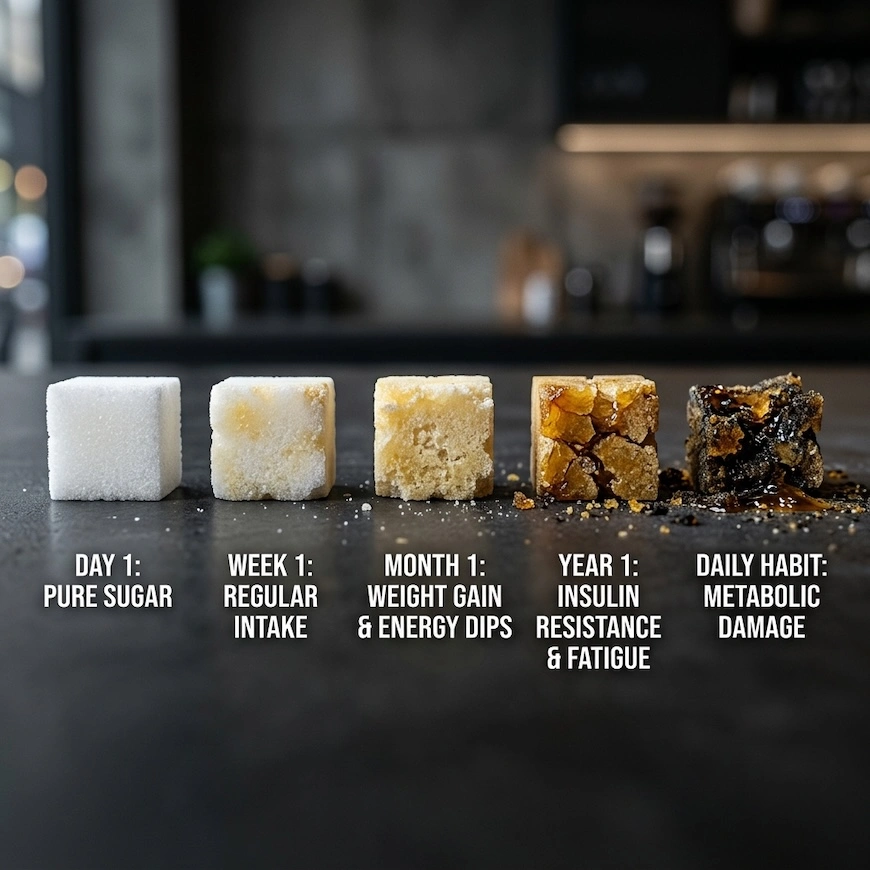
Sugar and ultra-processed food: Sugar creates Advanced Glycation End Products (AGEs), molecules that form when sugar binds to proteins in the body, collagen included. AGEs cross-link and stiffen collagen, which feeds visible skin aging, lost elasticity, and slower wound healing. This is a mechanism, not a metaphor. A high sugar intake speeds up collagen degradation.
Alcohol: Alcohol blocks biotin absorption, drains zinc and B vitamins, and dehydrates the skin barrier. Regular heavy drinking is one of the fastest routes to a visible drop in skin quality.
Extreme calorie restriction: As I mentioned, hair, skin, and nails are the first tissues to lose nutrient priority when calories fall hard. Crash diets reliably trigger temporary hair shedding 2 to 4 months after the restriction.
When Hair Loss or Skin Changes Are Bigger Than Diet
This part needs saying plainly: significant hair loss, persistent nail changes, or sudden skin changes are not only nutritional. They can signal thyroid disease, anemia, autoimmune conditions, hormonal shifts (postpartum, perimenopausal), or medication side effects.
The foods for healthy hair, skin, and nails described here support maintenance and gradual improvement in generally healthy adults. They aren’t a substitute for investigating sudden or severe changes.
If you’re shedding more than 100 to 150 hairs a day (beyond the normal growth-cycle shedding), seeing real nail pitting or discoloration, or noticing rapid changes in skin texture, see a dermatologist. A basic blood panel (iron and ferritin, thyroid, B12, vitamin D, zinc) will show whether a deficiency is the driver or something else needs looking into.
Related: Signs of magnesium deficiency: how mineral status affects your hair, nails, and skin over time →
Frequently Asked Questions
Which single nutrient matters most for nails?
Biotin and zinc together, though biotin alone is unlikely to help unless you're actually deficient. The supplement industry oversells biotin for nails. Zinc gets underplayed by comparison, and it's probably the more common deficiency behind brittle, slow-growing nails.
Do foods for skin really work as well as skincare products?
For different things, yes. Topical products work on the surface. Dietary nutrition works on the tissue itself: the collagen layer, the lipid barrier, cellular turnover. The best skin outcomes come from both at once. A vitamin C serum and dietary vitamin C aren't redundant; they act at different depths through different mechanisms.
How long until diet changes show in hair and nails?
Nails: 3 to 6 months, since they grow slowly and reflect your past nutritional status. Hair: 2 to 5 months for shedding to slow, 6 to 12 months for a visible change in fullness. Skin: 4 to 8 weeks for early gains in texture and hydration, 3 to 6 months for collagen-level change. It takes patience. The changes are real, but they move at biological speed.
Is biotin supplementation better than food sources of biotin?
Only if you're deficient and can't reliably eat eggs. Biotin from food is well-absorbed. High-dose biotin supplements (5,000 to 10,000mcg) add nothing over adequate food intake for people who aren't deficient, and they do interfere with certain lab tests (thyroid, cardiac, hormone panels) by binding to the assay reagents. If you take high-dose biotin, tell your doctor before any blood work.
What causes brittle nails besides diet?
Frequent hand-washing or long water exposure (that wet-dry cycling), nail polish remover (acetone), hypothyroidism, iron-deficiency anemia, fungal nail infection, and certain medications. Diet is one factor, not the whole story. Persistent brittle or pitted nails warrant a dermatology check.
Can dehydration affect hair and skin?
Directly, yes. The skin barrier needs adequate hydration to hold its lipid structure together. Chronic mild dehydration speeds up the decline in skin texture, especially around the eyes and mouth. Hair-shaft moisture comes from the scalp's sebum and from internal hydration, so very low water intake feeds dry, brittle hair. Eight glasses a day is a rough guideline; your urine color (pale yellow means adequate) is a more accurate read.
The Takeaway
My dermatologist didn’t say “eat better and your hair will fix itself.” She pointed at specific nutrients (protein, zinc, iron, biotin) and tied each to a specific tissue function. That conversation changed how I think about foods for healthy hair, skin, and nails.
These tissues aren’t vanity. They’re outputs of your nutritional inputs. Fatty fish, eggs, sweet potatoes, leafy greens, nuts and seeds, avocado, oysters, and berries, each one addressing a specific mechanism that hair, skin, and nails depend on.
The timeline is slow. Diet-driven improvements take months, not days. But they’re also the only approach that changes the tissue itself rather than its surface appearance. Skincare is external. Nutrition is structural.
The nails that started splitting two years ago are fine now. That’s not a product story. It’s a grocery-list story.
All content on LifestyleMine is for informational and educational purposes only. Significant hair loss, nail changes, or skin changes should be evaluated by a qualified healthcare professional or dermatologist, as they can indicate conditions beyond nutritional deficiency.

Mimo Karam is the founder and writer at LifestyleMine. She writes about daily habits, nutrition, sleep, and emotional wellness, turning research into practical advice for people who want to live healthier without making it complicated.