What Is Psoriasis and Can It Be Cured?
Quick Answer: Psoriasis is a chronic autoimmune condition in which T-cells mistakenly attack healthy skin cells, triggering an accelerated skin cell turnover cycle of 3–5 days instead of the normal 28–30 days. This produces the characteristic red, scaly plaques. There is currently no cure. However, four treatment categories, topicals, phototherapy, systemic medications, and biologics, can produce sustained remission in most people when matched to their psoriasis type and severity.
I started reading up on psoriasis after a close friend was diagnosed in her late twenties during a brutal stretch at work. Her dermatologist kept her on topical steroids for six months before sending her to a specialist. What surprised me wasn’t how complicated the drugs are. It was how long it takes to find the one that fits a person’s pattern and triggers.
Psoriasis treatment isn’t one-size-fits-all. The same condition shows up in five types, behaves differently when it’s mild, moderate, or severe, and reacts differently to the same drug depending on where it lands on the body. Something that helps scalp psoriasis might do almost nothing for psoriatic arthritis. The plan for someone with mild plaque psoriasis looks nothing like what someone with erythrodermic psoriasis needs.
This article walks through what psoriasis actually is at the immune level, then the four psoriasis treatment categories (topicals, phototherapy, systemic medications, and biologics) in plain clinical terms: what each one does, who it suits, and what realistic results look like.
What psoriasis actually is
Quick Answer: Psoriasis is a T-cell-mediated autoimmune disease. Activated T-helper cells (mainly Th17) release inflammatory cytokines (IL-17, IL-23, and TNF-alpha) that tell keratinocytes, or skin cells, to multiply. Normal skin turns over in 28 to 30 days; in psoriasis-affected skin it takes 3 to 5 days, so immature cells pile up into raised, scaly plaques. The genetic risk variant HLA-C*06:02 shows up in roughly 65% of people with psoriasis.
Psoriasis often gets described as a disease that speeds up skin cell growth. True, but it skips the part that matters: the skin cells aren’t the problem. The immune system is sending them the wrong signal.
The immune mechanism is worth knowing because it explains why the categories of psoriasis treatment work the way they do. Topicals calm the local inflammation at the skin surface. Phototherapy dials down immune activity in the skin itself. Systemic medications suppress immune function more broadly. Biologics block the specific cytokines (IL-17, IL-23, TNF-alpha) that drive the fast cell turnover.
The five types of psoriasis:
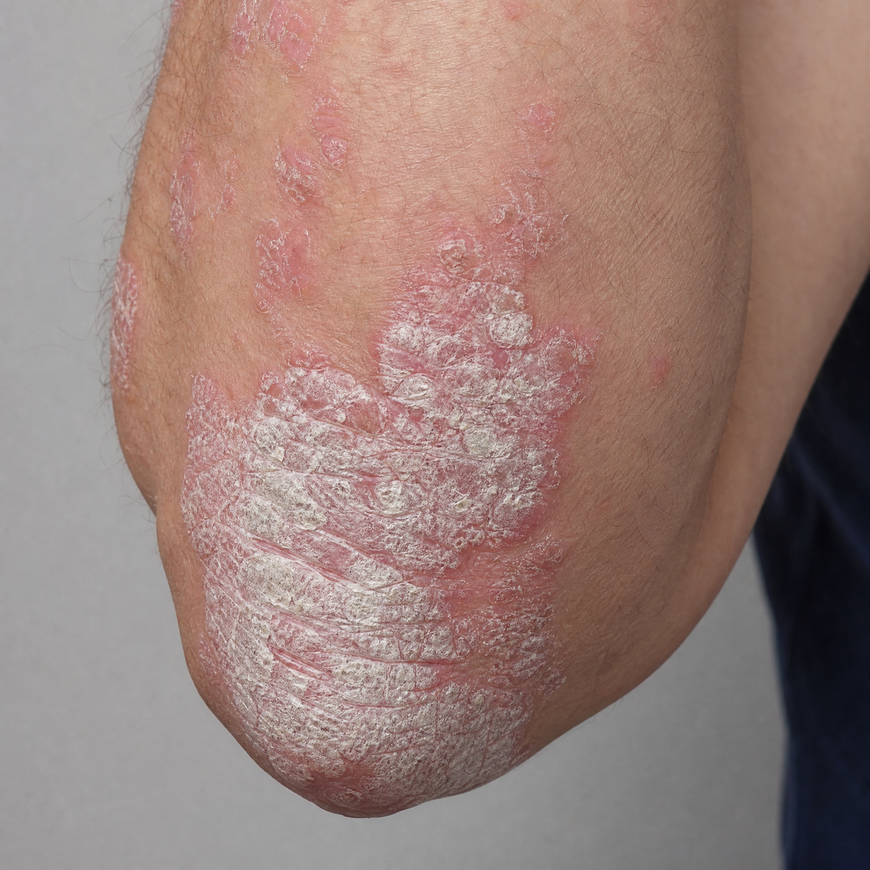
Plaque psoriasis is the common one, 80 to 90% of cases. Raised red patches topped with silvery-white scale, usually on the elbows, knees, lower back, and scalp. The edges are well defined, which helps tell it apart from eczema.
Guttate psoriasis shows up as small, raindrop-shaped spots across the torso, arms, and legs. It often follows a strep throat infection and is more common in children and young adults. It can clear on its own or settle into plaque psoriasis.
Inverse psoriasis sits in the skin folds: armpits, groin, under the breasts. The patches are red and smooth rather than scaly, and friction and sweat make them worse. Topicals are the main approach.
Pustular psoriasis looks like white pustules ringed by red skin. It can stay localized to the palms and soles or spread. The generalized version is rare and can be a medical emergency that needs hospital care.
Erythrodermic psoriasis is the rarest and most dangerous form, a fiery redness across most of the body. It’s a medical emergency: it wrecks the skin’s ability to hold temperature and fluid steady, so it needs immediate attention.
Roughly a third of people with psoriasis develop psoriatic arthritis, an inflammatory arthritis in the joints that often shows up alongside or after the skin symptoms. Catching it early matters: untreated, it can do permanent joint damage.
Topical treatments: the first-line psoriasis treatment
Quick Answer: Topical treatments (creams, ointments, foams, and shampoos applied to the skin) are the first-line psoriasis treatment for mild-to-moderate disease covering less than 10% of the body. Corticosteroid creams are the most effective and most prescribed psoriasis treatment option. Non-steroidal topicals like vitamin D analogs (calcipotriene), calcineurin inhibitors, and coal tar are used for maintenance, in sensitive areas, or when steroid side effects are a worry. The National Psoriasis Foundation Seal of Recognition flags OTC products made for psoriasis-prone skin.
For mild psoriasis, meaning it covers less than 10% of the body and isn’t seriously hurting quality of life, topical psoriasis treatment on its own is usually enough.
Corticosteroid creams (prescription and OTC). Topical steroids bring down inflammation by quieting the cytokine signaling that drives the fast turnover. For quick relief, no other topical psoriasis treatment beats them. Prescriptions run from mild potency (hydrocortisone 1%) for delicate areas up to super-high-potency formulas for thick plaques on hands and feet. Used too long they can thin the skin, cause easy bruising, and, with strong steroids over large areas, suppress the adrenal glands. That’s why doctors cycle them with planned breaks rather than running them nonstop.
Vitamin D analogs (calcipotriene/calcipotriol, Rx). These synthetic vitamin D3 derivatives slow keratinocyte growth and push the cells toward normal maturation. They don’t thin the skin, so they’re often alternated with steroids (steroid on weekdays, the analog on weekends) to keep the benefit while cutting steroid risk. They’re weaker on very thick plaques.
Coal tar. One of the oldest forms of psoriasis treatment around, going back to the 1800s. It slows cell turnover and helps with both inflammation and itch. You can buy it OTC as shampoos and creams. It works best on the scalp and on thin plaques. The downsides: it stains, it smells strong, and it makes skin a bit more sun-sensitive.
Salicylic acid. This one is mainly a keratolytic, which means it breaks down and lifts the scale off plaques so whatever you put on next can actually get in. The FDA lists OTC salicylic acid products for psoriasis treatment. On its own it makes plaques look better without touching the inflammation underneath.
Phototherapy: light therapy for moderate psoriasis
Quick Answer: Phototherapy uses ultraviolet (UV) light to tamp down T-cell activity in the skin and slow keratinocyte growth. Narrowband UVB (NB-UVB, 311 to 313nm) is the current standard, more targeted and safer than older broadband UVB while working just as well or better. A typical course runs 20 to 36 sessions at 2 to 3 times a week, a range one study in Dermatology and Therapy linked to the highest remission rates [verify citation before publishing]. Most commercial insurance covers clinic-based phototherapy, though home units usually aren’t reimbursed.
Phototherapy is one of the more underused options for psoriasis treatment. It works, it isn’t systemic (it doesn’t hit the whole body the way oral drugs do), and it fits moderate psoriasis that topicals alone haven’t handled.
How it works. UV light reaches the outer skin layer and suppresses the T-cell activity behind the plaques. UVB is absorbed by DNA in fast-dividing cells, which slows them down. Narrowband UVB is preferred because the 311 to 313nm band does most of the therapeutic work while skipping the wavelengths most tied to skin damage and cancer risk.
PUVA (psoralen plus UVA). An older approach that pairs UVA light with a photosensitizing drug (psoralen, swallowed or applied before the session). It’s very effective but carries more long-term skin cancer risk than NB-UVB, so it’s mostly held back for cases that didn’t respond to NB-UVB or for certain psoriasis types.
What to expect. Figure on 20 to 36 sessions at 2 to 3 a week, with noticeable improvement around session 10 to 15 and best results by session 30 to 36. Each session lasts 2 to 10 minutes depending on skin type and UV sensitivity. During psoriasis treatment you might get temporary redness, itching, and the occasional mild blister early on while the dose is dialed in. Long term, extended therapy raises the risk of photoaging and skin cancer, so the total lifetime light dose gets tracked and treatment is paused periodically.
Phototherapy isn’t for people with a history of skin cancer or with conditions that make them more UV-sensitive, such as lupus, xeroderma pigmentosum, or porphyria.
Systemic medications: when topicals and light aren’t enough (Rx only)
Quick Answer: Systemic psoriasis treatment means oral or injected drugs that change immune function throughout the body, not just at the skin. These are for moderate-to-severe psoriasis (more than 10% of the body) or psoriasis that’s badly hurting quality of life despite topicals and phototherapy. All are prescription-only and need regular monitoring. The three most established are methotrexate, cyclosporine, and acitretin, each with its own mechanism, efficacy, and contraindications.
Everything in this section is prescription-only psoriasis treatment. A dermatologist sets the dosing, picks the drug, and runs the monitoring based on your history.
Methotrexate (Rx). It started as a chemotherapy drug. It blocks dihydrofolate reductase, an enzyme involved in DNA synthesis and cell division, which slows the rapid skin-cell turnover in psoriasis, and it calms inflammation in its own right. As a systemic psoriasis treatment it works well for both plaque psoriasis and psoriatic arthritis. It needs regular blood tests (liver function and complete blood count) and is off the table for people with liver disease, heavy alcohol use, pregnancy, or anyone trying to conceive.
Cyclosporine (Rx). A strong immunosuppressant that blocks calcineurin, shutting down T-cell activation and cytokine production. It works fast, often within four weeks, which makes it a useful psoriasis treatment for getting bad flares under control quickly. It’s usually given in short courses of three to six months rather than long term, because over time it strains the kidneys (nephrotoxicity) and raises blood pressure. Regular kidney and blood pressure checks come with it.
Acitretin (Rx). An oral retinoid (a synthetic vitamin A derivative) that helps skin cells mature normally and brings down inflammation. As a psoriasis treatment it’s especially useful for pustular and erythrodermic forms. The big catch is teratogenicity: it causes severe birth defects, and women of childbearing age have to commit to contraception for three years after stopping it.
Biologics: the precision approach (Rx only)
Quick Answer: Biologics are protein-based drugs (monoclonal antibodies) that target the specific immune signals behind psoriasis: TNF-alpha, IL-17, IL-23, or IL-12/23. Where systemic immunosuppressants turn down immune function across the board, biologics intercept one pathway at a time. Given by injection or IV infusion, they’re meant for moderate-to-severe psoriasis that hasn’t responded to conventional psoriasis treatment, and they’re the most effective drugs for severe disease. All are prescription-only and need specialist management.
Biologics are the newest and most effective category of psoriasis treatment, and they came out of pinning down exactly which cytokines drive the disease. Instead of blanketing the whole immune system, they block the specific molecules that set off plaques.
TNF-alpha inhibitors (etanercept, adalimumab, infliximab, certolizumab). TNF-alpha is a major inflammatory cytokine in psoriasis. This was the first biologic class approved for psoriasis and psoriatic arthritis, and it’s still widely used. The main safety issue is a higher infection risk, including the reactivation of latent tuberculosis, so TB testing is required before starting.
IL-17 inhibitors (secukinumab, ixekizumab, bimekizumab). IL-17A is one of the main downstream cytokines in the Th17 pathway. These drugs clear skin at high rates, with roughly 80 to 90% of patients hitting PASI 75 (a 75% drop in psoriasis severity) in trials. They’re among the fastest-acting biologics. One thing to watch: a higher risk of mucocutaneous candidiasis (yeast infections), since IL-17 normally helps fend off fungal infections.
IL-23 inhibitors (guselkumab, risankizumab, tildrakizumab). IL-23 is the upstream signal that pushes Th17 cells to develop and crank out IL-17. Block IL-23 and you interrupt the pathway earlier. Remission tends to be very durable here, and some patients keep clear skin for months after stopping. The long-term safety record is among the best of any biologic class.
IL-12/23 inhibitors (ustekinumab). This one targets the p40 subunit shared by IL-12 and IL-23. It works for both psoriasis and psoriatic arthritis, and the dosing is infrequent (every 12 weeks after the initial loading doses), which a lot of patients like.
Which biologic you end up on depends on how severe the disease is, whether psoriatic arthritis is in the picture, what your insurance covers, and your own contraindications. A dermatologist or rheumatologist works out which class of psoriasis treatment fits your situation.
Natural remedies and lifestyle as add-ons
Quick Answer: No natural remedy cures psoriasis or replaces medical psoriasis treatment. A few have evidence for easing symptoms: aloe vera gel (0.5%) cuts plaque redness and scaling in controlled trials; Dead Sea salt baths reduce itch and lift scale; fish oil at 2 to 4g EPA+DHA a day lowers inflammatory markers and may ease plaques; and a Mediterranean diet tracks with lower severity in prospective studies. These add to medical care rather than stand in for it.
Natural remedies earn their place as add-ons. They don’t fix the immune dysfunction underneath, but they do calm skin inflammation and they make daily life easier alongside real psoriasis treatment.
Aloe vera. Products with 0.5% aloe vera extract have cut plaque redness, scaling, and itch in several controlled studies [verify citation before publishing]. The acemannan polysaccharides in aloe have anti-inflammatory and wound-healing effects. Look for the National Psoriasis Foundation Seal of Recognition, and patch-test first, since aloe triggers contact dermatitis in some people.
Dead Sea or Epsom salt baths. People have soaked in Dead Sea salt solution (rich in magnesium, calcium, and bromides) for psoriasis for decades. Research in the International Journal of Dermatology found Dead Sea salt baths reduced itch and scale buildup [verify citation before publishing]. The soak also softens plaques, which helps topical meds absorb better afterward. Keep the water warm, not hot, because heat makes inflammation worse.
Omega-3 fatty acids. The fish oil effects article goes deep on the anti-inflammatory mechanism. For psoriasis specifically, EPA and DHA compete with arachidonic acid for the cyclooxygenase enzymes, which cuts pro-inflammatory eicosanoid production. A 2014 systematic review found fish oil at 2 to 4g a day of EPA+DHA brought down psoriasis severity scores [verify citation before publishing]. The effect is modest and additive. It won’t replace psoriasis treatment, but it does make it work better.
A psoriasis-friendly diet. A Mediterranean-style diet, heavy on anti-inflammatory foods, olive oil, fish, and vegetables and light on processed food, lines up with lower psoriasis severity in several observational studies. The pattern supports the same anti-inflammatory goal as medical psoriasis treatment. A couple of specifics: alcohol is a documented trigger that also blunts psoriasis treatment, and obesity independently links to more severe psoriasis and weaker biologic response.
Tea tree oil. The evidence for psoriasis itself is thin (most of it is for scalp seborrheic dermatitis). There’s some support for its anti-itch effect through TRPV1 modulation. Dilute it before use (2 to 5% in a carrier oil), because undiluted tea tree oil irritates skin badly.
Psoriasis triggers and flare-up management
Quick Answer: For most people psoriasis runs a relapsing-remitting course: quiet stretches broken up by flares that identifiable things set off. The best-supported triggers are psychological stress (it fires up the HPA axis and pro-inflammatory cytokines), skin trauma (the Koebner phenomenon, where plaques appear at injury sites in 25 to 50% of patients), strep infections (especially guttate psoriasis), and certain drugs (lithium, beta-blockers, antimalarials). Tracking your own triggers with a journal or dermatology app can cut flare frequency on its own.
Triggers are personal, and the same exposure doesn’t reliably set everyone off. What they share is the downstream effect: HPA axis activation and a spike in pro-inflammatory cytokines.
Psychological stress. Stress and psoriasis feed each other. Psoriasis causes stress (it affects how you look, how you feel, your relationships), and stress makes psoriasis worse (through cortisol and neuropeptides that rev up the immune system). More than 70% of patients name stress as a trigger in surveys. Mindfulness-based stress reduction (MBSR) showed a statistically significant improvement in psoriasis symptoms in a 2013 randomized controlled trial [verify citation before publishing], which makes stress management one of the most underused parts of psoriasis treatment.
The Koebner phenomenon. New plaques cropping up where the skin gets hurt: cuts, sunburns, tattoos, insect bites. It happens in about 25 to 50% of patients. Not every injury triggers it, and it’s likelier during active disease. The practical takeaway: go easy on aggressive scrubbing, scratching, and any avoidable skin trauma.
Medications. Several prescriptions are documented triggers or aggravators: lithium (for bipolar disorder), beta-blockers (heart medications), antimalarials (hydroxychloroquine), and, oddly enough, suddenly stopping oral steroids, which can set off a severe rebound. If you have psoriasis and get prescribed any of these, raise the psoriasis question with the prescribing doctor.
Infections. Strep throat is strongly tied to guttate psoriasis, with a flare of raindrop lesions often turning up two to six weeks later. In kids and teens whose guttate psoriasis keeps coming back with repeat strep, treating the infections can be part of the answer. HIV infection tends to go with more severe, treatment-resistant psoriasis.
Early warning signs of a flare. Most patients get a one-to-two-week heads-up: skin that feels more sensitive, mild itching in spots that were affected before, or unusual dryness. Catching it early and stepping up topical psoriasis treatment before the plaques fully form can shorten the flare and take the edge off it.
Frequently Asked Questions
Is psoriasis worse in winter?
For most people, yes. Cold, dry air pulls moisture out of the skin and ramps up the scaling and flaking. Less winter sun also means less natural UV calming the skin. The core of winter psoriasis treatment is simple: a good emollient every day, on all your skin and not just the plaques, cuts winter flares by keeping the barrier intact. Humidifiers help in heated rooms.
Can psoriasis affect organs beyond the skin?
Yes. We now treat psoriasis as a systemic inflammatory disease, not just a skin problem. Beyond psoriatic arthritis (about a third of patients), it's linked to higher cardiovascular risk (it shares inflammatory pathways with atherosclerosis), metabolic syndrome, inflammatory bowel disease, and depression (partly from the toll of the disease, partly through shared inflammation). That's a big reason guidelines increasingly back aggressive psoriasis treatment for moderate-to-severe disease, not only to clear skin but to control the body-wide inflammation.
How long does psoriasis treatment take to work?
Topical steroids: improvement in one to two weeks, full effect by four. Phototherapy: measurable change by sessions 10 to 15, peak by sessions 30 to 36 (about 10 to 18 weeks at 2 to 3 a week). Methotrexate: six to twelve weeks for a real response. IL-17 biologics: often the fastest, with clear improvement by week four and peak by week 16. IL-23 biologics: a bit slower to start but longer-lasting, with peak response often at 16 to 24 weeks and very durable remission.
What’s the difference between psoriasis and eczema?
Both leave skin itchy, red, and inflamed, but the mechanisms and the look differ. Psoriasis: sharp plaque borders, dry silvery-white scale, a preference for elbows and knees, Th17-driven. Eczema (atopic dermatitis): fuzzy rash borders, weeping or crusting, a preference for skin folds (behind the knees, inside the elbows), Th2-driven. They can show up together, especially in kids. A dermatologist can tell them apart clinically, with a biopsy now and then for unclear cases.
Can children have psoriasis?
Yes. About a third of cases start in childhood or adolescence. Guttate psoriasis is especially common in kids, often after a strep throat. Scalp psoriasis is common in children too and gets mistaken for bad dandruff. Psoriasis treatment for kids leans on topicals first, and phototherapy or systemic drugs call for careful risk-benefit thinking at younger ages. The National Psoriasis Foundation has pediatric-specific guidance.
This article is for educational purposes and isn’t medical advice. Psoriasis is a complex condition that needs individual assessment and psoriasis treatment from a qualified dermatologist or healthcare provider. Every prescription drug mentioned here requires a physician’s evaluation and prescription. If you have erythrodermic psoriasis (widespread redness over most of your body) or generalized pustular psoriasis, get emergency medical care immediately. Don’t start, stop, or change any medication based on this article

Mimo Karam is the founder and writer at LifestyleMine. She writes about daily habits, nutrition, sleep, and emotional wellness, turning research into practical advice for people who want to live healthier without making it complicated.