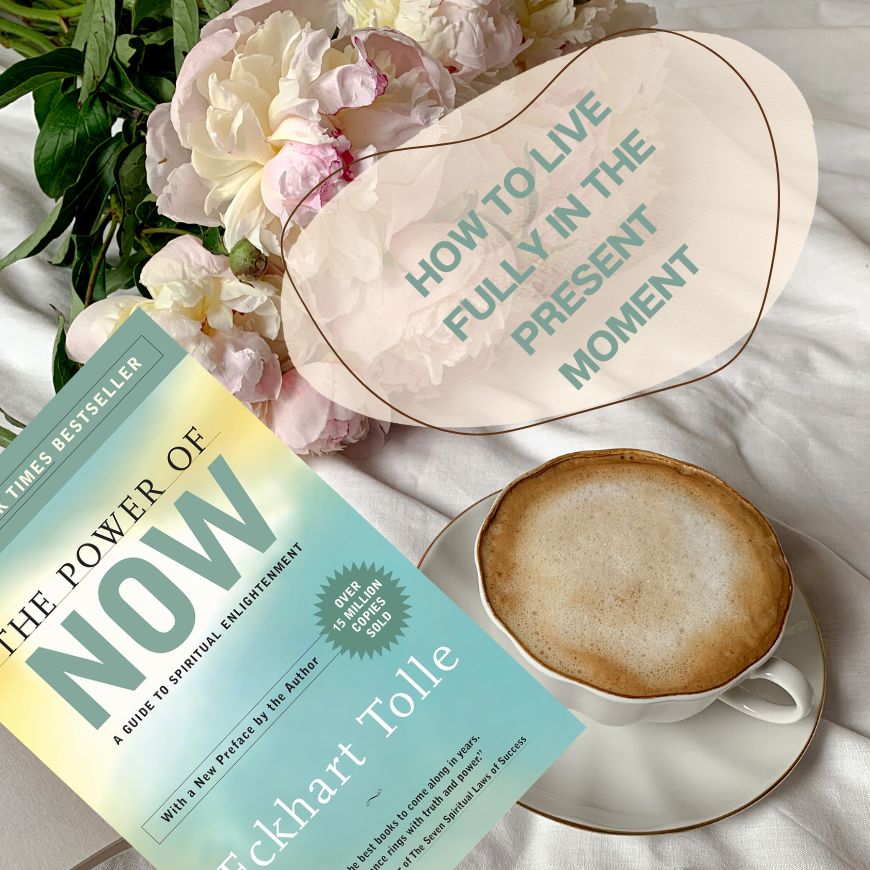
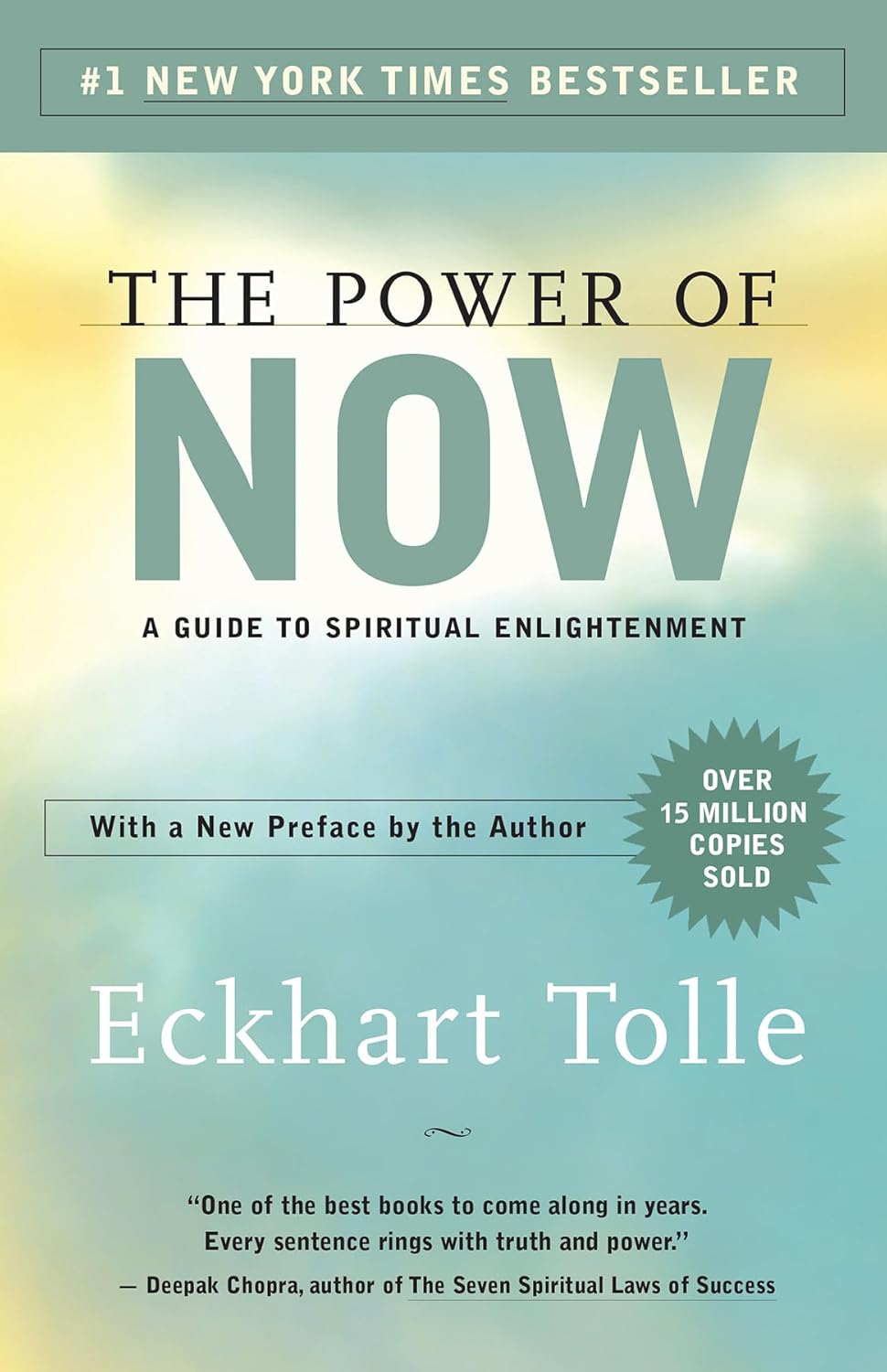
Author: Eckhart Tolle
Tags: mindfulness, living in the present, self-help books, spiritual books, how to be present, personal growth
What is The Power of Now book about?
Quick Answer: The Power of Now book by Eckhart Tolle argues that the source of most human suffering is mental time travel: compulsive thinking about the past (guilt, regret, nostalgia) and the future (anxiety, worry, anticipation). It offers a way to recognize when the mind has left the present moment, and techniques for returning to it, not through discipline or a formal meditation routine but through present-moment awareness itself. The book has sold millions of copies and remains one of the most-read spiritual and self-help titles of the 21st century.
Eckhart Tolle was, by his own account, in a state of chronic anxiety and depression for much of his 20s. The experience that became the foundation of The Power of Now was a sudden shift in consciousness at age 29, in which he describes his thinking mind going quiet and a deep sense of peace taking over. He spent the years that followed putting words to what happened and teaching it to others.
The Power of Now book is unusual among mindfulness books in that it does not present a program, a daily practice, or a step-by-step system. It tries to do something harder: point the reader toward a quality of attention that is available at any moment and does not require years of meditation training to reach. The techniques are secondary to the pointing.
That is both the strength and the limitation. For readers who click with Tolle’s framing, the effect can be immediate and profound. For readers who find his metaphysical language impenetrable or his unfalsifiable spiritual claims alienating, the book offers little to hold onto.
This review covers the core ideas of The Power of Now book honestly: what is well-grounded, what is speculative, and what the science on mindfulness actually says about the underlying practices.
The central problem: compulsive thinking
Quick Answer: Tolle’s premise is that most people are run by their thinking minds rather than directing them. He calls this “compulsive thinking” and names it the root of chronic stress, anxiety, and unhappiness. The practice he offers is not stopping thought but recognizing the thinker: becoming aware of thinking without being identified with it.
The distinction Tolle draws between thinking and the awareness of thinking is the conceptual core of The Power of Now book. He asks: “Who is aware of the thought?” The implication is that something observes the mind, a consciousness that is not the same as the thought stream. He calls the ordinary thinking mind “the Thinker” and the observing awareness “the Watcher.”
For readers with a background in meditation or Buddhist psychology, this is familiar ground. It is the classical distinction between thinking and metacognitive awareness. For readers meeting it for the first time, it can be disorienting: what does it mean to watch your own thinking?
Tolle’s technique for this is to ask yourself, “What will my next thought be?” Then wait and watch. The question shifts attention from the content of thought to the space in which thought arises, and most people notice that in the waiting there is a brief gap, a moment of quiet, before the next thought appears. That gap is what Tolle is pointing toward.
This is not esoteric. Cognitive neuroscience supports a distinction between the default mode network (the brain’s narrative, self-referential thinking, what Tolle calls “the Thinker”) and the present-moment attention network (what Tolle calls “the Watcher”). They are anatomically distinct and in partial competition, so activating one tends to dampen the other. Mindfulness practice measurably shifts the balance toward present-moment attention.
How to stop overthinking is one of the most searched mental health questions online, and Tolle’s framing, “you are not your thoughts; you are the awareness of thoughts,” is one of the clearest answers to it. The loop is often made worse by exhaustion. Chronic sleep deprivation reliably amplifies rumination and anxiety, which is why the same anxious thought feels stickier at 2 a.m. than it does after a full night of rest.
Psychological time vs. clock time
Quick Answer: Tolle separates “clock time” (the practical use of past and future for planning, learning, and problem-solving) from “psychological time” (mental dwelling in past regret or future anxiety beyond what is useful). Clock time is fine. Psychological time is the main source of unnecessary suffering. The antidote is not eliminating thought about past or future but noticing when thinking has shifted from practical to compulsive.
Tolle is explicit that planning, learning from the past, and solving problems all require thinking about past and future. That is clock time, and it is entirely appropriate. The problem is the involuntary continuation of that thinking beyond what is useful: replaying painful memories that no longer serve you, rehearsing future catastrophes that may never happen, or keeping up a running commentary about what is wrong with the present moment.
A recurring instruction in The Power of Now book is to notice when you have shifted from clock time into psychological time. The noticing itself is the start of the return to presence. You cannot think your way out of compulsive thinking, but you can notice that you are thinking, and in that noticing a brief gap of awareness opens.
In practice: the next time you catch yourself in a loop of anxious future-thinking or guilty past-replaying, ask, “Is there anything I can do about this right now, in the next hour?” If yes, do it. If no, what you are doing is psychological time, optional suffering, and the recognition itself tends to interrupt it.
The pain body: accumulated emotional pain
Quick Answer: The Pain Body is Tolle’s term for the accumulated layer of unprocessed emotional pain most people carry: past hurts, traumas, grief, and anger that were never fully felt and so remain stored in the body and psyche. It “awakens” when triggered by present circumstances that resemble past pain, and it temporarily takes over thinking and perception, making small current events feel enormously painful.
Inside The Power of Now book, this is one of Tolle’s most discussed concepts. He describes the Pain Body as semi-autonomous, with its own survival drive, feeding on painful emotion. When triggered, it colors current perception with historical pain, which is why a minor present-day frustration can produce a wildly disproportionate emotional response. The present trigger did not cause the response. It activated the stored material.
The practice Tolle recommends: when you notice a disproportionately intense reaction, recognize that the Pain Body may have woken up. Instead of acting on the emotion or suppressing it, observe it. Feel it in the body without adding a story. “There is intense anger in my chest right now,” rather than “I am furious and here is why the other person is wrong.”
This is consistent with, though not identical to, research on trauma and emotional processing. The literature distinguishes emotion regulation (modifying the emotional response) from emotion acceptance (observing the emotion without judgment), and Tolle’s approach lines up most closely with acceptance. Acceptance-based therapies (Acceptance and Commitment Therapy, Mindfulness-Based Cognitive Therapy) have substantial clinical evidence for anxiety and depression, which partly validates the underlying practice even where Tolle’s specific language is metaphysical.
The Pain Body concept also helps explain why relationships are so often the main site of suffering: close relationships offer the highest density of triggers for old pain. Two people’s Pain Bodies can feed each other in escalating reactive cycles, something most people recognize from arguments with a partner or family member that seem to replay the same emotional script. Everyday sensory triggers can do the same thing on a smaller scale. People with misophonia, for instance, experience an immediate, outsized reaction to specific sounds, a useful illustration of how a present-moment trigger can fire off a stored, automatic response before any conscious thought arrives.
The mindfulness science behind the book
Quick Answer: The practices Tolle describes (present-moment attention, non-judgmental awareness of thoughts and emotions, body-based grounding) overlap heavily with Mindfulness-Based Stress Reduction (MBSR), developed by Jon Kabat-Zinn at UMass Medical School. MBSR has over 40 years of research behind it. A Harvard/MGH study (Hölzel et al. 2011) found that 8 weeks of mindfulness practice produced measurable increases in gray matter density in the hippocampus, posterior cingulate, and cerebellum, regions tied to emotional regulation, self-referential processing, and perspective-taking.
The research that maps most directly onto Tolle’s core claims:
1. Present-moment attention is linked to lower anxiety. A 2010 Harvard experience-sampling study by Killingsworth and Gilbert found that people are mind-wandering (thinking about past or future) about 47% of waking hours, and that mind-wandering tracks with lower self-reported happiness regardless of the activity. Present-moment engagement, Tolle’s “Now,” is consistently tied to greater wellbeing.
2. Mindfulness-based approaches reduce depression relapse. A 2015 Lancet trial by Kuyken et al. (PMID 25907157) found that Mindfulness-Based Cognitive Therapy (MBCT) was about as effective as maintenance antidepressant medication at preventing depression relapse, with exploratory analyses suggesting a larger benefit for patients with a history of childhood trauma. MBCT comes directly out of MBSR and Buddhist mindfulness practice, the tradition Tolle draws from without naming it.
3. Mindfulness changes brain structure. Hölzel et al. (PMID 21071182) put 16 participants through 8 weeks of MBSR and found measurable increases in gray matter density in the hippocampus (emotional regulation), the posterior cingulate cortex (self-referential thinking), and the cerebellum (learning and coordination). These were structural changes, not just shifts in activation, after only 8 weeks.
A 1992 study by Kabat-Zinn et al. (PMID 1609875) found significant reductions in anxiety and panic symptoms in patients with anxiety disorders after an 8-week mindfulness-based stress reduction program, which helped establish the clinical case for present-moment awareness practices in treating anxiety.
Tolle’s book cites none of this. It is a spiritual text, not a scientific one. But the practices converge, and the research validates the underlying mechanism even where the metaphysical framing stays unprovable. None of this requires believing anything metaphysical; you can treat it as a practical experiment and simply notice what happens when you actually try it.
Practical exercises from the book
Quick Answer: The Power of Now book includes several specific practices for building present-moment awareness. The most accessible are the Inner Body scan (directing attention to physical sensation to anchor in the present), the Gap technique (asking “what will my next thought be?” to open a moment of quiet awareness), and sensory anchors (noticing sound, touch, or breath as portals to the Now). None require prior meditation experience.
Exercise 1: The gap technique (for stopping overthinking)
Ask yourself silently: “What will my next thought be?” Then wait and observe. The question shifts attention from the content of thought to the act of observing it. Most people notice a brief gap, a moment of mental stillness, before the next thought arrives. That gap is the present-moment awareness Tolle is pointing toward. It can be done anywhere, takes 10–20 seconds, and interrupts rumination cycles.
Exercise 2: The inner body scan
Close your eyes and direct attention to the interior of your body. Notice the sense of aliveness, the subtle tingling, warmth, or energy in your hands, then your arms, chest, abdomen, and legs. Tolle calls this the “Inner Body” and uses it as an anchor for presence because body sensations are always available only in the Now, unlike thoughts, which can live in the past or future. Spending 1–2 minutes on this between work tasks, before sleep, or during high-anxiety moments gives you a reliable return to the present.
Exercise 3: Sensory portals
Pick a recurring daily moment (making coffee, washing your hands, waiting in a line) and use it as a practice trigger. During that moment, direct full attention to one sense: the sound of water, the warmth of a cup, the feeling of standing. Not as a relaxation technique but as a deliberate shift from thinking to sensing. Tolle calls sensory experience one of the most reliable portals into the Now, because it is inherently present. You cannot smell a memory.
Exercise 4: The three-step return
When you notice you are caught in psychological time (anxious future-thinking or regretful past-thinking):
- Notice you are thinking, and just label it: “thinking”
- Take one conscious breath, feeling the inhale and exhale fully
- Ask: “What is happening in this room, in my body, right now?” and answer it
This takes 20–30 seconds, works in any situation, and reliably interrupts compulsive thinking without a quiet environment or any meditation training.
The ego: Tolle’s framework for self-created suffering
Quick Answer: Tolle uses “ego” to mean the false self built from identification with thoughts, roles, possessions, and the continuous story of “me.” The ego maintains itself through comparison, complaint, and drama, because its existence depends on the sense of a separate, incomplete self. Presence dissolves ego activity, because presence does not need a story of “me.”
This is the most metaphysically dense part of The Power of Now book and the part most likely to lose readers with no background in contemplative philosophy. Tolle’s “ego” is not the Freudian one (the conscious self mediating between id and superego). He uses it to mean the complete identification of consciousness with the thinking mind and its narratives.
The ego, in his framework, is not bad or wrong. It is simply limited. It runs on the assumption that the present moment is insufficient and that satisfaction requires changing your circumstances, acquiring more, or becoming someone else. That assumption drives the low-level dissatisfaction many people feel even when their lives are objectively going well.
Tolle’s sharpest observation here is that the ego identifies most strongly with its problems. This is why people are often strangely reluctant to actually solve a problem: the problem gives the ego something to do, someone to blame, and a reason to stay vigilant. Happiness in the present moment, paradoxically, threatens the ego’s structure.
This is most useful as a descriptive framework for watching your own patterns rather than as a literal claim about reality. Whether or not there is literally an “ego” entity with survival drives, the behaviors Tolle describes (seeking problems, nursing grievances, comparing yourself to others) are well-documented in research on rumination, negativity bias, and social comparison.
An honest assessment: what the book gets right and wrong
Quick Answer: The Power of Now book articulates genuine and valuable insights about the link between compulsive thinking and suffering. Its limitations are just as real: Tolle’s metaphysical language makes it inaccessible to many readers, his spiritual claims are unfalsifiable, and the book is not clinical treatment. For people in acute mental health crises, the framework is not enough on its own.
What the book gets right:
- Naming compulsive thinking as a primary source of suffering is well-supported by research (mind-wandering tracks with unhappiness; rumination predicts depression).
- The practices it offers (gap awareness, Inner Body, sensory anchoring) are effective and accessible without prior training.
- The Pain Body gives a coherent explanation for disproportionate emotional reactions that many readers find genuinely clarifying.
- The distinction between psychological time and clock time is practically useful for managing anxiety about the future.
What the book gets wrong or overstates:
- The claim that “the present moment is all that exists” is a philosophical and spiritual assertion, not a scientific finding, yet it is presented as obvious fact.
- The Q&A format makes for an uneven read; some sections feel circular or evasive.
- Tolle does not clearly separate ordinary present-moment practice from the spontaneous shift in consciousness he describes from his own life, which can set up unrealistic expectations.
- The book offers limited guidance for people with trauma, severe depression, or dissociation, where present-moment awareness can be destabilizing rather than grounding without clinical support.
When the book is not enough: for anxiety, depression, trauma, or grief that significantly impairs daily life, The Power of Now may give helpful framing but is not a substitute for evidence-based treatment. MBCT delivers similar practices with clinical oversight and a structured protocol for relapse. The 988 Suicide and Crisis Lifeline provides immediate support in an acute crisis. This is also where adjacent conditions matter: people with ADHD often find present-moment focus genuinely difficult, and while mindfulness can help as an adjunct, expecting a book alone to fix attention regulation sets the bar in the wrong place.
The Power of Now book vs. other mindfulness books
Quick Answer: The Power of Now book is the most spiritually oriented of the major mindfulness titles. It draws on non-dual Advaita Vedanta and Zen more than on clinical psychology. If you want scientific grounding, Jon Kabat-Zinn’s Full Catastrophe Living is a better starting point. For practical daily application, Thich Nhat Hanh’s The Miracle of Mindfulness is more accessible. Tolle is most useful for readers who want to understand the philosophical and experiential basis of presence before learning a technique.
| Book | Author | Approach | Best for |
|---|---|---|---|
| The Power of Now | Eckhart Tolle | Spiritual / non-dual | Understanding the nature of presence and ego |
| Full Catastrophe Living | Jon Kabat-Zinn | Clinical MBSR | Structured mindfulness for stress and chronic pain |
| The Miracle of Mindfulness | Thich Nhat Hanh | Buddhist-inspired, practical | Daily mindfulness in simple activities |
| Wherever You Go, There You Are | Jon Kabat-Zinn | Accessible intro | Beginners to meditation |
| Tiny Habits | BJ Fogg | Behavioral science | Building any habit, including a mindfulness practice |
If your real problem is getting any of these practices to stick day to day, that is a habit-design question more than a philosophy question. Treating presence as a habit system, the way Atomic Habits frames behavior change, pairs well with Tolle’s pointing: he tells you what to return to, and a habit system makes the return reliable.
Frequently Asked Questions
How long does it take to see results from The Power of Now book practices?
Many readers report a shift in how they relate to thinking right after reading certain sections; the Gap technique and the Inner Body scan in particular tend to produce a noticeable effect within minutes. More lasting change in habitual thinking usually follows the timeline of mindfulness research: 8 weeks of consistent practice is the threshold used in most MBSR studies, the point at which measurable changes in brain structure and anxiety levels show up. The book itself does not promise a timeline.
Can I meditate if I’ve never meditated before after reading The Power of Now book?
Yes. The practices are designed to be accessible without prior experience. The Gap technique, Inner Body scan, and sensory portals can each be done in under 2 minutes and need no special environment, posture, or training. If you want to go deeper into formal meditation afterward, Jon Kabat-Zinn's work gives you a more structured protocol with clinical research support. For a practical way to make a daily meditation habit stick, BJ Fogg's Tiny Habits method (anchor-based habit formation) is an effective complement.
Who should not read The Power of Now book alone?
People experiencing active suicidal ideation, acute trauma responses, psychosis, or severe depression should access professional mental health support first. The book is not clinical treatment, and some of its ideas, particularly around dissolving the sense of self, can be disorienting or even destabilizing for people in acute crises without appropriate support. For mild to moderate anxiety and everyday stress, it is broadly safe and often helpful.
What is A New Earth by Eckhart Tolle?
A New Earth (2005) is Tolle's follow-up to The Power of Now. Where the first book focuses on personal liberation from compulsive thinking, A New Earth extends the analysis to collective human behavior, how ego operates at social and civilizational levels. It expands on the Pain Body concept in more depth than the original and lays out Tolle's vision of an "awakening" in collective consciousness. Oprah Winfrey chose it for her book club in 2008, which dramatically widened its reach. Readers who respond well to The Power of Now almost always find A New Earth worth reading too.
Is The Power of Now book religious?
Tolle states plainly that The Power of Now book is not tied to any religion, though it draws on Buddhism (present-moment awareness, non-self), Advaita Vedanta (non-dual consciousness), and Christian mysticism (the Kingdom of God as inner stillness, cited from the Gospels). Readers from many religious traditions and from secular or atheist backgrounds have found it valuable. The spiritual language is the most common source of resistance; readers who find terms like "Presence," "Being," and "formless consciousness" alienating may prefer Kabat-Zinn's more clinically framed work.

Mimo Karam is the founder and writer at LifestyleMine. She writes about daily habits, nutrition, sleep, and emotional wellness, turning research into practical advice for people who want to live healthier without making it complicated.