✦
THE LIFESTYLEMINE NEWSLETTER
Simple wellness tips, healthy recipes, and
everyday inspiration delivered to your inbox.
Your Email Address
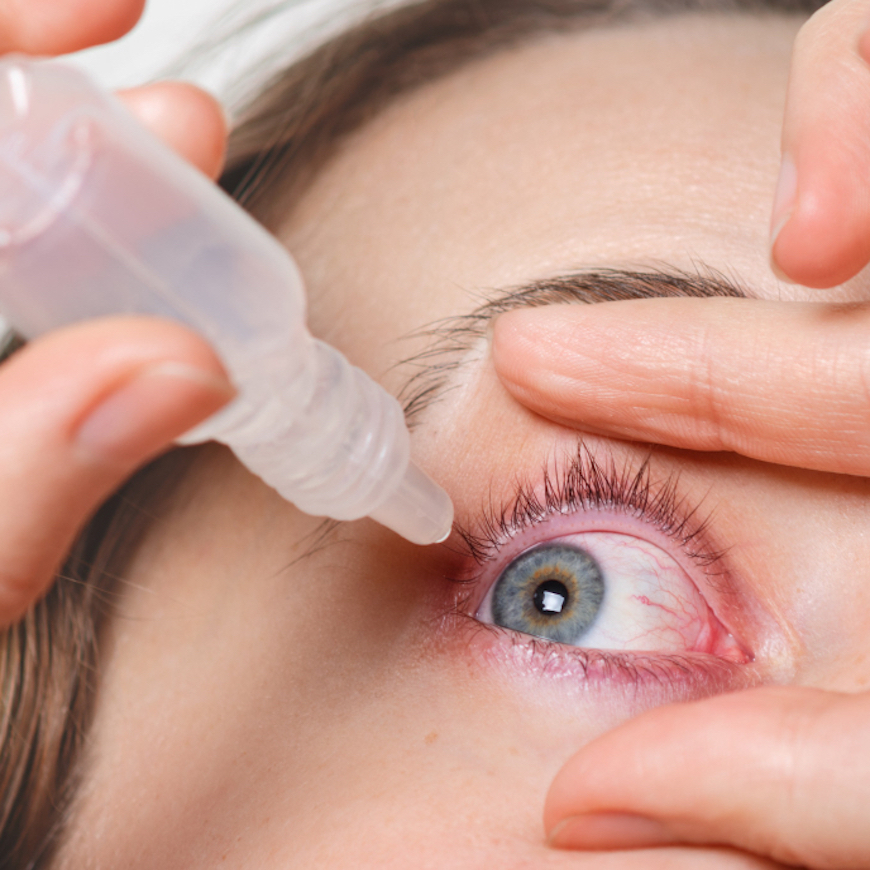
The first-line dry eye syndrome treatment for mild-to-moderate disease. Not all drops are the same, though.
Preserved drops contain benzalkonium chloride (BAK), thimerosal, or similar agents. BAK is a detergent that disrupts the ocular surface epithelium, the outermost cell layer of the cornea. In healthy eyes with occasional use, that’s insignificant. In dry eye patients using drops four or more times a day, chronic BAK exposure actively worsens the condition it’s meant to treat. Long-term use of preserved drops drives ocular surface inflammation and goblet cell loss.
The rule: if you’re using artificial tears more than three times a day for dry eye, use preservative-free. Single-dose unit vials (Refresh Plus, Systane Ultra PF, Blink Tears PF) are preservative-free by design. Multi-dose bottles that claim to be “preservative-free” usually use “disappearing” preservatives (sodium perborate, stabilized oxychloro complex) that break down on contact with the eye, and those are acceptable for daily use and gentler than BAK.
Carboxymethylcellulose (CMC) drops (Refresh, Generic CMC): Widely available, good for mild to moderate ADDE, viscous enough to coat effectively but thin enough for frequent use.
Sodium hyaluronate drops (Blink Tears, Hylo): Hyaluronic acid has excellent water-retention capacity (it holds 1,000× its weight in water). Good for both ADDE and mild EDE, and often better tolerated than CMC-based drops for frequent use.
Lipid-based drops (Systane Balance, Soothe XP, Refresh Optive Mega-3): These contain oil components meant to supplement the deficient lipid layer in EDE. If your dry eye treatment is primarily for meibomian gland dysfunction or evaporative dry eye, lipid-based drops are the right OTC starting point, not standard aqueous drops.
Gel drops and nighttime ointments (Refresh Liquigel, Genteal Gel, Lacri-Lube): Highly viscous, long-lasting, and they blur vision noticeably. Best at bedtime, not during waking hours. Ointments coat the cornea for hours. They’re appropriate as a dry eye syndrome treatment when overnight exposure keratopathy is a concern (eyelids that don’t fully close during sleep).
OTC drops manage symptoms. These go after root causes, specifically MGD, which drives EDE.
Meibomian gland lipid solidifies when the glands are dysfunctional. Healthy meibum melts at roughly 28°C, while solidified dysfunctional meibum melts closer to 32 to 35°C. Warm compresses applied at 40 to 45°C for 8 to 10 minutes raise lid temperature enough to melt the stagnant oil, so it can be expressed and flow into the tear film.
A hot wet cloth loses heat too fast. Purpose-built eye masks (Bruder Moist Heat Eye Compress, Eyedew warming mask) hold temperature more consistently. Use one daily for MGD management. Studies show consistent use improves meibomian gland secretion quality within 4 to 6 weeks.
Omega-3 fatty acids (EPA and DHA) influence the composition of meibomian gland secretions. Supplementing at 2,000mg combined EPA and DHA daily improves the ratio of oleic acid in meibum, making the oil less viscous and more effective at the lipid layer. Evidence grade: moderate. A large 2018 NIH-funded trial (the DREAM study) found no significant difference versus an olive oil placebo, while earlier smaller studies showed benefit. Response seems to vary by individual, so give it 8 to 12 weeks before judging.
Related: Omega-3 supplements for dry eye
Indoor relative humidity in heated or air-conditioned spaces commonly falls to 20 to 35%. The tear film is an aqueous surface, and it evaporates faster in lower humidity. Holding the bedroom and workspace at 45 to 55% relative humidity is a measurable passive intervention for dry eye syndrome treatment, particularly for the evaporative type.
You can buy the humidifier on amazon: LEVOIT Top Fill Humidifiers for Bedroom
Blink rate during focused screen work drops from a resting 15 to 17 a minute to about 5 to 7. Each blink spreads meibum and refreshes the tear film, so a 66% drop means the film isn’t renewed. The 20-20-20 rule (every 20 minutes, look 20 feet away for 20 seconds) forces breaks. Conscious blinking, deliberately making full blinks during screen use, is a legitimate component of dry eye syndrome treatment for screen workers.
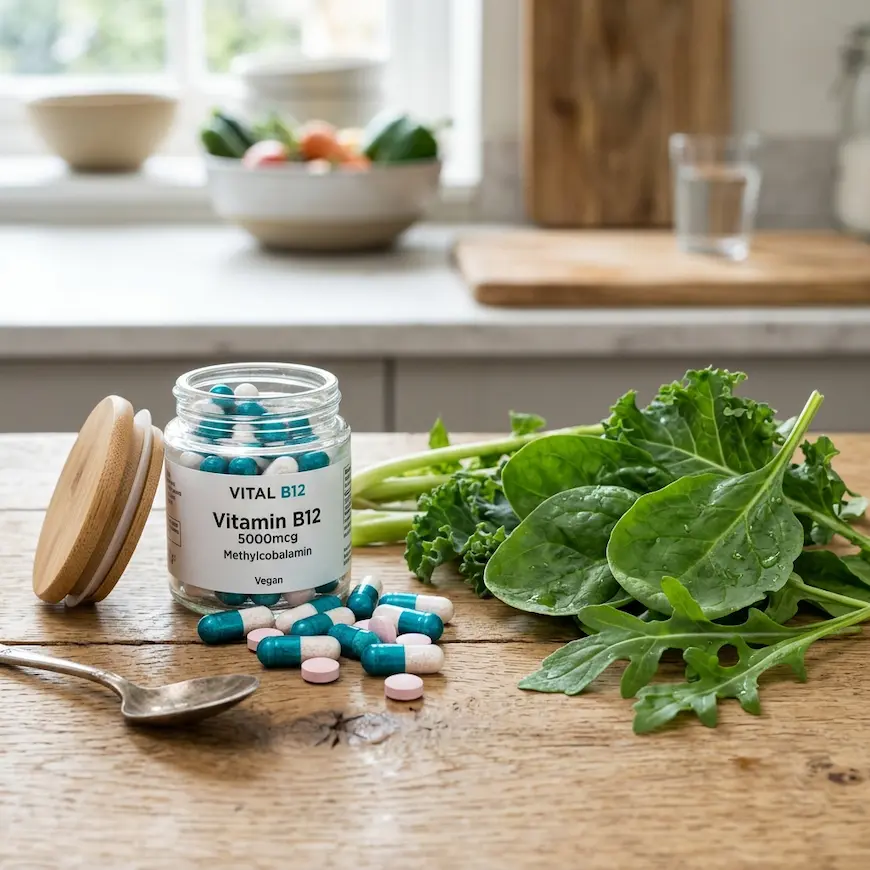
An anti-inflammatory diet of oily fish, leafy greens, berries, and minimal processed food has an evidence base in ocular surface health, though the direct dry eye evidence is mostly observational. Hydration matters too (tears are 98% water, and mild dehydration measurably reduces production), as does cutting back on alcohol and excess caffeine and correcting any vitamin A deficiency (it’s critical for goblet cell function and mucin-layer production).
Related: Anti-inflammatory diet supports tear film
When OTC drops and home interventions still aren’t enough after 6 to 8 weeks of consistent use, prescription dry eye syndrome treatment is the next step.
FDA-approved for chronic dry eye since 2003. Cyclosporine is a calcineurin inhibitor that suppresses T-cell-mediated inflammation on the ocular surface. In ADDE, that inflammation is what suppresses lacrimal gland function, so cyclosporine lifts the suppression and lets the gland recover and make more tears.
On timing: expect at least 3 months of twice-daily use before meaningful improvement, with full benefit around 6 months. This is the most common reason patients say “Restasis didn’t work”: they stopped at 6 weeks. The drop stings at first because of the castor oil vehicle, which usually eases after a few weeks.
Restasis fits ADDE better than EDE. Using it as your sole dry eye treatment for MGD-driven evaporative dry eye will give partial results at best.
FDA-approved in 2016, with a different mechanism from cyclosporine. Lifitegrast blocks the LFA-1/ICAM-1 interaction, an adhesion-molecule pathway that recruits inflammatory T-cells to the ocular surface. Some patients see symptom improvement within 6 weeks, faster than cyclosporine typically delivers.
Xiidra has a distinct dysgeusia (unusual taste) side effect that about 25% of users notice, a bitter or odd taste shortly after instillation, from nasolacrimal drainage into the throat. It doesn’t signal a problem, but it surprises users who weren’t warned. For most, it fades with continued use.
Your ophthalmologist’s choice between cyclosporine and lifitegrast usually comes down to your dry eye subtype, your insurance coverage, and how well you tolerate each drop’s particular side effects.
Corticosteroid eye drops, used short-term to break an acute inflammatory cycle. They aren’t appropriate for long-term maintenance dry eye syndrome treatment, because prolonged corticosteroid use raises intraocular pressure and increases cataract risk. But a 2 to 4-week course can meaningfully reduce surface inflammation, which makes cyclosporine or lifitegrast more effective when started alongside or after the steroid course.
Eysuvis (0.25% loteprednol) was specifically FDA-approved for short-term dry eye flare treatment in 2020.
Approved in 2021. It’s a nicotinic acetylcholine receptor agonist delivered as a nasal spray that stimulates the trigeminal nerve and activates the lacrimal reflex network, increasing both aqueous and mucin tear production through neural signaling rather than treating the gland directly. Application is a twice-daily nasal spray. The mechanism is unusual and it works, with trials showing significant improvement in Schirmer’s scores. A good option for ADDE patients who don’t tolerate topical cyclosporine or lifitegrast.
For moderate-to-severe dry eye that hasn’t responded well enough to medical management, in-office procedures go after the structural causes of MGD.
A 12-minute procedure. The device applies controlled vectored thermal pulsation, heating from inside the eyelid (the surface alone can’t reach the glands) while applying pulsatile pressure from outside. That combination mechanically expresses the blocked meibomian glands while heating them to a functional temperature.
Studies show symptom improvement lasting 9 to 12 months in the right candidates. It isn’t covered by most insurance, and it typically costs $300 to $600 per eye. Results are best in patients with MGD confirmed on meibography who haven’t responded to warm compresses alone.
Originally a dermatology technology for rosacea. Ocular IPL (the E-Eye IRPL system, among others) applies broadband light to the skin around the eye, targeting the abnormal blood vessels along the eyelid margins that feed the inflammatory mediators behind MGD.
IPL is especially effective for patients with both facial and ocular rosacea, a combination more common than most realize. It takes 3 to 4 sessions, with results maintained by annual or biannual boosters. As a dry eye syndrome treatment for the rosacea-associated MGD subset, IPL currently has some of the strongest evidence of any in-office procedure.
A small metal probe dilates and clears each meibomian gland orifice, under topical anesthesia. Studies show significant improvement in gland function and symptom relief, especially with severe, fibrotic obstruction that warm compresses and LipiFlow don’t resolve.
Punctal plugs are small silicone or dissolvable collagen devices placed into the punctal openings (the small tear-drainage holes at the inner corner of each eyelid). They slow or stop tear drainage, which keeps your existing tears on the surface longer. Dissolvable plugs last 3 to 6 months; silicone plugs are semi-permanent but removable.
This is an appropriate dry eye syndrome treatment for patients with adequate tear production but rapid drainage, or as an add-on to other treatments to maximize tear-film retention.
Made from the patient’s own blood, centrifuged for serum, diluted to 20%, and dispensed in sterile vials. The serum contains growth factors (EGF, TGF-β), vitamins A and C, fibronectin, and immunoglobulins, the components of natural tears that commercial artificial tears can’t replicate.
The best evidence is in severe dry eye, graft-versus-host-disease-associated dry eye, and post-refractive-surgery dry eye. It requires regular blood draws, specialized pharmacy preparation, and refrigerated storage, so it’s expensive and not available everywhere. But for treatment-refractory dry eye syndrome, autologous serum drops often succeed where everything else has failed.
Rarely needed, and reserved for specific severe presentations.
Permanent punctal cauterization: Permanent closure of the puncta for patients with profound aqueous deficiency that plugs can’t manage adequately. Irreversible.
Amniotic membrane transplant (PROKERA): A therapeutic contact lens made from cryopreserved amniotic membrane, placed on the eye surface. It promotes epithelial healing and reduces inflammation in severe, treatment-resistant surface disease.
Tarsorrhaphy: Partial surgical closure of the eyelids to reduce corneal exposure in patients with exposure keratopathy (lids that don’t close fully, as in Bell’s palsy, Graves’ disease, or post-facial-nerve injury). It isn’t for standard dry eye syndrome treatment, but it matters in specific anatomical presentations.
Related: Post-surgical dry eye treatment
Several commonly used products actively worsen dry eye disease:
Decongestant drops (“get the red out,” like Visine or Clear Eyes): Vasoconstrictors that cause rebound redness. No benefit for dry eye. They mask a symptom while making the underlying condition worse with repeated use.Preserved artificial tears used more than 3× daily long-term: BAK accumulates and ocular surface damage compounds. Switch to preservative-free.First-generation antihistamines (diphenhydramine, chlorpheniramine): Their anticholinergic drying effect significantly cuts tear production. If you need antihistamines for allergies, use a second-generation one (loratadine) and add artificial tears.Rewetting drops not formulated for contacts: If you wear contact lenses, use only drops labeled compatible with contacts. Standard drops with BAK bind to lens materials.
Related: Contact lens dry eye management
The dry eye syndrome treatment that actually works is the one matched to your specific mechanism, severity, and lifestyle. A practical starting framework:
Mild, EDE-predominant: Lipid-based OTC drops, warm compresses 10 minutes daily, omega-3 at 2,000mg daily, a humidifier, and the 20-20-20 rule. Reassess at 6 weeks.
Mild-moderate, ADDE-predominant: Preservative-free sodium hyaluronate drops every 2 to 3 hours, plus Tyrvaya if drops alone fall short, with adequate hydration and vitamin A intake. Reassess at 6 weeks.
Moderate-severe, persistent: Add prescription cyclosporine or lifitegrast and continue the above. Ophthalmology follow-up at 3 months.
Severe or treatment-refractory: In-office evaluation for LipiFlow or IPL. Consider punctal plugs. Consider autologous serum drops. Get evaluated for underlying systemic conditions (Sjögren’s, rosacea).
Related: What happens when dry eye is left untreated
Dry eye syndrome treatment works when it’s matched to the underlying cause. Most people with evaporative dry eye (86% of cases) have MGD, and OTC aqueous drops treat the symptom without touching the cause. Warm compresses, lipid-based drops, omega-3, and in-office MGD treatments address the actual mechanism.
The trial-and-error approach to dry eye treatment that most people go through, cycling through artificial tears hoping one works, usually comes down to not knowing which type of dry eye they have. Schirmer’s test and meibography turn the approach from guessing into targeted treatment. Ask your ophthalmologist for them. They’re simple, quick, and they change the entire treatment conversation.
The information provided here is not a substitute for professional medical advice. Always consult with a licensed healthcare provider before beginning any new treatment or making wellness changes.
Mimo Karam is the founder and writer at LifestyleMine. She writes about daily habits, nutrition, sleep, and emotional wellness, turning research into practical advice for people who want to live healthier without making it complicated.