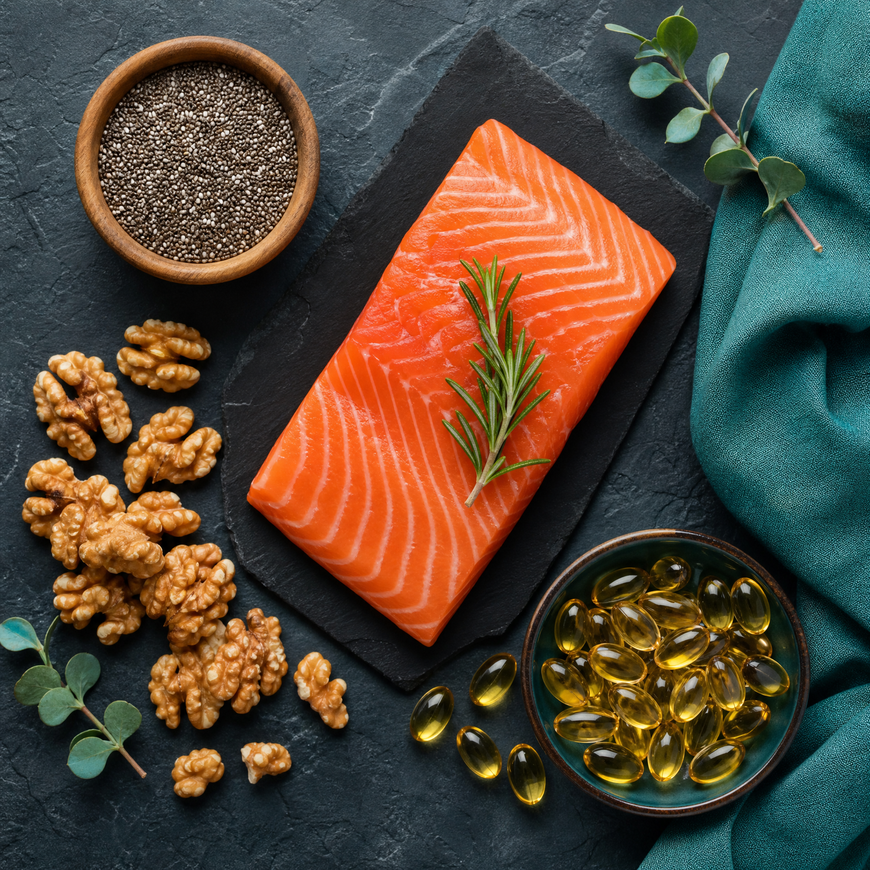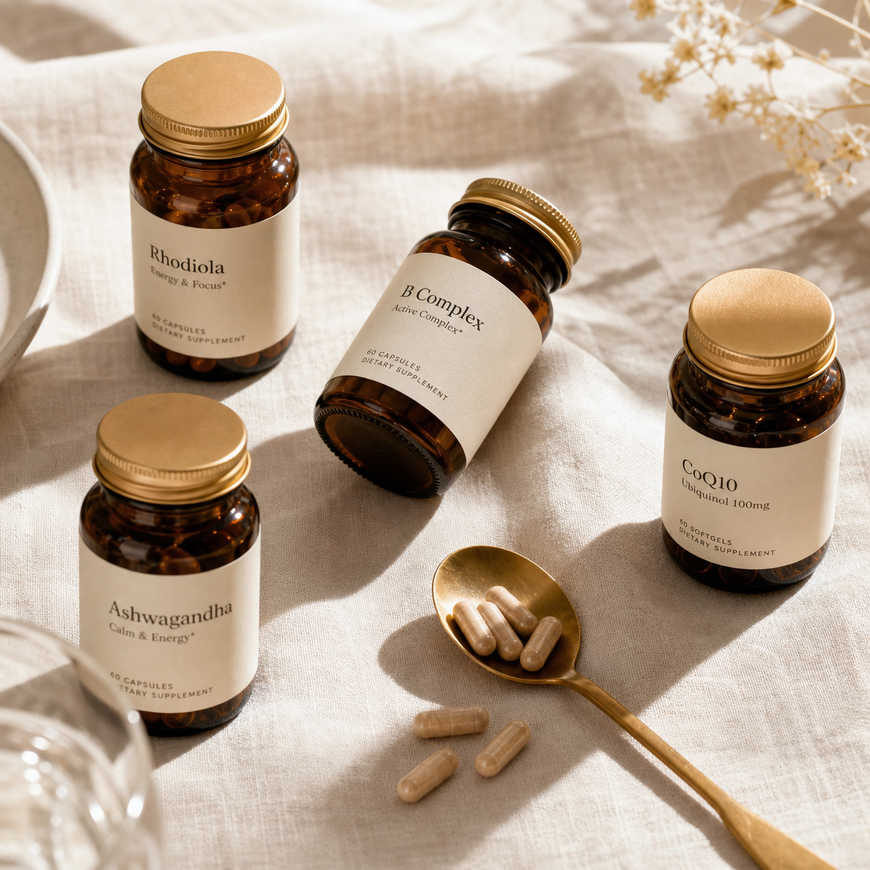
For two years, I had a drawer that looked like a small supplement store.
There was a B12 spray that cost forty-seven dollars and tasted like aluminum. A pre-workout in a tub the size of a fire extinguisher. A magnesium powder that promised “deep cellular energy.” Three different ashwagandha bottles, because I kept buying new ones when the old ones didn’t seem to work. A “women’s energy multivitamin” that turned my urine the color of highlighter ink. Plus the random one-offs: CoQ10, ginseng, beetroot capsules, a green powder that tasted like wet hay.
I was so tired. I wanted one of these to be the answer.
Most of them weren’t. A few of them, I now take every single day. The difference between those two categories is what this article is about.
What follows is a real, honest look at the supplements for energy worth your money and the much longer list of ones that aren’t. I’ve tried most of these personally. I’ve researched the rest. None of this is medical advice (please talk to your doctor before starting any supplement). But it’s the breakdown I wish someone had handed me before I spent two years and several hundred dollars figuring it out alone.
First, the Uncomfortable Truth About Energy Supplements
Before the list, the framing matters. Because most articles on supplements for energy skip this part and go straight to the recommendations, and the reader buys five things, and then writes me a year later saying they don’t feel any different.
Here’s the truth. Supplements for energy generally fall into two very different categories, and confusing them is why most people waste money.
Category 1: Deficiency fixers. These genuinely work but only if you’re actually deficient in something. If your iron is rock-bottom and you start taking iron, you’ll feel like a different person within four weeks. If your iron is normal and you start taking iron, you’ll feel essentially nothing (and you might actually feel worse, because excess iron isn’t friendly). The same is true for vitamin D, B12, magnesium, and most B-complex vitamins.
Category 2: General “boost” supplements. Adaptogens like rhodiola and ashwagandha, cellular-energy compounds like CoQ10, and a small handful of others. These can help slightly even if you’re not deficient, but the effect is usually subtle, takes weeks, and varies wildly between people.
The mistake almost everyone makes is buying Category 2 supplements for energy when their actual problem is a Category 1 deficiency. Or buying Category 1 supplements at random when they haven’t tested anything and have no idea what they’re actually short on.
So before the list: the single most useful thing you can do is get a basic blood panel that includes ferritin, vitamin D, B12, and (if you can) magnesium. It costs less than a few months of supplement guesswork, and it tells you what’s actually missing.
OK, now the list.
The Energy Supplements I Actually Take (And Why)
1. Magnesium (Glycinate, specifically)
This is the supplement I’d recommend first to almost anyone. The NIH Office of Dietary Supplements notes that a significant portion of adults don’t hit the recommended daily intake, and the symptoms of low magnesium (fatigue, anxiety, poor sleep, muscle tension, brain fog) read like a list of complaints most tired adults have.
I take it at night. Magnesium glycinate is gentle on the stomach, doesn’t cause grogginess in the morning, and over a few weeks of consistent use, the cumulative effect on sleep, and therefore on next-day energy, is meaningful. This is one of the few supplements for energy that gives you energy by improving the *recovery* side of the equation, not by stimulating the body.
Worth taking if: you’re chronically tired, sleep poorly, or have muscle cramps. Most people benefit, especially those eating fewer leafy greens, nuts, or whole grains than they should.
Skip if: you’re already eating a magnesium-rich diet and sleeping well.
Related: Signs of magnesium deficiency — see if you actually need this →
2. Vitamin D3 (Especially October Through April)
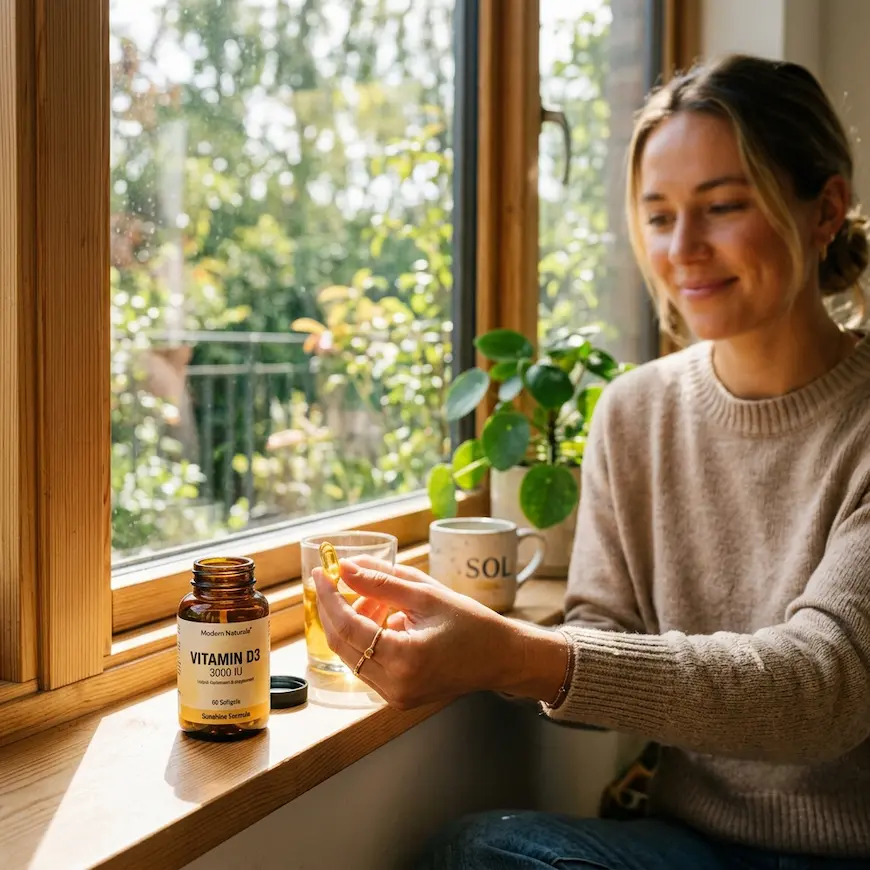
Most adults are vitamin D deficient. Not “low normal.” Deficient. The data is consistent across populations, and the people who think they’re fine usually haven’t been tested. If you live anywhere with real winters, work indoors, have darker skin, or are over forty, your odds are very high.
Vitamin D is unusual in that low levels don’t just cause “tiredness.” They quietly affect mood, sleep quality, immune function, and (some research suggests) cellular energy production. When you correct a deficiency, the upgrade in how you feel can be dramatic, not in a stimulant way, but in a “the floor came back” way.
I take 2,000 IU daily through the winter, sometimes more if I’ve tested low. The NIH guidance on vitamin D gives general dosing, but personally I’d test before guessing.
Worth taking if: you live outside the tropics, work indoors, or are over forty. Test first if you can.
Skip if: your serum vitamin D is already above 30 ng/mL and you’re getting daily sun.
3. B12 (If You Need It)
B12 is one of the most over-marketed supplements for energy in the world. Every drugstore has a wall of “B12 energy drinks” promising vitality. Here’s what almost no one will tell you: if you’re not deficient, B12 supplements do basically nothing for energy.
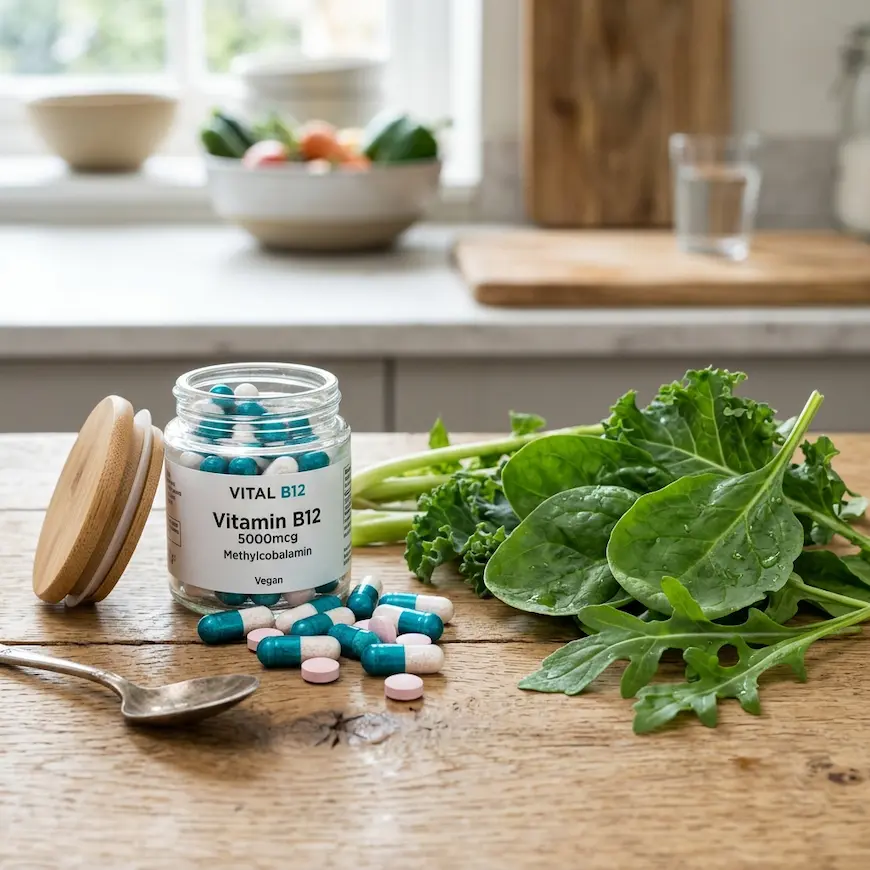
If you *are* deficient, though, the difference is night and day. Deficiency is common in three groups: vegans and vegetarians (B12 comes almost entirely from animal foods), adults over fifty (absorption drops with age), and anyone on certain medications like metformin or long-term acid reducers.
The signs of real B12 deficiency aren’t just tiredness, they’re brain fog, tingling in hands or feet, low mood, and persistent fatigue that doesn’t respond to sleep. If those ring a bell, test first. A simple blood test costs less than two months of B12 supplements, and tells you whether you actually need them.
Worth taking if: you’re vegan, over fifty, on metformin, or testing shows low B12.
Skip if: you eat meat regularly, are under forty, and have no symptoms. Save your money.
4. Iron (Women Especially But Test First)
Iron deficiency is one of the most common nutrient gaps in the world, and it disproportionately affects women under fifty. The symptoms are textbook fatigue: tired all the time, cold hands and feet, pale skin, brittle nails, headaches, brain fog. The same symptoms people blame on stress for years before they finally test.
When iron is the cause of fatigue, fixing it is genuinely transformative. People describe it as “feeling like a different person.” I’ve seen this happen multiple times in my life with friends who finally tested ferritin (the storage form of iron, more accurate than just hemoglobin) and started supplementing under their doctor’s guidance.
Important warning: don’t take iron supplements without testing. Excess iron is harmful and accumulates in organs over time. This is the one supplement where guessing is genuinely risky. The NIH iron fact sheet is worth reading if you’re considering it.
Worth taking if: you’ve tested low and your doctor has recommended it.
Skip if: you haven’t tested. Seriously, please test.
5. Creatine (Yes, Really)
This one surprises people. Creatine has been studied for decades as an athletic supplement for energy, but newer research is showing genuinely interesting effects on general fatigue, cognitive function, and energy availability even for non-athletes.
I started taking it for entirely non-athletic reasons (a friend who’s a researcher kept recommending it for cognitive energy), and within a few weeks of 5 grams daily, I noticed a steadier daytime energy and slightly clearer mental focus. The science is real, the safety profile is well-established, and unlike most supplements for energy, you can actually feel a difference.
It’s cheap. It’s tasteless. It mixes in water. The one downside: you have to take it consistently, most of the effect comes from cellular saturation over weeks, not from any single dose.
Worth taking if: you’re over thirty, want steady cognitive energy, or are physically active.
Skip if: you have kidney disease (talk to your doctor first) or prefer to keep your routine simple.
The Adaptogens: Worth a Try, But Manage Expectations
These don’t fix deficiencies. They modulate stress response, which (indirectly) can help with energy. The effect is real for some people and absent for others. There’s no good way to predict which one you’ll be.
Ashwagandha
Probably the most popular adaptogen at the moment. The research is genuinely promising, especially for stress-related fatigue, anxiety, and sleep quality. I take 300mg of a KSM-66 extract on hard weeks, not daily, because I find it works better as an occasional reset than as a permanent fixture in my supplement routine.
The catch: response varies wildly. Some people swear by it; others feel absolutely nothing. You’ll know within three weeks whether you’re a responder.
Rhodiola Rosea
The adaptogen I personally respond to. Rhodiola has decent research showing reduction in mental fatigue and stress-induced exhaustion. The effect for me is subtle but real, a more even daytime energy, less of the late-afternoon collapse. I take it during high-stress weeks at work.
Same caveat: not everyone responds.
The Energy Supplements I’d Skip (Honestly)
Now the part most “best supplements for energy” articles won’t tell you.
Energy drinks and “energy gummies. Almost always sugar plus caffeine plus a useless trace amount of B vitamins. They aren’t supplements. They’re sugary coffee in a fancy package. Skip them.
Generic multivitamins marketed for energy. The doses are usually too low to fix a real deficiency, and you’re paying for thirty ingredients you don’t need so the marketing can list them all. Better to identify your actual gaps and supplement those specifically.
Proprietary blends” with no per-ingredient dosing. If the label says “Energy Complex: 500mg” without telling you how much of each ingredient, walk away. Reputable supplements tell you exactly what’s inside and in what amounts.
Most pre-workouts (for non-athletic energy use). They’re designed to make you stim-buzzed for a gym session, not to give you sustainable daytime energy. Using them as a coffee replacement is a fast path to adrenal exhaustion and racing-heart afternoons.
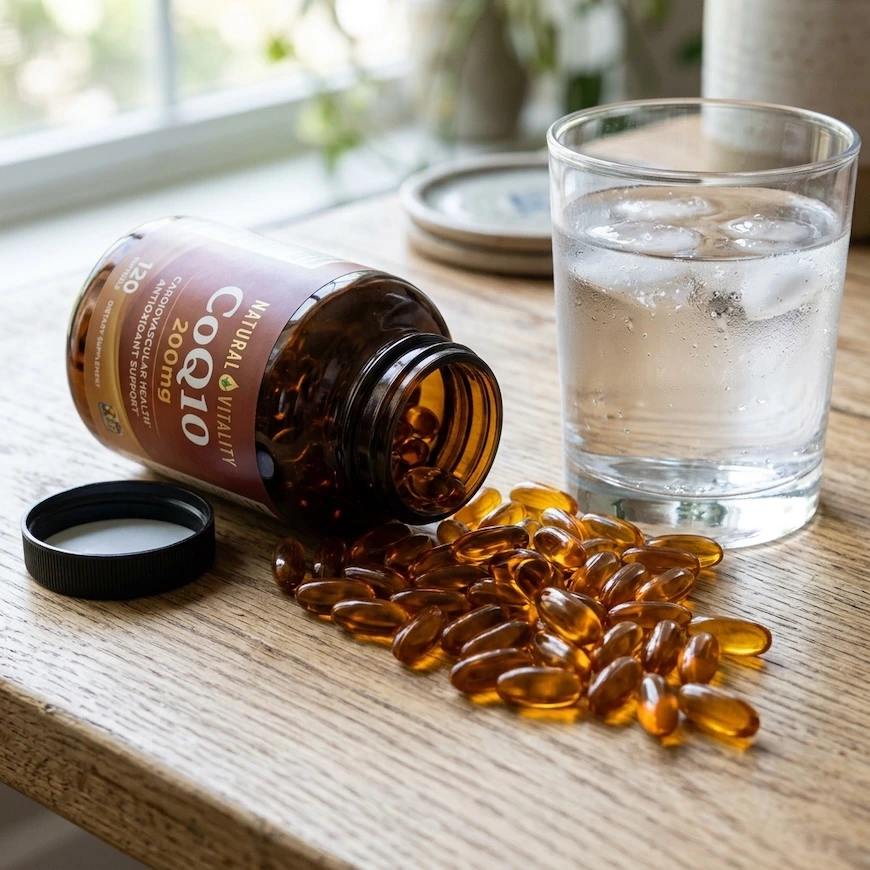
CoQ10 (for most people under forty). The research is real but the population it most helps is older adults and people on statin medications. If you’re young, healthy, and not on statins, the effect for you is probably negligible. Save your money.
B12 injections (unless prescribed). If your B12 is normal, an injection isn’t going to feel like a “boost.” It just gets excreted. Save the appointment.
The general rule: skepticism toward anything sold as a single solution for fatigue. Real energy comes from a few specific supplements working alongside actual lifestyle changes, sleep, food, movement, light, stress management. No pill replaces the work.
How to Actually Start (Without Wasting Money)
If I were starting over from a drawer full of unused supplements for energy, this is what I’d do.
Step 1: Get a basic blood panel. Ferritin (iron storage), 25-hydroxy vitamin D, B12, and ideally magnesium. A few of these are sometimes excluded from standard checkups, ask specifically. The result is the cheapest “buy nothing yet” map of what you actually need.
Step 2: Start with one supplement. Whatever the test says you’re lowest in. Take it consistently for four to six weeks. Track how you feel weekly, not daily.
Step 3: Reassess. If energy improved, you found your gap. If not, retest the levels and reconsider. Don’t stack three new supplements at once, you’ll never know what’s working.
Step 4: Once your deficiencies are fixed, consider one adaptogen. Either rhodiola or ashwagandha, for six to eight weeks. If you respond, great. If you don’t, stop.
That’s the entire reasonable framework. Most of my supplement drawer was the result of skipping step one and going straight to step four with every shiny supplement I read about online.
Related: What to eat when you’re feeling exhausted — food first, supplements second →
When Supplements Aren’t the Answer
I want to be honest about this part because no supplement for energy article ever is.
If you’ve been chronically tired for months, the answer is usually not in a bottle. The most common causes of persistent fatigue are: poor sleep (often unrecognized, apnea, late screens, alcohol), chronic stress, undertreated thyroid dysfunction, depression presenting as exhaustion, or a medical condition that needs an actual diagnosis. None of these get fixed by magnesium, no matter how good the magnesium is.
If you’ve been doing the lifestyle basics for two months, decent sleep, real food, some movement, basic stress management, and you’re still depleted, please see a doctor. Not for a supplement prescription, but for proper testing. There’s a real medical reason behind a lot of chronic fatigue that gets dismissed for years.
LifestyleMine is a wellness platform, not a medical resource. Please don’t use this article as a substitute for actual healthcare.
Related: Foods that give you energy without caffeine — the lifestyle layer first →
Frequently Asked Questions
How long do energy supplements take to work?
It depends on which one. Iron deficiency correction can take four to six weeks to feel a real difference. Magnesium effects on sleep often show up within two weeks. Adaptogens like rhodiola or ashwagandha typically need three to six weeks. Anyone selling a supplement for energy that "works in days" is selling you caffeine.
Should I take supplements every day or only sometimes?
For deficiency-correction supplements (magnesium, iron, B12, vitamin D), daily is the norm. For adaptogens like ashwagandha, cycling, taking for six to eight weeks then pausing, is what most research-savvy users prefer.
Are energy supplements safe?
Most are, when taken at recommended doses. The risks come from megadosing (especially iron, vitamin D, B6), interactions with medications, and "proprietary blends" with undisclosed ingredients. Always check with your doctor if you're on prescription medications.
Can I just drink coffee instead of taking energy supplements?
Coffee gives you alertness, not energy. It blocks the adenosine receptors that tell you you're tired, which is different from actually creating more energy in your cells. It's a useful tool, not a replacement for real energy support.
What about caffeine pills or “energy chews”?
Just caffeine with extra packaging. If you want caffeine, drink coffee. Don't pay supplement prices for a stimulant you can get in a teaspoon of espresso.
The Takeaway
The honest summary of two years of trial and error is shorter than I expected: the supplements for energy that actually work do one of two things. They correct a real deficiency, or they nudge your stress response. That’s basically the whole field.
Get tested. Fix what’s missing first. Add one adaptogen later if you want to. Skip the energy drinks, the proprietary blends, the giant pre-workout tubs, and the multivitamins that promise the world in thirty ingredients. Spend the money you save on better food, better sleep, and the one or two supplements that are actually helping you.
The cliché answer to “what’s the best supplement for energy” is “sleep, food, sunlight.” It’s the cliché answer because it’s the right one. The actual supplements are a small, useful supporting cast, not the main act.
That’s the real version. Your drawer doesn’t need to look like a supplement store. It just needs to hold the two or three things that genuinely help you.
All content on LifestyleMine is for informational and educational purposes only. It is not a substitute for advice from a qualified healthcare professional. Please consult a doctor before starting any new supplement, especially if you’re pregnant, nursing, on medication, or have a medical condition.

Mimo Karam is the founder and writer at LifestyleMine. She writes about daily habits, nutrition, sleep, and emotional wellness, turning research into practical advice for people who want to live healthier without making it complicated.