After my father’s cardiac event in January 2022, his cardiologist said something I didn’t expect. His cholesterol wasn’t dangerously high. The main risk factors were his BMI of 33 and the chronic low-grade inflammation that came with it. “The weight has to come down,” he told us, “but crash dieting will make this worse, not better.”
I spent the next six months reading what the evidence actually says about obesity treatment. Not the recycled advice on every wellness site, but the underlying biology, the trial data, and what holds up past the two-year mark. What I found was more nuanced than “eat less, move more,” and a lot more useful.
Start with the scale of the problem. CDC data puts obesity, defined as a BMI of 30 or higher, at 41.9% of U.S. adults during 2017 to March 2020, up from 30.5% in 1999-2000 CDC, Adult Obesity Facts. What matters more than the number is the biology. Obesity is not a failure of willpower. It’s a chronic condition that involves hormonal dysregulation, changes in the gut microbiome, altered reward pathways in the brain, and metabolic adaptation. Treating it means working with those mechanisms, not just cutting calories.
This article covers seven ways to control obesity that have the strongest evidence behind them: how you structure your diet, physical activity, behavioral therapy, sleep, stress, and, for people who qualify, the medical options that have done more for obesity treatment in the past three years than the previous three decades did. Together they add up to one obesity treatment plan rather than seven separate hacks.
What obesity treatment actually means, and why most approaches fail
One idea explains why so many weight loss attempts collapse even when people are trying hard.
Your body defends a weight “set point” through a set of hormonal signals. Cut calories sharply and three things happen at once: leptin, which tells you you’re full, drops; ghrelin, which tells you you’re hungry, climbs; and your resting metabolic rate falls to conserve energy. After meaningful weight loss, this adaptation can cut your daily burn by 300 to 600 calories. That’s why a deficit that worked in month one can produce nothing by month three.
This isn’t a willpower problem. It’s a survival response that evolved to protect against starvation. Once you understand it, the obesity treatment approach changes. The goal isn’t the biggest possible calorie cut, it’s a deficit you can actually hold, paired with specific tactics to blunt that metabolic adaptation.
The clinical benchmark for meaningful obesity treatment is losing 5 to 10% of body weight and keeping it off for 12 months. Even that moderate loss reliably improves blood pressure, triglycerides, blood glucose, and cardiovascular risk. Those are the outcomes that actually matter.
Strategy 1: build your obesity diet plan around structure, not restriction
The evidence on how to lose weight with obesity doesn’t point to one named diet. It points to three structural changes in how you eat, each working through a different mechanism, and together they form the dietary core of obesity treatment.
The first is protein, at roughly 25 to 30% of calories. Protein has the highest thermic effect of any macronutrient: 20 to 30% of the calories you eat get burned just digesting it, versus 5 to 10% for carbohydrates and 0 to 3% for fat. More usefully, a 2005 meta-analysis found that raising protein to 30% of calories led people to eat about 441 fewer calories a day with no instruction to restrict anything. Fullness did the work on its own. For someone eating 2,000 calories, that’s roughly 150 to 165g of protein daily.
The second is cutting ultra-processed foods. A 2019 NIH randomized controlled trial run by Kevin Hall put 20 participants on either a whole-food or an ultra-processed diet for two weeks, then switched them. On the ultra-processed diet, people ate about 508 more calories a day with no difference in how hungry they reported feeling, and gained close to 2 lbs in two weeks (Hall et al., Cell Metabolism, 2019). The effect held regardless of nutrient breakdown, which points to texture, eating speed, and engineered palatability rather than macros alone.
The third is fiber. Every 10g increase in daily soluble fiber is tied to a 3.7% reduction in visceral fat over five years, according to Wake Forest University research. Fiber slows gastric emptying, flattens post-meal glucose spikes, and feeds bacteria that produce short-chain fatty acids, which improve insulin sensitivity. A practical target is 25 to 38g of total fiber a day.
For the nutritional mistakes that quietly drive weight gain, several of which people don’t recognize, my article on nutrition mistakes that make us fat goes through the evidence. Building the wider structure around whole foods is the framework I cover in importance of healthy nutrition.
Strategy 2: physical activity and the NEAT advantage most people miss
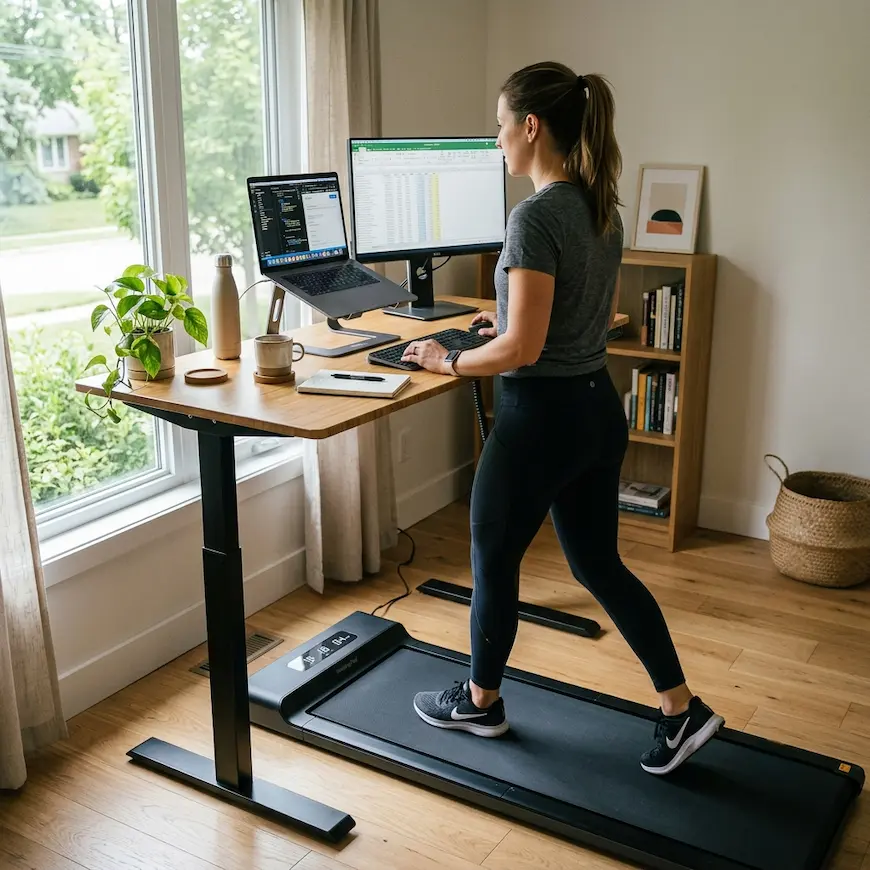
The standard advice of 150 minutes of moderate aerobic activity a week is well established. But formal exercise usually accounts for only 5 to 10% of your total daily energy use. The bigger variable is NEAT, non-exercise activity thermogenesis: every calorie you burn moving around that isn’t structured exercise.
NEAT covers walking to meetings, standing instead of sitting, fidgeting, taking the stairs, carrying groceries. People with naturally active habits burn 300 to 500 more calories a day than sedentary people, without any formal workout. Standing rather than sitting for four hours a day burns an extra 50 to 100 calories an hour, which adds up to 200 to 400 extra calories.
For weight loss tips for obese individuals, leaning on NEAT often beats intense formal exercise that brings joint stress, soreness, and a quiet drop in the rest of your daily movement. Research keeps showing that people who start aggressive exercise programs unconsciously move less the rest of the day, which cancels out much of the benefit. For obesity treatment, the goal is more total movement, not punishment.
The physical activity structure with the best support for obesity treatment looks like this:
- 150 to 300 minutes a week of moderate, low-impact cardio such as brisk walking, cycling, or swimming
- Two resistance training sessions a week to protect lean muscle during a calorie deficit, since muscle burns about three times more calories at rest than fat
- 10,000 daily steps as a floor, the NEAT baseline that keeps your metabolism from compensating
- A 10-minute walk after meals, which a 2022 Sports Medicine study found cuts the post-meal glucose spike by 22% and supports insulin sensitivity
Strategy 3: behavioral therapy and the cognitive side of obesity
Behavioral work is one of the most underrated parts of obesity treatment. Research on obesity causes and treatment increasingly recognizes that behavior drives food choices more than nutritional knowledge does. Knowing what to eat and consistently doing it are two different problems.
The behavioral approaches with the most evidence behind them start with cognitive behavioral therapy. CBT targets the thinking behind emotional eating, all-or-nothing patterns (“I had one bad meal, the whole day is ruined”), and the distortions that keep weight cycling going. A 2017 Cochrane review found that CBT-based weight management produced significantly better 12-month results than diet and exercise alone.
Food environment design matters too. Work from Cornell University’s Food and Brand Lab found that changing your surroundings, fruit out on the counter, healthy food at eye level in the fridge, smaller plates, shifted how much people ate without any conscious decision, trimming 100 to 200 calories a day through automatic cues.
Then there’s self-monitoring. A 2019 JMIR mHealth study found that people who tracked their food consistently lost 3.6 times more weight than those who tracked on and off, even on identical diets. The mechanism is awareness, not restriction. Tracking makes the gap between what you think you ate and what you actually ate visible.
Working with a registered dietitian instead of a generic plan produces meaningfully better outcomes and is one of the highest-leverage moves in obesity treatment. Personalized calorie targets, macronutrient adjustments for your metabolism, and built-in accountability are linked to two to three times better 12-month results than going it alone.
Strategy 4: sleep, the obesity treatment variable nobody talks about
Short sleep is one of the most consistent predictors of weight gain and obesity in long-term studies, and one of the most ignored levers in obesity treatment.
A 2018 systematic review from King’s College London found that sleep-deprived people ate about 385 more calories a day than well-rested ones. The mechanism is direct: too little sleep raises ghrelin and lowers leptin at the same time, the exact hormonal setup that makes losing weight harder.
Sleeping under six hours a night is linked to a 41% higher risk of obesity in prospective studies. The relationship runs both ways, since obesity raises the risk of sleep apnea, which fragments sleep, which worsens the hormonal environment for managing weight.
All of which means effective obesity treatment has to treat sleep as a primary variable, not an afterthought. A minimum of 7 hours a night, sleep apnea screening for anyone with a BMI of 30 or higher, and consistent timing, the same bedtime and wake time within about 30 minutes every day, are all evidence-based pieces of obesity treatment.
For why fatigue and low energy persist even when sleep seems fine, I cover the nutritional and lifestyle drivers in why you are always tired.
Strategy 5: stress management and cortisol
Chronic stress drives weight gain directly through cortisol’s effect on metabolism and eating. Cortisol ramps up appetite specifically for high-calorie, high-fat, high-sugar food, which is the mechanism behind stress eating. It also pushes fat storage toward the abdomen by stimulating fat production in tissue that’s rich in cortisol receptors.
For people with high-stress lives, standard obesity treatment often stalls because cortisol is constantly working against the hormonal conditions you need to lose fat. It dulls leptin sensitivity, raises fasting blood glucose, and prompts insulin release, three things pulling against weight management at once, which is why stress belongs in any serious obesity treatment plan.
The stress strategies with support in the obesity literature are mindfulness-based stress reduction (eight-week MBSR programs measurably lower cortisol), physical activity (the single most effective way to modulate it), social support, and sleep, which lowers cortisol on top of fixing the hormonal picture.
Building morning habits that keep reactive cortisol down through the day has changed my own stress response more than I expected. I go through the specific practices in morning habits that change how you feel.
Strategy 6: medical interventions, medications and surgery
For people with a BMI of 30 or higher (or 27 with obesity-related conditions), the medical side of obesity treatment has changed dramatically since 2021. Every prescription medication and surgical option here requires a physician’s evaluation, so treat this section as information, not instruction.
On the medication side, GLP-1 receptor agonists are the biggest advance in obesity drugs in decades. The STEP-1 trial, published in the New England Journal of Medicine in 2021, found that high-dose semaglutide, a GLP-1 agonist, produced an average 14.9% body weight loss over 68 weeks, well beyond anything available before Wilding et al., NEJM, 2021. These are prescription-only drugs with specific criteria and side-effect profiles, managed by doctors. They aren’t right for everyone, can be expensive, and their effects beyond five years are still being studied.
Bariatric surgery is the option for morbid obesity treatment (a BMI of 40 or higher, or 35 with serious comorbidities). Gastric bypass and sleeve gastrectomy produce the most durable results in the literature: 25 to 35% of total body weight lost and held at 10 years. Surgery requires extensive medical and psychological evaluation, gastric bypass is irreversible, and it carries surgical risk. It’s the comparison most people should actually weigh: what surgery involves versus intensive lifestyle change supported by a GLP-1 drug.
If you are weighing medication or surgery, an obesity medicine specialist can run the workup, balance your other conditions against the risks, and set up the lifestyle support that makes either option hold. There are also bariatric surgery alternatives. Endoscopic procedures like the gastric balloon and endoscopic sleeve gastroplasty are less invasive and produce smaller losses. Their role is mainly for people who don’t qualify for surgery or decline it.
Medical obesity treatment works best alongside ongoing behavioral, dietary, and activity changes, not as a standalone fix.
Strategy 7: monitoring, accountability, and keeping it off
The literature is clear on one point. The hardest part of obesity treatment isn’t losing the weight, it’s keeping it off. Among people who lose 10% of body weight, roughly 80% regain it within five years. The strongest predictor of holding on is continuous self-monitoring and regular professional contact, the two habits that separate lasting obesity treatment from temporary weight loss.
A few obesity treatment maintenance practices that hold up:
- Weigh weekly, not daily. Daily swings create noise that wears down motivation, and weekly weighers keep weight off about twice as well over two years as people who stop tracking after the initial loss.
- See a registered dietitian at least quarterly for the first two years, which catches early regain before it compounds.
- Keep moving. Sustained physical activity is the strongest predictor of long-term maintenance, regardless of how the weight came off in the first place.
- Watch sleep and stress. The hormonal environment that drove the weight gain comes back fast when sleep slips or chronic stress returns.
The anti-inflammatory pattern is one of the more sustainable long-term frameworks for obesity treatment, since it’s naturally high in protein, fiber, and whole foods without demanding that you count every calorie. I cover the specific foods in anti-inflammatory foods.
Frequently Asked Questions
What BMI qualifies for obesity treatment medications?
FDA-approved weight loss medications (prescription only) are indicated for a BMI of 30 or higher, or 27 or higher with at least one weight-related condition such as type 2 diabetes, hypertension, dyslipidemia, or obstructive sleep apnea. Criteria vary by drug. You'll need a physician or obesity medicine specialist to assess whether they fit your situation.
Can obesity be treated without medication?
Yes. For most people with Class I obesity (BMI 30 to 34.9), lifestyle change is the first-line obesity treatment. The average lifestyle-only program produces 5 to 7% body weight loss at 12 months, which is clinically meaningful for heart and metabolic health even without hitting a "normal" BMI. For Class II and III obesity (BMI of 35 or higher), lifestyle change alone has lower long-term success rates, and medical evaluation makes sense.
What obesity diet plan works best?
The dietary approaches that work in obesity research share three features regardless of the name on them: higher protein (25 to 30% of calories), high fiber, and a sharp cut in ultra-processed food. Mediterranean, DASH, and plant-based diets all check those boxes. The best diet is the one you can hold for two years or more, because adherence predicts results better than any specific macro ratio.
How long does it take to treat obesity?
The clinical benchmark for real improvement in obesity-related risk is 5 to 10% body weight loss at 12 months. A sustainable rate is 0.5 to 1 kg (1 to 2 lbs) a week through lifestyle change. Faster loss without medical supervision usually triggers metabolic adaptation and higher regain. Treating obesity as a chronic condition you manage over time, rather than a one-off weight loss push, fits the long-term evidence on obesity treatment best.
Is obesity genetic? Can it still be treated?
Genetics account for 40 to 70% of obesity risk. Some people are biologically wired toward more appetite, weaker fullness signals, and more efficient fat storage. That doesn't make obesity untreatable. It means some people need more intensive, longer-term help than average lifestyle change provides. Medical options like GLP-1 drugs and bariatric surgery exist precisely for the cases where biology makes the standard approach fall short.
This article is for informational purposes only and does not constitute medical advice, diagnosis, or treatment recommendations. Obesity is a complex medical condition that requires individual assessment and management by qualified healthcare professionals. Dietary changes, exercise programs, and medications affect people differently. All prescription medications mentioned are prescription-only and require physician evaluation before use. Do not start, stop, or change any medication or surgical plan based on information in this article. If you are experiencing symptoms of obesity-related complications such as chest pain, shortness of breath, signs of diabetes, or severe sleep disruption, seek medical evaluation promptly.

Mimo Karam is the founder and writer at LifestyleMine. She writes about daily habits, nutrition, sleep, and emotional wellness, turning research into practical advice for people who want to live healthier without making it complicated.