✦
THE LIFESTYLEMINE NEWSLETTER
Simple wellness tips, healthy recipes, and
everyday inspiration delivered to your inbox.
Your Email Address
Caloric drink displacement. When a glass of cucumber water replaces juice, soda, or sweetened coffee, you save 100 to 200 calories per swap. One swapped drink a day adds up to 36,500 to 73,000 fewer calories a year. No biological magic required.
Bioactive compound delivery. The amounts of polyphenols, gingerols, cinnamaldehyde, and allicin in infused water are small, much smaller than you’d get from the whole food. But they aren’t zero, and for ginger, cinnamon, and garlic, even small doses have shown gastric and metabolic effects in controlled research.
Bloating reduction. This is the fastest and most noticeable effect. Ginger, peppermint, and fennel all affect how quickly the gut moves food along and how much gas builds up. The flatter stomach you see in the first week or two is almost all reduced bloating, not fat loss. It’s real, and it’s quick, and it’s usually the part of detox water for weight loss people notice first.
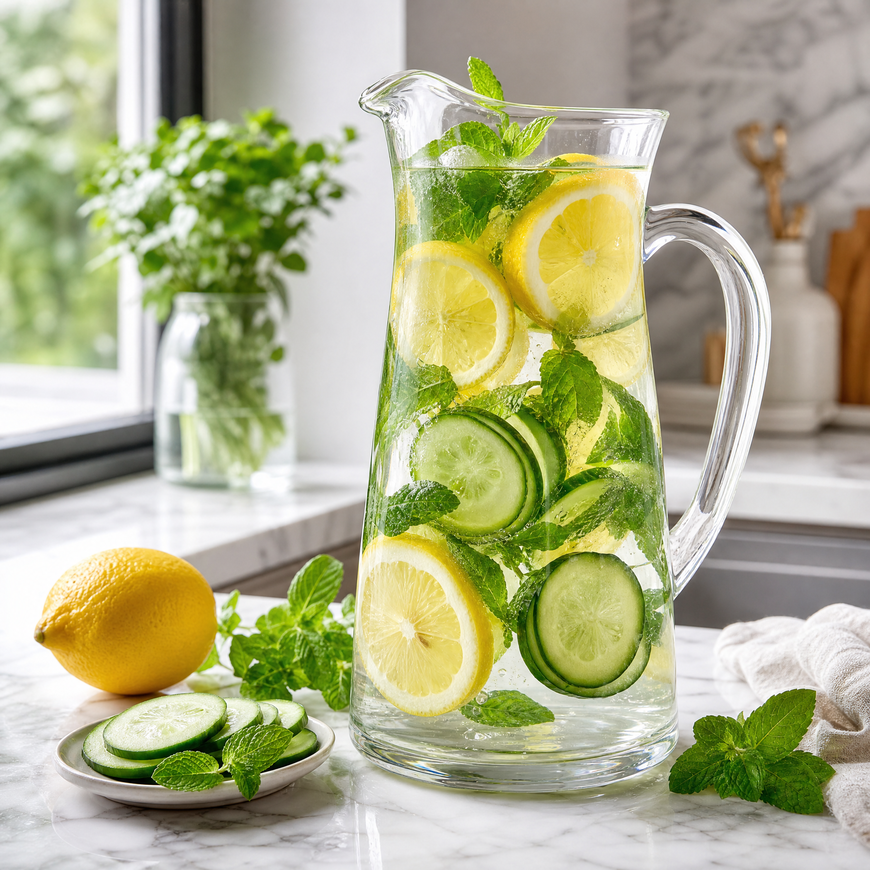
Quick Answer: Cucumber is 96% water by weight and contains cucurbitacins, compounds with mild anti-inflammatory properties. Peppermint relaxes the smooth muscle in your gut, which eases spasm and gas and speeds up gastric emptying. Together they make the most drinkable infused water combination, which is the whole point: the more you like it, the more you drink. One study found people drank 31% more fluid a day on cucumber-mint water than on plain water.
Cucumber water is the most popular infused water for a simple reason. It’s the easiest to drink, it looks good in the glass, and it has the clearest hydration benefit of any combination.
Why it works: Cucumber is 96% water with a light flavor that makes it easy to drink a lot of. It gives you some potassium, which helps with fluid balance, and a little vitamin K. The cucurbitacins in the skin have mild anti-inflammatory activity; the amount in infused water is modest but not nothing.
Mint is where the digestive effect comes from, peppermint especially. Peppermint oil has the strongest evidence base of any plant-based option for easing IBS symptoms; a 2014 meta-analysis of nine trials found a real reduction in abdominal pain and bloating. Infused water gives you far less than a clinical dose, but even small amounts of menthol relax the intestinal muscle and cut down on trapped gas. Fruits and vegetables that keep you hydrated goes deeper into the hydration science, and cucumber sits right at the top of the water-content rankings.
Recipe:
Half a cucumber, thinly sliced
10 to 12 fresh mint leaves, lightly bruised (fold and press to release the oils without tearing them)
1L cold water
Optional: 3 to 4 lemon slices for vitamin C and extra flavor
Combine in a pitcher. Refrigerate at least an hour, or overnight for the most flavor. Drink it through the day, and remake it daily; infused water is best within 24 hours.
Best for: Your daily hydration base. If you’re starting detox water for weight loss, this is the one to make first and keep in the fridge as your default water.
Quick Answer: Ginger contains gingerols and shogaols, compounds that speed up gastric emptying (how quickly food moves from the stomach into the small intestine) and reduce nausea. A 2011 meta-analysis of six double-blind RCTs found ginger significantly cut gastric emptying time at doses as low as 1 to 2g. Lemon adds citric acid, which gets saliva and digestive enzymes going. Together the combination eases post-meal bloating and supports regular digestion more directly than anything else on this list.
Lemon and ginger is the most searched and most evidence-backed detox water for weight loss when the goal is digestive support. The mechanism is ginger’s effect on how fast the stomach empties, one of the better-documented herbal effects in clinical gastroenterology.
The ginger evidence: Gingerols and shogaols, ginger’s active compounds, act on 5-HT3 and M3 receptors in the gut wall and speed up gastric emptying. A 2011 meta-analysis of six randomized controlled trials found that 1 to 2g of ginger significantly reduced gastric emptying time against placebo [verify URL before publishing]. Faster emptying means less time for gas to build up and bloating to set in after meals. It’s why ginger is a standard suggestion for postoperative nausea, morning sickness, and functional dyspepsia.
The lemon part: Lemon juice prompts hydrochloric acid (through gastrin signaling) and bile, both of which help you digest fat efficiently. It adds vitamin C and a small amount of flavonoids. The acidic pH may also give the liver’s Phase II detox pathways a temporary nudge, which is a real if modest mechanism, and a different thing from the pseudoscientific “detox” claim.
If you get frequent acid reflux, go easy on lemon water; citrus raises gastric acid volume and can make symptoms worse. The top foods that cause acid reflux covers this in detail.
Recipe:
1-inch piece of fresh ginger, peeled and thinly sliced (or grated for a stronger effect)
Juice of half a lemon plus 2 to 3 lemon slices
500ml warm water (warm works better than cold for gastric motility)
Optional: 1 teaspoon raw honey
Combine in a mug or glass. Steep 5 minutes if you sliced the ginger; stir if you grated it. Drink 20 to 30 minutes before your largest meal for the most anti-bloating benefit.
Best for: Before meals, especially if you tend toward post-meal bloating or slow digestion.
Quick Answer: Cinnamon contains cinnamaldehyde and procyanidins that mimic insulin and switch on GLUT4 glucose transporters, which improves how cells take up glucose. A 2003 study in Diabetes Care (60 people with type 2 diabetes) found 1 to 6g of cinnamon a day lowered fasting blood glucose by 18 to 29%. Infused water gives you far less cinnamaldehyde than a supplement, but even small amounts may blunt the post-meal blood sugar spike that drives insulin-led fat storage and energy crashes.
The flat-stomach link with apple-cinnamon water is less about water retention and more about blood sugar, and it’s where detox water for weight loss has a plausible mechanism beyond simple hydration. Spikes in blood sugar, and the insulin surge that follows, push the body toward fat storage, especially visceral abdominal fat. Anything that flattens the glucose curve quiets that signal.
The cinnamon mechanism: Cinnamaldehyde, cinnamon’s main active compound, switches on GLUT4 glucose transporters in muscle and fat cells, the same pathway metformin (a type 2 diabetes drug) targets. It also blocks alpha-glucosidase, an intestinal enzyme that breaks complex carbohydrates down into glucose, which slows how fast glucose is absorbed after a carb-heavy meal. The 2003 Diabetes Care study used 1 to 6g of whole cinnamon a day; the cinnamaldehyde you get from infused water is much less, but the direction of the effect matches the mechanism.
A note on cinnamon types: Ceylon cinnamon (true cinnamon, lighter in color, more delicate) is the one to use regularly. Cassia cinnamon (the common supermarket kind, darker and stronger) contains coumarin, which can damage the liver in high doses taken regularly. In infused water amounts, cassia is fine now and then; for daily use, Ceylon is safer.
Apple’s part: Apples bring polyphenols (quercetin, chlorogenic acid) that have their own effects on glucose absorption and gut microbiome diversity. Chlorogenic acid specifically blocks glucose-6-phosphatase, an enzyme involved in the liver’s glucose release. The polyphenols concentrate in the skin, so leave it on.
Recipe:
2 small apples or 1 large, cored and thinly sliced (skin on)
2 cinnamon sticks (Ceylon preferred)
750ml to 1L cold water
Optional: 3 to 4 cloves for extra warmth and antimicrobial compounds
Combine in a pitcher. Refrigerate at least 2 hours; overnight tastes best. The water turns a light amber-pink from the apple polyphenols. It’s good cold, and you can serve it warm as a herbal-style drink in winter.
Best for: After meals, or through the day if blood sugar stability is the goal. A good stand-in for sweet afternoon tea.
Quick Answer: Piperine, the active alkaloid in black pepper, is best known for boosting curcumin absorption by 2,000%, but it has its own metabolic effects: it slows adipogenesis (the formation of new fat cells) in cell models and shows modest thermogenic activity. Ginger’s gingerols add anti-inflammatory and gastric-motility effects. Combined in warm water, this is the strongest-tasting recipe here and the most thermogenically active, though keep expectations realistic: the metabolic bump is real but small, on the order of 50 to 100 calories a day in animal models.
This recipe stays closest to the original formulation and is the most aggressively bioactive detox water for weight loss combination on the list.
Piperine’s mechanism: Beyond its job as a bioavailability booster, piperine has shown a few things: it inhibits PPARγ (peroxisome proliferator-activated receptor gamma, the main transcription factor driving fat-cell differentiation), it stimulates TRPV1 receptors (the same ones capsaicin hits, which produces a mild thermogenic effect), and it improves insulin sensitivity in rodent models. Human trial evidence is thin, but the mechanistic case holds up.
The piperine in half a tablespoon of black pepper is roughly 25 to 50mg, within the range some bioavailability trials have used. In infused water, where the pepper is steeped and strained, the final amount is lower but not negligible.
A note on honey: Raw honey holds enzymes (diastase, invertase) and trace bee pollen and propolis with antimicrobial and antioxidant properties. Warm water keeps most of these intact; boiling water doesn’t. If you heat this to a boil, add the honey after you take it off the heat.
Recipe:
½ teaspoon freshly cracked black pepper (not pre-ground; piperine degrades fast once ground)
1-inch fresh ginger, grated
1 teaspoon raw honey (add after heating, not during the boil)
Juice of half a lemon
500ml warm water (not boiling)
Combine the pepper and ginger in a mug. Pour the warm water over them. Steep 5 minutes. Add the honey and lemon after steeping. Stir well and drink warm.
Best for: Morning, pre-workout, or a warming winter drink. It’s the strongest-flavored one here and not everyone’s pick for daily use. The ginger makes it especially good for digestion on top of its thermogenic side.
Quick Answer: Rosemary contains rosmarinic acid, ursolic acid, and carnosic acid, polyphenols with antioxidant, anti-inflammatory, and neuroprotective activity. A 2016 University of Northumbria study found that exposure to rosemary aroma (from the compound 1,8-cineole) was linked to prospective memory scores up to 15% higher. Rosemary also stimulates bile flow from the gallbladder (a choleretic effect), which helps with fat digestion and eases bloating after a fatty meal. It’s the least sweet option here and works best as a savory, herbal water.
Rosemary isn’t the first thing most people reach for in detox water for weight loss, but it’s the most underused combination on this list, and the one with the most interesting range of effects. Most people think of it as a cooking herb, not a drink.
The digestive mechanism: Ursolic acid in rosemary inhibits pancreatic lipase, the enzyme that breaks down dietary fat in the small intestine. Less lipase activity means slightly less dietary fat absorbed per meal. In infused water (versus a concentrated extract) that effect is small, but the choleretic effect, the boost to bile flow, matters more for bloating. Better bile flow emulsifies fats more efficiently, which cuts the fermentation and gas that happen when under-digested fats reach the colon.
The cognitive angle: 1,8-cineole, a volatile compound in rosemary, crosses the blood-brain barrier. In the Northumbria study, participants worked in a rosemary-scented room and did better on prospective memory (remembering to do things later). Drinking rosemary water gets the cineole in internally rather than through your nose, but it reaches the bloodstream either way. The effect is modest, but rosemary water is one of the few things here with a plausible cognitive benefit alongside the digestive one.
Recipe:
4 to 5 large sprigs of fresh rosemary (dried works but tastes stronger and slightly medicinal)
1 lemon, thinly sliced with the rind removed
900ml to 1L cold water
Combine in a glass pitcher. Refrigerate at least 2 hours; 4 to 6 hours pulls the most flavor from the rosemary. The color stays clear to pale yellow. Serve cold or at room temperature, and drink it within 24 hours.
Best for: A mid-morning or afternoon drink. A good option if you want something less sweet than apple-cinnamon or less sharp than lemon-ginger.
Quick Answer: Garlic’s main active compound is allicin, which forms when garlic is crushed or sliced, not in an intact clove. Allicin has documented antimicrobial, lipid-lowering, and blood-pressure-reducing effects across several clinical trials. A 2016 meta-analysis of 39 trials found garlic supplementation significantly lowered total cholesterol and triglycerides. The flat-stomach link: allicin reduces Helicobacter pylori in the gut (a bacterium tied to bloating and dyspepsia) and has prebiotic effects that support a balanced microbiome.
Garlic water is the least pleasant detox water for weight loss option by taste and the most potent by bioactive content. It’s worth including for anyone who can handle the flavor.
The allicin mechanism: Allicin is a sulfur compound produced when the enzyme alliinase meets alliin as garlic cells are damaged by slicing or crushing. It has documented antimicrobial activity against a range of gut pathogens including H. pylori, lipid-lowering effects at the equivalent of 600 to 1,200mg/day of garlic powder, mild antifungal activity (relevant for Candida overgrowth), and antioxidant activity through its thiosulfinate chemistry.
The original article said to wait 10 minutes after slicing before adding the garlic to water, and that’s correct and worth doing. Alliinase needs 5 to 10 minutes of air exposure after cutting to produce the most allicin. Crushing garlic rather than slicing it produces even more.
A note on garlic and acid reflux: Garlic triggers reflux in some people; it’s a FODMAP fructan that can raise gas and intra-abdominal pressure. If you get GERD symptoms, approach garlic water carefully and start with one small clove.
Recipe:
2 garlic cloves, sliced (not minced; slicing releases enough allicin without overwhelming the water)
Let the sliced garlic sit for 10 minutes before adding it to water (allicin activation)
500ml room-temperature water
Optional: juice of half a lemon to make it more palatable
Don’t eat for at least an hour after drinking it (lets the allicin absorb without competing with food)
Best on an empty stomach in the morning. The taste is strong; if it’s too much, start with one small clove and build up.
Best for: Anyone targeting gut microbiome balance, high cholesterol, or immune support. Not a daily hydration choice for most people; more of a 2 to 3 times a week thing.
Quick Answer: Most detox water routines fail because of prep friction. Making infused water means slicing, combining, and refrigerating the night before, which is too much effort at the moment you actually want a drink. The fix is batching: prep a 1L pitcher every Sunday and Wednesday evening so the choice is already made by the time you’re thirsty. Within 2 to 3 weeks, reaching for the pitcher becomes automatic. The flatter-stomach results come from consistency over 3 to 4 weeks, not from any single recipe.
Making detox water for weight loss work as a daily habit is less about the recipe and more about taking the friction out of the routine.
The batch approach: Make a fresh 1L pitcher every 2 to 3 days, in the evening so it’s ready by morning. Keep it visible, on the counter or at eye level in the fridge. The visual cue is what drives you to drink it. Out of sight, and it’s forgotten in favor of whatever’s easy. Consistency is the thing that makes detox water for weight loss actually move the scale.
Which recipe to start with: For most people, cucumber-mint. It’s the easiest to make, the most pleasant to drink in quantity, and the most likely to crowd out other drinks. Once it’s a steady daily habit, usually 2 to 3 weeks in, add a second recipe for variety.
A realistic timeline for flat tummy water results:
Days 1 to 3: better hydration, maybe a small drop in water retention
Days 4 to 7: noticeable bloating reduction if ginger or mint are in the mix
Week 2: if infused water is replacing sugary drinks, the scale usually reads 0.5 to 1.5kg lower (a mix of less water retention and fewer calories)
Weeks 3 to 4: actual body composition change shows up if the habit has genuinely replaced calorie-containing drinks
What to track: Weight first thing in the morning, before food or drink, same time and same conditions. Track weekly averages, not daily numbers. Daily swings of 1 to 2kg from hydration, hormonal cycles, and digestion are normal and meaningless. The weekly trend over 3 to 4 weeks tells the real story, and most of the detox water for weight loss results come from what the water replaces rather than the water itself.
Combine with: Anti-inflammatory foods in your meals for a compounding effect on bloating and gut health. Infused water handles hydration; anti-inflammatory food choices handle the dietary inflammation that puffs up the abdomen independently of water retention.
The obesity treatment article covers the full picture of sustainable weight management. Detox water for weight loss is a useful daily habit inside a broader approach, not a solution on its own.
No, and this matters. Infused water has almost no calories (under 10 per liter for most recipes). Using it to replace meals would leave you badly underfed. Detox water for weight loss works as a complement to regular, balanced eating, specifically as a hydration tool and a swap for calorie-containing drinks. It is not a fast, a cleanse, or a meal substitute.
Filtered is better, for two reasons. Chlorine in tap water reacts with some of the polyphenols in fruit and herbs, and filtered water simply tastes cleaner, which matters when you're drinking it all day. A basic pitcher filter is plenty. Bottled water is unnecessary and wasteful for a daily habit.
With citrus, 24 hours refrigerated at most. Cucumber and herb water lasts a bit longer, up to 48 hours, if you pull the cucumber after the first day; cucumber skin starts to break down after 24 hours and can turn the water slightly bitter. Garlic water should be drunk within 12 hours. When in doubt, smell it first; fresh infused water smells clean and pleasant, spoiled water smells flat or fermented.
ACV water is one of the more aggressive detox water for weight loss recipes people try, and the evidence is mixed. A 2018 study found 30ml a day of ACV lowered fasting blood glucose and triglycerides in pre-diabetic adults. But ACV is highly acidic (pH around 2.5 to 3.5), and regular use can erode tooth enamel and irritate the esophagus. If you use it, dilute it hard (1 to 2 teaspoons per 250ml minimum), drink through a straw, and don't brush your teeth right after. Stronger concentrations don't get better results.
Cucumber, mint, and fruit-infused waters are fine for children. Ginger water in small amounts is fine too. Garlic water isn't recommended for young children, and black pepper water is too spicy for most. Skip honey (in the black pepper recipe) for infants under 12 months because of the botulism risk. For children over 1, most mild infused waters are safe and a useful way to get them drinking more.
For cucumber, the skin is edible and holds cucurbitacins and extra fiber, so leave it on if the cucumber is organic; for conventionally grown cucumber, a quick scrub does the job. For lemon, the rind has limonene (a terpene with mild digestive benefits) and a lot of vitamin C, so keeping it in adds flavor and nutrition. Wash citrus well before slicing and leaving the rind in.
The information in this article is for general wellness and hydration purposes only. Infused water is not a medical treatment, weight loss medication, or substitute for medical care. If you have kidney disease, take diuretic medication, or have any condition that requires fluid restriction, talk to your physician before significantly increasing your water intake. Anyone with GERD or irritable bowel syndrome should introduce new ingredients gradually and watch their own response.